REVIEW · VARANASI
Visit to Death Hotel in Varanasi
Book on Viator →Operated by Tour Varanasi · Bookable on Viator
One place in Varanasi feels upside down.
This private guided outing to Mukti Bhavan (often called the Death Hotel) tackles a subject most people don’t see on a normal sightseeing day: Hindu beliefs about dying in Varanasi and what that’s supposed to do for the soul. You also get local context as you head toward Assi Ghat, where the city’s spiritual rhythm is easy to understand even if you never plan to take part in the rituals.
I really liked the way the tour stays practical while it’s still thought-provoking. The English-speaking guide helps you connect the religious ideas to the city’s history, not just repeat slogans. I also appreciated the included hotel pickup and drop-off, which makes a short 4-hour visit feel manageable instead of stressful.
One thing to consider: Mukti Bhavan may be closed on your day, and then you can be routed to another related place called Mumukshu Bhavan (an old age home). It’s still part of the story, but it can feel different from what you pictured. Also plan for a conservative dress code (full sleeves) and photo rules that depend on what’s allowed inside.
In This Review
- Key points before you go
- Varanasi’s Death Hotel: What you’re really walking into
- Getting to Assi Ghat at 9:30: The tour’s easiest win
- Mukti Bhavan explained: Salvation, death, and the city’s logic
- The real-world twist: If Mukti Bhavan is closed, you may see Mumukshu Bhavan
- What to expect during your visit (and how to behave)
- A private guide you can ask questions to (including Vimal)
- Price and value: Is $63 for 4 hours worth it?
- How this fits with your Varanasi day plan
- Who should book this Death Hotel visit—and who might skip it
- Should you book?
- FAQ
- What is the duration of the tour?
- Where does the tour start?
- Does the price include pickup and a guide?
- Is admission included?
- What should I wear?
- Can I take photos?
- What if Mukti Bhavan is closed during my visit?
- What is not included in the tour price?
Key points before you go
- Private, English-led pacing that fits a short 4-hour schedule without rushing you
- Assi Ghat area orientation so the spiritual setting makes sense fast
- Clear explanations of why people come to die and what moksha is meant to represent
- Your visit may shift to Mumukshu Bhavan if Mukti Bhavan isn’t operating that day
- Simple behavior tips (full sleeves; ask before photographing) help you avoid awkward moments
Varanasi’s Death Hotel: What you’re really walking into
If Varanasi is famous for anything, it’s for devotion that’s hard to ignore. People come in huge numbers for Ganges bathing and for funeral-related rites, and the city’s spirituality can feel like it runs on a different clock than most places. This tour takes one of the city’s strangest concepts and puts it into a human, religious framework.
At the center is Mukti Bhavan, an institution connected to the idea that dying in Varanasi can lead to moksha, or salvation—escaping the endless cycle of birth and death. You’ll also hear how the belief system is debated, because real life isn’t a neat spiritual math problem. But the practical point is this: lots of people still arrive with the intention that their final moments connect to something bigger.
One striking detail you should keep in mind: Mukti Bhavan has seen 15,000-odd deaths since its inception. That number doesn’t turn it into a tourist attraction—it makes it clear this isn’t a dramatic gimmick. It’s a long-running religious phenomenon people plan for, at least for those who choose to.
You can also read our reviews of more tours and experiences in Varanasi.



Getting to Assi Ghat at 9:30: The tour’s easiest win
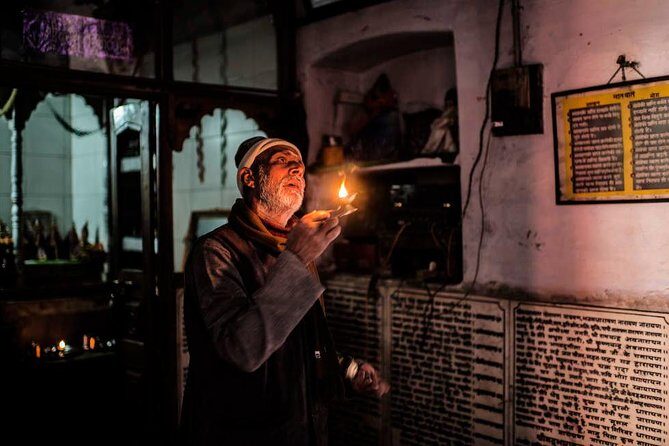
The tour starts at 9:30 am, with pickup from your hotel and then a drive toward Assi Ghat with your guide. I like this structure for one big reason: Varanasi can be loud and crowded, and you don’t want to spend your limited energy trying to figure out where to go first.
Because this is a private tour, you’re not blending into a huge group. Your guide can set the pace and adjust based on what’s happening that morning. You also have less guesswork about transport. The tour includes hotel pickup and drop-off, and taxes are included in the price—so you’re not mentally juggling add-ons while you’re trying to absorb what you’re seeing.
One small nuance: in real life, the ride may be done in a tuk-tuk-style vehicle depending on how operations are set up. Either way, the important thing is that you’re taken from your hotel without having to negotiate streets on your own.
Mukti Bhavan explained: Salvation, death, and the city’s logic
When you reach the area connected with Mukti Bhavan, your guide’s job is to translate the idea into something you can actually hold in your head. The core explanation you’ll get is straightforward: in Hindu belief, dying in Varanasi can help the soul break out of the cycle of rebirth.
Here’s what makes this part valuable for you, even if you don’t share the belief. The tour forces you to see how religion shapes decisions that most people never plan for. In many cultures, death is something you avoid thinking about until it happens. In this place, death is approached with spiritual intention—and that’s a major difference in mindset.
You’ll also learn the history behind the sacred city of Varanasi itself, which matters because Mukti Bhavan is not floating in isolation. It connects to a city where the Ganges is a spiritual magnet and where funeral rituals are part of the everyday landscape. Once you understand that the city’s spirituality is public and constant, the idea of a dedicated place tied to death doesn’t feel quite as out of nowhere.
A balanced note to keep in mind: you’ll likely hear that these beliefs are highly debatable. That’s not a cop-out—it’s honest context. Religion often asks you to accept meanings that science can’t prove. Your guide can help you understand the logic from inside the tradition while still keeping a respectful, grounded tone.
The real-world twist: If Mukti Bhavan is closed, you may see Mumukshu Bhavan
This is the section you should read carefully before you book, because it affects expectations.
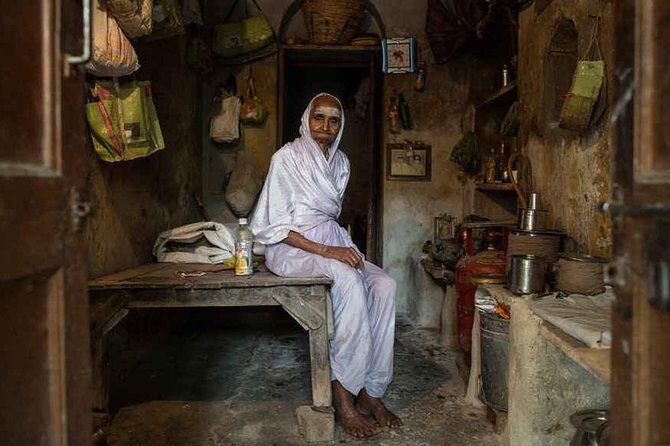
On some days, Mukti Bhavan can be shut if there are no patients present. If that happens, your guide may take you to Mumukshu Bhavan instead. Mumukshu Bhavan is described as an old age home connected to people seeking a religious end-of-life approach.
This change isn’t automatically bad, but it can feel jarring if your mental picture is specifically Mukti Bhavan as the main act. The upside is that you still get the religious and city context, and you’re still visiting a related place tied to the same end-of-life theme.
If you want to reduce disappointment, go in with flexibility. Ask your guide (or confirm with the operator) that visiting Mukti Bhavan may depend on on-site operations. That small mindset shift turns a potential letdown into a more interesting, real-on-the-ground experience.
What to expect during your visit (and how to behave)
The tour is designed to be a guided experience, not a free-for-all. That matters because the sites involved come with rules and sensitivities.
Plan on full sleeves for your visit. This is a simple request but it can be the difference between moving smoothly and feeling like you’re stuck adjusting your clothing in front of other people. Also expect photo restrictions. You should not take photos unless you’re allowed for it by people inside, especially in areas where patients or residents may be present. When in doubt, look to your guide first and ask before you raise your phone.
If you’re sensitive to heavy subjects, you might be wondering how the tone stays human instead of grim. The answer is the guide’s framing. Even when the topic is death, the explanations revolve around intention—what people hope for spiritually, and why Varanasi attracts them.
And yes, it can feel intense. But the point of the tour isn’t to shock you. It’s to give you insight into a living tradition that tourists often don’t understand because they arrive thinking Varanasi is only about temples and rivers.



A private guide you can ask questions to (including Vimal)
One reason this experience works is the private format. You’re not stuck listening to a script you can’t interrupt. If something is confusing—like how salvation fits with a city’s routines—your guide can slow down and explain.
I was especially struck by one guide name that came up strongly: Vimal. In a review-style write-up, Vimal was described as having a lot of sensitivity and real affection for the city, and that showed in the way he guided people through even small details of the cult and the city’s rhythm. That’s a good sign for you: it suggests the tour isn’t only about facts. It’s about reading the room, staying respectful, and helping you connect ideas to local reality.
If you can, keep a short list of questions ready:
- What does moksha mean here, in practice?
- Why Varanasi, specifically?
- How do daily life and death rituals overlap in the city?
That kind of question turns a short visit into something that sticks.
Price and value: Is $63 for 4 hours worth it?
At $63 per person, this isn’t a bargain like a street snack tour—but it’s also not priced like a luxury attraction. For that cost, you’re getting a personal English-speaking guide, hotel pickup and drop-off by a private medium car, and the taxes/fees are included.
The value part comes from structure. A guided visit to an unusual religious site in Varanasi isn’t just about seeing something. It’s about understanding what you’re seeing, and doing it without wasting your time navigating. Over four hours, a good guide can turn confusion into context—and in a place as complex as Varanasi, context is what you pay for.
Two practical notes so you don’t get surprised:
- Food and drinks aren’t included, so plan for your next meal before or after.
- There are no additional costs referenced in at least one positive review, which usually means you won’t be pressured into upsells mid-tour. Still, carry a little cash for your own comfort as you move around the city.
Booking timing also matters. This tour is often booked about 92 days in advance on average, which tells me demand is steady for a private, English-guided slot. If your dates are fixed, it’s smart to lock it in early.
How this fits with your Varanasi day plan
This is a short outing—about 4 hours—so it’s best for travelers who want one meaningful “anchor” experience rather than trying to stack five sites in a haze of jet lag.
I like it as:
- A morning activity that helps you understand the city before you start wandering
- A structured way to see something unusual without giving up hours to transport and confusion
- A cultural check-in when you’re tired of only hearing about the Ganges from a distance
You’ll probably walk away with a new mental model for Varanasi: it’s not only a place where people worship and bathe. It’s also a place where end-of-life choices can carry religious meaning and where institutions exist around those intentions.
Just remember: this isn’t a casual photo safari. Your best experience comes when you treat it like a guided conversation with a place that has rules, routines, and real people.
Who should book this Death Hotel visit—and who might skip it
Book it if you:
- Want religion and history context with a guide you can ask questions to
- Prefer private pacing over crowded group tours
- Are curious about end-of-life traditions and how they shape life in Varanasi
Consider skipping if you:
- Expect Mukti Bhavan as a guaranteed open-and-accessible stop every time. It can be closed depending on whether patients are present.
- Don’t want to deal with photo restrictions and conservative clothing expectations.
- Are likely to be upset if the visit shifts to Mumukshu Bhavan due to on-site operations.
For most people who enjoy cultural insight—and who can handle a serious topic with respect—this tour can be a powerful change of pace.
Should you book?
I think you should book this tour if your goal is understanding Varanasi’s spiritual logic, not collecting selfies. The included English-speaking guide and pickup/drop-off make it efficient, and the short 4-hour format keeps it from swallowing your whole day.
The only reason I’d hesitate is expectation mismatch. Because Mukti Bhavan can be closed and you may go to Mumukshu Bhavan instead, you’ll enjoy this more if you book with flexibility. If you’re okay with that reality, you’ll likely come away with insight that feels genuinely different from typical temple-and-ghat sightseeing.
FAQ
What is the duration of the tour?
The experience lasts about 4 hours.
Where does the tour start?
Pickup begins at 9:30 am from your hotel, and the route includes driving toward the Assi Ghat area.
Does the price include pickup and a guide?
Yes. The tour includes a personal English-speaking tour guide plus hotel pickup and drop-off by a private medium car.
Is admission included?
Admission tickets are listed as free for this experience.
What should I wear?
You should wear full sleeves clothes.
Can I take photos?
You should not take photos unless you are allowed for it by in-house guests/people inside.
What if Mukti Bhavan is closed during my visit?
If Mukti Bhavan remains shut when there is no patient, the guide may take you to the next related place called Mumukshu Bhavan.
What is not included in the tour price?
Food and drinks are not included, and anything not listed under inclusions isn’t covered.