REVIEW · PUSHKAR
Temples Walk around 52 Ghats ( Spiritual Tour )-The Pushkar Route
Book on Viator →Operated by THE PUSHKAR ROUTE · Bookable on Viator
Pushkar makes you slow down. This temple-town walk circles Pushkar Lake and connects the dots between ghats, families, and Hindu customs in a way that feels practical, not preachy. It’s a 3-hour loop that trades big-city sightseeing for a calmer kind of discovery.
I really like two things here: the guide Manish keeps the explanations clear and easy to follow, and the tour doesn’t turn into a shopping detour. You also get thoughtful extras like coffee or tea, bottled water, and snacks, which matter when you’re out walking by the lake.
One consideration: this is a walking-focused experience, so if you’re hoping for long sit-down time at a few spots—or you’re not comfortable on uneven temple steps—plan for a steady pace and respectful temple conduct.
In This Review
- Key highlights you’ll care about
- A temple-town walk around Pushkar Lake’s 52 ghats
- Why Manish’s storytelling makes the loop feel personal
- Timing, walking pace, and what 3 hours 10 minutes covers
- Stop 1: Pushkar Lake and the meaning of the ghat system
- Gau Ghat (Gandhi Ghat) and Brahma Ghat’s daily worship vibe
- Varah Ghat, Varaha Temple, and Rangji: Vishnu stops you can’t miss
- Koteshwar Mahadev, 108 Mahadev, and the Shiva side of the lake
- Brahma Temple and Jaipur Ghat: marble, myths, and a sunset finish
- Price and what’s included in a $7-per-person temple walk
- Who should book this 52-ghat temple walk
- Should you book Temples Walk around 52 Ghats with The Pushkar Route?
- FAQ
- Is pickup included for the Pushkar 52 ghat temple walk?
- How long is the tour?
- What’s included in the price?
- Are admission tickets included for temple stops?
- Is this tour private?
- Is free cancellation available?
Key highlights you’ll care about
- A full loop around 52 ghats around Pushkar Lake, not just a quick hit of the famous places
- Manish’s guided storytelling, with simple explanations of Hindu customs and what you’re seeing
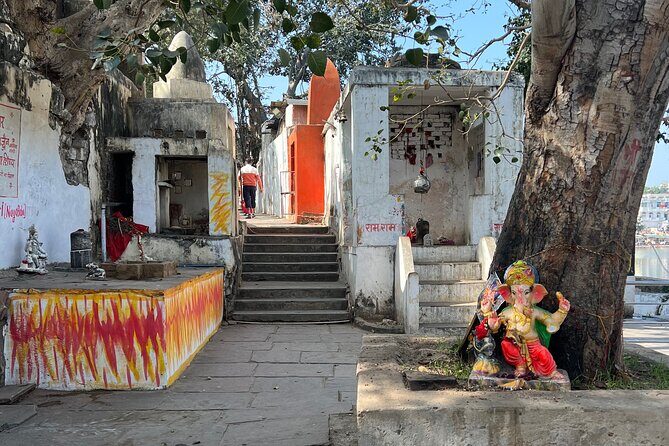
- Multiple temple types in one route: Vishnu, Shiva, and Brahma-focused sites
- Gau Ghat and the Gandhi connection, plus a chance to see worship atmosphere at the lake
- Practical value: water, tea/coffee, and snacks included in a low per-person price
A temple-town walk around Pushkar Lake’s 52 ghats
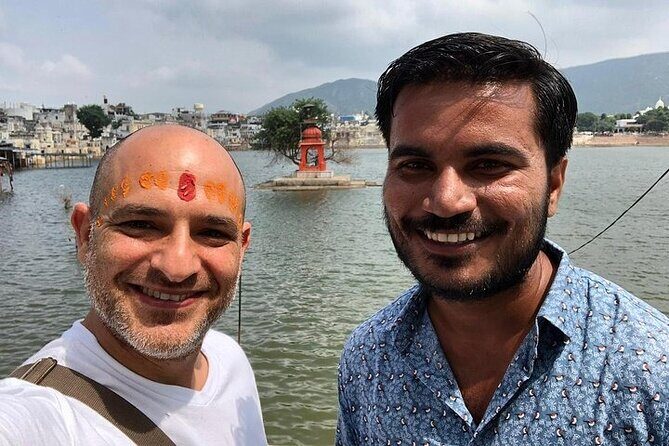
Pushkar isn’t one of those places where you just race from landmark to landmark. The whole point is the lake—Pushkar Lake—surrounded by 52 ghats (steps along the water). Each ghat is tied to specific communities and royal families from Rajasthan, which turns what could be “pretty water” into a map of local tradition.
The tour is built around that idea: you walk the lake edge, pause at temple stops, and learn what the ghats represent. You’ll also get access to more tucked-away temples along the banks, including spots that are less visited than the headline sights.
This works especially well if you’re trying to experience Pushkar the way locals do—slow, observant, and respectful. The religious setting isn’t a backdrop; it’s the main story.
You can also read our reviews of more walking tours in Pushkar



Why Manish’s storytelling makes the loop feel personal
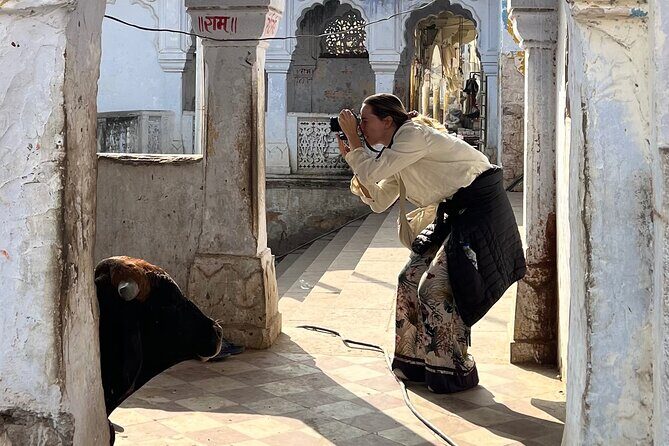
The guide makes or breaks a temple walk, and this one has a strong track record with Manish. In the feedback, people consistently highlight how he explains religious and spiritual ideas clearly and in an organized way. That matters because temple architecture and ritual details can be confusing if you don’t know the basics.
Manish also comes across as friendly and focused. One theme you’ll feel is that he keeps you comfortable and doesn’t try to steer the group into shops. That’s a big deal in India, where it’s easy to get stuck in a “tour route” that doesn’t match what you wanted to see.
A smart bonus: your time isn’t just spent looking. You’re learning how Hindu customs show up around the lake—where people gather, what worship moments look like, and why specific temples are placed where they are.
Timing, walking pace, and what 3 hours 10 minutes covers
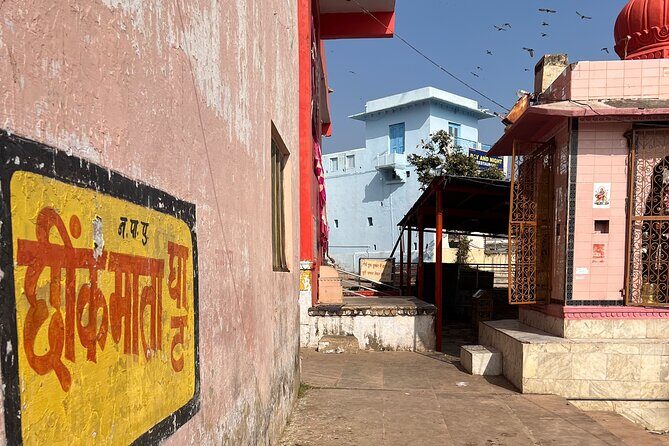
The tour runs about 3 hours 10 minutes. That’s long enough to cover a lot of the lake route, but short enough that you’re not stuck for half a day when you’d rather wander Pushkar on your own after.
Most of the stops are brief—some are around 10 minutes—so you’ll get quick context, not a long lecture. That keeps things moving and helps the route feel cohesive: ghat, temple, explanation, then back to walking.
Bring practical expectations. You’ll be on foot near a lake, so you’ll want comfortable shoes. And since this is a spiritual setting, you’ll want to dress and behave in a way that fits temples and religious spaces.
Stop 1: Pushkar Lake and the meaning of the ghat system
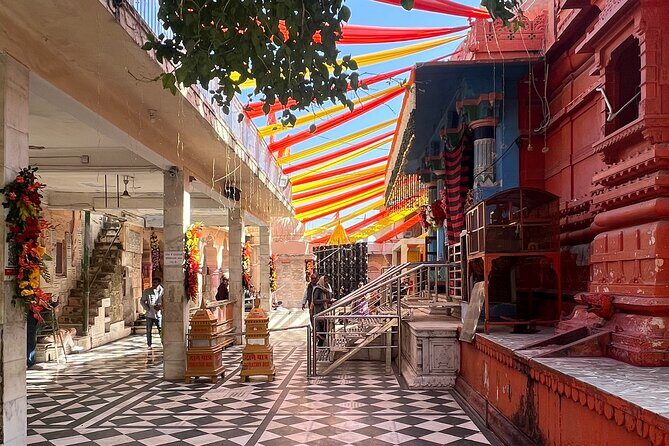
You start at Pushkar Lake, the heart of the town. The lake is described as being surrounded by 52 ghats, donated and built by Rajasthan’s royal families and kings. There are also 500+ temples in the area, which helps explain why a “temple walk” here doesn’t feel like a checklist—it feels like a neighborhood with landmarks.
You’ll do a walk around the lake and visit some of the hidden temples on the banks. Expect the guide to frame what you’re seeing: how each ghat relates to a community or royal connection, and how that shapes today’s pilgrimage behavior.
There’s also a practical reason this start works: once you understand the lake-and-ghats layout, every later stop makes more sense. You’re not just watching buildings; you’re learning the logic of where people gather.
Gau Ghat (Gandhi Ghat) and Brahma Ghat’s daily worship vibe

Next comes Gau Ghat, also called Gandhi Ghat. The key detail here is the connection to Mahatma Gandhi: the ashes were spread in the sacred pond at this ghat. That gives the lake a layer beyond purely ancient religious tradition—an element of modern Indian history sitting inside the same spiritual geography.
Then you move to Brahma Ghat, one of the important ghats for worship activity. It’s known for Maha Arti, and the entrance of the ghat includes a temple constructed by Shri Jayendra Saraswati dedicated to Shankaracharya. Even if you’re not religious yourself, this kind of placement helps you understand how figures of Hindu teaching and ritual life are woven into the lake’s daily rhythm.
A quick note for timing: because worship moments can be time-sensitive, your best bet is to follow your guide’s flow and stay flexible. When the atmosphere is right, it’s often the small moments—prayer movement, offerings, the way people stand and watch—that make a temple walk feel real.





Varah Ghat, Varaha Temple, and Rangji: Vishnu stops you can’t miss
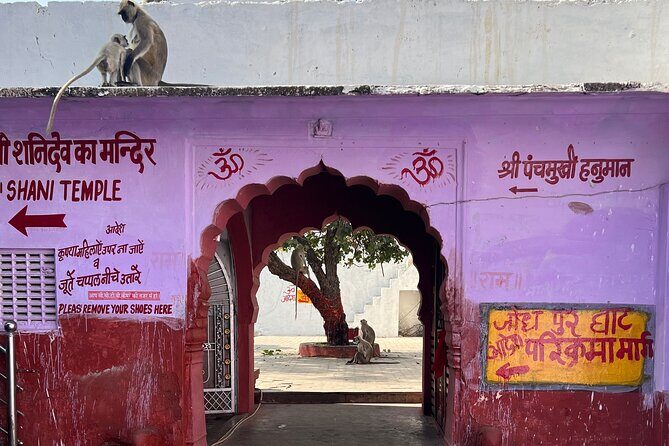
After the Brahma-focused start, the route turns toward Vishnu.
At Varah Ghat, the naming is tied to Vishnu’s boar incarnation (Varaha). The ghat is also linked to history: it was reconstructed in 1150 AD by King Anaji Chauhan, and there’s a connection to a palace of Queen Ahuliya Bai Holkar in the area.
Then comes Varaha Temple, one of Pushkar’s ancient Vishnu temples. It’s said to date back to the 12th century, built by King Anaji Chouha, and it’s considered one of eight Swayambhu Kshetra of Vishnu. Whether you care about the exact mythological category or not, the practical value is that this temple explains why Pushkar attracts so many devotees: it isn’t only about the lake; it’s about sacred geography tied to specific forms of Vishnu.
Nearby you’ll also visit the Old Rangji Temple, dedicated to Vishnu and described as about 200 years old. Being close to Varaha Ghat, it works well as a “bridge stop,” letting you keep the Vishnu theme going while seeing how different temples share the same lake atmosphere.
Koteshwar Mahadev, 108 Mahadev, and the Shiva side of the lake
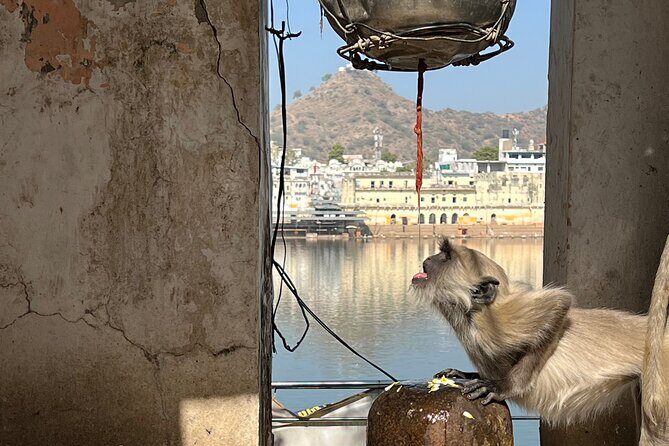
The tour balances Vishnu with Shiva.
You’ll reach Koteshwar Mahadev Temple, known for beautiful architecture and history. It’s also treated as a VIP Ghat because VIP visits happen throughout the year. That’s useful to know because it suggests the site draws attention and devotion, not just passing curiosity.
Then comes a standout stop: Prachin Shree 108 Mahadev Ji Ka Mandir. This is described as rare and unique, with the promise of seeing 108 Shivalingams altogether. A sight like this is the kind of thing that changes how you understand a “temple stop.” Instead of one main idol and a few details, you’re looking at repetition as devotion—108 as a symbolic count expressed in physical form.
If you’re the type who likes photos, this kind of temple interior/arrangement usually gives you more than one good shot. If you’re more into atmosphere, it’s still powerful because it shows how belief can be measured and expressed through design.
And along the way, you’ll also hit a well-designed temple dedicated to Lord Shiva at the edge of Pushkar Lake. The tour keeps reminding you: this lake loop isn’t one-faith only. It’s a mixed spiritual map that still has clear themes.
Brahma Temple and Jaipur Ghat: marble, myths, and a sunset finish
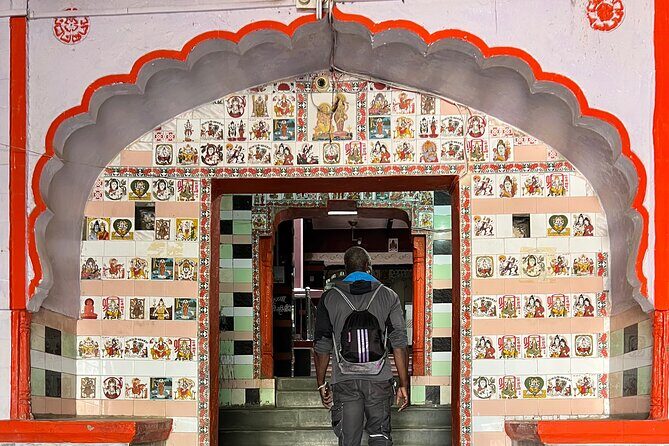
Pushkar has a major claim to fame with Brahma. The tour includes the Brahma Temple, described as the only temple in the whole universe dedicated to Lord Brahma. The structure dates to the 14th century, with later partial renovations. You’ll also notice the temple is made of black and white marble stones, which gives the space a strong visual identity compared with many older stone temples.
After that, the walk shifts toward the finishing mood at the water.
You’ll visit Jaipur Ghat, also known as Sunset Point or Raj Ghat. This ghat has a royal construction story: it was built by the King of Amer Raja Mann Singh I in the early 16th century, and later renovated by Jai Singh in the 18th century. In other words, the sunset point isn’t just a nice view—it’s part of a long chain of patronage that shaped how Pushkar looks and feels today.
If you time it well, this is often where people slow down naturally. You’ve spent hours moving through temples and explanations, and then you’re back at the lake with a calmer, almost ceremonial feel.
Price and what’s included in a $7-per-person temple walk
At $7.00 per person, this tour is priced like a budget-friendly introduction to Pushkar’s religious core. That low cost stands out most when you compare it with what you’re getting in the time window: a structured guided walk, multiple stops, and practical refreshments.
The inclusions listed are straightforward and genuinely useful:
- Coffee and/or tea
- Bottled water
- Snacks
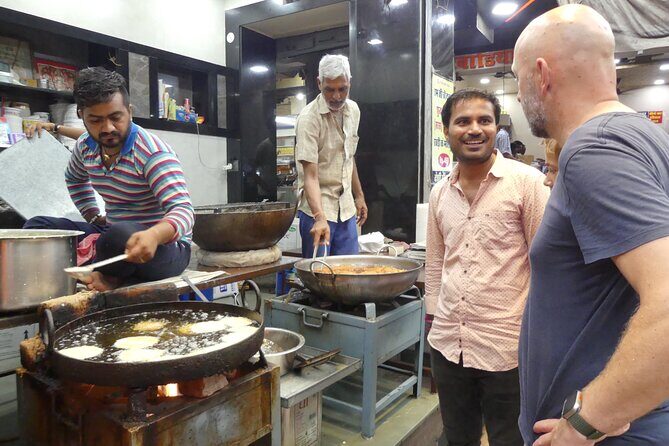
Some temple stops also include an admission ticket, while others are free entry. That matters because without ticket handling, temple visits can turn into small add-ons that raise the real cost. Here, you get a clearer sense of what’s covered while you’re walking.
You should also know it’s described as a private tour/activity, meaning only your group participates. That can be a big value boost if you want questions answered without feeling rushed, or if you’re coming as a couple or small group rather than joining a big crowd.
Who should book this 52-ghat temple walk
This tour fits best if you want:
- A temple-focused Pushkar experience, not just lake views and shops
- A guided way to understand ghats, temple dedications, and customs
- A walk that keeps moving but still offers explanations at each stop
- A low-cost outing that still feels planned
It’s especially good for first-timers to Pushkar who don’t want to “guess” their way through what they’re seeing. If you’re more into pure hiking or long independent exploration, you might find the stops brief. But if your goal is meaning and context, this route hits the sweet spot.
Also, if you like photography, the lake route plus multiple temple angles give you plenty to work with—just remember temple spaces often have rules about where you can stand and when you can take pictures.
Should you book Temples Walk around 52 Ghats with The Pushkar Route?
I’d book this if you want Pushkar’s spiritual side without wasting time figuring out the ghat system. The combination of Manish’s clear guidance, the no-shopping feel, and the practical inclusions makes the $7 price look very reasonable.
Skip it only if you’re looking for a slow day with long temple stays, or if walking in a dense, active spiritual area doesn’t work for you. Otherwise, this is one of the most sensible ways to see Pushkar beyond the postcard version—by understanding what the lake means and why these temples sit exactly where they do.
FAQ
Is pickup included for the Pushkar 52 ghat temple walk?
Pickup is offered as part of the experience, and you’ll also receive a mobile ticket.
How long is the tour?
The duration is about 3 hours 10 minutes.
What’s included in the price?
The experience includes coffee and/or tea, bottled water, and snacks.
Are admission tickets included for temple stops?
Admission ticket inclusion varies by stop. Some locations are listed as admission included, while others are marked as free entry.
Is this tour private?
Yes. It’s described as a private tour/activity, with only your group participating.
Is free cancellation available?
Yes. You can cancel for a full refund up to 24 hours before the experience’s start time.