REVIEW · PUSHKAR
Full Day Spiritual Tour of Ajmer & Pushkar-The Pushkar Route
Book on Viator →Operated by THE PUSHKAR ROUTE · Bookable on Viator
Two faiths, one calm day.
If you want Ajmer and Pushkar in a single run, this tour is a smart way to do it, with temples and shrines packed into a private schedule that still leaves room to breathe. I like that it starts in Ajmer, then shifts to Pushkar for the lake finale, so you feel the contrast between the cities instead of just checking boxes.
My favorite part is the way the guide keeps things conversational, connecting what you’re seeing to the meaning behind it. You also get a clear sweep of major sites—Jain, Sufi, Sikh, and multiple Hindu traditions—without needing to plan a route yourself.
One thing to consider: the schedule is tight, so the pace can be quick and you’ll spend plenty of time walking and standing in and around religious spaces.
In This Review
- Key highlights you’ll care about
- One-Day Ajmer and Pushkar Loop: how the timing works
- Ajmer Stop 1: Soni Ji Ki Nasiyan, Soni Haveli, and the Jain temple glow
- Ajmer Stop 2: Dargah Khwaja Kanoon Sahib (Ajmer Sharif) and the Sufi atmosphere
- Ajmer Stop 3: Akbar’s Palace and the Government Museum in Ajmer
- Ajmer Stop 4: Ana Sagar Lake and a garden-side reset
- Pushkar Stop 5: Gurudwara Sahib and Sikh learning in practice
- Pushkar Stop 6: Varaha Temple, Vishnu devotion, and the Swayambhu idea
- Pushkar Stop 7: Old Rangji Temple near Varaha Ghat
- Pushkar Stop 8: Atmateshwar Mahadev Mandir and the cave-temple feeling
- Pushkar Stop 9: Brahma Temple, the one dedicated to Brahma
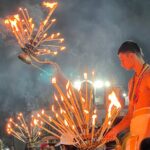
- Pushkar Stop 10: Pushkar Lake, 52 ghats, and the Evening Arti finish
- Price and logistics: is $50 worth it?
- Should you book the Full Day Spiritual Tour of Ajmer & Pushkar?
- FAQ
- What time does the tour start?
- How long is the tour?
- Is pickup included?
- Is this tour private?
- Do I get admission tickets for the stops?
- Is lunch included?
- Does the tour include Evening Arti at Pushkar Lake?
- What tickets do I receive?
- Is cancellation free, and when do I need to cancel?
- Is the tour dependent on weather?
Key highlights you’ll care about
- Private group, pickup offered: you don’t get bounced around with strangers.
- Ajmer first, lunch break, then Pushkar: the flow keeps the day from feeling chaotic.
- A real guide-led spiritual walk: explanations are meant to be easy to follow.
- Pushkar Lake + 52 ghats feel different at golden hour: the last stop builds to Evening Arti.
- Admissions are handled for most stops: several site entries are included, including the big names listed.
One-Day Ajmer and Pushkar Loop: how the timing works
This is a 6-hour spiritual circuit starting at 10:00 am, built for seeing a lot without turning it into a marathon. The plan is simple: about three hours in Ajmer, then around one hour for lunch, followed by about one more hour in Pushkar before you finish with Evening Arti at Pushkar Lake.
That sequence matters. Ajmer sets the tone with Jain and Sufi heritage, plus a stop tied to Mughal-era collecting and gardens. Then Pushkar shifts you back toward Hindu pilgrimage energy, ending where everyone eventually ends up: by the water, where daily ritual turns into something you can actually watch.
You’re also starting with the right kind of experience format. This is a private tour, meaning only your group participates, and it runs off a mobile ticket. The meeting point is described as being near public transportation, which is helpful if you’re arriving on your own and want options.
You can also read our reviews of more tours and experiences in Pushkar.



Ajmer Stop 1: Soni Ji Ki Nasiyan, Soni Haveli, and the Jain temple glow
Your first major stop is Soni Ji Ki Nasiyan, also described alongside the Soni Ji ki Haveli and Soni Temple. This is a 19th-century complex associated with Jain worship, specifically honoring Lord Rishabhdev (Agnidev), described as the first of the Tirthankaras.
Here’s what I think makes this stop more than just pretty architecture: it’s the kind of place where the details are the story. The information provided for this site highlights the famous opulence—over 1,000 kg of gold is mentioned in the description—so when you look closely, you’re seeing how devotion can be expressed through craftsmanship, not just prayer.
Time is about 45 minutes, which is long enough to take in the space and still keep momentum for the rest of Ajmer. A practical note: religious sites often mean rules about footwear, quiet voices, and respectful dress. If you come prepared, you’ll enjoy it more.
Potential drawback: because it’s an ornate Jain complex, people sometimes rush the photos and miss the meaning. Give yourself a moment to slow down before moving on.
Ajmer Stop 2: Dargah Khwaja Kanoon Sahib (Ajmer Sharif) and the Sufi atmosphere
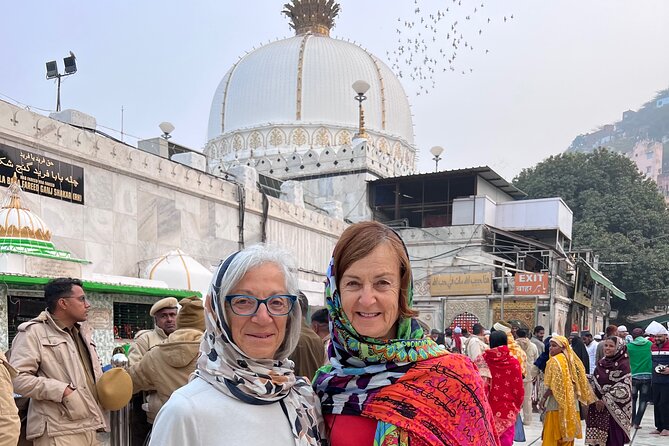
Next comes the heart of Ajmer’s Muslim pilgrimage world: Dargah Khwaja Kanoon Sahib, also referred to as Ajmer Sharif. This tomb is dedicated to the Sufi saint Khwaja Moinuddin Chishti, who is described as having come to Ajmer from Persia in the late 11th century.
What you’re likely to feel here is the difference between a temple-focused experience and a shrine-focused one. Even if you don’t follow the tradition personally, this kind of sacred space has a pull: devotion, memory, and community are all visible. The description also emphasizes how important the mosque and the shrine area are for Muslims.
You get about 45 minutes. That’s enough time to see the atmosphere without turning it into a long wait. Still, dargahs can be busy, and part of enjoying them is learning to move with the flow rather than against it.
One consideration: shrine spaces can involve crowds, and photographers may need to be careful. If you want fewer distractions, aim for a calmer pace within your time window.
Ajmer Stop 3: Akbar’s Palace and the Government Museum in Ajmer
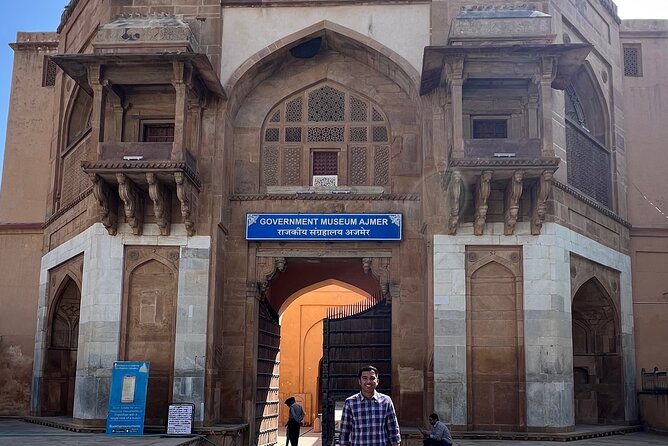
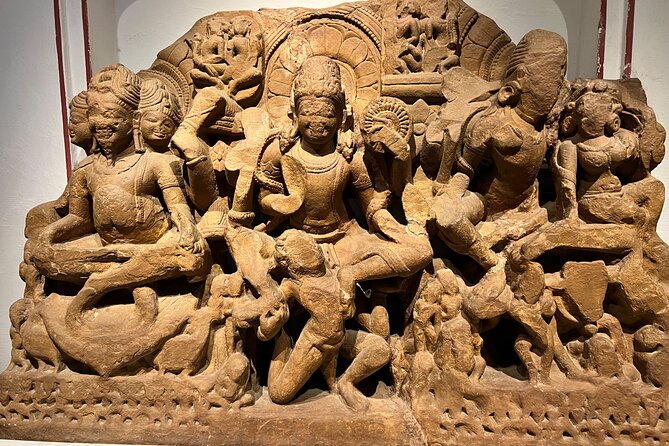
After the shrine, you shift gears—literally—into the Akbar’s Palace & Museum, set in the premises of the 16th-century Akbari Fort. This is the Government Museum of Ajmer, and the description points to a wide collection: historical artifacts, exhibits, sculptures, and even miniature paintings.
This stop is about context. Seeing a shrine tells you what people believe. Seeing the museum tells you how rulers, collectors, and artisans shaped what survives. It’s a different kind of travel education: not a lesson in feeling, but in evidence.
You’ll get about 45 minutes. With a schedule this full, I’d use the time strategically: look for what connects to what you just saw in Ajmer—art, stonework, visual culture—so the museum feels like part of the day, not a detour.
Potential drawback: museums can be a lot if you’re already tired from religious sites. If your energy is low, focus on the highlights your guide points out rather than trying to read everything.
Ajmer Stop 4: Ana Sagar Lake and a garden-side reset
Then you get a quieter spell at Ana Sagar Lake. The description credits its creation to King Arnoraja (Anaji Chauhan), identified here as the grandfather of Prithivi Raj Chauhan. It also notes that Jahangir built the Daulat Bagh garden beside the lake, and adds that Shah Jahan constructed something further near the water (the details cut off in the information, but the royal garden link is clear).
This is a good mid-day pivot. Lakes work well as “reset stops” in religious itineraries because your mind can unclench. You’re not switching to another building full of rules; you’re switching to open air.
Time is about 30 minutes, plus admission is included in the stop list. You’re not meant to hang out all day, but you are meant to breathe before Pushkar.
Tip: this is a good moment for hydration and a quick snack if your stomach runs on “adventure calories.”



Pushkar Stop 5: Gurudwara Sahib and Sikh learning in practice
Your Pushkar portion starts with Gurudwara Sahib. The description frames this as an educational stop, focused on Sikh religion and community, and it mentions that two of the ten great Sikh teachers have been here.
Even if you’ve visited a gurudwara before, this one fits the tour’s bigger theme: different faiths, different spaces, different rules of how devotion shows up. A guided explanation makes a huge difference here. Without it, it can feel like just another impressive building; with it, you get meaning you can carry forward.
You’ll have about 30 minutes. That’s enough to listen and observe without turning the stop into a ceremony you don’t understand.
Practical consideration: like other places of worship, plan to be respectful with clothing and sound level. If you’re unsure about what to do, your guide will help you stay in the right lane.
Pushkar Stop 6: Varaha Temple, Vishnu devotion, and the Swayambhu idea
Next is the Varaha Temple, dedicated to Lord Vishnu. The description says it’s considered one of the eight Swayambhu Kshetra of Vishnu, which signals special pilgrimage status—places believed to have an unusually direct spiritual connection.
It also points to the temple’s age and origin: built in the 12th century by King Anaji Chouha. That matters for how you see it. When a temple is tied to a specific royal period, you can better imagine what artistic style and religious priorities shaped it.
Time is about 30 minutes. This stop works best if you look at the architecture and carvings with a guided prompt in mind: not just what’s there, but why it’s there.
Potential drawback: if you’re expecting a long guided walk, 30 minutes can feel short. But the tour is designed to chain these short stops so you understand the overall religious map.
Pushkar Stop 7: Old Rangji Temple near Varaha Ghat
You then head to the Old Rangji Temple, described as one of the most ancient temples in Pushkar, located near Varaha Ghat in the middle of town. The information says the temple is about 200 years old and dedicated to Lord Vishnu.
This is the kind of stop I like because it feels less like a grand monument and more like a lived-in place of devotion. Being near the ghat area also links the temple to the water-based rhythm of pilgrimage.
You’ll get about 30 minutes. That’s usually enough time to see the temple setting and understand its place in the local geography.
Consideration: it can be busy around temple/ghat areas, so expect foot traffic and plan to move with it.
Pushkar Stop 8: Atmateshwar Mahadev Mandir and the cave-temple feeling
Then comes one of the most distinctive stops on the route: Atmateshwar Mahadev Mandir, dedicated to Lord Shiva. The description calls it an underground cave temple, built in the 12th century AD, known for Hemadpanti architectural carvings.
Even without fancy expectations, a cave temple changes how you experience devotion. Lighting, acoustics, and the sense of enclosure all affect the mood. If you’re someone who likes to feel the “how,” this one delivers. If you prefer wide-open spaces, it may feel a little different, but that contrast is part of why it’s included.
Time is about 30 minutes. Since this stop is architectural and spatial, it benefits from slow attention. Let the carvings and layout guide you rather than trying to see everything at once.
Practical note: underground or cave-like areas can be cooler or dimmer than outside, so keep that in mind for comfort.
Pushkar Stop 9: Brahma Temple, the one dedicated to Brahma
The tour continues to Brahma Temple, described as the only temple in the whole universe dedicated to Lord Brahma. The structure here is said to date to the 14th century, with later partial renovations. The description also notes the temple is made of black and white marble stones.
This is a standout on a route that otherwise covers multiple traditions. Brahma is not the most common “main” focus for many visitors, so seeing a temple devoted to Brahma helps you understand why Pushkar is such a pilgrimage magnet.
Time is about 30 minutes with admission included. If you’re a photography person, this is a good stop to bring your attention—marble contrast and temple details tend to photograph well, but always follow local rules about where you can stand and what you can capture.
Possible drawback: because it’s a single dedicated temple in a schedule with many other temples, you may want to keep expectations realistic. This won’t feel like an all-afternoon temple marathon—it’s a guided highlight moment.
Pushkar Stop 10: Pushkar Lake, 52 ghats, and the Evening Arti finish
Finally, you arrive at Pushkar Lake, surrounded by 52 ghats. The description emphasizes that ghats have cultural and religious importance, used for bath, ceremonies, and meditation. It also states that the ghats were constructed by kings and emperors from across India.
This is where Pushkar becomes more than architecture. The lake is the organizing center of the town’s spiritual life, and when your tour finishes here with Evening Arti, you’re seeing the day’s quiet beliefs turn into a public ritual you can watch.
You’ll spend about 45 minutes here, and the listed entry for this stop is free. Then the tour ends by watching Evening Arti at the lake.
I like ending on a water ritual because it’s easy to understand, even if you don’t know the tradition deeply. The rhythm, the gathering, and the shared attention do a lot of the teaching for you.
Practical consideration: Evening Arti can bring crowds, so plan to be patient and keep your space. If you’re sensitive to noise, this is still a friendly moment, just not silent.
Price and logistics: is $50 worth it?
At $50 per person, the value depends on what you’re trying to avoid. If you’re trying to figure out transport, route order, and entrance timing across Ajmer and Pushkar on your own, this becomes a bargain. The schedule is structured, the day has a clear arc, and it’s private—so you’re not stuck waiting for other groups.
A key value driver here is that admission tickets are included for many major stops (including several listed religious and museum entries), and Pushkar Lake entry is free. Even without knowing exact ticket prices, that package feel matters: it reduces decision fatigue.
Also, you get pickup offered plus a mobile ticket. For a route that hops between shrine, temple, museum, and lake, cutting out “where do we go next” time is worth real money.
Who it’s best for:
- You want Ajmer + Pushkar in one day.
- You like guided context, especially for religion and symbolism.
- You prefer a tight plan over a fully self-paced itinerary.
Who might pass:
- If you want long, unhurried stays at each site, the stop-by-stop timing may feel short.
Should you book the Full Day Spiritual Tour of Ajmer & Pushkar?
If your goal is a guided “spiritual sampler” that still feels grounded, I’d book it. The biggest strength is the guide-led approach: explanations are presented in a conversational way and can be adjusted to your interests and knowledge. That matters because it turns a list of sites into understanding.
I also like the day’s rhythm: you get a lunch break (there’s mention of lunch with a view, which is a nice mental reset), and you don’t get shoved into nonstop sightseeing. Ending with Evening Arti gives the day emotional weight without requiring extra planning.
One more reason to lean yes: the route gives you a rare chance to see how different faiths and traditions sit side by side across Ajmer and Pushkar, all within a single, well-structured window of time.
FAQ
What time does the tour start?
The tour starts at 10:00 am.
How long is the tour?
The duration is about 6 hours.
Is pickup included?
Yes, pickup is offered.
Is this tour private?
Yes. It’s a private tour, so only your group participates.
Do I get admission tickets for the stops?
Admission tickets are included for several listed stops, and Pushkar Lake is free. (The schedule notes admission included per stop.)
Is lunch included?
The itinerary gives you about 1 hour for lunch during the Ajmer portion of the day.
Does the tour include Evening Arti at Pushkar Lake?
Yes. The tour finishes by watching Evening Arti at Pushkar Lake.
What tickets do I receive?
You’ll receive a mobile ticket.
Is cancellation free, and when do I need to cancel?
Free cancellation is available up to 24 hours before the experience’s start time for a full refund.
Is the tour dependent on weather?
Yes. The experience requires good weather, and if it’s canceled due to poor weather, you’ll be offered a different date or a full refund.