REVIEW · PUSHKAR
Walking Sightseeing Tour – The Shine Pushkar
Book on Viator →Operated by The Shine Pushkar (Pushkar Local guide services) · Bookable on Viator
Pushkar makes more sense with a guide who knows the stories. This walking tour strings together the places that pilgrims and locals treat as everyday sacred stops, from Pushkar Lake to major temples and ghats.
I especially like two things: you get a clear route that doesn’t feel random, and the guide support is strong (Akash Sharma and Awash are specifically called out for being punctual, professional, and good at explaining what you’re seeing). One thing to consider is the walking pace and temple stair bits—this tour lists a moderate fitness level, so plan for some uneven footpaths and steps.
If you want a short, organized way to see the spiritual core of Pushkar, this fits. It’s priced low, includes core fees, and even adds tea or coffee, but the optional cable car to the Savitri temple is extra if you choose to go.
In This Review
- Key things to know before you go
- A practical way to understand Pushkar in 2 to 4 hours
- Pushkar Lake: the holy circuit, sunset point, and the 52 ghats
- Brahma Temple: VIP entry and why this temple is singled out
- Gurudwara Sahib: a different faith tradition within Pushkar’s flow
- Old Rangji Temple: same structure idea, different context
- Brahma Ghat: holy dips and aarti timing you can actually use
- New Rangnath (Naya Rangji) and the golden pillar detail
- Ati Prachin Shri Atamteshwar Mahadev Mandir: the oldest Shiva anchor
- Varaha Temple and Varaha Ghat: Vishnu, and the oldest ghat mention
- Savitri temple on the hill and the optional cable car charge
- Price and what $5.58 buys you in Pushkar terms
- Pickup, private group comfort, and the walking reality
- Who should book this tour?
- Should you book The Shine Pushkar walking sightseeing tour?
- FAQ
- How long is the Walking Sightseeing Tour – The Shine Pushkar?
- What is the price per person?
- Does the tour include pickup?
- Is this a private tour or a group tour?
- What are the main stops on the itinerary?
- Are entry fees included?
- Is tea or coffee included?
- Is the cable car charge included for the Savitri temple?
- Are service animals allowed?
- What physical fitness level do I need?
Key things to know before you go
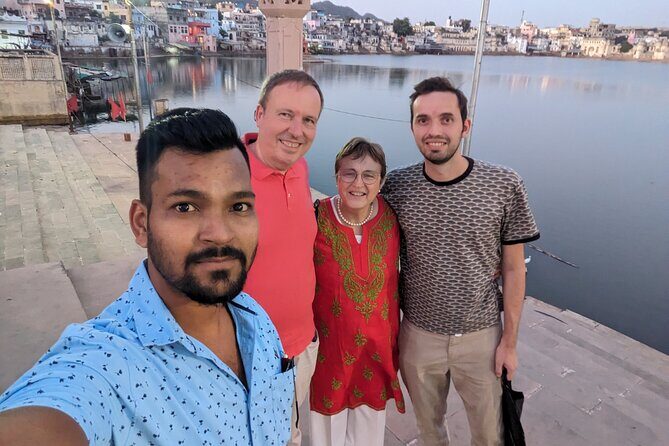
- A tight walking route: Pushkar Lake, multiple temples, and the ghats that frame morning/evening rituals
- VIP entry for Brahma Temple: built into the included access
- Tea or coffee included: a small, welcome pause during temple hopping
- Stops are tied to meaning: you’re not just looking at buildings, you’re hearing why they matter
- Private for your group: you stay together instead of getting swallowed by a big crowd
- Cable car is optional: Savitri temple access is extra if you want it
A practical way to understand Pushkar in 2 to 4 hours
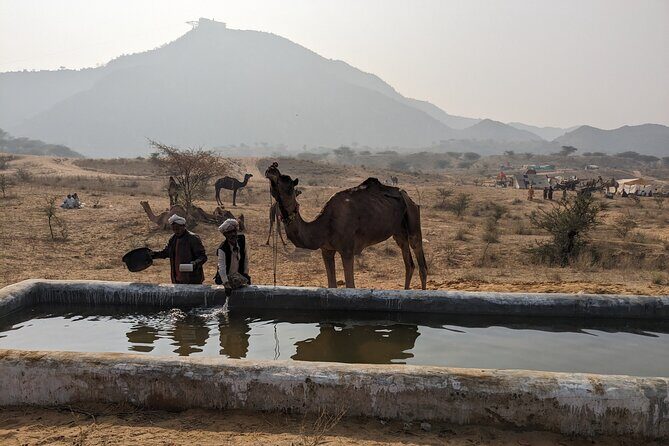
Pushkar can feel like a maze at first: holy spots, small lanes, and ghats that seem to repeat until someone explains what’s special about each one. This tour solves that problem by walking a logical loop through the town’s spiritual anchors.
I like how the itinerary is organized around “why you’re there,” not just “where to stand for a photo.” You start at Pushkar Lake, then move through temples tied to specific traditions, and end up at the ghats where people gather for daily devotion. The timing also helps: at the Brahma Ghat stop, you’ll hear what’s connected to morning and evening aarti, so you know what you’re watching rather than guessing.
The tour is also built for real trip schedules. It’s listed as about 2 to 4 hours, and pickup is offered. It’s private, so you’re not stuck waiting for strangers to finish a conversation halfway up the steps. For a town like Pushkar, that matters more than you’d expect.
You can also read our reviews of more walking tours in Pushkar



Pushkar Lake: the holy circuit, sunset point, and the 52 ghats
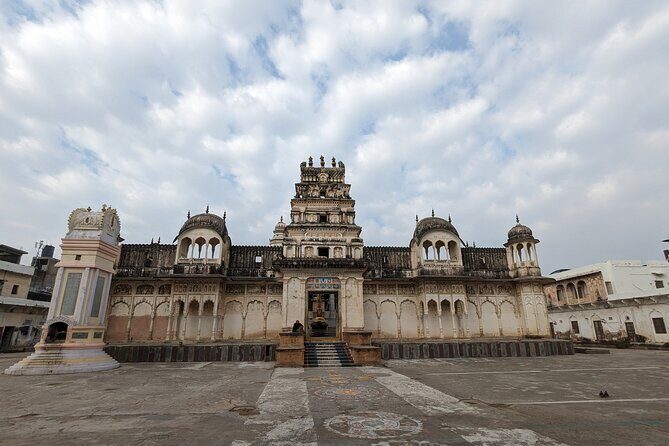
Your first stop is Pushkar Lake, described as the holy lake of Pushkar. The guide also frames one of the most useful details for understanding the area: Pushkar Lake has 52 ghats, which is why the waterfront feels like a spiritual map rather than just a lake promenade.
At this stop, you’re given time for a spiritual walk around the lake, plus a chance to look toward the sunset point. The itinerary also mentions a holy bridge, so you’re not only circling the waterfront—you’re walking a route that connects key lake-side points. Since entry is listed as free here, it’s a low-pressure start: you can focus on settling into the town’s rhythm.
What to watch for: lake areas can shift with crowds and ceremony. Even without a set showtime, you’ll still get a sense of how pilgrims move along the ghats and why so many locations line the water. If you’re visiting during busy periods, the guide’s timing helps you spend time where it makes sense, rather than bouncing around.
Brahma Temple: VIP entry and why this temple is singled out
Next comes the Brahma Temple, and this stop is built around explanation. The tour highlights why there’s only one Brahma temple in the world, and it sets you up to notice the temple’s beauty from the inside.
The practical part: Brahma Temple has VIP entry included. That’s not a small upgrade in a place like Pushkar, where lines and bottlenecks can form. If your goal is to see the key sights without losing most of your time to waiting, this built-in access is a big value piece.
The longer-term value is the story. When you hear why Brahma is represented here in a distinct way, the rest of the stops start to click. Temple viewing becomes less about repeating incense-and-stone and more about understanding how each site relates to the town’s spiritual identity.
Time at the Brahma Temple stop is about 30 minutes, so it’s enough for a full look without turning the tour into a temple marathon.
Gurudwara Sahib: a different faith tradition within Pushkar’s flow
After Brahma, you’ll visit Gurudwara Sahib, where the focus is on the Sikh community. The itinerary specifically says you’ll learn more about the Sikh community here, with time set for about 30 minutes.
This stop is useful for two reasons. First, it widens your understanding of Pushkar beyond one religious tradition. Second, it prevents your brain from getting stuck in a single “temple-only” mindset. Even if you’re mainly here for Hindu pilgrimage sites, it’s still worth seeing how another community’s worship spaces fit into the same town geography.
If you’re someone who likes to connect the dots between cultures, this is a good moment in the route. You’ll also get a break in pace from the lake-side walking and the focus on a different set of rituals and meanings.
Old Rangji Temple: same structure idea, different context
Then the tour goes to Old Rangji Temple, one of two with the same structure in Pushkar: Old Rangji and New Rangji. The itinerary notes that you’ll learn the history of why there are two temples with the same structure.
This is the kind of detail that turns a quick stop into a remembered one. If you’ve ever felt annoyed by tours that treat every temple as identical, this one tries to solve that. You’re given a “point” for your visit, so you can compare what you see later at the next Rangji-related stop.
The time here is about 25 minutes. That’s long enough for the explanation to land, but short enough to keep momentum in a walking itinerary.





Brahma Ghat: holy dips and aarti timing you can actually use
At Brahma Ghat, the tour points to one of the core pilgrimage behaviors: people take a holy dip here. The stop also ties into daily religious rhythm by mentioning the aarti of Shri Pushkar Raj in the evening and morning every day, and that pilgrims can participate.
This part is why I think this tour works well for first-timers. You’re not just learning temple names—you’re learning how devotion plays out along the water. A ghat visit becomes practical because you know what you’re looking at and what kind of activity happens there.
The itinerary lists about 10 minutes here, which is short, but that may be intentional. Ghats can get busy. If you linger too long without structure, you can lose the thread. With a guide leading you through what matters, you get the meaning without turning it into a traffic jam.
New Rangnath (Naya Rangji) and the golden pillar detail
Next is Shri Rama Vaikunth Nath (Naya Rang ji) Temple, also called the New Rangnath temple. The route points out it’s in the east of the town, and it includes a specific visual detail: you’ll see a golden pillar and the beautiful structure.
There’s also a historical clue: the temple was built by Marwari Seth Bangarh of Didwana. That kind of name in the story is helpful because it makes the site feel rooted in people and patronage, not just stone.
Time here is about 25 minutes. In a walking tour, that’s a decent window to take in the structure and absorb the explanation. It also helps your visit feel “layered”: lake, Brahma, Sikh worship space, Rangji temples, then back toward Shiva-associated stops.
Ati Prachin Shri Atamteshwar Mahadev Mandir: the oldest Shiva anchor
The itinerary then moves to Atamteshwar Mahadev Mandir, described as one of the oldest temples of Lord Shiva. The tour shares construction timing details, saying the old temple was built during the reign of the Chauhans. It also notes the upper part was built by Guman Ji Rao, the subedar of Ajmer, in 1816.
This stop is a strong example of why guide interpretation matters. Construction dates and regional reigns give you something solid to hold onto while you’re looking at the temple. Without that, old temples can blur together fast.
You’ll also likely appreciate the short stop length—about 15 minutes—because it keeps your schedule moving and prevents fatigue on a day already spent walking and listening.
Varaha Temple and Varaha Ghat: Vishnu, and the oldest ghat mention
You finish this set with the Varaha Temple, near Varaha Ghat. The itinerary says Varaha ghat is the oldest and it’s near a Vishnu temple (it mentions the temple of god Vishnu).
This is a useful tonal shift. After a series of Brahma and Shiva-related stops, Vishnu comes back into the story. And the “oldest ghat” mention gives you a clear reason to pay attention to that specific waterfront spot, even if you’re not a deep scholar of all the symbolism.
Time here is about 15 minutes. It’s enough to understand the relationship between the ghat and the temple, without turning the last part of the tour into a rush.
Savitri temple on the hill and the optional cable car charge
The tour also points out another location: a temple on a hill in the west of the town of Pushkar dedicated to Savitri, the wife of God Brahma. From this hill you can see whole Pushkar town, and the itinerary mentions a cable car service, which is available but not included in the tour cost.
So here’s the practical take: if you want the panoramic view and you don’t want to walk up, you’ll need to plan for the cable car charge. If you’d rather skip the extra expense, you can still keep the main walking route as planned and focus on the included temple and ghat circuit.
This is the one point where your personal preferences change the experience. Some people care a lot about the view. Others are happy with the town-level understanding you get from the core stops.
Price and what $5.58 buys you in Pushkar terms
At $5.58 per person, this tour is priced like a value deal, but the key is what’s included. The list covers guide fees, arrival and departure, all fees and taxes, and entries connected to Brahma Ghat / Varah Ghat, plus VIP entry/Admission for Brahma Temple. Tea or coffee is also included.
In other words, you’re not paying a low price and then getting hit with surprise admission costs at every temple. Many walking tours get cheaper up front, then cost more once you start adding entry fees and “optional” extras. Here, the main access points are already covered, while the cable car remains an optional add-on.
Duration is flexible (2 to 4 hours), and pickup is offered. That reduces wasted time, which is usually the real hidden cost in sightseeing. I also like that there’s a mobile ticket and the tour is private for your group, since that lowers friction if you’re traveling with someone and don’t want to move at other people’s pace.
One more value piece: free cancellation is listed, with full refund if you cancel at least 24 hours before the experience starts. For a short tour, that kind of flexibility is comforting.
Pickup, private group comfort, and the walking reality
This is marked as a private tour/activity, meaning only your group participates. That can make the experience feel smoother, especially when you’re moving between lake edges, temple entrances, and ghat steps.
Pickup is offered, and the meeting point is in Pushkar, Rajasthan 305022, India, with the activity ending back at the meeting point. The tour is described as near public transportation too, which helps if you’re mixing this with other parts of your day.
Fitness-wise, it calls for moderate physical fitness. That likely means you should be comfortable with walking and some stairs. If you have mobility concerns, consider whether the temple steps and ghat access will be easy for you. The cable car option to Savitri temple is there if you want an easier route up to the hill viewpoint.
Good to know: service animals are allowed.
Who should book this tour?
Book it if you want a guided, story-based route through Pushkar’s most important spiritual locations without spending half the day figuring out logistics. It’s also a great fit for:
- first-timers who want the town’s sacred map explained clearly
- couples or families who prefer a private pace
- solo travelers who want structure and a guide who can answer the “why is this here” questions
If you already know Pushkar well and just want to wander, you might not need the organized stops. But if you’re the type who likes understanding what you’re seeing, this tour’s format makes that easy.
The guide quality is a clear strength in the feedback, with Akash Sharma and Awash mentioned for being punctual, professional, and friendly. That matters, because a spiritual town tour is only as good as the person narrating it.
Should you book The Shine Pushkar walking sightseeing tour?
Yes, if you want an efficient, low-stress way to cover the core of Pushkar—Pushkar Lake, key temples, and the ghats where devotion happens. The price looks small, but the included pieces (especially VIP entry for Brahma Temple and the core ghat entries) help justify it.
I’d book it especially if you’re planning only a few hours in Pushkar and want a guide to connect the stops into one understandable story. Just go in knowing it’s a walking tour with a moderate fitness requirement, and remember that the cable car to the Savitri hill temple is optional and costs extra.
FAQ
How long is the Walking Sightseeing Tour – The Shine Pushkar?
It’s listed as about 2 to 4 hours.
What is the price per person?
The price is $5.58 per person.
Does the tour include pickup?
Pickup is offered, and arrival and departure are included.
Is this a private tour or a group tour?
It’s private, meaning only your group participates.
What are the main stops on the itinerary?
The route includes Pushkar Lake, Brahma Temple, Gurudwara Sahib, Old Rangji Temple, Brahma Ghat, Shri Rama Vaikunth Nath (Naya Rang ji) Temple, Ati Prachin Shri Atamteshwar Mahadev Mandir, and Varaha Temple.
Are entry fees included?
The tour lists all fees and taxes as included, and admission is described as free for the temple and ghat stops on the route. Entry/admission for Brahma Ghat and Varah Ghat is specifically included, and VIP entry/admission for Brahma Temple is included.
Is tea or coffee included?
Yes, coffee and/or tea is included.
Is the cable car charge included for the Savitri temple?
No. The itinerary notes that Savitri temple cable car charge is not included if you choose to go.
Are service animals allowed?
Yes, service animals are allowed.
What physical fitness level do I need?
You should have a moderate physical fitness level.