REVIEW · NEW DELHI
Private 4-Day Golden Triangle Tour – Delhi Agra and Jaipur
Book on Viator →Operated by Private Driver In India · Bookable on Viator
Golden Triangle, minus the hassle. This private 4-day loop threads Delhi, Agra, and Jaipur together with guided sightseeing, so you get the big-name sights without juggling buses, taxis, or ticket lines that multiply fast. I like the way the tour pairs a dedicated driver with local guides, which helps you understand what you’re actually seeing.
I also like the day-by-day flow. You’ll do Delhi’s Mughal-era highlights first, then travel by road to Agra, and finally finish in Jaipur with a packed-but-doable mix of palaces, forts, and astronomy sights.
One possible consideration: it’s not a slow, laid-back trip. Expect long days, and make sure you confirm what entrance fees are included for each monument site, since the package notes can be a bit mixed. Also, the Taj Mahal is closed on Fridays for general viewing, so your date matters.
In This Review
- Key highlights worth your attention
- A Golden Triangle route that keeps you comfortable
- Hotel pickup and the driver setup you’ll feel on Day 1
- Day 1 in Delhi: Old Delhi icons plus two UNESCO-heavy stops
- Jama Masjid and the Old Delhi atmosphere
- Raj Ghat, then India Gate for a different kind of power
- Rashtrapati Bhavan and Parliament House: big shapes, big symbolism
- Humayun’s Tomb, Lotus Temple, and Qutub Minar in one day
- Road to Agra on Day 1
- Day 2 in Agra: Taj Mahal first, then forts and the Baby Taj
- Taj Mahal sunrise-style experience (closed Fridays)
- Agra Fort and its Mughal living-space feel
- Itmad-ud-Daula (the Baby Taj) for more intimate scale
- Fatehpur Sikri: a quick detour that adds depth
- Jaipur check-in to reset
- Day 3 in Jaipur: City Palace to Hawa Mahal and the math of Jantar Mantar
- City Palace: the Maharaja’s power center
- Jantar Mantar: Rajput astronomy in plain sight
- Hawa Mahal: the Palace of Breeze for classic Jaipur visuals
- Albert Hall Museum for a breather with context
- Day 4 near Jaipur: Amer, a stepwell, and three bonus photo-and-story stops
- Royal Gaitor Tumbas for royal memorial design
- Jal Mahal: the lake palace seen from the road
- Panna Meena ka Kund: a stepwell with geometric charm
- Amer: the big finale near Jaipur
- What’s included, and what you should confirm before you go
- Price and value: where $270 makes sense, and where it doesn’t
- Who this tour fits best (and who should look elsewhere)
- Should you book this Golden Triangle tour?
- FAQ
- How long is the Private 4-Day Golden Triangle Tour?
- How much does the tour cost?
- Is this tour private?
- Do I get hotel pickup and drop-off?
- Are local guided tours included?
- Is breakfast included?
- Are monument entrance fees included?
- Is the Taj Mahal open every day?
- What’s the cancellation policy?
Key highlights worth your attention
- Private driver + local guides every day to keep context and navigation simple
- Hotel or airport pickup and drop-off so you don’t waste time on Delhi logistics
- Taj Mahal timing built into Day 2 for the classic early experience
- UNESCO stops across Delhi, Agra, and the Fort-and-Sikri area for a real “Golden Triangle” hit
- Jaipur mix of royal sites and Rajput science at Jantar Mantar
- Flexibility with a vehicle that matches your group size (sedan to minivan options)
A Golden Triangle route that keeps you comfortable
The Golden Triangle is famous for one reason: it’s where India’s grandest storytelling is concentrated. Delhi sets the stage with centuries of Mughal and British-era power, Agra delivers the world’s most photographed mausoleum, and Jaipur brings a whole different look—pink sandstone, old forts, and royal geometry.
What makes this tour practical is that it is built around movement without stress. You’re not trying to figure out public transit with suitcases, language barriers, and peak-hour crowds. Instead, you’re in a private, air-conditioned vehicle driven by an English-speaking driver, and you still get local guides for the sightseeing.
For many first-timers, that’s the sweet spot: you see a lot, but you’re not always in “survival mode.” And because it’s private, your pace can stay realistic even when cities get chaotic around you.
You can also read our reviews of more private tours in New Delhi


Hotel pickup and the driver setup you’ll feel on Day 1
From the start, you’re using the tour’s simplest advantage: pickup plus a vehicle that goes with you. That matters more than it sounds. Delhi traffic can turn a short hop into a long headache, and the route here is designed around minimizing those “dead hours.”
Your vehicle choice depends on group size—Toyota Etios or Dzire for smaller parties, a Toyota Innova/Crysta/Ergta for medium groups, and a ten-seater minivan for larger groups. That detail is small, but it often decides whether you’ll enjoy the ride or spend the day uncomfortable.
This tour also uses mobile tickets and includes daily hotel breakfast when you choose the hotel option. In plain terms: you don’t have to hunt for breakfast, and you start sightseeing with fuel in your system.
Day 1 in Delhi: Old Delhi icons plus two UNESCO-heavy stops
Delhi on Day 1 can feel like a greatest-hits album. You’ll cover Old Delhi’s spiritual landmark first, then pivot to memorials and imperial architecture, and end with two major UNESCO sites that show why the city is treated like a living museum.
Jama Masjid and the Old Delhi atmosphere
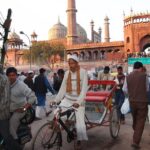
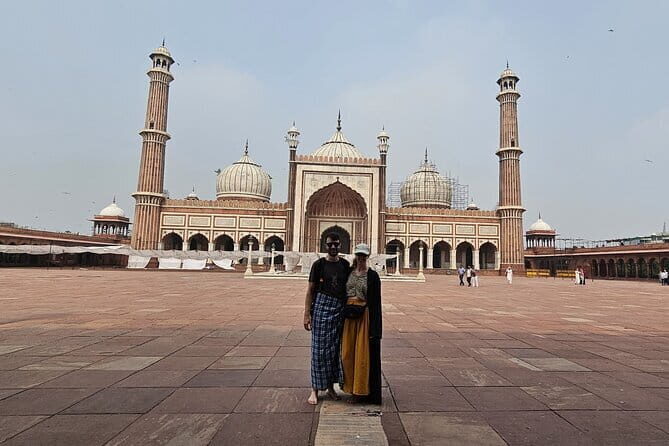
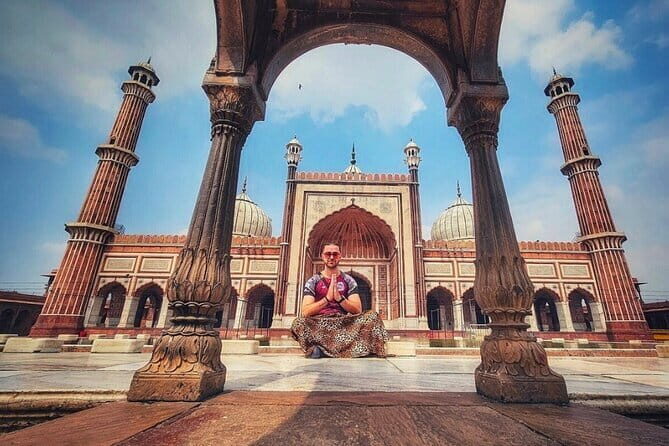
You’ll start at Jama Masjid, one of the largest mosques in India, commissioned by Mughal Emperor Shah Jahan and built in the mid-1600s. The point of putting this early on your schedule is simple: you get the architecture when you still have energy and before the day compresses under heat and crowds.
Expect an experience that’s more than a photo stop. You’re stepping into a space shaped by Mughal design priorities: scale, symmetry, and materials that keep their presence even when the surroundings change over centuries.
Raj Ghat, then India Gate for a different kind of power
Next is Raj Ghat, the memorial to Mahatma Gandhi at the site where he was cremated in 1948. It’s deliberately plain and powerful, and it shifts the day from architectural grandeur to political memory.
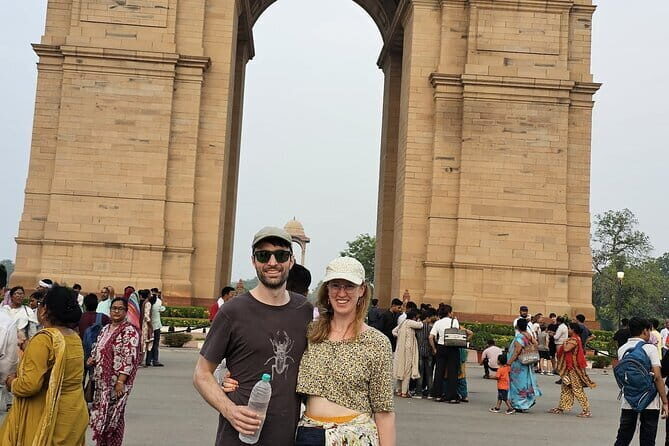
Then you move to India Gate, a war memorial topped by the names of more than 13,000 soldiers. The arch is 42 meters high, and there’s a sense of national narrative written into stone. It’s a quick stop, but it helps you understand why Delhi is built around monuments, not just neighborhoods.
You can also read our reviews of more tours and experiences in New Delhi





Rashtrapati Bhavan and Parliament House: big shapes, big symbolism
You’ll also include views of Rashtrapati Bhavan and Parliament House. These are major landmarks designed by British-era architects Sir Edwin Lutyens and Herbert Baker, completed in the late 1920s. Even if you’re not going inside, the exterior presence teaches you a lot about how power was physically staged in Delhi.
Practical note: because these are government sites, your experience may be exterior-focused, so plan your photos and timing accordingly.
Humayun’s Tomb, Lotus Temple, and Qutub Minar in one day
Day 1 ends with a strong trio:
- Humayun’s Tomb (UNESCO), built in 1565 as the tomb of Humayun, with Persian-style gardens and a grand dome.
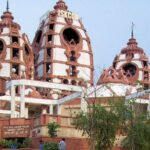
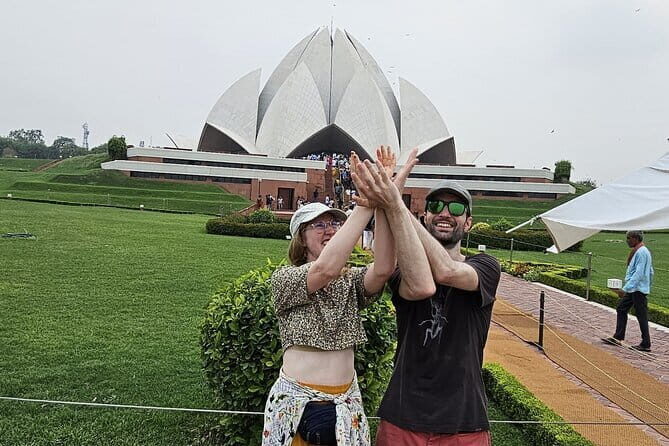
- Lotus Temple, a Bahá’í House of Worship completed in 1986, known for its lotus-inspired shape and open-door concept for people of all religions.
- Qutub Minar (UNESCO), a 73-meter tall Indo-Islamic minaret area, built in 1193.
This is a lot of visual variety in one day: Mughal tomb gardens, modern faith architecture, and the oldest-looking monument complex in the lineup. I like this mix because it prevents “monument fatigue.” You’re constantly changing scale, materials, and mood.
Road to Agra on Day 1
After Delhi, you drive to Agra via the Yamuna Expressway, typically around three hours. That’s a genuine comfort upgrade compared to wrestling with public transit schedules. It also sets up Day 2 so you can start early in Agra, rather than arriving exhausted.
Day 2 in Agra: Taj Mahal first, then forts and the Baby Taj
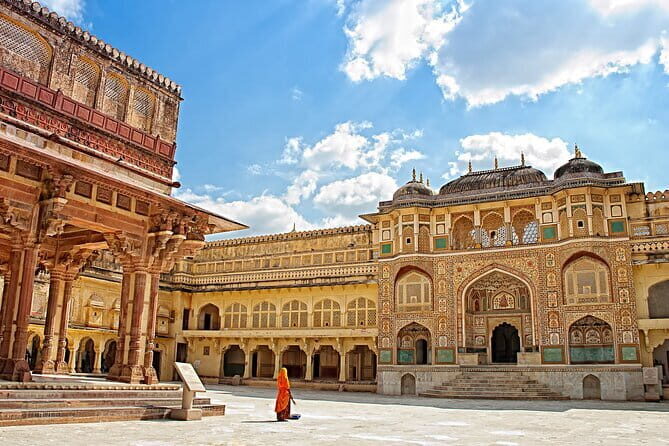
Day 2 is the heavyweight day. The tour is built around an early start for the Taj Mahal experience, followed by two more major Agra monuments and the Fatehpur Sikri detour before reaching Jaipur.
Taj Mahal sunrise-style experience (closed Fridays)
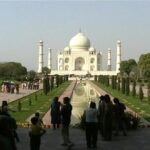
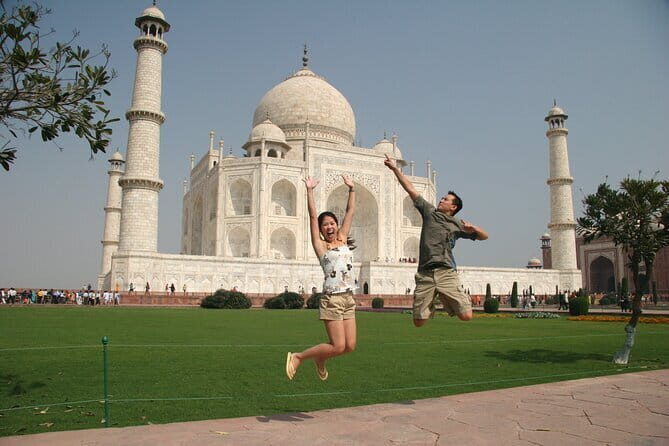
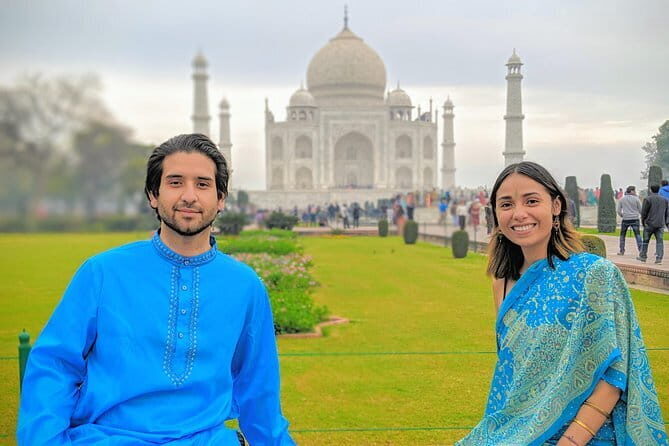
Your day begins at the Taj Mahal, with a guided visit and a focus on the early-hour viewing. The monument’s core idea is simple: Shah Jahan built it as a memorial, and the building does its job by forcing your eyes to notice symmetry and marble craftsmanship.
One important calendar detail: the Taj Mahal is closed on Fridays for general viewing. If your dates land on a Friday, your schedule needs adjustment so you don’t show up to a closed gate.
Agra Fort and its Mughal living-space feel
Next is Agra Fort (UNESCO). This isn’t just a wall around views—it’s an area tied to Mughal life, with palaces, balconies, and gardens. A guided explanation helps here, because you’re looking at shapes that once had daily routines, not just defensive functions.
Itmad-ud-Daula (the Baby Taj) for more intimate scale
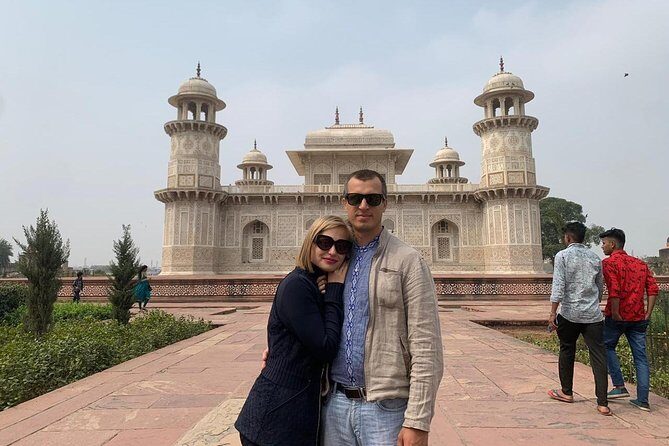
You’ll also visit Itmad-ud-Daula, often called the Baby Taj. The reason this stop works is scale. It’s less of a “jaw drop from far away” moment and more of a “look closer” monument. You get a sense of the Mughal transition toward the kind of marble storytelling the Taj Mahal perfects.
Fatehpur Sikri: a quick detour that adds depth
Then you head to Fatehpur Sikri (UNESCO), near Agra. This was Akbar’s Mughal capital for a short period, and the stop gives your trip a missing piece: it’s not only about one emperor’s love story. You get a sense of empire building, too—architecture designed for court life and monumental planning.
Jaipur check-in to reset
After Fatehpur Sikri, you travel to Jaipur and check in to your hotel, then get time to unwind. This break is key because Jaipur sightseeing continues strongly on Day 3.
Day 3 in Jaipur: City Palace to Hawa Mahal and the math of Jantar Mantar
Jaipur is where the Golden Triangle stops feeling like a relay race and starts feeling like a personality. Pink sandstone and royal planning show up in everything from palace courtyards to the open-air “instruments” of Jantar Mantar.
City Palace: the Maharaja’s power center
You’ll spend about an hour at the City Palace, built in 1721. This was a ceremonial and administrative seat of the Maharaja. Even if you’ve seen lots of palaces elsewhere, City Palace feels grounded—more like a working political space than a museum set.
Jantar Mantar: Rajput astronomy in plain sight
Then it’s Jantar Mantar, a UNESCO site built in 1734 by Sawai Jai Singh II, designed around 19 astronomical instruments. The value here is that it’s a “science you can walk through.” With a guide, you’ll get the logic behind the instruments instead of treating it like a weird set of stone decorations.
Hawa Mahal: the Palace of Breeze for classic Jaipur visuals
Next comes Hawa Mahal, the Palace of Breeze, built in 1799. It’s a five-story pyramidal facade of red and pink sandstone. Even if you don’t stay long, it’s one of those structures that makes you understand why Jaipur became an Instagram magnet long before phones.
Albert Hall Museum for a breather with context
You’ll also stop at Albert Hall Museum, built in 1876 and described as Rajasthan’s oldest museum. It combines Indian and European architectural influences and houses collections that range across art, textiles, sculptures, and historical artifacts.
I like placing this late in the day because it gives your brain a softer landing between outdoor stops. It’s still cultural, but the pacing is calmer.
Day 4 near Jaipur: Amer, a stepwell, and three bonus photo-and-story stops
Day 4 is designed around Jaipur’s edges. You’ll include Amer, plus shorter stops that add variety: a lake-front palace view, a stepped water structure, and the Royal Gaitor cenotaphs.
Royal Gaitor Tumbas for royal memorial design
First are the Royal Gaitor Tumbas, royal cenotaphs of Jaipur’s Maharajas near the Aravalli Hills. These marble and sandstone tombs blend Rajput and Mughal influences, and the setting near the hills makes them feel different from palace courtyards.
Jal Mahal: the lake palace seen from the road
Then you’ll have a quick stop at Jal Mahal, the palace that appears to float on Man Sagar Lake. The time is short, but it’s a useful visual reset after the tombs. It also gives you a classic “look back and connect the dots” moment for Jaipur’s planning—water is part of the city’s story.
Panna Meena ka Kund: a stepwell with geometric charm
Next is Panna Meena ka Kund, a stepwell built in the 16th century. The value here is that it’s functional architecture turned into geometric design. Even if you only have 30 minutes, it’s a great change of pace from palaces and forts.
Amer: the big finale near Jaipur
Your main finish is Amer, the historic town near Jaipur. The stop focuses on heritage buildings, temples, and traditional havelis in the Aravalli Hills area. Amer is a strong closing choice because it gives you a sense of what Jaipur’s power centers looked like beyond the city walls.
What’s included, and what you should confirm before you go
This tour includes a lot of the stuff that usually causes friction: private local guides, hotel pickup and drop-off, and a private air-conditioned vehicle with an English-speaking driver. If you book with the hotel option, breakfast is included for three mornings, and the package includes 3 nights’ accommodation.
It also says monument entrance fees are included. But the stop notes also list admission tickets as not included for many sites. That’s why I suggest you confirm exactly what you’ll pay on-site versus what the tour covers, especially for high-visibility monuments.
Meals are not included beyond breakfast. That’s normal for this kind of tour, but it affects your planning. Build in time for lunch and dinner suggestions from your driver, since a good driver can help you avoid “sit-down tourist menu” situations.
Price and value: where $270 makes sense, and where it doesn’t
At $270 per person for a 4-day private route, you’re paying for three things:
- Private transportation (comfort and time savings)
- Local guidance (context, not just movement)
- Hotel logistics (when you choose the hotel-included option)
If you’re traveling in a group and splitting the vehicle cost, it often feels like strong value because you avoid paying for separate guide/transfer arrangements. It also saves mental energy, which is real money, even if nobody puts it in a spreadsheet.
The price may feel less attractive if you’re the type who loves DIY planning, already comfortable with public transit, and happy to move at random without a timetable. This tour is for structure. You get more sightseeing time done, but you give up some spontaneity.
Who this tour fits best (and who should look elsewhere)
This works best for:
- First-time visitors who want the big highlights of Delhi, Agra, and Jaipur without transit headaches
- People who like a guide’s explanations and want context for Mughal and Rajput architecture
- Anyone who values comfort—hotel pickup, air-conditioned car, and fewer logistics steps
It’s less ideal if you:
- Want a very relaxed pace with lots of free time
- Are sensitive to long day schedules and multiple major stops
- Are traveling on a Friday and can’t adjust the Taj Mahal date (closure for general viewing)
Should you book this Golden Triangle tour?
If you want the Golden Triangle in one clean package with guides, pickup, and a private driver, I’d book it. It’s a practical way to see the core monuments without spending your days decoding routes and schedules.
Just do two things before you commit: confirm what entrance fees are covered for each site, and double-check your travel day relative to the Taj Mahal Friday closure. If you handle those details, you’ll spend your time doing what you came for—seeing Delhi’s Mughal landmarks, Agra’s signature monuments, and Jaipur’s royal architecture with a plan that actually works.
FAQ
How long is the Private 4-Day Golden Triangle Tour?
It’s approximately 4 days.
How much does the tour cost?
The price is $270.00 per person.
Is this tour private?
Yes. It’s a private tour/activity, and only your group participates.
Do I get hotel pickup and drop-off?
Yes. The tour includes hotel or airport pick-up and drop-off.
Are local guided tours included?
Yes. All sightseeing tours include private local guides.
Is breakfast included?
Yes, daily hotel breakfast is included if you book the option including hotels (and the package lists breakfast for 3 days).
Are monument entrance fees included?
The included list says monument entrance fee is included, but some stop notes say admission tickets are not included. Confirm what’s covered for each specific site before you go.
Is the Taj Mahal open every day?
The Taj Mahal is closed on Fridays for general viewing.
What’s the cancellation policy?
Free cancellation is available up to 24 hours in advance of the experience’s start time for a full refund.