REVIEW · NEW DELHI
Veg and Non veg : Private Cooking Class in Delhi home (7 meal)
Book on Viator →Operated by Indian Food Cooking Class · Bookable on Viator
Spices, tea, and a real-family kitchen in New Delhi. This private cooking class is built around learning Indian flavor from the inside out: you get guided cooking in a local home, then you sit down and eat what you made. It’s also one of those rare activities where you’re not just watching.
What I like most is that it’s private and tailored to your group, not a rushed demo. Another big win is the menu mix: masala tea or lassi, curry, dal, rice, breads, a vegetable dish, and a sweet—so you leave with a complete “how to cook an Indian meal” framework. One thing to consider is that there’s no hotel pickup, so getting to Uttam Nagar West Metro area on time matters.
In This Review
- Key takeaways before you book
- Entering a Delhi home kitchen, not a classroom
- Your 3-hour flow: from spices to the table
- A small drawback: it’s active
- The 7-part meal you’ll cook (veg or non-veg)
- Drink: masala tea or lassi
- Main curry: chicken curry or butter chicken (non-veg)
- Dal: yellow dal or dal tarka
- Dry vegetable side: aloo gobhi, okra, or paneer masala
- Rice: cumin rice or plain rice
- Bread: roti or parathas
- Sweet dessert: one included
- What makes Sonu and Preeti’s teaching work
- Vegetarian and non-veg choices without the stress
- A practical note
- The real value: learning sequencing, not just recipes
- What you eat, and why it’s better than restaurant-only
- Market walking: a nice bonus if it’s offered
- Getting there and timing: the part that trips people up
- Recipes afterward: how to use them at home
- Who this Delhi cooking class is best for
- Should you book this Delhi home cooking class?
- FAQ
- How long is the cooking class in Delhi?
- Is the class private?
- What’s included in the meal?
- Do I get to choose veg or non-veg?
- What drink is included?
- Do they include hotel pickup or drop-off?
- Where is the meeting point?
- Should I arrive early?
- Are recipes provided after the class?
- What is the cancellation policy?
Key takeaways before you book
- Private, home-based instruction with hosts Sonu and Preeti guiding you step-by-step
- 7-part meal making (drink, curry, dal, rice, breads, dry veg, sweet) rather than one dish only
- Veg or non-veg choices with options like chicken curry or butter chicken
- Recipe support after class (English recipe notes are shared after the session)
- Clean, modern kitchen setup often described as air-conditioned and very well organized
- Arrive 15 minutes early for smooth start and easy settling in
Entering a Delhi home kitchen, not a classroom
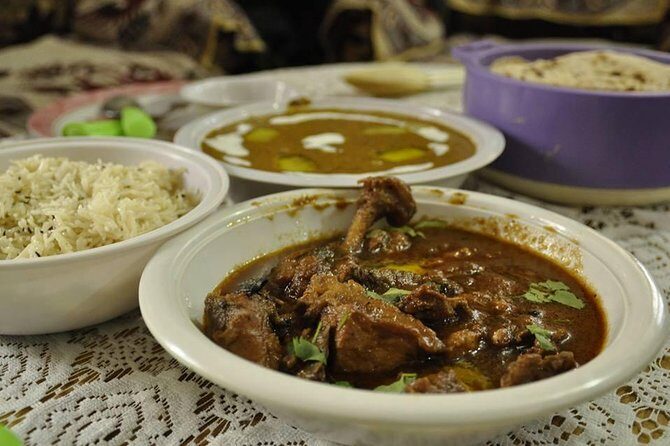
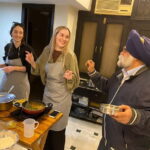
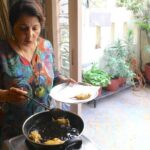
This experience is basically one thing: an Indian home meal with instruction attached. You meet at a residential cooking-class location on Hastsal Rd in Uttam Nagar (near Sunil Dairy, Block A 1). It’s the kind of setting where you can actually ask questions while you’re chopping, stirring, kneading, and tasting.
The big reason this works is simple. Indian cooking is not one magic ingredient. It’s sequencing—what goes in first, what simmers, when spices bloom, and how you balance salt, tang, heat, and fat. In this class, you’re taught those habits while you’re making a full plate of food.
If you’ve been craving more than restaurant flavors, this is a strong move. You’ll leave with a method you can repeat for friends at home, not just a memory of what something tasted like.
You can also read our reviews of more private tours in New Delhi



Your 3-hour flow: from spices to the table
The session runs about 3 hours. You’ll usually start with a warm welcome and a quick setup in the kitchen, then get into spices and cooking steps. The timing is practical: drink first, then you build the meal in a logical order, finishing with breads and dessert so you can eat everything together.
Here’s the core rhythm you can expect:
1) Spices and ingredients talk
You start by explaining spices—what they are, why they’re used, and how they behave in Indian cooking. Expect a lot of hands-on guidance, including what’s added when and how to judge flavor as you go.
2) Masala tea or lassi (your choice)
You’ll make or enjoy either Indian masala tea or lassi at the start (the class includes one). This is more than a refreshment. It’s also a quick way to understand how Indian flavor is layered, not just “spicy.”
3) Curry and dal work begins
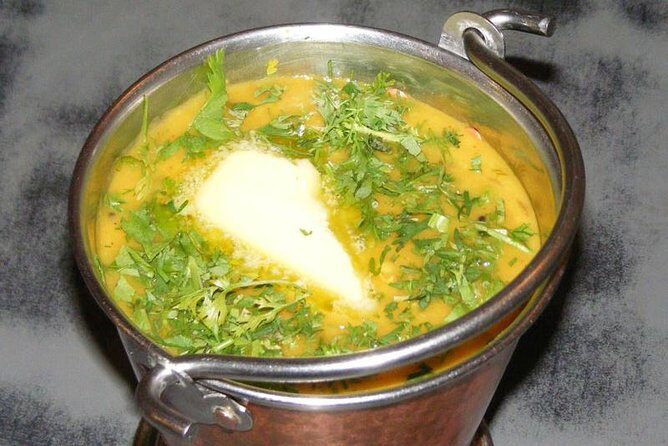
Next you move into the main gravies and comforting components: chicken curry (or butter chicken for non-veg) and yellow dal (also offered as dal tarka). This part sets your “base flavors” for the meal.
4) Bread and rice, then the sides
You also make either rotis or parathas, plus cumin rice or plain rice. Alongside that you prepare one dry vegetable dish such as aloo gobhi, okra, or paneer masala (the class includes one option).
5) Sweet finish and eating together
A sweet is included, so you finish with a full sit-down meal, not just tasting while cooking.
A small drawback: it’s active
This isn’t an easy “sit and watch” workshop. You’ll be chopping and cooking in the kitchen. If you’re short on mobility, you might find the hands-on format more tiring than you want—but that’s also why it sticks.
The 7-part meal you’ll cook (veg or non-veg)
This class is structured around a full eating experience. The “7 meal” framing makes sense here because you’re not only learning one recipe. You’re learning a system that builds into a complete table.
Drink: masala tea or lassi
You’ll get either masala tea or lassi included. In practical terms, I like this because it helps you notice how Indian kitchens switch gears between hot, spiced flavors and cooling, creamy ones.
You can also read our reviews of more cooking classes in New Delhi



Main curry: chicken curry or butter chicken (non-veg)
For non-veg classes, you’ll cook one of these:
- chicken curry with lentils-style components (gravy curry)
- or butter chicken
This is a great choice if you want a crowd-pleaser dish that shows how gravy is built with onion-tomato base plus ginger-garlic-green chili paste and layered spices. You’ll learn how the sauce behaves as it thickens.
Dal: yellow dal or dal tarka
The dal portion is your comfort foundation. Yellow dal (and also dal tarka as an option) gives you a protein-rich side that pairs naturally with rice and breads. You’ll learn how to season and finish dal so it tastes like it belongs on an Indian lunch or dinner plate.
Dry vegetable side: aloo gobhi, okra, or paneer masala
You’ll prepare one dry vegetable dish:
- aloo gobhi
- okra
- paneer masala (dry/side style)
I like this because “dry” dishes teach you a different cooking goal than gravy. You practice frying or sautéing to concentrate flavor instead of relying on soup-like sauces.
Rice: cumin rice or plain rice
You’ll cook cumin rice or plain rice. Even if rice seems simple, the class approach matters. You’ll learn how spice and aromatics work with rice so it tastes intentional, not bland.
Bread: roti or parathas
You’ll make either roti (chapati) or parathas (depending on what you choose). Bread practice is where a lot of home cooks get nervous, but the step-by-step instruction is the point. It’s also a key part of understanding Indian meal structure: bread and curry/dal are meant to be eaten together.
Sweet dessert: one included
A sweet is included at the end. This matters because it turns the class into a full meal rather than a partial taste session.
What makes Sonu and Preeti’s teaching work
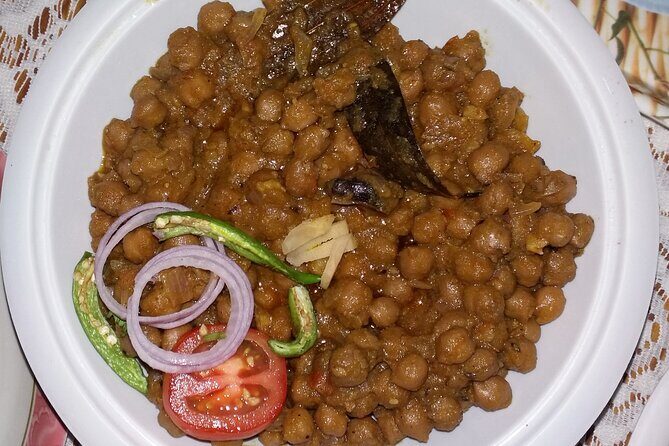
This class stands out because instruction is personal. You’re not stuck following along with strangers. Hosts Sonu and Preeti are described as welcoming, communicative, and patient, and that comes through in the way steps are broken down.
Here’s what “personal instruction” means in real life:
- You can ask what to do if something looks off. That matters with spice timing, sauce thickness, and bread texture.
- You get the logic behind technique. Instead of just being told to add something, you learn what it’s doing in the flavor system.
- They adjust to what you want. You can choose veg or non-veg options, and special dietary needs can be discussed.
One recurring practical detail from feedback is that the kitchen setup is described as clean and modern, sometimes even air-conditioned. That’s not just comfort. It makes the class easier to focus on because you’re not fighting a chaotic workspace.
Vegetarian and non-veg choices without the stress
Whether you eat veg or non-veg, this class offers options. For many people, the hard part with cooking classes is knowing if you’ll get a true menu instead of a “swap.” Here, you’re choosing actual dish options, like chicken curry/butter chicken on the non-veg side, or vegetable/paneer-focused dishes on the veg side.
This is especially good if you’re traveling with someone who eats differently. You can still keep the class structure while matching the meal to your preferences.
A practical note
Your final menu depends on the options available for the day and what you select. So if there’s one dish you really want (or one you definitely don’t), communicate it early through your booking process. The class is described as responsive, so this usually works smoothly.
The real value: learning sequencing, not just recipes
Many cooking classes give you a card with ingredients. This one gives you cooking habits you can repeat.
For example, the spice teaching isn’t just “here are spices.” You learn how Indian cooking often uses a pattern: warm spices in oil for aroma, then add powdered spices at the right point so they don’t burn and taste flat. Even if you forget the exact rule, you’ll remember the cause-and-effect while you cook.
You also practice the way Indian meals stack flavors:
- curry gravy + dal seasoning
- rice aromatics
- bread texture
- dry vegetable “bite” to balance richness
- sweet finish
When you sit down after the cooking, you’re tasting the meal as a complete system. That’s the best way to understand why the steps matter.
What you eat, and why it’s better than restaurant-only
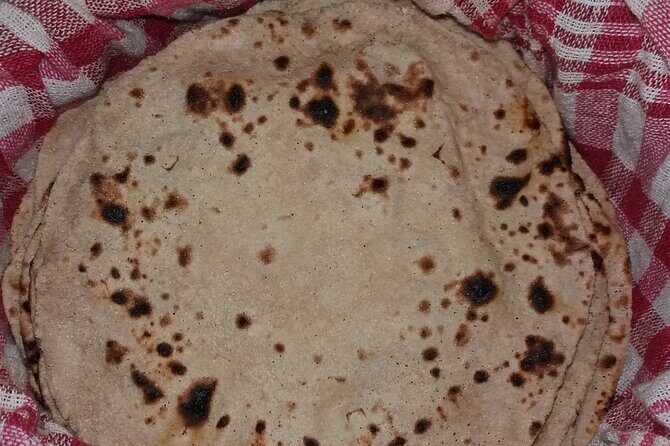
Restaurant Indian food is delicious, but it can hide technique. At home, the “method” is visible.
In this class, the meal includes:
- a warm spice drink (masala tea or lassi)
- one main curry (chicken curry or butter chicken)
- yellow dal or dal tarka
- one dry veg side (aloo gobhi, okra, or paneer masala)
- rice with cumin or plain rice
- roti or parathas
- a sweet dessert
That coverage matters because you won’t just learn how to make gravy. You’ll learn how to build a plate where each dish does a job. Curry and dal bring body; rice and bread carry the sauce; the dry veg adds texture and a different spice punch; the sweet rounds it off.
If you’re in Delhi for a few days and already eat out, this class gives you something you can’t “download” from a menu.
Market walking: a nice bonus if it’s offered
Some sessions may include a quick look at local ingredients, and at least one account mentions a brief market stop to buy fresh items like vegetables and spices. It’s not guaranteed from the core description, but if it’s part of your day, it’s a helpful add-on.
I like market moments because they teach what fresh really changes. Spices aren’t only about heat—they’re about freshness and aroma. Even 10 minutes walking can make your future cooking smarter.
Getting there and timing: the part that trips people up
This is a home-based experience, so location matters. You’ll meet at Indian Food Cooking Classes at A1, 63 Hastsal Rd, Block A1, Uttam Nagar (near Sunil Dairy). The directions mention the pick-up point at Uttam Nagar West Metro station outside gate no. 4, but the class itself doesn’t include hotel pickup or drop-off.
The good news: the hosts are described as communicative before class, so if you’re unsure about the simplest route from the metro, you can ask in advance.
Arrive 15 minutes early so you’re not rushed at the start. That buffer helps you settle in, meet your hosts, and start with a relaxed pace instead of standing around hungry and confused.
Recipes afterward: how to use them at home
One of the best “value add” items is recipe support. Multiple accounts mention that recipes are emailed after the class in English, and that the class breaks directions into simple steps.
When you get the recipe notes, don’t treat them like a souvenir. Use them like a tool:
- cook the next dish you made at home within a week
- follow the steps, but taste as you go
- compare your texture to what you remember from class (thickness of gravy, firmness of dal, bread puffing)
Even if your kitchen equipment is different, the sequencing you practiced will transfer.
Who this Delhi cooking class is best for
This is a great fit if:
- you want a private cooking experience instead of a group show
- you enjoy hands-on cooking with guidance
- you want both food and culture through daily home practices
- you like Indian spice flavor and want the “why” behind the taste
It’s also ideal if you’re traveling with a teenager or friend who wants something practical. Some feedback specifically notes that a 14-year-old enjoyed the mix of cooking and conversation.
If you want a quiet, purely observational activity, you might find the hands-on kitchen format too active. But if you like learning by doing, you’ll probably have a better time than you expect.
Should you book this Delhi home cooking class?
I think you should book it if you want an authentic Delhi experience that teaches real technique, not just a meal. At $47 per person for a 3-hour private home class that includes a full set of dishes (plus drink and sweet), the value is solid, especially because you get guidance, you cook multiple components, and you receive recipe notes afterward.
Skip or reconsider if you:
- need hotel pickup and don’t want to handle transport
- prefer low-effort activities
- only care about one dish, not a whole meal-building approach
If you’re ready to cook, taste, and learn how Indian meals come together in a home kitchen, this is the kind of experience that makes Delhi feel personal.
FAQ
How long is the cooking class in Delhi?
The class runs for about 3 hours.
Is the class private?
Yes. It’s described as private, and only your group participates.
What’s included in the meal?
You’ll receive bottled water and a full set of dishes, including a drink (masala tea or lassi), curry (chicken curry or butter chicken for non-veg), a dry vegetable (aloo gobhi/okra/paneer masala), yellow dal (or dal tarka), rice (cumin rice or plain rice), bread (roti or parathas), and one sweet.
Do I get to choose veg or non-veg?
Yes. There are options for both vegetarian and non-vegetarian diets.
What drink is included?
Masala tea or lassi (you choose one).
Do they include hotel pickup or drop-off?
No. Hotel pickup and drop are not included.
Where is the meeting point?
The meeting point is at Indian Food Cooking Classes, A1, 63 Hastsal Rd, near Sunil Dairy, Block A 1, Uttam Nagar, New Delhi, Delhi 110059.
Should I arrive early?
Yes. The guidance is to arrive 15 minutes before the meeting time.
Are recipes provided after the class?
Yes. Recipes are shared after the class in English.
What is the cancellation policy?
Free cancellation is available. You can cancel up to 24 hours in advance for a full refund; cancellations within 24 hours are not refunded.