REVIEW · AGRA
Agra, The City through Poetry
Book on Viator →Operated by Agra Heritage Walks · Bookable on Viator
Poetry turns Agra into something you can read. This private walk looks past the usual monument trail and takes you to poets’ birthplaces and literary landmarks, with names like Mirza Ghalib and Nazir Akbarabadi, plus Mir Taqi Mir and newer voices. You’ll walk through the old city, hearing stories that connect words to the places people lived and worked.
Two things I really like about this experience: the private guide style, and the fact you get a take-home handout with selected poetry verses and photographs. It’s not just sightseeing; your guide can slow down, answer questions, and help with photos, so you actually leave with a clearer picture of how Urdu and Mughal-era culture shaped what we read today.
One consideration: it’s a walking tour with a moderate fitness level requirement, and it runs best in good weather. If conditions aren’t ideal, the tour may be changed or refunded, so keep an eye on that before you plan your evening.
In This Review
- Key highlights at a glance
- Why Agra Has More to Say Than the Taj Mahal
- Setting Out From Jama Masjid at 5:00 pm
- Mirza Ghalib’s Birthplace: Urdu Poetry in the Late Mughal Period
- The Calligraphy Workshop: Reading Urdu With Your Eyes
- Walking Down a 16th-Century Silk Route Shopping Street
- Khankhana Katra and Abdur Rahim Khankhana
- Learning Through a Private Guide (and Why It Matters)
- The Take-Home Handout With Verses and Photos
- Price and Value: What $44.28 Gets You
- Timing, Pacing, and Weather: The Real-Life Logistics
- Who This Tour Suits Best
- Should You Book Agra, The City through Poetry?
- FAQ
- What is the duration of the Agra poetry walk?
- What time does the tour start?
- Where does the tour begin?
- Is this a private tour?
- What stops are included?
- Do you get anything to take home?
- Is there a calligraphy workshop during the tour?
- What is the price per person?
- Do I need good weather for this tour?
- Is free cancellation available?
Key highlights at a glance
- Jama Masjid starting point: Kick off from a major historic landmark in old Agra.
- Mirza Ghalib’s birthplace: Learn how Urdu poetry grew during the late Mughal period.
- Urdu calligraphy workshop: See the script as part of language and literature.
- 16th-century silk-route shopping street: Follow the old trade path and read verse tied to daily life.
- Khankhana Katra stop: Meet another literary figure tied to the city’s poetic tradition.
- Photo help and a takeaway handout: A practical souvenir, not just a memory.
Why Agra Has More to Say Than the Taj Mahal
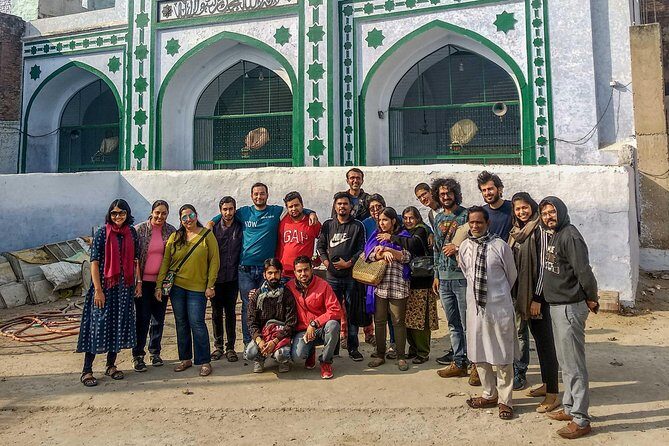
Agra’s famous for stone, but it’s also famous for words. This walk is built around the idea that the city’s poetry doesn’t live in a textbook—it lives in neighborhoods, in markets, in courtyards, and in the way people used Urdu to describe society.
You’ll hear how late Mughal cultural life shaped poetry genres and how writers observed the world around them. That’s the magic here: you’re not only learning who wrote what, you’re also seeing where the ideas took root and how public life influenced literature.
And because it’s a private tour, it’s easier to ask basic questions without feeling rushed. Want to know why Urdu mattered so much in the period? Want help connecting a poet’s style to what you’re looking at? This format makes that kind of conversation normal.
You can also read our reviews of more city tours in Agra



Setting Out From Jama Masjid at 5:00 pm
The tour meets at Jama Masjid, in Agra’s old city area (Subash Bazar, Kinari Bazar, Hing ki Mandi, Mantola). Starting at 5:00 pm gives you a calmer rhythm for walking, and you’re already in a historic pocket right from the first step.
This is also a useful starting strategy. Jama Masjid anchors the walk in a real religious and cultural setting, and from there you head toward literary sites. The route is designed for a steady pace on foot—perfect if you want to trade rushed photos for conversations and street-level understanding.
Practical tip: since it’s a moderate-walk experience, wear comfortable shoes. The route is short enough that you can keep your energy, but you’ll still be moving for the whole 2 to 3 hours.
Mirza Ghalib’s Birthplace: Urdu Poetry in the Late Mughal Period
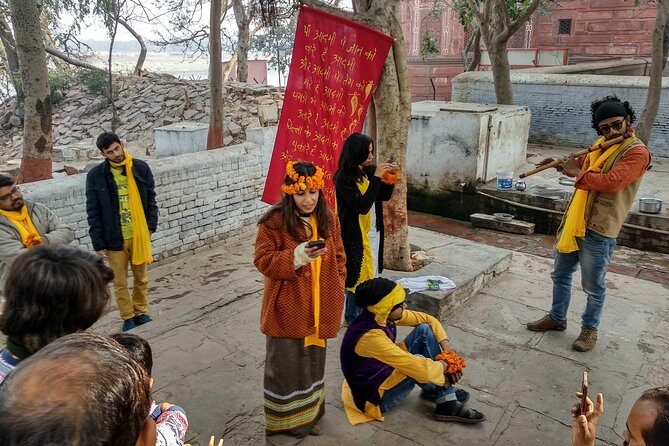
One of the main stops is Mirza Ghalib’s birthplace. This is where the tour shifts from general storytelling into specific literary context—learning about his writing genre and how Urdu poetry rose to prominence during the late Mughal period.
Here’s what makes this stop more than a plaque-and-photo moment: you’re not just getting a name and dates. You’re getting context for how the language and poetry scene evolved, so when you hear references to Urdu literary culture during the walk, they start to click.
Ghalib also works as a kind of “center point.” If you’re new to Urdu poetry, understanding what shaped Ghalib helps you interpret the other poets you’ll hear about later, like writers known for documenting what they saw in everyday life.
Expect your guide to connect the birthplace setting to the broader shift in literary culture—how poets turned language into social commentary, emotion, and craft.
The Calligraphy Workshop: Reading Urdu With Your Eyes
After Ghalib, you’ll visit a calligraphy workshop tied to Urdu’s unique script. This is a smart move because it teaches you the poetry story through form, not just content.
Urdu calligraphy isn’t only decorative. It’s a visual way of thinking, and the style of the script reflects how language was carried through culture. In this stop, you’ll discuss how language and literature developed during Mughal rule, with the calligraphy script serving as a living example.
If you’ve ever wondered why the same language can feel different depending on how it’s written, this workshop is your answer. It makes Urdu feel tangible. You’ll also be better prepared to appreciate the verses later, because you’ll have seen how the script expresses tone and structure.
One more bonus: calligraphy workshops are usually quiet and focused, which makes it easier to ask questions and slow down for photos without feeling like you’re interrupting a crowd.
Walking Down a 16th-Century Silk Route Shopping Street
Then you’ll walk down a 16th-century shopping street—the kind of place where trade shaped daily life. This area is described as once important to the silk route, and that context matters, because poetry often rides along the same currents as commerce: people, ideas, languages, and stories moving through the city.
On this stretch, you’ll read a couple of verses from Nazir Akbarabadi. What I like about including his work here is that he’s presented as someone who documented the city’s socio-economical details. That means you’re not just reading romantic lines; you’re seeing how writers observed real public life.
This is the part of the tour where the route becomes more than a route. You’ll start noticing how a “literary city walk” can actually be a way to practice observation:
- Look at the street character around you.
- Pay attention to how everyday spaces connect to social life.
- Let the verse act like a lens, so you’re not only collecting facts.
And since your guide can set your pace, you can linger at photo spots or keep moving if you’re eager to reach the next literary landmark.





Khankhana Katra and Abdur Rahim Khankhana
Next comes Khankhana Katra, with a focus on Abdur Rahim Khankhana. This stop keeps the walk rooted in the city’s built environment—specific corners tied to literary identity.
The value here is that you’ll get a sense of how multiple poets and writers are woven into different locations across Agra. Rather than treating the city like a single “poetry map,” this walk shows poetic tradition as something distributed—different writers associated with different places and contexts.
You’ll also read from Khankhana’s work (the details you get will depend on your guide’s approach), but the key idea is consistent: you’re learning to link literary output to location and period, the way people in the past experienced culture around them.
Learning Through a Private Guide (and Why It Matters)
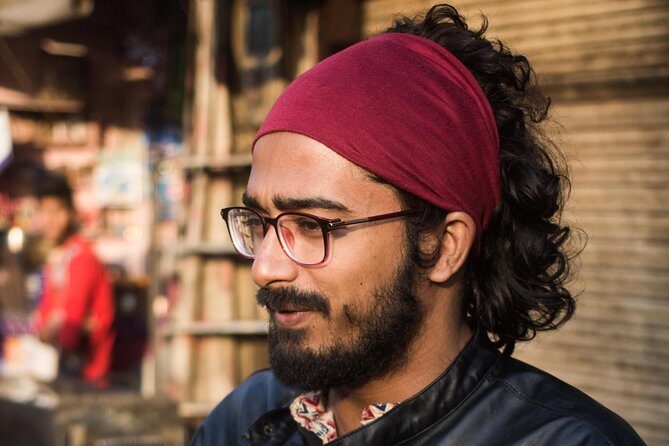
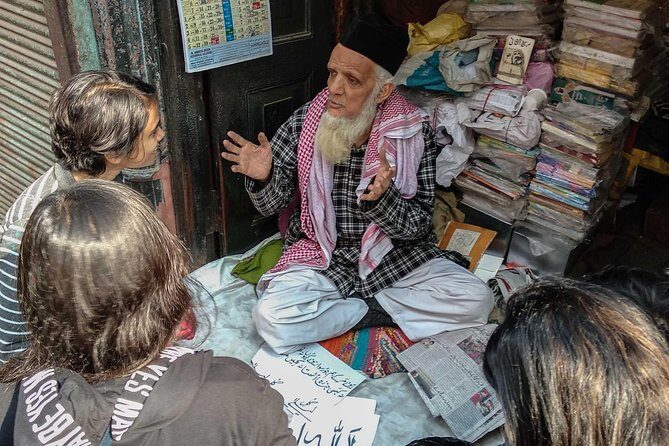
A private walk changes the whole tone. With only your group, you can ask about anything: the relationship between Mughal rule and Urdu literary growth, how calligraphy fits the story, or what the poet’s themes mean when you’re standing in the same area.
This is where the guide’s role really shows. In the strongest examples, your guide is someone like Kaleem, described as caring deeply about Agra’s people and culture and able to tie together multiple sites across different religions with clear historical context.
That kind of guiding matters because poetry can feel abstract if you only hear dates and definitions. A good guide turns it into something you can connect to street life. They help you connect the dots between Ghalib, the Urdu script, Nazir Akbarabadi’s social observations, and Khankhana’s presence in the city.
If you care about context more than speed, this is the right format.
The Take-Home Handout With Verses and Photos
At the end (or along the way, depending on your guide’s pacing), you’ll receive a handout with selected poetry verses and photographs. This is one of those details that sounds small until you use it later.
Why it matters:
- You can reread the lines later when you’re home and the streets feel far away.
- The photos help you remember which poet and theme matched which location.
- It turns the walk into something you can revisit instead of a quick memory.
If you like souvenir value that doesn’t become clutter, this is the kind of keepsake that earns its place on your shelf.
Price and Value: What $44.28 Gets You
The price is $44.28 per person, for a 2 to 3 hour private walking experience. On paper, that might sound like more than a standard group tour.
In practice, the value comes from a few specific ingredients:
- Private format, so you’re not waiting for others or translating yourself aloud.
- A guide who can tailor the conversation around poets and language.
- Stops that include a calligraphy workshop and multiple literary landmarks, not just one photo stop.
- A take-home handout with verses and photos.
Also, the tour uses a mobile ticket, which is simple when you’re juggling schedules in a city with heavy foot traffic and shifting plans.
One note on timing: the tour is often booked about 86 days in advance on average. If you’re traveling during a busy season or you want the 5:00 pm slot, booking earlier is a smart move.
Timing, Pacing, and Weather: The Real-Life Logistics
This walk starts at 5:00 pm and runs for roughly 2 to 3 hours. That timing is handy because it fits well between a daytime monument plan and an evening meal plan.
It also says something about pacing: the experience is built for a comfortable walking rhythm. You can explore at your preferred pace, and your guide can help take photos, which is especially useful if you want pictures that match the poetry themes rather than random street shots.
Weather matters here. The experience requires good weather, and if it’s canceled due to poor conditions, you’ll be offered a different date or a full refund. So don’t treat this as a last-minute gamble—choose your day with some flexibility.
Who This Tour Suits Best
This is best for you if:
- You want Agra beyond the standard monuments.
- You’re interested in Urdu poetry and how culture shaped language during Mughal times.
- You like walking tours where questions are part of the experience, not an interruption.
- You value a souvenir you’ll actually read later.
It’s also a good fit for people who prefer smaller, more personal tours rather than big-group logistics.
If you’re looking for a purely high-speed highlights sprint, you might find this too slow and too talk-heavy. But if you want to understand the city through poets and places, it’s a strong match.
Should You Book Agra, The City through Poetry?
I’d book it if your goal is to leave Agra with more than photos. The mix of Ghalib, calligraphy, the silk-route shopping street, and Khankhana Katra gives you multiple ways into the same story: how poetry grew from real life in this city.
Skip it or think twice if you dislike walking, if your schedule is locked with no flexibility for weather, or if you only want landmark checklists. This experience works when you’re there to learn the city’s voice, not just its skyline.
If you want an authentic old-city feel with a guide who can connect sites, language, and meaning, this is the kind of Agra tour that makes the city feel personal fast.
FAQ
What is the duration of the Agra poetry walk?
The tour lasts approximately 2 to 3 hours.
What time does the tour start?
The start time is 5:00 pm.
Where does the tour begin?
It begins at Jama Masjid, Agra (Subash Bazar, Kinari Bazar, Hing ki Mandi, Mantola area).
Is this a private tour?
Yes. It’s a private tour/activity, and only your group participates.
What stops are included?
You start at Jama Masjid, then visit Mirza Ghalib’s birthplace, a calligraphy workshop, a 16th-century shopping street tied to the silk route, and Khankhana Katra.
Do you get anything to take home?
Yes. You receive a handout with selected poetry verses and photographs.
Is there a calligraphy workshop during the tour?
Yes. You visit a calligraphy workshop focused on Urdu and its calligraphic script.
What is the price per person?
The price is $44.28 per person.
Do I need good weather for this tour?
Yes. The experience requires good weather. If it’s canceled due to poor weather, you’ll be offered a different date or a full refund.
Is free cancellation available?
Free cancellation is available up to 24 hours in advance for a full refund. If you cancel less than 24 hours before the experience starts, the amount paid is not refunded.