REVIEW · NEW DELHI
Private 6-Day Ranthambhore Tiger Tour including Delhi, Agra and Jaipur
Book on Viator →Operated by Pacific Classic Tours India · Bookable on Viator
Tiger dreams meet classic monuments. This private 6-day plan strings together Delhi, Agra, and Jaipur, then swaps city stone for the real hope of seeing tigers in Ranthambhore. I like that you travel in a private air-conditioned vehicle (so you’re not wrestling with busy public transport), and the schedule still packs in top sites without making you play itinerary Tetris.
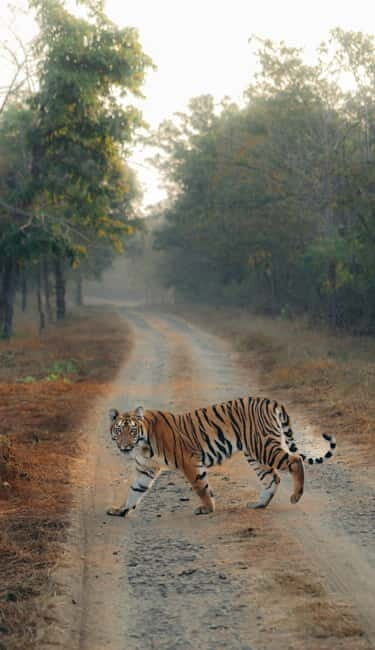
My other big plus is the wildlife focus: you get morning and afternoon jungle safaris in Ranthambore with an English-speaking naturalist, plus the park’s high odds of tigers compared with many other reserves. One thing to weigh up: tiger sightings are not guaranteed, and the Taj Mahal sunrise visit depends on clear weather—so you’ll want some flexibility in your expectations.
In This Review
- Key Highlights You’ll Care About
- Why This Delhi–Agra–Jaipur + Ranthambhore Combo Feels Efficient
- Day 1 in Delhi: Big Monuments, Smooth Pace
- Day 2 Agra: Taj Mahal at Sunrise + a Second Look Later
- Day 3 En Route to Ranthambhore: Birds and Stepwells on Purpose
- Day 4 Ranthambhore Safari Day 1: The Suspense Starts Early
- Day 4 Afternoon Safari: Second Chance, Different Mood
- Day 5 Jaipur: The Pink City Arrives After Jungle Quiet
- Day 6 Jaipur Beyond the Postcard: Amber, Jal Mahal, Hawa Mahal, Monkey Temple
- Price and Value: Where the Money Really Goes
- Who This Tour Fits Best (and Who It Might Not)
- Should You Book This 6-Day Private Ranthambhore Tiger Tour?
- FAQ
- What time does the tour start and where is the first meeting point?
- Is the tour really private?
- What’s included for Ranthambore safaris?
- If a shared jeep isn’t available, what happens?
- Are entrance fees covered?
- Will I definitely see a tiger?
- Is the Taj Mahal sunrise visit guaranteed?
- FAQ
- Is lunch included during the tour?
- Is hotel accommodation included in the price?
- Are there any meals restrictions?
- Is an elephant/jeep ride at Amber Fort included?
- Do I need a passport for booking?
Key Highlights You’ll Care About
- Private door-to-door travel: Door pickup and a dedicated vehicle help you move fast and stay comfortable.
- Sunrise Taj Mahal timing: A morning visit is built in, then you get a second Taj photo angle later from Mehtab Bagh.
- UNESCO stops that matter: Humayun’s Tomb, Qutub Minar, Taj Mahal, Agra Fort, and Jantar Mantar are all included.
- Two Ranthambhore safari chances: Morning and afternoon drives in shared jeep/canter with an English-speaking naturalist.
- Keoladeo by rickshaw: A guided Keoladeo Ghana bird sanctuary tour rides through the landscape in a tricycle/rickshaw.
- Jaipur without the guesswork: City Palace, Jantar Mantar, Birla Mandir, plus Amber Fort and Monkey Temple.
Why This Delhi–Agra–Jaipur + Ranthambhore Combo Feels Efficient
This is the kind of trip that makes sense if you want maximum highlights with minimal stress. You’re doing the Golden Triangle (Delhi–Agra–Jaipur) and adding Ranthambhore in six days, but the key is how it’s managed: you’re not bouncing around with multiple operators, and you’re not losing hours to confusing local transport. The private vehicle is more than comfort—it’s time insurance.
I also appreciate that the itinerary balances iconic monuments with nature. Delhi and Agra give you UNESCO-grade history and the famous visuals (yes, the Taj Mahal is the Taj Mahal), and then Ranthambhore shifts the mood to quiet, early mornings and the suspense of the jungle. If your main goal is tigers, the two safari windows are a practical way to increase your odds without turning the trip into an all-day grind.
The main consideration is your mindset going in. The tour is set up for tiger viewing, but it doesn’t pretend it’s a zoo. Some days you’ll get tracks, birds, and maybe other cats; some days the tigers stay hidden. Keep your expectations grounded, and you’ll enjoy it more.
You can also read our reviews of more tours and experiences in New Delhi.



Day 1 in Delhi: Big Monuments, Smooth Pace
Day 1 starts with a pickup around 9am from your Delhi-area location (Delhi, Gurugram, or Noida). Then the day becomes a classic Delhi highlights loop, with a private guide walking you through some of the city’s most important Mughal-era and colonial-era sights.
Humayun’s Tomb is the opener. It’s a UNESCO World Heritage site and a smart first stop because it sets the tone for what comes next in Agra—grand Mughal architecture, built as a statement of power and legacy. From there, you move to Qutub Minar, another UNESCO site, and one of those towers you can’t fully “get” until you’re standing near it. It’s tall, visual, and tied directly to the beginnings of the Qutb complex.
Next is Gurudwara Bangla Sahib, a large white-marble Sikh gurdwara with golden domes. It’s also a reminder that India’s major religions sit side by side in real neighborhoods, not sealed-off museum zones. Then India Gate closes out the sightseeing stretch. After that, the route includes a stop at the Parliament area and looks at Rashtrapati Bhavan/President House from the outside.
You’ll then drive to Agra, roughly a three-hour transfer, check into your hotel, and reset for a big Day 2.
What I like: the order. You start with Mughal heritage and big landmark geometry before you move into the capital’s modern civic vibe.
What to watch: Day 1 is a lot of walking through major complexes. Bring water and wear comfortable shoes.
Day 2 Agra: Taj Mahal at Sunrise + a Second Look Later
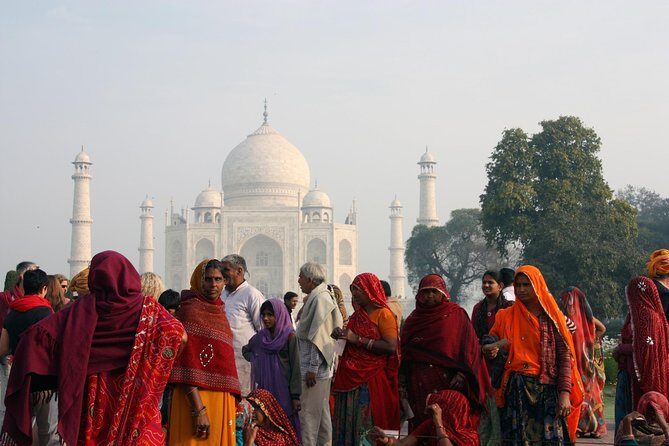
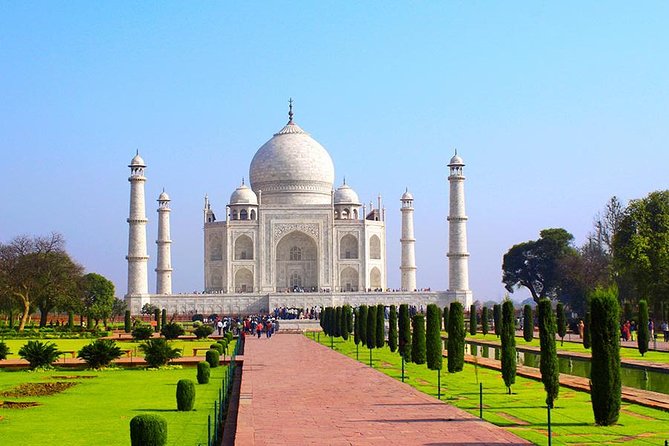
Agra Day 2 is built around one idea: see the Taj Mahal like it matters. The schedule includes a sunrise Taj Mahal visit, which is often when the light is best and the crowds feel less intense. The tour also notes that this timing depends on clear weather. If skies cooperate, sunrise turns the Taj into a soft glow machine. If clouds roll in, you may still see it well, but the magic drops a notch.
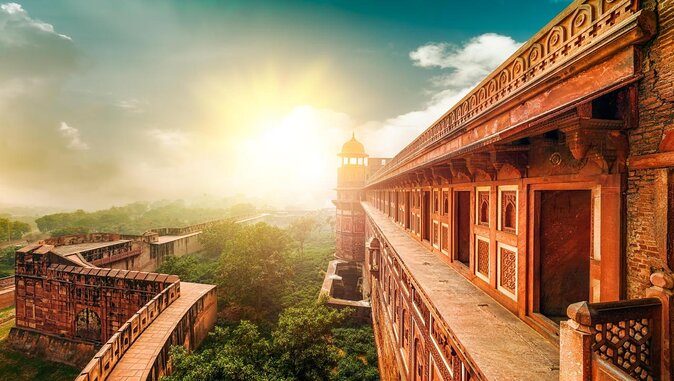
After the Taj, you head to Agra Fort, another UNESCO World Heritage site and a key power center for the Mughal emperors. If the Taj is the love letter, Agra Fort is the command center. Then you visit Itmad-ud-Daula, often called the Baby Taj. It doesn’t have the same scale, but the details are delicate and easy to appreciate without sprinting.
The evening part is where the itinerary gets clever. You go to Mehtab Bagh for a photo tour viewpoint of the Taj from across the river area. Think of this as a chance to see the Taj from a different angle after you’ve already stared at it up close. It helps your brain connect the monument to its setting instead of treating it as a single standalone picture.
What I like: the built-in “two-view Taj” approach—up close at sunrise, then a different perspective later.
Potential drawback: sunrise weather is not in anyone’s control. Keep your travel-day plans flexible if you’re hoping for perfect conditions.
Day 3 En Route to Ranthambhore: Birds and Stepwells on Purpose
This day is a smart use of travel time. Instead of treating the Agra-to-Ranthambhore leg as dead hours, you break it up with two excellent detours.
First stop: Keoladeo National Park in Bharatpur, a UNESCO World Heritage site and one of India’s best-known bird sanctuaries. This is a guided experience by Rickshaw/Tricycle, and it’s designed for viewing at a slower pace. If you like birds, it’s a great counterbalance to the tiger focus—because even if tigers don’t show, you still get wildlife energy.
Then you head to Chand Baori in Abhaneri. This stepwell is famous for its depth and structure—over a thousand years old—and it gives you a very different “water and architecture” story than the Taj complex. It’s also a good break from constant car time, even if it’s still a controlled stop.
In the evening, you arrive at Ranthambore Tiger Reserve. The itinerary frames it as a former royal hunting ground and a place known for its tiger population in natural habitat. You’ll have time to settle in at your jungle resort and get ready for the safaris that actually matter.
What I like: this is not just a sightseeing checklist. You get two nature/heritage stops that teach you something about India’s relationship with land and water.
What to watch: it’s another day with a few fixed stops—pack light and keep essentials easy to grab.
Day 4 Ranthambhore Safari Day 1: The Suspense Starts Early
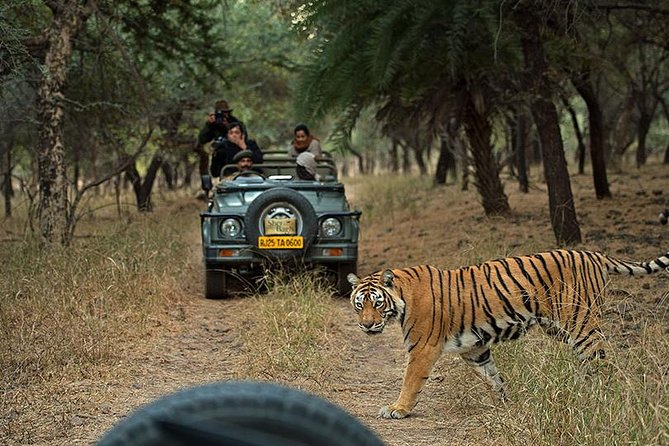
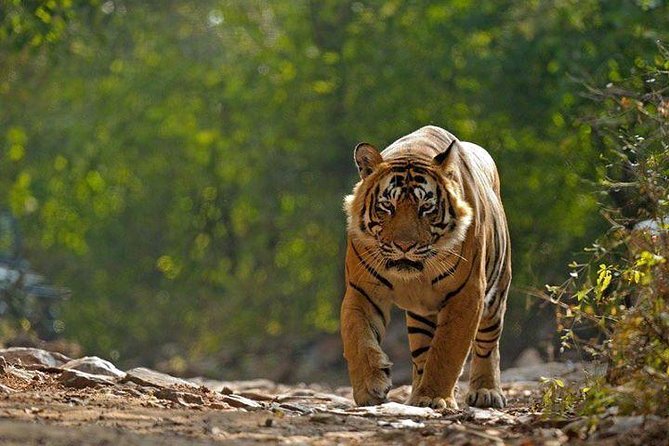
Day 4 is your first real tiger attempt: a morning safari in Ranthambore National Park. The tour uses a shared Jeep/Canter, and you go looking for tigers during the active parts of the day when sightings are more likely.
You’ll be out for about three hours. The tour also includes an English-speaking naturalist during safaris, which is a big deal. Naturalists aren’t just “spotters”—they help you read what you’re seeing: movement patterns, tracks, calls, and the landscape features that make tigers choose one area over another. Even if you don’t see a tiger quickly, this kind of guidance keeps the safari from feeling like aimless driving.
After the safari, the itinerary leaves room for the rest of the day at your own pace around the resort. This matters because Ranthambhore isn’t a museum you can power through with nonstop energy. You’ll want recovery time—shade, water, and a quiet moment before your second attempt.
What I like: two safaris, both guided with a naturalist. That setup makes it feel like you’re learning how the reserve works, not just hoping.

Day 4 Afternoon Safari: Second Chance, Different Mood
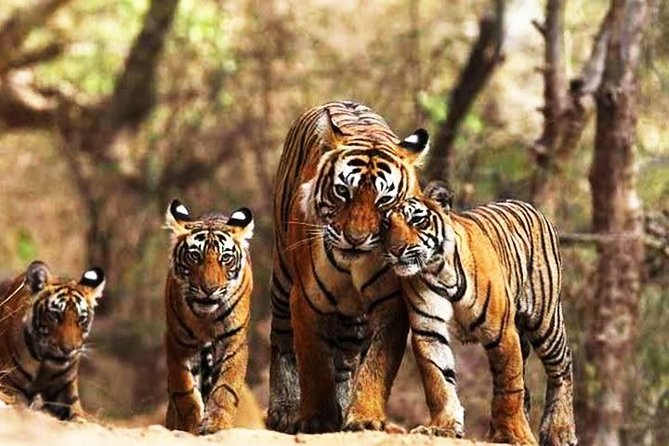
The afternoon safari is your second attempt, again in a shared jeep/canter format for about three hours. The good part about a second safari is not just extra time—it’s a different lighting angle and different animal behavior. Tigers might stay active early, or they might shift activity later. The reserve has lakes and ruins too, so the scenery isn’t repetitive.
Even with a second try, you’re still dealing with wild animals and changing conditions. The tour explicitly says there’s no guarantee of tiger sightings. That honesty is important. If you go in expecting zero control, you’ll enjoy the ride more: the park’s real drama is unpredictable.
One traveler’s experience even included a mention of trying hard but not getting a tiger sighting. The takeaway for you is clear: focus on the process—birds, deer, chance encounters, and the feeling of being in genuine habitat.
Pro tip from the tour guidance: wear colors that blend with the forest—khaki, brown, olive green. It’s not fashion; it’s a practical way to help animals feel less startled.
Day 5 Jaipur: The Pink City Arrives After Jungle Quiet
After breakfast and checking out of your Ranthambhore hotel/resort, you drive toward Jaipur, about three hours. Jaipur earns its nickname for a reason: the city center color and the uniform look of buildings make it instantly recognizable from the moment you arrive.
Day 5 includes City Palace, the residence of the royal family and a mix of courtyards and palace buildings from different eras. It’s not just one palace; it’s a complex that helps you picture how royal life evolved over time.
Next is Jantar Mantar, a UNESCO World Heritage site and an observatory made of geometric structures designed to monitor movement of stars and planets. It’s one of those sights where you’ll start seeing patterns even if you don’t know the science in advance. It’s also a break from the heavier fort vibe.
You also stop at Birla Mandir Temple. It’s white marble, at the base of Moti Dungri hill, and it stands out for its intricate latticework. The Birla family temples are familiar across India, but Jaipur’s version has its own character.
Your day ends with room for evening downtime and a quieter pace—handy because the next morning includes more forts.
What I like: this day avoids cramming in five major forts. You get variety: palace, astronomy, and a temple with strong visual design.
Day 6 Jaipur Beyond the Postcard: Amber, Jal Mahal, Hawa Mahal, Monkey Temple
Amber Fort is the centerpiece of Day 6. It’s about 11km northeast of Jaipur and built in a honey-hued tone that makes the whole place look like it’s catching sunlight even in shade. It’s also the kind of fort where you’ll want time to look slowly, not just walk through quickly.
The tour notes that elephant/jeep ride at Amber Fort is not included. So if you want the classic ride experience, you’ll need to arrange it separately. For many people, that’s fine; the fort is still worth it even without the ride.
There’s a photo stop at Jal Mahal, the Water Palace, set near the Man Sagar water area. You don’t spend long here, but it’s one of those “light hits different angles” moments—especially in late morning or early afternoon when the water reflects color.
Next is Hawa Mahal, the Palace of Winds. Even if you’re not going inside, it’s a must-see from the outside: a pink facade with honeycombed windows rising five storeys. It looks delicate, but it’s unmistakably built for function—cooling and viewing through many small openings.
Finally, you visit Galtaji Temple, also known as Monkey Temple. It has pools and a cliff setting, and yes, monkeys are part of the experience. It’s a great last stop because it’s livelier and more relaxed than fort-and-palace mode.
Then you drive back to New Delhi/Gurugram/Noida—roughly five hours—depending on where you’re dropped off.
What I like: the final day feels like a collage of Jaipur, not just one big attraction.
Price and Value: Where the Money Really Goes
At $701.41 per person for a six-day private tour, you’re paying for more than sightseeing. You’re buying a structure that saves time: private transportation, professional local guides for the sightseeing blocks, entrance fees for the included monuments and the national park, and organized safari logistics.
The value jumps when you look at what’s bundled:
- Multiple UNESCO sites across Delhi, Agra, and Jaipur
- Taj Mahal sunrise timing with included return transport from parking via battery bus/golf cart
- Ranthambhore safaris with shared jeeps/canters plus an English-speaking naturalist
- Keoladeo National Park guided bird viewing by Rickshaw (Tricycle)
- Meals: lunch plus five breakfasts and two dinners are listed as included, along with bottled water
- Five nights in twin-share hotels if you choose the option that includes hotels
This is also one of those tours where timing matters. When you travel during busy periods, private routing helps you avoid wasting hours. And when you travel with heat in the mix, air-conditioned car time becomes a real comfort factor, not a luxury.
Where you might question value is if you only care about one city or only want a tiger guarantee. Wild animals make guarantees impossible here, and the itinerary is intentionally balanced. If that mix sounds right, the pricing can feel fair for what you get.
Who This Tour Fits Best (and Who It Might Not)
This tour fits well if you want:
- A tight six-day itinerary that still covers the essentials without chaos
- Private transport and guided visits for the major monuments
- Two attempts at tiger viewing in Ranthambhore with a naturalist
- A Golden Triangle overview plus one nature-heavy day on purpose
It may not fit as well if:
- You need a guarantee of tiger sightings (the tour doesn’t offer that)
- You want a slower, free-form trip with long self-guided wandering time
- You’re sensitive to early mornings and full sightseeing days (Delhi and Agra days run on a schedule)
If you’re going around late December or New Year, you might have good luck with sunrise conditions; one traveler specifically mentioned avoiding morning fogs at the Taj Mahal on that trip timing. Still, it’s weather-dependent, so don’t build your entire expectations on forecasts alone.
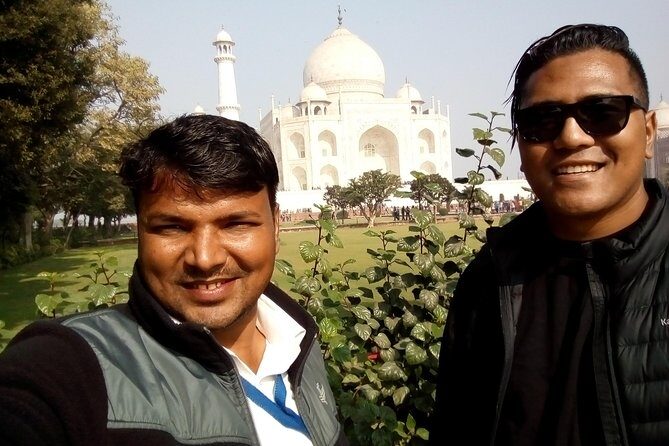
Also, if you prefer a guided experience with strong local knowledge, you could be lucky with a guide like Mahesh Kumar, who has been praised for deep familiarity with Delhi and Agra.
Should You Book This 6-Day Private Ranthambhore Tiger Tour?
Book it if you want the best of India’s “big icons” and its real wilderness suspense in one efficient private package. The private vehicle, guided UNESCO circuit, and the two safari windows with an English-speaking naturalist make it a practical choice for people who don’t want to spend days planning.
Don’t book it if tiger sightings are your only goal and you can’t handle uncertainty. Even with great safari planning, tigers are wild and unpredictable. In that case, you might still enjoy Ranthambhore, but you’ll want to treat the trip as a nature experience first.
If your dream is to see the Taj Mahal in early light, wander Jaipur’s royal layers, and then chase the thrill of Ranthambhore without messy transport, this is a solid match.
FAQ
What time does the tour start and where is the first meeting point?
The start time is 9:00am, and the meeting point listed is Indira Gandhi Intl Airport in New Delhi. Pickup is also offered from your desired place in Delhi, Gurugram (Gurgaon), or Noida.
Is the tour really private?
Yes. This is described as a private tour/activity, so only your group participates.
What’s included for Ranthambore safaris?
You get morning and afternoon jungle safaris at Ranthambore Tiger Reserve in a shared Jeep/Canter. The tour also includes services of an English speaking naturalist during the safaris.
If a shared jeep isn’t available, what happens?
If a shared jeep is not available, safaris will be provided in a shared canter (20-seater van).
Are entrance fees covered?
Entrance fees of the mentioned monuments and national park are included. This includes tickets listed for stops such as Humayun’s Tomb, Qutub Minar, Taj Mahal, Agra Fort, and Jantar Mantar.
Will I definitely see a tiger?
No. The tour explicitly does not guarantee tiger sighting since you’re visiting a jungle and not a zoo.
Is the Taj Mahal sunrise visit guaranteed?
It’s subject to clear weather conditions. The sunrise timing is planned, but weather can affect what you see.
FAQ
Is lunch included during the tour?
Yes, lunch is listed as included. Breakfast (5) and dinner (2) are also listed as included as per the itinerary.
Is hotel accommodation included in the price?
It depends on the option you choose. The tour lists 5-nights accommodation on twin sharing if you book with the option including Hotels.
Are there any meals restrictions?
A vegetarian option is available. You should advise the provider at booking if you need vegetarian meals.
Is an elephant/jeep ride at Amber Fort included?
No. The elephant/jeep ride at Amber Fort in Jaipur is specifically listed as not included.
Do I need a passport for booking?
Yes. The tour states that passport name, number, expiry, and country are required at time of booking for all participants. A current valid passport is required on the day of travel.