REVIEW · VARANASI
Learn to play a traditional indian instrument in Varanasi!
Book on Viator →Operated by music vibes shop & lessons · Bookable on Viator
A good music lesson can change your whole mood. In Varanasi, this one is built around something you can hear and feel right away: the sound, look, and physical vibration of classical Indian instruments. You pick your instrument—tabla, sitar, tampura, harmonium, shruti, or flute—then learn the basics and how to start playing with a real instructor.
I like two things most. First, you get a real, local handcrafted instrument during the session, so the lesson stays practical instead of theory-only. Second, your teacher is Suraj, described as a Master of music with 20+ years of performing and teaching experience, including venues and festivals around the world.
One drawback to consider: it’s about an hour, so you’re not going to leave performing like a pro. Plan to treat it as a strong introduction and a memorable Varanasi hands-on moment, not a long course.
In This Review
- Key takeaways before you book
- Choosing Your Instrument at Music Vibes (tabla, sitar, tampura, harmonium, shruti, flute)
- What Happens in a 1-Hour Lesson: Sound Basics to Your First Notes
- Meet at Dashashwamedh Ghat: Finding Music Vibes Shop & Lessons
- Instruments Provided: Why “Try It for Real” Makes This Worth $9
- Suraj’s Teaching Style and the Advantage of Real Credentials
- 1-to-1 vs Group Lessons: Picking the Right Lesson Size
- Who This Experience Fits (and who should think twice)
- Timing and Booking: Make It Work With Your Varanasi Days
- Add-ons to Ask About: Sunrise Ganges Boat Concert
- Should You Book This Varanasi Music Lesson?
- FAQ
- What instruments can I choose to learn?
- How long is the lesson?
- Is musical education required?
- Do I get an instrument to play during the lesson?
- Do you offer private lessons or group lessons?
- Where is the meeting point?
- How does payment and ticketing work?
- What is the cancellation policy?
- Is the tour suitable for most people?
Key takeaways before you book
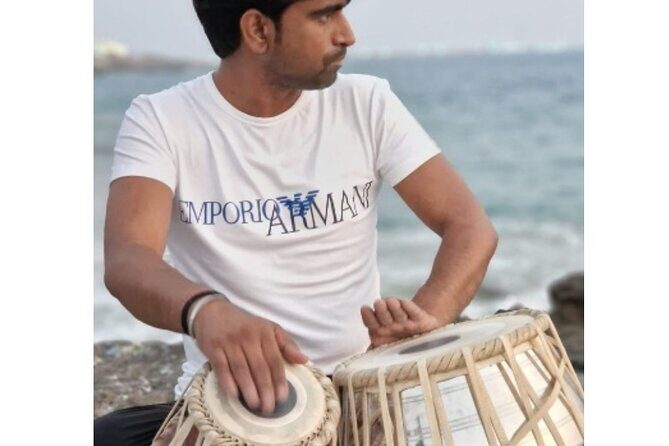
- Pick your instrument on arrival and get instruction tailored to what you chose.
- Handcrafted instruments for each participant make it easy to practice during the lesson.
- Suraj’s 20+ years of experience bring structure beyond the usual casual demos.
- No musical background needed, so it works even if you’ve never read music.
- 1-to-1 or group lessons are available, with room to discuss options for special experiences.
Choosing Your Instrument at Music Vibes (tabla, sitar, tampura, harmonium, shruti, flute)
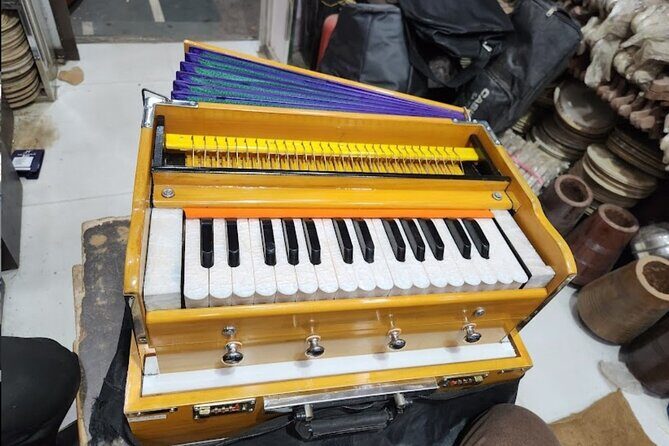
Varanasi is famous for music you can feel in your bones, and this lesson leans into that idea from minute one. At the Music Vibes shop in the Dashashwamedh Ghat area, you’ll choose the instrument you want to learn: tabla, sitar, tampura, harmonium, shruti, or flute.
What I like about this setup is that it forces you to pay attention to the instrument’s personality. A tabla isn’t just a drum—it has tone, pitch, and different strike techniques that create conversations between the two drum heads. A tampura is about steady resonance, giving your ear a reference point that makes everything else easier to hear. A sitar and flute both rely on breath, finger control, and timing, but in very different ways. If you’re the type who learns best by doing, this “sound and aesthetics first” approach gives you a fast path into understanding what you’re about to play.
The shop also provides the instrument for the participants during the experience, and that matters more than it sounds. When you’re holding the actual instrument in your hands, you can connect the sound to what your fingers and hands are doing. That turns the session into something you can feel instantly, even if you only grasp a few basic patterns by the end.
You can also read our reviews of more tours and experiences in Varanasi.



What Happens in a 1-Hour Lesson: Sound Basics to Your First Notes
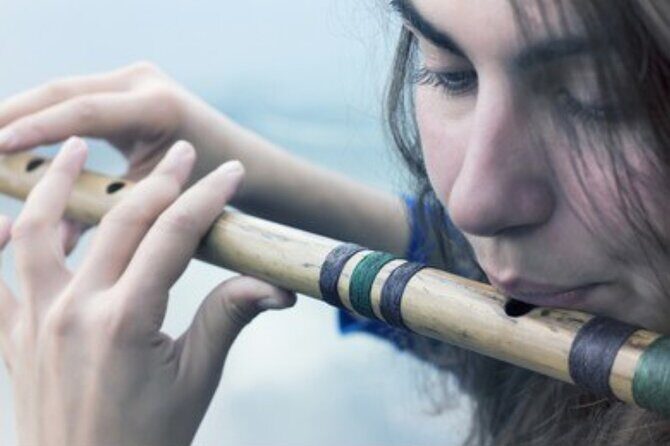
This is a one-hour lesson, and it’s designed to move in a clear sequence. You start by looking closely at your chosen instrument—how it looks, how it’s built, and what kind of sound it produces. Then you learn music basics related to that instrument.
After that, Suraj teaches you how to play. The teaching is framed as more than mechanics; it’s about how sound and vibration affect your mind, soul, and body. Even if you’re practical and skeptical, you’ll likely notice the psychological part quickly: steady tones can calm you, and rhythmic patterns can focus your attention.
Here’s the practical reality of an hour. You won’t become fluent in classical Indian music in 60 minutes. But you can absolutely leave with:
- A feel for how the instrument responds to your touch
- A basic pattern or entry point you can repeat
- A clearer ear for rhythm or resonance
- The confidence that the technique has a logic you can keep building on
Think of this lesson as a “first door opened” experience. You walk in not knowing much (totally fine), and you walk out with enough understanding to keep learning later—whether you return for another lesson or just continue on your own.
Meet at Dashashwamedh Ghat: Finding Music Vibes Shop & Lessons
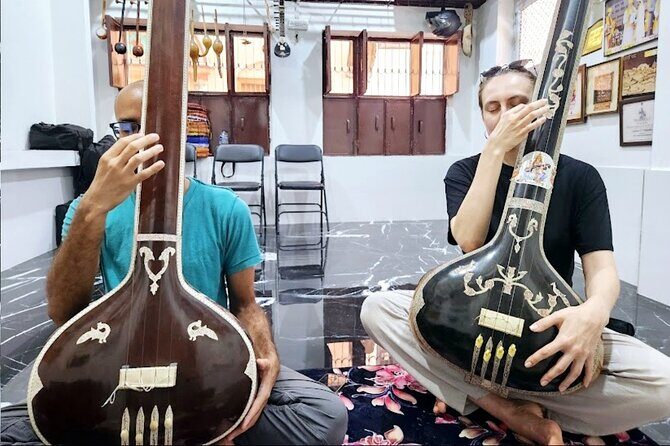
The meeting point is Music Vibes Shop & Lessons, D14/88, Dashashwamedh Ghat Rd, Terhineem, Godowlia, Varanasi, Uttar Pradesh 221001, India. That puts you in the Dashashwamedh Ghat zone, one of the most active parts of Varanasi for walking, noise, and river energy.
For most people, the logistics are simple because it’s near public transportation. You don’t need a complicated plan or a long taxi ride to start your lesson—just get yourself to the shop address before your session time.
This is also set up as a private tour/activity, meaning only your group participates. That usually makes a big difference in a hands-on lesson. You’re not fighting for attention or trying to hear instructions over a crowd.
One small consideration: because Varanasi is so lively, it’s smart to give yourself a little buffer time to reach the shop calmly. If you’re rushing, you’ll feel it, and music is easier when you’re settled.
Instruments Provided: Why “Try It for Real” Makes This Worth $9
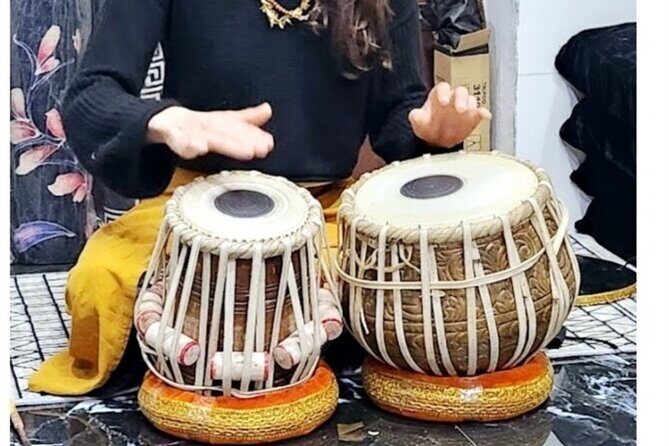
The price is $9.07 per person, and for what you get, it’s honestly tough to beat. The value isn’t just the cost—it’s how the lesson is structured around doing. You’re not watching from the sidelines. You get an instrument during the experience, so you can practice right away with your own hands.
Also, the instruments are described as one-of-a-kind and handcrafted by local people. Even without getting into a deep craft lecture, that detail changes the experience. It’s not a generic demo tool. You’re learning on something made by local makers, which is exactly the kind of authenticity that feels right in a city like Varanasi.
A quick note on expectations: because this is a beginner-friendly session and the duration is short, you’re not paying for a multi-week conservatory-style training program. You’re paying for a guided introduction that gives you enough structure to understand what classical Indian music is doing—and enough hands-on practice to make the sound real.
If you’re on a tight budget, this is one of those activities that fits without messing up your whole itinerary. And if you’re not on a tight budget, it still works because the experience feels personal and immediate, not like a tourist stop.
Suraj’s Teaching Style and the Advantage of Real Credentials
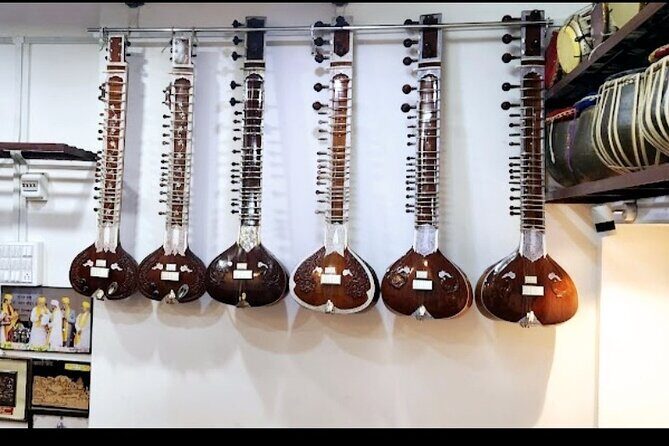
A lot of music-related stops in India are more about selling an experience than teaching technique. This one leans the other way. Suraj is described as a Master of music with extensive experience—20+ years—performing and teaching at venues and festivals around the world.
The reviews add an extra layer: one of the big praises is that the teacher is an actual graduate in music. That’s a meaningful distinction, especially for Western visitors who may not know what to look for in a shop or who want more than a basic “try this for a minute” approach.
So what does that mean for you during the lesson? It usually means:
- Clear instruction that makes sense quickly
- A focus on fundamentals (so you don’t just copy a sound)
- An ability to adapt if you’re starting from zero
If you’re a professional musician, the experience may still be useful because it can add to your repertoire—learning how a local teacher approaches basics on these specific instruments. But if you’re a complete beginner, the good news is that you don’t need any musical education to join.



1-to-1 vs Group Lessons: Picking the Right Lesson Size
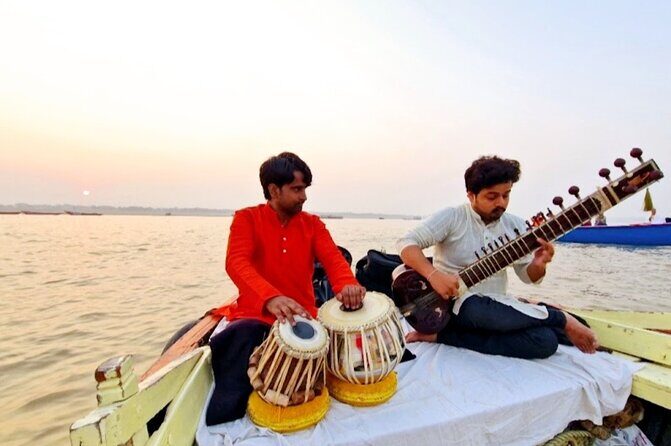
This is offered as 1-to-1 or group lessons. If you’re traveling solo, 1-to-1 is the most efficient option because your time goes toward your instrument and your learning pace. If you’re traveling as a group, you can do a small group lesson or keep it private for your party.
A private lesson format matters because learning rhythms and patterns needs feedback. Even if you only learn a few basic phrases, being corrected early helps you avoid locking in a wrong technique.
There’s also mention of possible add-ons if you’re traveling in a group, such as arranging a private sunrise boat concert on the Ganges. That’s not the core lesson, but it’s a nice example of how the shop can connect music to Varanasi’s signature setting.
Who This Experience Fits (and who should think twice)

This lesson is a strong fit if you want hands-on cultural learning without needing prior training. It’s also ideal if you want a calm, structured counterpoint to the busy energy of Varanasi—an hour with a single focus and a teacher guiding you step by step.
You’ll likely enjoy this more if you like:
- Learning by doing
- Hearing a sound and then figuring out how to produce it
- Practical instruction over a lecture
Who should think twice? If you’re expecting a long classical-music training track, this won’t be long enough. You’re also limited by the nature of the session: you’ll learn basics and first steps, not a full repertoire.
If you’re very sensitive to noise or crowd bustle, plan how you’ll handle the wider area around the shop. The lesson itself is at the shop, but you’re still in Varanasi’s ghat district.
Timing and Booking: Make It Work With Your Varanasi Days
This is typically booked about 36 days in advance on average. That’s a clue: if your dates are fixed, booking sooner is smart. You’ll also want to book early if you’re hoping for a specific instrument choice, since you’ll want your first pick available when you arrive.
The experience lasts about an hour, so it fits well on many schedules. I like scheduling it earlier in the day when you still have energy to practice whatever you learn. But even later can work, because the focus and repetition of music can feel grounding.
Add-ons to Ask About: Sunrise Ganges Boat Concert
One extra detail worth keeping on your radar: the shop mentions the possibility of arranging a small group lesson or a private sunrise boat concert on the Ganges. If your group size makes it workable, it’s the kind of “place + music” pairing that can feel especially memorable in Varanasi.
I’d treat this as an optional conversation, not something to count on automatically. Ask what’s possible for your dates and group size, and keep expectations flexible.
Should You Book This Varanasi Music Lesson?
Book it if you want a beginner-friendly, hands-on music experience in Varanasi that doesn’t require special skills. You’re getting an instructor with 20+ years of experience, an instrument provided for you, and a lesson built around sound, basics, and actual playing. At $9.07 for about an hour, the value is strong.
Skip it if you’re looking for a long course, deep classical training, or a performance-only experience. This is about your first steps, not a full transformation into a master.
If you’re curious about tabla, sitar, tampura, harmonium, shruti, or flute—and you want your first real contact with the instrument—you’ll probably leave with a smile and a new ear for Varanasi music.
FAQ
What instruments can I choose to learn?
You can learn one of these traditional classical instruments in Varanasi: tabla, sitar, tampura, harmonium, shruti, or flute.
How long is the lesson?
The experience is approximately 1 hour.
Is musical education required?
No. The lesson is designed so that you don’t need any musical education to participate.
Do I get an instrument to play during the lesson?
Yes. An instrument of your choice is provided to each participant during the experience.
Do you offer private lessons or group lessons?
Yes. The shop offers 1-to-1 or group lessons, and you can also arrange a small group lesson for a traveling group.
Where is the meeting point?
The meeting point is Music Vibes Shop & Lessons, D14/88, Dashashwamedh Ghat Rd, Terhineem, Godowlia, Varanasi, Uttar Pradesh 221001, India.
How does payment and ticketing work?
You’ll receive a mobile ticket, and confirmation is received at the time of booking.
What is the cancellation policy?
Free cancellation is available. You can cancel up to 24 hours in advance for a full refund; within 24 hours, the amount paid is not refunded.
Is the tour suitable for most people?
Most travelers can participate. Service animals are allowed as well.