REVIEW · JAIPUR
Jaipur: Spice Market and Street Food Walking Tour
Book on GetYourGuide →Operated by Ultimate Urban Adventures Pvt. Ltd. · Bookable on GetYourGuide
Spices hit you before you even reach the stalls. Starting at Shri Chandpol Hanuman Ji Temple, you walk straight into Jaipur’s oldest and biggest spice market, where the air is thick with color, noise, and scent, and you can see locals grinding spices. I love how direct and sensory this is, because it turns a market into a real introduction to how Indian cooks think.
My second favorite part is the food piece: you stop at 5 to 6 authentic vegetarian stalls, then finish with chai and snacks in the old city. The one drawback to plan around is that this is a crowded, walking-heavy experience with strong smells, so you’ll want comfortable shoes and you should expect tight streets.
In This Review
- Key highlights to look for
- Entering Jaipur from Shri Chandpol Hanuman Ji Temple
- Jaipur’s oldest spice market walk: grinding, colors, and real use
- Historic sights on the way to the chaos
- Short tuk-tuk hops to Tripolia Gate
- The street-food tasting: chai plus 5 to 6 vegetarian stops
- What you’re really paying for with a $21 price
- Photography and filmmaking in crowded spice lanes
- Who this tour suits best (and who should skip it)
- Should you book the Jaipur spice market and street food walk?
- FAQ
- Where do I meet the guide?
- How long is the tour?
- What food do you try during the street-food portion?
- Are there tuk-tuk rides?
- Is the tour in English?
- Is this tour suitable for wheelchair users?
Key highlights to look for
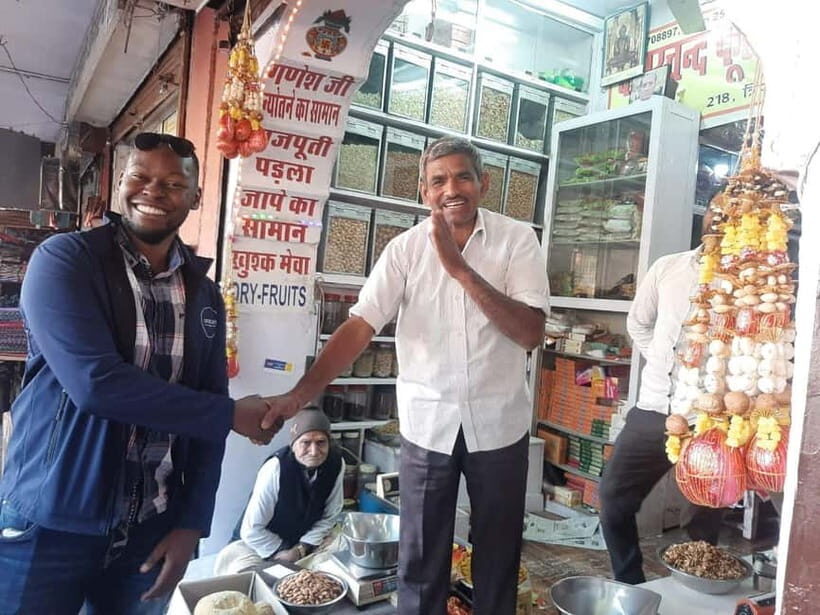
- Start at Shri Chandpol Hanuman Ji Temple: meet the guide just outside for an easy, local landmark.
- Watch spices being ground: see how the market works up close, not from far away.
- Two short tuk-tuk rides: quick breaks that help your feet after the market walk.
- Street-food tasting with chai: multiple stops make it feel like a guided sampler, not one random meal.
- Historic sights along the route: you pass major old-city landmarks while learning what you’re seeing.
- Photography is welcome: great for cameras and filmmakers, with the usual respectful-local etiquette.
Entering Jaipur from Shri Chandpol Hanuman Ji Temple
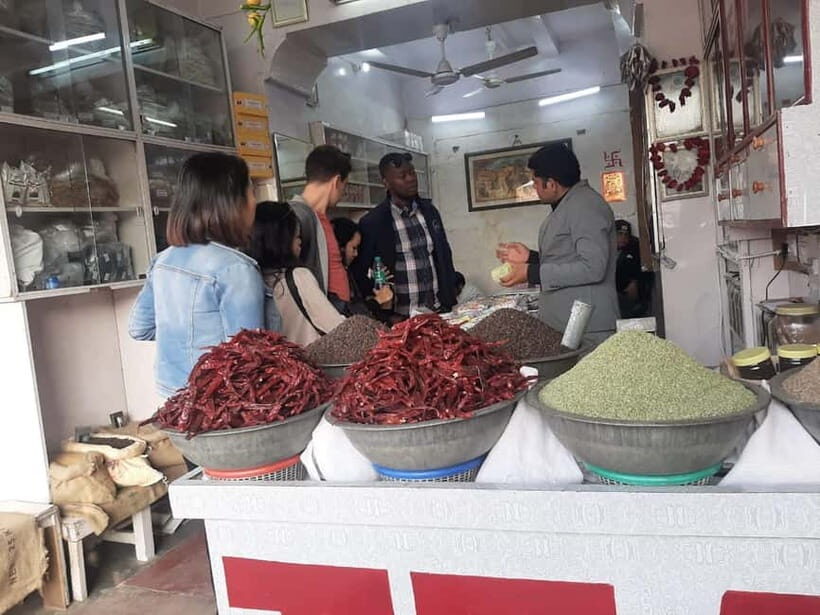
I like tours that start with a place locals would recognize instantly, and this one does. You meet your guide just outside Shri Chandpol Hanuman Ji Temple in the pink city area. That matters because the market and old streets can feel chaotic at first. Starting from a fixed landmark helps you get your bearings fast, so the “wow” factor comes from the sights instead of confusion.
This also sets the tone. You’re not wandering in with no context. You’re entering the old city as a guided walk, which means you spend less time trying to figure out where to go and more time noticing details like the way people handle sacks of spice, the way shopfronts are arranged, and how the talk around cooking and ingredients actually sounds.
If you’re the type who likes to film or photograph street scenes, this first stretch is useful. You’ll get rhythm: stop, look, move, and keep your camera respectful of foot traffic.
You can also read our reviews of more walking tours in Jaipur


Jaipur’s oldest spice market walk: grinding, colors, and real use
The main event is the spice market walk. You’ll explore Jaipur’s oldest and biggest spice market, and you’ll see spices being ground by locals. That single detail changes everything. Instead of viewing spices as neat powders on a shelf, you see them as raw material coming to life—moved, ground, blended, and sold in real time.
A good guide also helps you connect what you see to what you cook with. In English, guides on this tour have explained how different spices are used in cooking and how people think about medicinal or Ayurvedic properties. That kind of explanation is practical. It helps you notice spice behavior in the market—what’s commonly sold, what’s mixed, and why certain aromas seem to dominate when the air is still.
Here’s what you should expect in your senses. The market has layers: grinding sounds, trading voices, rustling bags, and the thick smell of dry heat plus fresh spice. The tour doesn’t hide that. It leans into it, which is why food lovers usually enjoy it. If you’re worried about being overwhelmed, plan to slow down and let the guide lead your pacing. You can look without barging into people’s space.
One more thing: the market walk is your guided filter. Even if you love street markets, it’s easy to miss the “why” when you’re solo. With a guide, you’re not just taking photos. You’re learning what you’re seeing.
Historic sights on the way to the chaos
Another reason I like this tour is that it doesn’t trap you in one block of shops. Along the route, you walk past famous historic sites while you move through the organized chaos of the spice market area. That mix is valuable because it gives you both context and momentum.
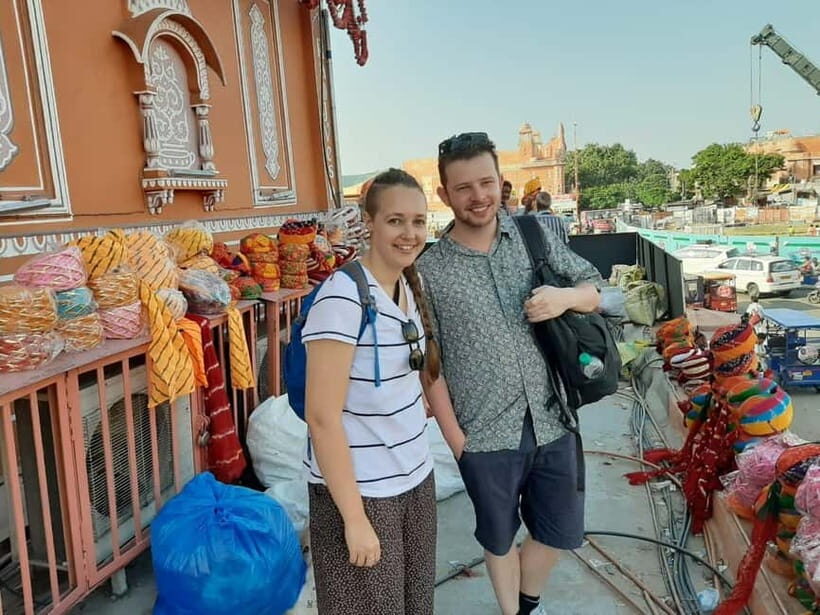
You’ll likely notice that the old city feels like it’s built for walking, but not for wandering blindly. The lanes funnel you. The street turns reveal new storefronts. The guide’s job is basically translation—turning the streetscape into something you can name and understand. That makes your photos better too. You’re capturing scenes with a reason attached, not just random frames of activity.
Practical tip: keep your camera strap short and your phone secured. The streets are crowded, and people move close to each other around stalls.
Short tuk-tuk hops to Tripolia Gate
After the spice market walk, you get a break: short tuk-tuk rides that help you reset. The itinerary includes a ride of about 10 minutes to Tripolia Gate, and there are two quick tuk-tuk segments total during the tour. For a 2.5-hour experience, that’s a smart move. It keeps you from arriving at the food portion with dead feet.
Also, the tuk-tuk angle gives you a slightly different view of the pink city compared with walking lanes. It’s not about sightseeing from a long ride. It’s about getting you from one part of the old city to the next without burning energy.
If you’re bringing gear for filming, treat tuk-tuks like what they are: bumpy and close. Hold your bag in tight, and avoid filming while leaning or standing up.
The street-food tasting: chai plus 5 to 6 vegetarian stops
This is where the tour turns from “look and learn” into “taste and compare.” You stop at 5 to 6 authentic food shops in the old city and you finish with chai and street food. The food portion is vegetarian-focused, which is a helpful detail if you’re trying to keep your stomach calm while still eating local.
What makes this tasting feel worth it is the structure. Instead of one stop where everyone gets the same snack, you get a short sequence of places. That lets you notice differences in spice use, texture, and how each stall handles flavor. And your guide acts like your translator, explaining what to try and why it matches the spices you just saw in the market.
You also get a chance to slow down. One of the best moments people describe is ending up at a very well-known chai place, eating properly, and talking for a minute in a local setting. That’s a big deal in India street food culture: it’s not only about eating fast and moving on.
If you have a sensitive stomach, this is still street food, so be smart. Stick with what the guide recommends, eat at a normal pace, and take small bites if you’re trying unfamiliar spices. And if you’re heat-sensitive, tell your guide you want milder options before ordering.
You can also read our reviews of more food & drink experiences in Jaipur





What you’re really paying for with a $21 price
At $21 per person for about 2.5 hours, this tour is good value because it bundles several “separate costs” into one guided experience. You get:
- a guided market walk focused on spices and how they’re used
- tastings across 5 to 6 authentic stalls
- two short tuk-tuk rides
- a water bottle
So yes, you’re paying for food and transport. But the bigger value is guidance. The guide helps you avoid the two classic street-market problems: missing the best places and not understanding what you’re looking at. When a guide explains how spices connect to cooking and even medicinal ideas, the snack portion becomes more than fuel. It becomes learning you can taste.
Photography and filmmaking in crowded spice lanes
If you’re coming for visuals, this tour is set up for you. It’s explicitly a good fit for photographers, filmmakers, bloggers, chefs, and food lovers. The market gives you textures and color, and the spice-grinding scene is the kind of shot that’s hard to recreate later.
Just keep it practical:
- Move with the group. Don’t stop in the middle of a lane.
- Ask before zooming close to people at the grinder or shopfront.
- Expect dust and spice particles in the air. Wipe your lens if you see residue.
- Use short bursts instead of long shots; the crowd moves quickly.
And remember: respectful filming looks better than aggressive filming. If people feel safe, you’ll get better images.
Who this tour suits best (and who should skip it)
This one fits you if you want a real old-city introduction: spices, street food, and a guided explanation that stays grounded in everyday use. It’s especially good if you’re curious about Indian cooking ingredients and you like food experiences that come with context.
It may not be ideal if:
- you have mobility limitations (the tour is not suitable for people with mobility impairments or wheelchair users)
- you dislike crowded walking or strong, spicy smells
- you want a slow, low-stimulation pace
Also, this is English-led. If you don’t speak English comfortably, you might find it less satisfying.
Should you book the Jaipur spice market and street food walk?
Book it if you like markets with purpose: watch spices being ground, learn what they’re used for, then eat multiple vegetarian street-food tastings with chai. The mix of spice market + historic streets + guided food stops is what makes it feel more complete than a simple food crawl.
Skip it if you’re looking for a quiet, wide-open sightseeing day. This is tight streets, close crowds, and serious scent. You’ll get the most out of it if you come with comfortable shoes and a flexible mindset.
If you want a fun way to see Jaipur beyond major monuments, this tour is a strong match. You leave with a better mental map of old-city life, plus the kind of food memories that stick.
FAQ
Where do I meet the guide?
Meet just outside Shri Chandpole Hanuman Ji Temple in Jaipur. That temple is the starting landmark for the walk.
How long is the tour?
The tour runs for 2.5 hours.
What food do you try during the street-food portion?
You’ll taste food at about 5 to 6 authentic food shops in the old city, and the tour includes chai and snacks.
Are there tuk-tuk rides?
Yes. You’ll have two short tuk-tuk rides during the tour, including a ride of about 10 minutes after the spice market walk.
Is the tour in English?
Yes. The live tour guide speaks English.
Is this tour suitable for wheelchair users?
No. It is not suitable for people with mobility impairments or wheelchair users.