REVIEW · JAIPUR
Jaipur: Full Day City sightseeing with Car, Guide & Lunch
Book on GetYourGuide →Operated by Flamingo Luxury Tours · Bookable on GetYourGuide
Jaipur can feel overwhelming fast, but this tight, guided loop makes it manageable. You get a private AC car with a live guide and a classic set of landmarks packed into one day, from Amber Fort’s dramatic hillside walls to Hawa Mahal’s honeycomb facade. I like that the plan includes both “wow” monuments and practical, human-scale stops like the stepwell. I also like that lunch is included, so you don’t end up hunting for food between sites. One thing to keep in mind: with multiple stops and walking time at each one, you’ll want to start with clear expectations (and confirm the order) so nothing important gets shortened.
The best part of this experience is how it lets you piece together Jaipur’s story: forts and palaces for power, a stepwell for survival, and water-and-wind architecture for everyday city life. If you do it smart—water first, comfy shoes on, and a quick chat with your guide at pickup about what you care about—you’ll end the day feeling like you really understood the Pink City, not just photographed it. The only drawback is that if you show up late in the day or you’re chasing long indoor museum time, the schedule can feel brisk.
In This Review
- Key things that make this tour worth your time
- Why this 6-hour Jaipur day works for first-timers
- Your pickup and car ride: smoother than hopping between taxis
- Amber Fort: red sandstone, white marble, and serious viewpoint energy
- Panna Meena ka Kund: the stepwell that explains how people survived
- Jal Mahal on Man Sagar Lake: a calm pause with photo payoff
- Lunch in Jaipur: a real sit-down break (and why it’s included)
- Hawa Mahal: the Palace of Winds as a street-life design
- City Palace: Maharaja Jai Singh’s complex of power and residence
- Where Jantar Mantar fits (and why you should confirm it)
- Cost and value: what $7 per person really means
- Who this tour suits best (and who may feel cramped)
- Should you book this Jaipur full-day city sightseeing tour?
- FAQ
- How long is the Jaipur city sightseeing tour?
- Do I get picked up from my hotel or other location in Jaipur?
- Is the tour private?
- What monuments are included on the main route?
- Is lunch included?
- Are monument tickets included?
- What languages are the guides available in?
- Is Jantar Mantar definitely part of the day?
Key things that make this tour worth your time
- Private guided sightseeing loop that keeps you moving efficiently across Jaipur’s main sights
- Amber Fort + Panna Meena ka Kund back-to-back, mixing palace power with water-engineering beauty
- Jal Mahal at Man Sagar Lake for a calm break from crowds and city noise
- Hawa Mahal + City Palace to see both the city’s iconic facade and the royal residence in one stretch
- Lunch included, so you get a real meal without turning the day into constant logistics
Why this 6-hour Jaipur day works for first-timers
I like Jaipur best when I can connect the architecture to the daily life around it. This tour is built for that. In one afternoon window, you cover landmarks that show different sides of the city: defensive fort walls, court life, public water systems, and the famous facade designed for watching the street.
And yes, it’s only about six hours. That’s the point. You’re not trying to “master” Jaipur. You’re trying to get your bearings fast—so later, if you want to return for deeper time at one place, you’ll know exactly where to go.
You can also read our reviews of more guided tours in Jaipur



Your pickup and car ride: smoother than hopping between taxis
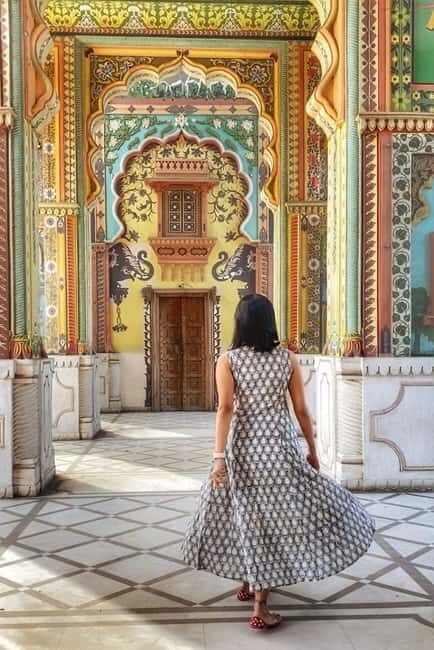
The tour includes pickup from your chosen location in Jaipur, with a private AC car and a live guide. That matters more than it sounds. Jaipur traffic and parking can eat time, and when you’re moving between forts and palace areas, you want fewer decisions. The car also makes the day feel more comfortable in heat.
The guide is available in English, Italian, Spanish, and French, which is great if you want explanations beyond simple directions. You’re also in a private group, so you can ask questions and adjust pacing a bit—within reason—without being stuck in a big crowd.
One practical note: a route like this includes walking time at each stop. Wear shoes you can handle for hills and stone steps, especially around Amber Fort.
Amber Fort: red sandstone, white marble, and serious viewpoint energy

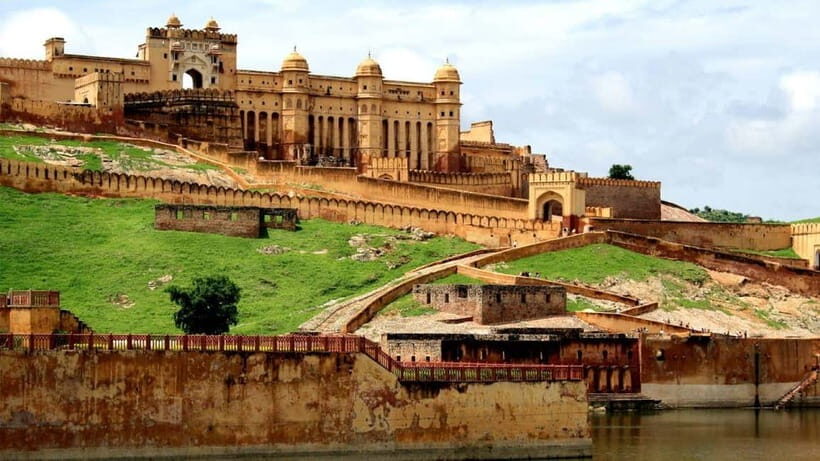
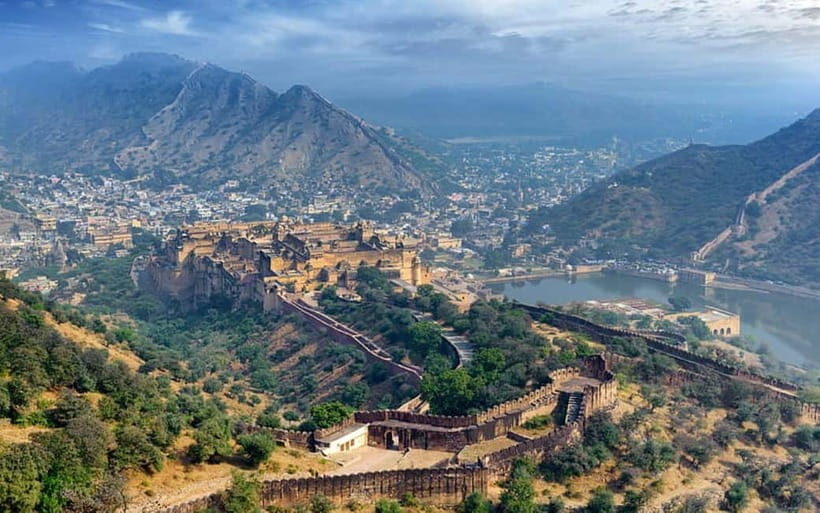
You’ll spend about 2 hours at Amber Fort, including a guided visit, sightseeing, and walking. Amber Fort sits on rugged hills outside Jaipur, and the architecture is a strong mix of Hindu and Muslim styles. That combination is the whole point. It’s not just a fortress—it’s a display of royal taste and political reach.
What you’ll enjoy most here is the feeling of stepping into a layered past. You see dramatic stonework, courtyards, and panoramic views over the surrounding landscape. When your guide points out details, the fort stops feeling like generic “ancient walls” and starts reading like a carefully designed stage.
Practical consideration: Amber Fort involves stairs and uneven surfaces. Plan for a moderate walk rather than a quick wander. If you’re visiting in hotter weather, bring water (you’ll have it), and don’t be shy about pausing for shade.
Panna Meena ka Kund: the stepwell that explains how people survived
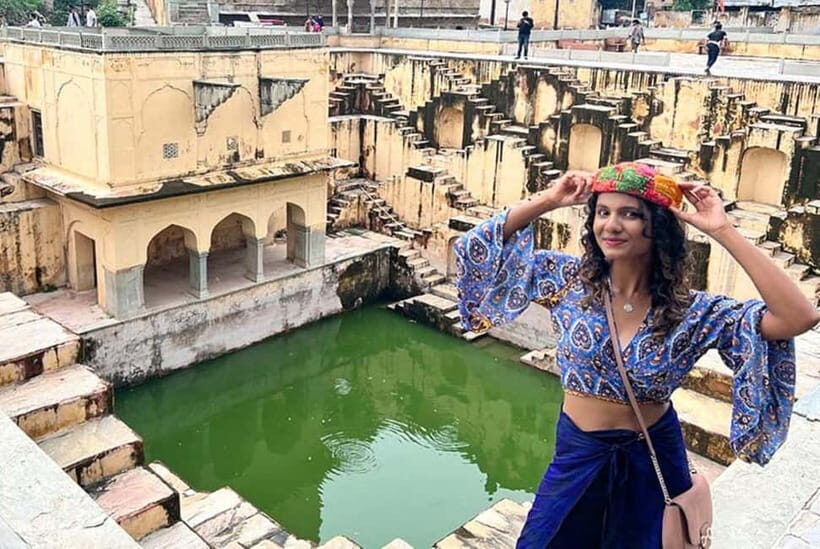
Next comes Panna Meena ka Kund, about 105 minutes, with guided viewing and walking. This is a stepwell known for its symmetrical stairways and efficient rainwater catchment design. It’s a 16th-century structure near Amber Fort, and it’s the kind of site that rewards paying attention.
Here’s why I think this stop is great value: it shifts the day from royal spectacle to practical engineering. It tells you how water storage and access shaped daily life. The geometry is striking, and even if you’re not an architecture nerd, the logic behind the design makes it feel purposeful rather than decorative.
If you take photos, aim for angles that show the symmetry from more than one side. Guides usually help with that, but you can also do it yourself—slow down and look for straight alignments.
Jal Mahal on Man Sagar Lake: a calm pause with photo payoff
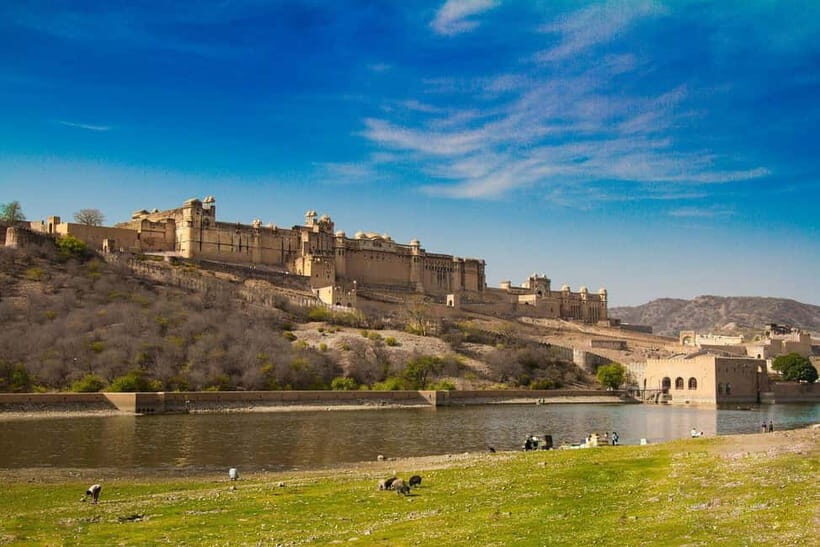
Jal Mahal is next, with about 1.5 hours for visit, guided sightseeing, and walking. This is the “water palace” idea: an 18th-century Rajput structure in the middle of Man Sagar Lake, built in striking red sandstone.
The reason this stop works in a six-hour loop is that it breaks the pace. After forts and city architecture, you get something quieter visually. You also get perspective—Jaipur isn’t only about buildings. It’s about planning the city around water systems and views.
At the same time, it’s easy to over-hype it. You’ll get strong views and atmosphere, but this is still a monument you visit in a fixed time window. If you’re the type who wants long unhurried time at a single place, you might feel the schedule here. I’d treat Jal Mahal as a visual reset rather than a long museum moment.
You can also read our reviews of more city tours in Jaipur





Lunch in Jaipur: a real sit-down break (and why it’s included)
Lunch is included for about 1 hour at an authentic Indian spot in Jaipur. This is one of those “small” inclusions that becomes big during a tight itinerary. Without it, you’d spend time figuring out where to eat, whether the food is safe for you, and how long the meal will take.
The value here is timing. An extra 45 minutes searching for a restaurant can wreck the flow of a day that already has planned walking time at multiple monuments. With lunch taken care of, you can focus on sightseeing again sooner.
Food tip: eat at a normal pace. Don’t try to maximize the meal. You’ll thank yourself later at Hawa Mahal and City Palace.
Hawa Mahal: the Palace of Winds as a street-life design
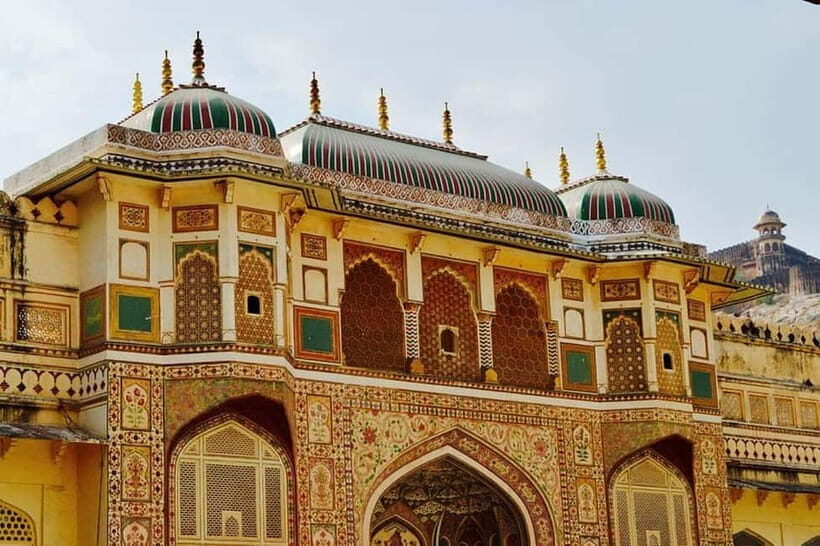
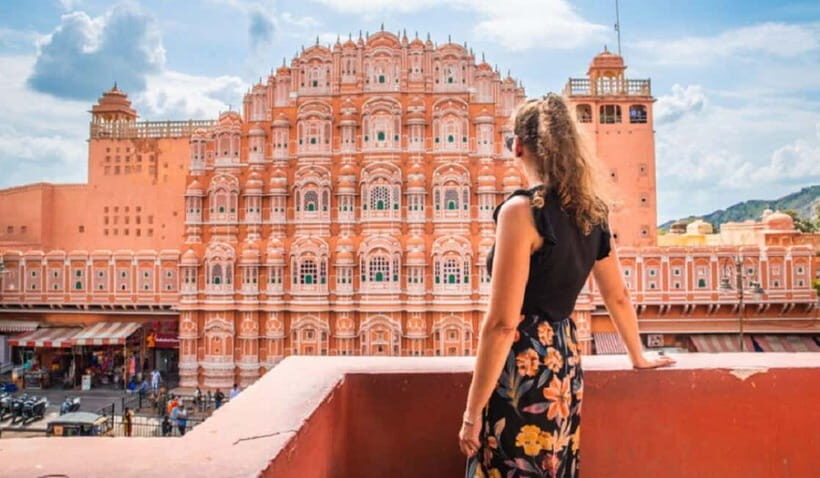
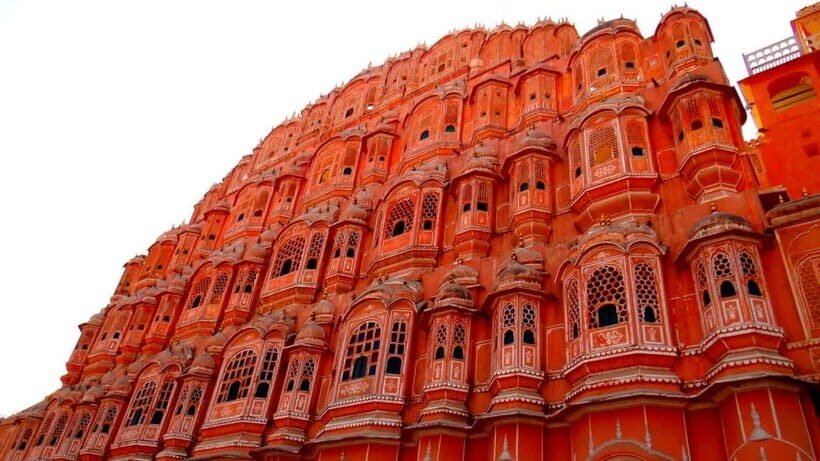
You’ll then head to Hawa Mahal, spending about 1.5 hours for visit, guided tour, and sightseeing. Hawa Mahal, or the Palace of Winds, was envisioned by Sawai Pratap Singh. It’s famous for its tiered arches and intricate latticework screens.
What makes this stop more than a postcard is the concept behind it. The design was meant to help someone glimpse daily life from inside—through those decorative window structures. Your guide can help you connect the facade you see from outside with the purpose it served.
I recommend doing two things here:
- Look at the pattern at eye level, not only from far away.
- Then step back and compare the building’s layers as a whole.
That way you don’t miss the design logic while you’re distracted by the crowds and the photo frenzy.
City Palace: Maharaja Jai Singh’s complex of power and residence
Next is the City Palace, about 2 hours including guided sightseeing and walking. This is where Jaipur feels most like a royal seat rather than just a monument stop.
City Palace was built by Maharaja Jai Singh and it houses the erstwhile royal family’s spaces. That means you’re not only looking at walls—you’re looking at how a palace complex worked as a living center of power and administration.
What I like about including City Palace near the end of the day is that it ties back to Amber Fort. You see the arc: forts for defense and rule, palaces for court life and governance. By now, the city’s architecture themes start to click.
Practical note: City Palace is large. If you try to see everything at the same tempo as the other stops, you’ll feel rushed. Use your guide’s direction. Pick the areas that interest you most and let the rest be a quick look.
Where Jantar Mantar fits (and why you should confirm it)
The tour description also calls out Jantar Mantar, an astronomical site tied to Sawai Jai Singh. It mentions nineteen astronomical instruments and highlights UNESCO status plus the world’s largest stone sundial.
But the hour-by-hour outline you’ll be given focuses on Amber Fort, Panna Meena ka Kund, Jal Mahal, Hawa Mahal, and City Palace—so the exact inclusion of Jantar Mantar in your day isn’t crystal clear from the schedule alone.
So here’s my advice: when you book or when you get picked up, ask a simple question:
- Is Jantar Mantar included in my exact itinerary today, and when will we go?
If it is included, great—you’ll get a very different lens on Jaipur, where science and architecture show up together. If it isn’t, you’ll know you’re not missing it unexpectedly and you can decide whether to add it later on your own.
Cost and value: what $7 per person really means
At $7 per person for about 6 hours, this tour looks like an amazing deal on paper. And for a private setup with a car, guide, and a route through major monuments, it often is. The key is how the fine print affects your real-world cost.
Here’s what you should watch:
- Monument tickets are included only if you select that option.
- The “skip the line” benefit is tied to the ticket situation (a separate entrance works when you have tickets).
- Lunch is included if you choose the lunch option (it’s described as included in the experience options).
If you’re traveling on a tight budget, I still think it’s good value. The guide and car are doing the heavy lifting that would otherwise cost more, especially if you’d otherwise juggle rides and ticket lines by yourself.
Who this tour suits best (and who may feel cramped)
This experience fits you if:
- You’re short on time and want a best-of Jaipur day.
- You like having a guide explain what you’re seeing, not just look at it.
- You want a private, car-based day instead of spending energy on transport.
You might feel less happy if:
- You hate walking and would rather do fewer stops with more quiet time.
- You’re a “slow traveler” who wants long museum-style visits at one site.
- You care deeply about a specific order of sights. The plan is designed as a set loop, and timing can shift.
One real-world reminder: I’ve seen reports where the day got pushed late, and in that case, one key stop didn’t happen as expected. That’s not the norm you should assume, but it is a good reason to communicate your priorities early at pickup. If entering a specific place matters most to you, say it clearly.
Should you book this Jaipur full-day city sightseeing tour?
Yes, I’d book it if your goal is a confident first-day hit list: Amber Fort, stepwell engineering, Hawa Mahal, and City Palace, with lunch and private transport handling the stress. The value is strong for the amount you cover, and a good guide can turn the day from sightseeing into understanding.
If you’re particularly attached to Jal Mahal and Jantar Mantar, confirm both before you go—especially whether Jantar Mantar lands in your exact schedule. Also, if you have a preferred starting point, tell the guide at pickup and ask whether the order can stay as planned.
FAQ
How long is the Jaipur city sightseeing tour?
It runs for about 6 hours.
Do I get picked up from my hotel or other location in Jaipur?
Yes. Pickup is included from your desired location in Jaipur, and you’ll also be dropped back afterward.
Is the tour private?
Yes. It’s a private group with a private guide and a private AC car.
What monuments are included on the main route?
The tour description focuses on Amber Fort, Panna Meena ka Kund, Jal Mahal, Hawa Mahal, and City Palace.
Is lunch included?
Lunch is included if you select the lunch option. It’s described as authentic Indian cuisine at a good spot in Jaipur.
Are monument tickets included?
Monument tickets are included only if you select the monument tickets option. There’s also mention of skip-the-line through a separate entrance.
What languages are the guides available in?
The live guide is listed as available in English, Italian, Spanish, and French.
Is Jantar Mantar definitely part of the day?
The tour highlights mention Jantar Mantar, but the time breakdown you receive focuses on the other sites listed. It’s smart to confirm with your guide during pickup whether it’s included that day.