REVIEW · NEW DELHI
Glories of the Past-3 Day Tour to Delhi Agra Fatehpur-Taj & More
Book on Viator →Operated by Magic Carpet Tours · Bookable on Viator
A three-day route through India’s power centers.
What makes this trip fun is the mix: Delhi landmarks plus Mughal masterpieces in Agra, then Emperor Akbar’s Fatehpur Sikri. I like the certified guide angle, because the best moments are the explanations: why these places look the way they do and what they meant. One thing to watch: monument entry tickets are included only if you choose that option, so check before you finalize your total cost.
The pace is built for real life. You’ll ride in a private, air-conditioned vehicle with in-car bottled water and light snacks, then get guided time inside each key stop. It’s also set up for less hassle, with pickup offered from Delhi, Noida, Gurugram, Ghaziabad, and Faridabad, plus a mobile ticket.
The only drawback I’ll flag: long museum days happen, especially with the Agra drive. If you want a light, do-nothing vacation, this may feel like a lot of walking and looking. If you love seeing iconic places with a guide who answers questions (and does it in solid English), you’ll probably enjoy the ride.
In This Review
- Key Highlights I’d Bookmark Before You Go
- Day 1 in Delhi: From Gurudwara Calm to Mughal Icons
- The Agra Day That Turns Up the Drama: Agra Fort, Baby Taj, and Sunset Views
- Day 3: Taj Mahal First, Fatehpur Sikri After
- How the Guide and the Car Change the Whole Trip
- Price and Value: What You Pay $195 For (and What Could Add Up)
- Who Should Book This 3-Day Delhi–Agra–Fatehpur Tour
- Should You Book It? My Decision Guide
- FAQ
- What is the price of the tour?
- How long is the tour?
- Do they pick me up from my hotel?
- Is this a private tour?
- Is a guided tour included?
- Are monument entry tickets included?
- What do I get in the car during the day?
- Is accommodation included?
- Is there free cancellation?
- Do I receive a ticket on my phone?
Key Highlights I’d Bookmark Before You Go
- Private group setup: only your group participates, with a customized pace inside the overall plan
- Guide quality shows up: Ali and Mehraj are praised for clear English, history explanations, and patient Q&A
- Delhi-to-Agra comfort: air-conditioned vehicle plus hotel pickup and smooth transfers
- Photo help is part of the deal: your guide may take time to capture family photos during key stops
- Taj and Fatehpur on the same itinerary: big-silhouette moments plus Akbar-era architecture in one trip
Day 1 in Delhi: From Gurudwara Calm to Mughal Icons
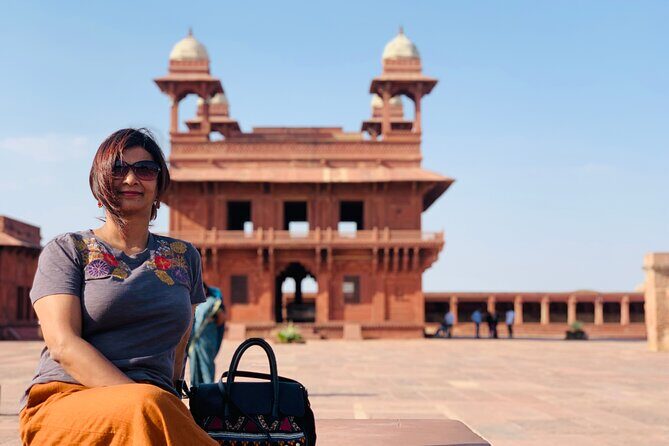
Day one is a nice “mood shift” day. You start at Gurudwara Bangla Sahib, a Sikh temple known for calm, devotion, and service. The description ties it directly to Guru Har Krishan, and that context matters because it’s not just a pretty building—you’re meant to feel the place’s purpose first. You’ll have about 30 minutes there with an admission ticket included, so it’s enough time to look around and reset your brain before the city turns busy (in a good, sensory way).
Next you hit Khari Baoli, often described as Asia’s largest spice market. This is where Delhi feels hands-on: saffron, cardamom, and dried chilies in the air, and stalls that draw you in fast. The stop is also listed at 30 minutes with admission included, which is perfect if you want the aroma and shopping energy without turning it into a half-day errand run.
Then comes the “big capital” monuments. India Gate is quick—about 15 minutes—and it’s framed here as a war memorial for Indian Army soldiers from World War I. It’s short on time but big on atmosphere; use this stop to get oriented in central Delhi before the more architectural sites.
After that, the trip moves into Mughal territory with Humayun’s Tomb (about 1 hour, admission included). It’s UNESCO-listed in the tour info and described as Persian-and-Mughal in style, built in the 16th century by a grieving widow. That backstory makes the visit click. You’ll look longer when you understand it’s not only “a tomb,” it’s also a statement of empire and grief written in stone.
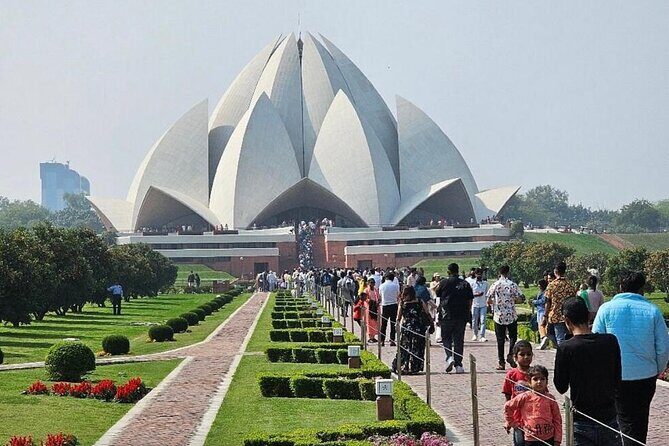
You close the Delhi day with two very different shapes. Lotus Temple (about 30 minutes) is presented as a symbol of unity and peace, open to all faiths. If you’ve been walking in noise and traffic, this gives you a breather—quiet, reflective, and more about space than monuments.
Finally, Qutub Minar (about 45 minutes, admission included). The tour description is clear: a 73-meter minaret built in the 12th century, with Indo-Islamic architecture and Quran verses. It’s also surrounded by historic ruins, so you’ll feel the site as a whole complex rather than a single object. Tip: wear shoes you can move in easily, because you’ll likely want time to look up and also around.
You can also read our reviews of more tours and experiences in New Delhi



The Agra Day That Turns Up the Drama: Agra Fort, Baby Taj, and Sunset Views
Day two is where the trip starts feeling cinematic. The plan begins with pickup in Delhi (and nearby areas) and a drive of about 4 hours to Agra. Since accommodation isn’t included, you’ll want to base yourself in a place where your pickup is genuinely easy. Once you arrive, Agra Fort is the first heavy hitter, with about 1 hour and admission included.
Agra Fort is described as red sandstone and tied to the strength and resilience of the Mughal Sultanate. That “red sentinel” feel matters. Forts can be dry if you’re just scanning walls, but with a guide you’ll get the point: these weren’t just defensive structures—they were the stage for power.
Next is Itmad-ud-Daula, often called the “Baby Taj,” and the tour info leans into that with the nickname and the idea of delicate Mughal craftsmanship. You’ll get about 45 minutes with admission included. This stop is a great counterbalance to the biggest monument in the region. The design is smaller-scale in comparison, but the description emphasizes details and artistry—exactly what you want after a fort day.
Then you roll into Mehtab Bagh, the moonlight-garden style stop. It’s listed for about 1 hour with admission included, and the selling point is the riverside setting and views of the Taj Mahal, especially around sunset. This is a smart move in the itinerary, because it gives you a “Taj moment” even before the full Taj visit on day three. If you care about photos, this stop is marked as a photographer’s paradise, with Taj views from the garden.
One practical note: sunset days can be time-flexible depending on conditions, but your guide’s job is to keep the visit practical. I’d plan for a bit of waiting, even when everything is scheduled neatly.
Day 3: Taj Mahal First, Fatehpur Sikri After

Day three is designed to end with contrast: the most famous white marble monument in the region, then the quieter, more surprising empire-city experiment of Akbar.
Start with the Taj Mahal (about 2 hours, admission included). The tour description frames it as love made permanent in marble poetry, and it includes a Tagore line about the Taj as a tear-drop that glistens on time’s cheek. Even if you’re not the poetic type, that framing helps you see this place as an idea, not only a landmark. Your guide can also help you focus on what you’re actually looking at, which is where guided time really pays off.
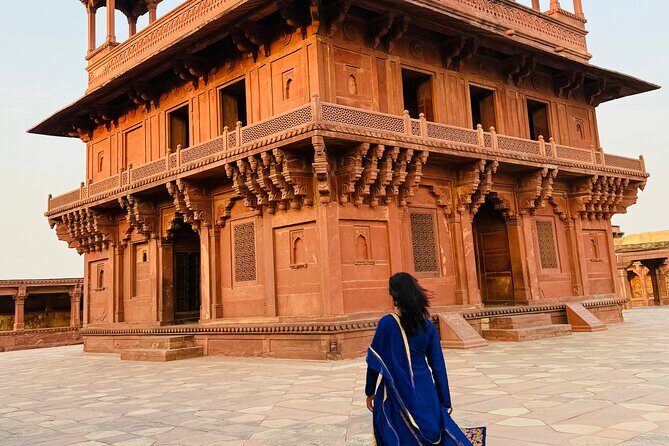
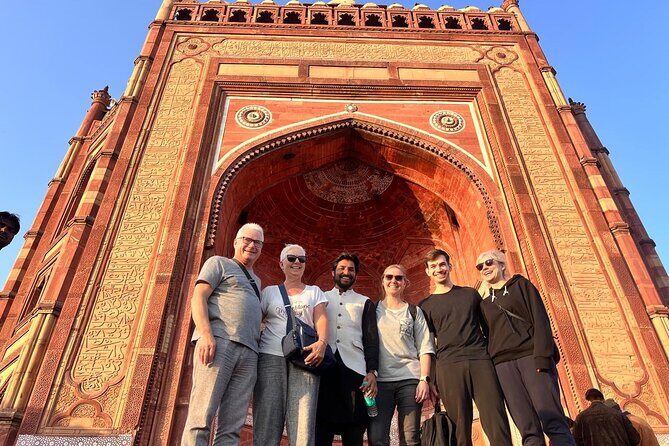
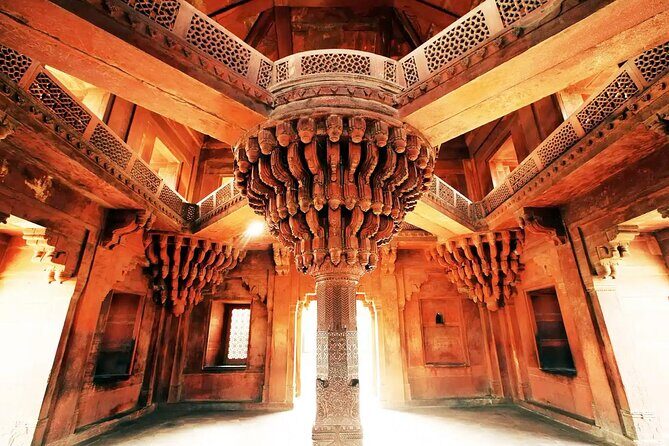
After Taj, you head to Fatehpur Sikri. The drive here isn’t specified in hours, but the stop is substantial: about 4 hours, and the tour info says admission is free. Fatehpur Sikri is described as a red sandstone dream city on the edge of the Aravalli hills, shaped by Emperor Akbar’s vision. The description also emphasizes silent arches and grand courtyards, tied to themes of power, faith, and love.
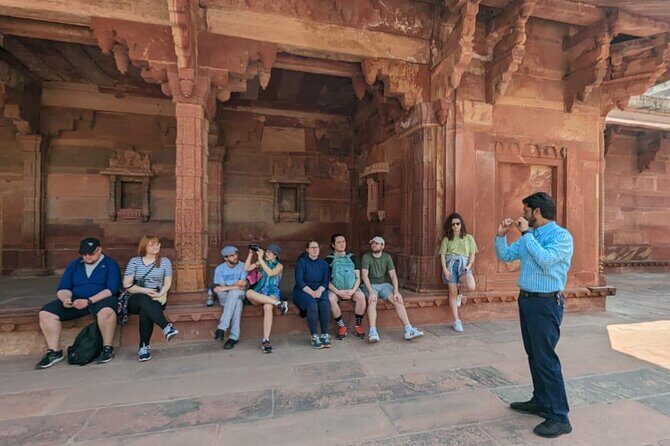
This is also where your guide can make a big difference. In the reviews, people specifically praised Mehraj/Meharaj for being extremely knowledgeable and explaining history beautifully at Fatehpur Sikri, and for answering questions in detail. That matters because Fatehpur can feel like a lot of stones unless someone connects the architecture to what Akbar was trying to build here.
If you want a tip for enjoying Fatehpur: don’t rush to match every visual to a mental checklist. Use your time to watch the shape of the space—courtyards, arches, and how the complex feels when you slow down.
Finally, you end with return to New Delhi, again described as comfortable, with about 4 hours back to your starting point.
How the Guide and the Car Change the Whole Trip
This tour isn’t just a checklist of monuments. The structure is meant to remove stress. You get a private, air-conditioned vehicle and pickup from multiple areas around Delhi, which is a big deal in a city where traffic can turn even short distances into time sinks.
Inside the vehicle you also get bottled mineral water and light snacks, so your day doesn’t depend on finding a café at the exact wrong moment. That’s the kind of inclusion that sounds small until you’re thirsty at the wrong time.
The guide part is where the reviews really glow. Names like Ali and Mehraj/Meharaj come up repeatedly, and the most consistent praise isn’t about “extra facts.” It’s about practical delivery: clear English, friendliness, and a willingness to answer questions. One review specifically notes Ali’s time spent taking numerous beautiful family photographs. That’s not guaranteed for every guide, but it’s a strong sign of the team’s approach: you’re not just standing in front of monuments; you’re also getting help capturing your time there.
Also: the tour info notes a private tour and a customized journey at your own pace. You still follow the itinerary order, but within that, a good guide helps you decide when to speed up, when to slow down, and where to focus.
Price and Value: What You Pay $195 For (and What Could Add Up)
At $195 per person, the value is mostly about what’s handled for you. You’re paying for:
- private transfers in an air-conditioned vehicle
- pickup from several Delhi-region areas
- guided tour with a certified guide
- in-car refreshments
- all fees and taxes
Then there are the “could-add-cost” parts. The tour info says meals and beverages aren’t included except for the in-car snacks. Accommodation isn’t included either, so you’ll need to book your hotel separately.
Most important for your budget: monument entry tickets are included only if you choose that option. Taj Mahal, Agra Fort, and Humayun’s Tomb are listed as admission ticket included, but the tour also says tickets are included if the option is chosen. So treat it like: the itinerary shows what you’ll visit, but your final amount depends on the entry-ticket choice you select during booking.
Finally, gratuities for guides and drivers aren’t included. That doesn’t mean you must tip huge amounts, but it does mean you should plan something modest if the guide is doing a great job answering questions and keeping you on track.
If you’re the kind of traveler who likes having a guide handle timing and context, $195 can feel fair. If you’re trying to keep costs razor-thin and you plan to guide yourself for every monument, you may find you’re paying extra for the human element. Based on the praise for Ali and Mehraj/Meharaj, though, the human element seems to be the point.






Who Should Book This 3-Day Delhi–Agra–Fatehpur Tour
I’d steer you toward this tour if:
- you want Mughal-era highlights without planning bus routes or sorting ticket timing
- you care about history explanations delivered clearly in English
- you like having time for photos, not just quick photo stops
- you prefer private group attention over crowded group tours
It may not fit as well if you hate a fast daily rhythm. Day one stacks multiple Delhi sites. Day two is travel-heavy with that about 4-hour drive to Agra. Day three is the “big monument” day plus a long Fatehpur visit.
Best match: a couple, friends, or a small family who want to see the iconic names—Taj Mahal included—while still understanding what you’re looking at. Solo travelers can fit too, but you’ll get the most value if you’ll actually use the guided Q&A.
Should You Book It? My Decision Guide
If your goal is simple—see Delhi’s key monuments, experience the Agra highlights, and end with Fatehpur Sikri—this itinerary is strong. The route is logical: calm and spiritual stops in Delhi on day one, Mughal craftsmanship and Taj views in Agra on day two, then Taj Mahal and Akbar’s city on day three.
The reason I’d lean yes is the consistent emphasis on guides: Ali and Mehraj/Meharaj are described as extremely knowledgeable, friendly, and able to answer questions in a way that makes the sites make sense. Add private transfers, AC comfort, and in-car snacks, and you’ve got a trip that’s built for fewer hassles and better attention inside the monuments.
The main reason to hesitate is budget clarity. Confirm whether monument entry tickets are included under your selected option, since that’s the biggest variable cost. If you’re counting every dollar, read that part carefully before you book.
If you’re okay with paying for comfort and guidance, and you want a tightly packed but well-supported 3-day route, I think this tour is a solid choice.
FAQ

What is the price of the tour?
The price is listed as $195.00 per person.
How long is the tour?
The duration is approximately 3 days.
Do they pick me up from my hotel?
Yes. Pickup is offered from Delhi, Noida, Gurugram, Ghaziabad, and Faridabad.
Is this a private tour?
Yes. It’s described as private, and only your group will participate.
Is a guided tour included?
Yes. The tour includes a guided tour with a certified guide.
Are monument entry tickets included?
Monument entry tickets are included if you choose the option. Some stops list admission tickets included, and some list admission as free, but the inclusion depends on the option selected.
What do I get in the car during the day?
The tour includes in-car refreshments: bottled mineral water and light snacks.
Is accommodation included?
No. Accommodation is not included.
Is there free cancellation?
Yes. There is free cancellation up to 24 hours in advance for a full refund.
Do I receive a ticket on my phone?
Yes. The tour includes a mobile ticket.