REVIEW · DHARAMSALA
Guided, India’s Own Mini Tibet Mcleodganj- Culture Tour
Book on Viator →Operated by Himachal Bylocals · Bookable on Viator
McLeod Ganj can feel like a different world.
This short guided culture tour gives you context fast, with stops tied to the Tibetan government-in-exile story, daily religious life, and the institutions that keep culture and learning going in India. I especially love how the guide keeps things clear and practical, and I also like the small group size (max 15), which makes it easy to ask questions without feeling rushed. One thing to consider: some key places charge an entrance fee, so your total cost isn’t just the $31 base price.
You’ll walk through major Tibetan sites around town rather than racing between random sights. The big win here is that the tour is built around understanding what you’re seeing—temples, archives, a museum, and a well-known Tibetan medical and astro institute. It’s also a smart way to get your bearings in McLeod Ganj’s cultural core, since the stops loop back to the same Main Square meeting point.
If you want a 3–4 hour hit of Tibetan culture with real local explanations, this works well. The route is straightforward, but it’s still a walking experience—bring comfortable shoes, and don’t plan a late lunch immediately after unless you’re okay with a slightly variable finish time.
In This Review
- Key things to know before you go
- Getting Oriented in McLeod Ganj’s Tibetan Government District
- Tsuglag Khang and the Temple Complex Circuit (Kalachakra + Dalai Lama’s Temple)
- Library of Tibetan Works and Archives: What You See Is Culture in Action
- The Tibet Museum Stop: Turning Monuments Into Stories
- Men-Tsee-Khang: Tibetan Medical and Astro Traditions in a Charitable Institute
- Timing, Walking, and the Entrance-Fee Math
- Guide Quality Makes or Breaks Short Tours
- Who Should Book This Mini Tibet Tour (and Who Might Skip It)
- Should You Book This McLeod Ganj Culture Tour?
- FAQ
- What’s the duration of the Guided, India’s Own Mini Tibet McLeodganj Culture Tour?
- Where does the tour start and end?
- What’s included in the price?
- Are entrance fees included?
- Do I need pickup or drop-off from my hotel?
- How big is the group?
- Is the ticket delivered digitally?
- What if I need to cancel or change my booking?
- Is the tour suitable for most travelers?
Key things to know before you go
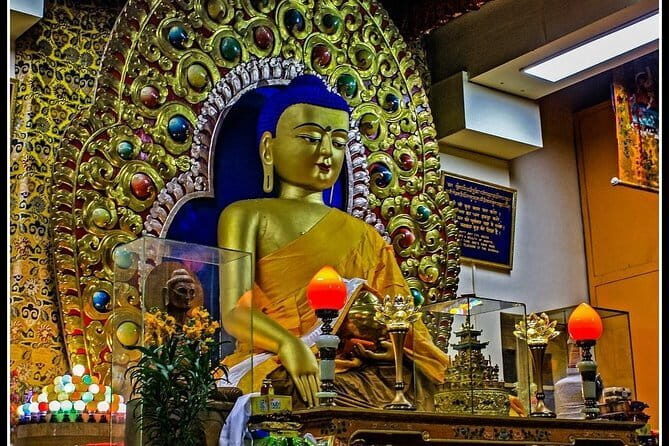
McLeod Ganj explained by an English-speaking local guide so the sites make more sense than quick photos.
A focused set of Tibetan institutions: Kalachakra temple, Tsuglag Khang, LTWA archive/library, Tibet Museum, and Men-Tsee-Khang.
Small groups (15 max) which usually means you can get personal attention.
Bottled water is included, a small comfort that helps during temple-area walking.
Entrance fees are extra (₹150 for Tibet Museum + LTWA + Men-Tsee-Khang), so factor that in.
Getting Oriented in McLeod Ganj’s Tibetan Government District
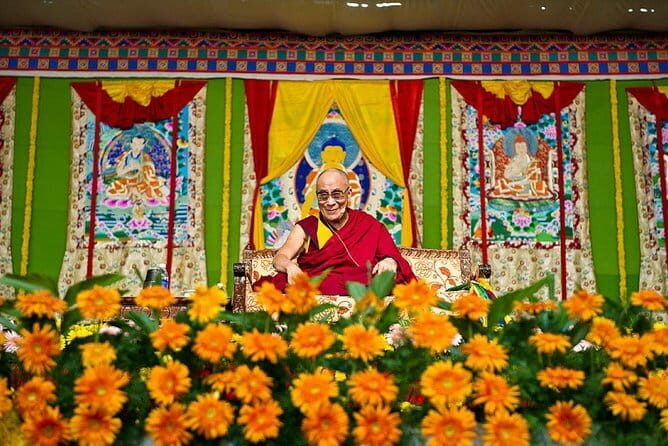
McLeod Ganj isn’t just a scenic hill stop. It’s the home of the Tibetan government in exile, and the Dalai Lama lives in the city to this day. That matters, because the places you visit here aren’t only tourist sights—they’re active centers of learning, religion, and community life.
This tour leans into that idea: you’re not just seeing buildings, you’re getting the story behind them. I like that the pace is short—about 3 to 4 hours—so you can still enjoy the rest of the day in Dharamsala without feeling boxed in.
You’ll start at Main Square, McLeod Ganj (176215) and finish back there. That “back where you began” format is ideal if you’re using local transport or just want a simple plan.
You can also read our reviews of more guided tours in Dharamsala

Tsuglag Khang and the Temple Complex Circuit (Kalachakra + Dalai Lama’s Temple)
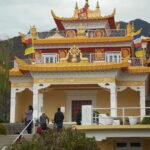
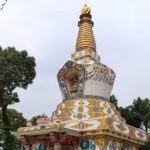
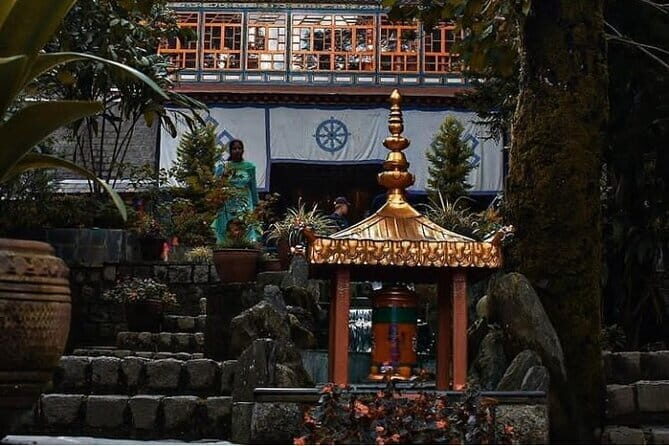
Your first cultural anchor is the Kalachakra Temple, tucked inside the larger Thekchen Choumlling temple complex. A detail I appreciate: the complex also includes the Namgyal monastery. That kind of layout is typical here—religious sites often sit inside bigger temple compounds, so one stop can teach you how the community is organized.
The guide’s job on this section is to help you read what you’re looking at: temple layout, religious purpose, and why these places are still important beyond sightseeing. Even if you’re not a big temple-goer, you’ll likely leave with a better sense of what a “complex” means in Tibetan religious life.
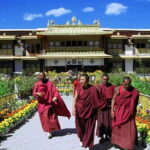
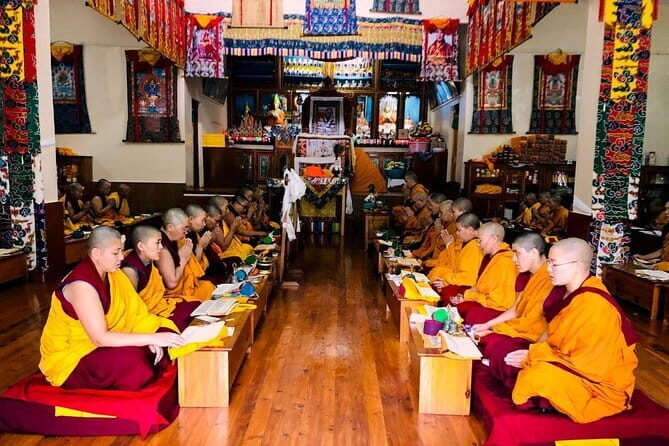
Next comes the Tsuglag Khang, also known as the Dalai Lama’s temple complex. This is described as the home of His Holiness the Dalai Lama, and it’s also one of the world-renowned religious centers that attracts Buddhist pilgrims throughout the year. You’ll spend time there with a guide who can explain what the site represents, and why people gather.
A practical note: plan for quiet observation. These are active religious spaces, and you’ll get more out of the stop if you move slowly and let the atmosphere sink in.
Library of Tibetan Works and Archives: What You See Is Culture in Action
One of the most meaningful stops is the Library of Tibetan Works and Archives (LTWA). It’s not just a room of books—it’s part of a larger effort to preserve Tibetan language, learning, and texts. The library was founded by Tenzin Gyatso, the 14th Dalai Lama, on 11 June 1970, and it’s considered one of the most important Tibetan cultural institutions outside Tibet.
In a short tour, it’s easy to skim over “culture” as a theme. Here, the guide’s explanations help you connect the dots: temples are worship spaces, museums are interpretation, and archives are what keep knowledge alive for the future.
If you enjoy places where you can see how communities protect memory, this stop often becomes a highlight. You’ll also likely appreciate it even more if you’ve ever wondered how displaced communities keep traditions strong in a new country.
The Tibet Museum Stop: Turning Monuments Into Stories
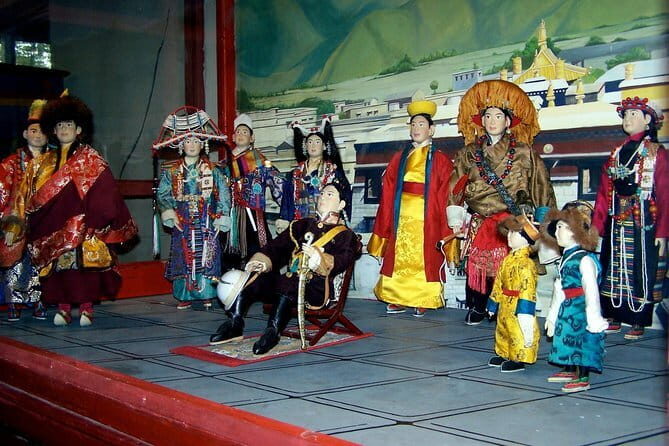
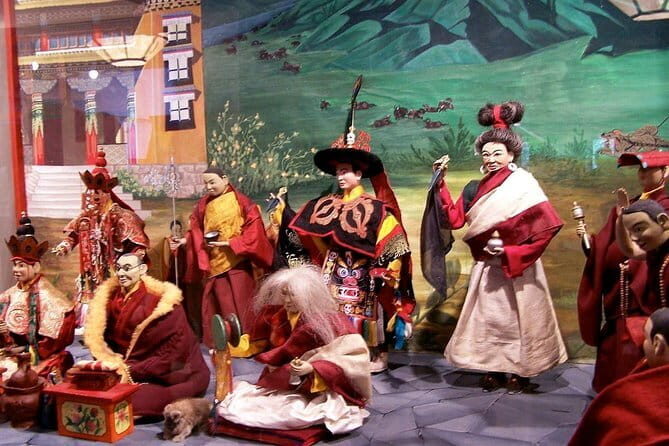
After LTWA, you’ll visit the Tibet Museum, located near the main temple of the 14th Dalai Lama, Tsuglag Khang. This museum is connected to the Central Tibetan Administration’s Department of Information and International Relations, so it’s meant to communicate—both to visitors and to future generations.
The value here is that it helps you connect what you just heard at the temples with what you learn in objects, exhibits, and historical context. A temple can tell you how belief is practiced today; a museum helps you understand how culture and identity are framed, explained, and preserved.
Since the museum is close to Tsuglag Khang, it also keeps the route logical. You’re not bouncing across town; you’re deepening your understanding of the same cultural zone.
One drawback to keep in mind: because your time is limited and your other stops are packed in, you won’t have unlimited roaming time. If you love reading every label, you may want to do quick scans first and slow down only where something truly grabs you.
Men-Tsee-Khang: Tibetan Medical and Astro Traditions in a Charitable Institute
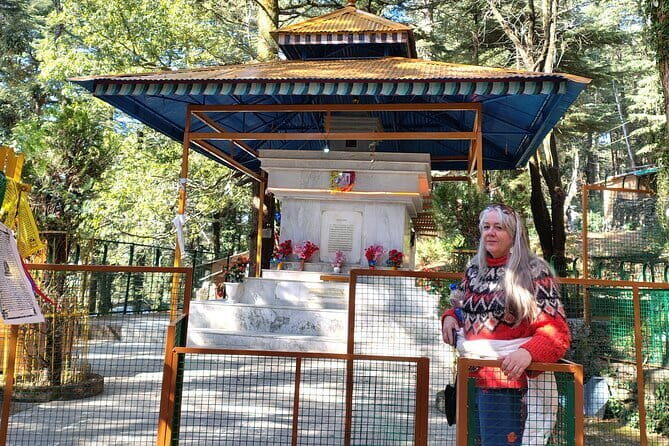
The last big stop is Men-Tsee-Khang, also known as the Tibetan Medical and Astro Institute. This is a charitable institution in Dharamsala, founded by the 13th Dalai Lama in Lhasa in 1916.
That year matters because it places the institute’s roots in a long tradition of Tibetan medicine and spiritual knowledge. During your visit, the guide can help you understand how these teachings are organized and why an institution like this plays a key role in community life.
What I like about ending with Men-Tsee-Khang is that it broadens the tour beyond religion-only storytelling. You’re also seeing how culture shows up in healing practices and in the way people approach life cycles with both medicine and astrology.
It’s also a good “cool down” stop in the itinerary: after temple and archive areas, you shift to a different type of learning center. The tour time here is longer—around 30 minutes—so you have a bit more chance to take things in.
Timing, Walking, and the Entrance-Fee Math
The schedule is built like a compact loop. You’ll spend about:
- 15 minutes at Kalachakra Temple
- 20 minutes at Dalai Lama Temple Complex (Tsuglag Khang)
- 15 minutes at Library of Tibetan Works and Archives
- 20 minutes at The Tibet Museum
- 30 minutes at Men-Tsee-Khang
That’s roughly 100 minutes of stop time, and the rest comes from walking between them and meeting the group pace. The full tour is listed as 3 to 4 hours, so it’s not an all-day commitment.
Price-wise, it starts at $31.00 per person, which includes:
- an English-speaking local guide
- a walking tour
- a water bottle
Then there’s an important add-on. The tour doesn’t include entrance fees for The Tibet Museum + LTWA + Men-Tsee-Khang, which total ₹150.00 per person. Also, the itinerary notes admission tickets aren’t included for the first two stops either, so you should be ready to pay any applicable entry costs on the day.
So your best budgeting approach is simple:
- Start with the $31
- Then add the ₹150 for the three named paid stops
- Leave a little extra buffer in case you’re asked for any additional admission at specific locations
Also note the tour uses a mobile ticket. That’s convenient if you’re trying to travel light and avoid paper.
Guide Quality Makes or Breaks Short Tours
On a short culture tour, the guide is the difference between seeing temples and understanding why they matter. This one is explicitly set up for that: you get an English-speaking local guide who provides commentary at the stops.
One guide name that comes up is Arjun Malik, noted for strong knowledge about Buddhism and Tibetan culture, plus flexibility and helpful explanations. Even if a different guide leads your group, that review emphasis is a good sign: the operator seems focused on clarity, not just motion.
Here’s the practical way to use that in your favor. Ask one question early—something like what a temple complex layout is meant to show, or what LTWA is trying to preserve. You’ll get more out of every later stop, because the guide can connect themes.
And since the group is capped at 15 people, you’re less likely to feel like a number in a big van situation. It’s easier to pause, look back, and ask for clarification.
Who Should Book This Mini Tibet Tour (and Who Might Skip It)
This tour is ideal if you:
- want a short guided orientation to Tibetan culture in McLeod Ganj
- like learning from explanations, not just photos
- appreciate places tied to living communities and institutions
- prefer a small group with room to ask questions
It might be less ideal if you:
- want long, slow time inside each site with lots of wandering freedom
- dislike paying separate admission fees on top of the base price
- are planning a tight schedule right after the tour, since timing depends on walking flow and local conditions
If you’re already doing a deep-dive itinerary for Dharamsala, this can still work as a high-value “anchor tour” that gives you context. It’s also a great first-day option if McLeod Ganj feels overwhelming at first.
Should You Book This McLeod Ganj Culture Tour?
I’d book it if you want a compact, meaningful way to understand McLeod Ganj’s Tibetan cultural core in just a few hours. The combination of Tsuglag Khang, the LTWA archive/library, the Tibet Museum, and Men-Tsee-Khang covers multiple sides of culture: worship, preservation, interpretation, and learning.
The value equation is strong for the time: you get a local English guide, water, and a focused route that doesn’t waste your day. Just go in knowing you’ll likely pay the ₹150 entrance fees for the museum/library/medical institute cluster.
If that fee is fine and you’re happy with a guided walking pace, this is a smart pick.
FAQ
What’s the duration of the Guided, India’s Own Mini Tibet McLeodganj Culture Tour?
The tour is listed as about 3 to 4 hours.
Where does the tour start and end?
It starts at Main Square, McLeod Ganj, Himachal Pradesh 176215, and ends back at the same meeting point.
What’s included in the price?
The tour includes an English-speaking local guide, a walking tour, and a water bottle.
Are entrance fees included?
No. Entrance fees are not included. The Tibet Museum + Library of Tibetan Works and Archives + Men-Tsee-Khang are listed as ₹150.00 per person.
Do I need pickup or drop-off from my hotel?
Pick up and drop off from your hotel is not included.
How big is the group?
The tour is capped at a maximum of 15 travelers per booking.
Is the ticket delivered digitally?
Yes, it uses a mobile ticket.
What if I need to cancel or change my booking?
This experience is non-refundable and cannot be changed for any reason.
Is the tour suitable for most travelers?
The information says most travelers can participate.