REVIEW · NEW DELHI
6 Days Private Golden Triangle Tour with Varanasi from Delhi
Book on Viator →Operated by TRAVEL INDIA ONE DAY · Bookable on Viator
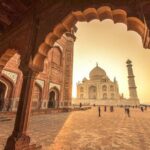
Sunrise at the Taj starts the story.
This 6-day private circuit strings together India’s biggest “wow” sites with real spiritual life in Varanasi—so you’re not just taking photos, you’re seeing how the day-to-day rituals fit alongside famous monuments. I liked the way Taj Mahal at sunrise is built into the schedule, with a private guide and skip-the-long-lines access that saves real energy. You also end with Ganga Aarti by the ghats, where the experience feels local and immediate rather than staged.
Two things I really liked: first, the steady private organization, including an air-conditioned vehicle and drivers who stayed punctual across Delhi, Agra, and Jaipur—people like Arun and Nawal came up in real trip feedback as reliable and kind. Second, the guide quality: Neeraj was praised as informative, and that matters here because you’ll get more meaning from Qutub Minar, Amber, and the temple stops than if you wandered alone. One drawback to consider is that meals are not included (lunch and dinner are on you), and at least one major stop, Amber Palace, lists admission as not included.
In This Review
- Key highlights to know before you go
- The private rhythm: how the tour keeps India from feeling chaotic
- Day 1 in Delhi: Qutub Minar, Lotus Temple, India Gate, and Agrasen Ki Baoli
- Day 2 from Agra to Jaipur: Taj Mahal at sunrise, Agra Fort, Itmad-ud-Daula, then a long drive
- Day 3 in Jaipur: Amber Palace, City Palace, Jantar Mantar, and Hawa Mahal time
- Day 4: Fly to Varanasi and make room for the ghats
- Day 5: Assi Ghat rituals, Kashi Vishwanath Temple, Banaras Hindu University, then Ganga Aarti
- Day 6: One last morning in Varanasi, flight back to Delhi, and drop-off
- Price and value: what $6.91 per person doesn’t tell you
- Who this Golden Triangle with Varanasi tour suits best (and who should think twice)
- Should you book it? My honest take
- FAQ
- How long is the tour?
- Is this tour private?
- Which cities are included?
- Do I get hotel stays and breakfast?
- Are flights included?
- Are monument tickets included?
- What meals are included?
- Do I get pickup and drop-off?
- Is there free cancellation?
Key highlights to know before you go
- Taj Mahal sunrise with a private expert guide and admission handling that helps you skip long waits
- Golden Triangle speed with comfort: private air-conditioned vehicle and a driver across Delhi, Agra, and Jaipur
- A real Varanasi sequence: Assi Ghat in the morning, Kashi Vishwanath Temple, then evening Ganga Aarti at Dasaswamedh Ghat
- Professional local guides in each city, with help from a team that’s been called out as punctual and friendly
- All tolls and parking handled, plus bottled water and onboard Wi‑Fi on the travel days
- Some tickets aren’t included, so you’ll want to confirm what’s covered under your specific option
The private rhythm: how the tour keeps India from feeling chaotic
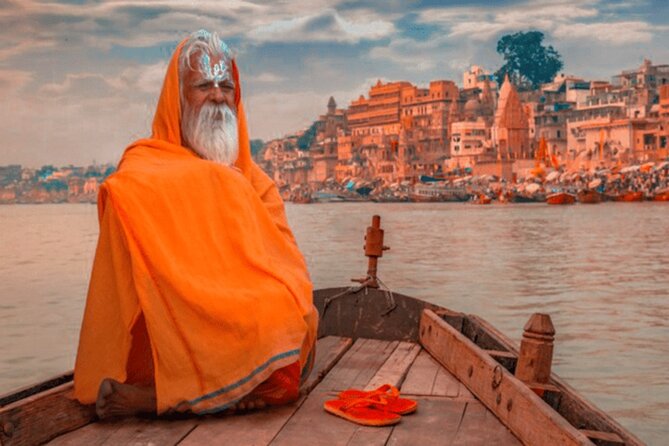
India traffic, ticket lines, and time gaps can wear you down fast. This tour is built around the idea that you shouldn’t spend your days bargaining for entry, hunting meeting points, or waiting around for transport. You get a private AC vehicle with pickup/drop-off at your hotel or airport, plus a professional guide to smooth out the “what goes where” problem.
A nice bonus is that you’re not stuck with random timing. The schedule gives you the high-demand sights at good moments—especially the Taj Mahal sunrise—and then shifts to temple and ghat time when it’s meaningful. Real trip feedback also calls out drivers like Dinesh as punctual and the cars as clean, which is a small detail that makes the whole thing feel easier.
The trade-off is that you’re moving every day. This is not a slow “stay put and wander” style trip. If you hate flights and short museum windows, you may find the pacing intense.
You can also read our reviews of more tours and experiences in New Delhi.



Day 1 in Delhi: Qutub Minar, Lotus Temple, India Gate, and Agrasen Ki Baoli
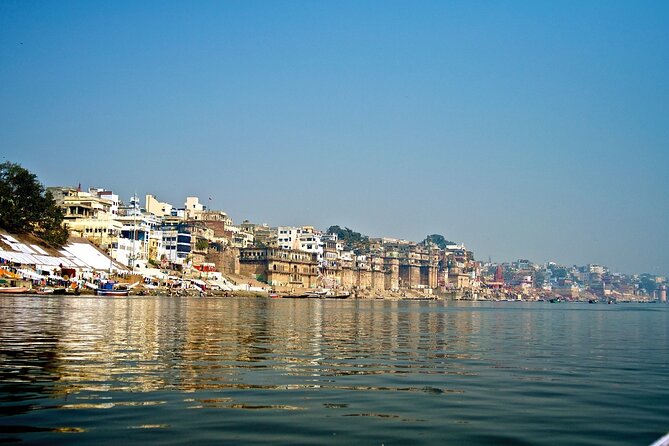
Delhi day one is a smart warm-up. You start with Qutub Minar, a UNESCO-listed landmark you’ll see best with a guide, because the history and design details become clear when someone points them out. You also get admission handling, which matters because Delhi monument lines can be time-sucking.
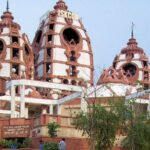
From there, you shift into calm mode at the Lotus Temple. It’s known for its lotus-shaped design and peaceful atmosphere, and it works as a breath between the big-ticket sights. After that, you get a scenic pass by India Gate and the panoramic route past government landmarks like Parliament House and Rashtrapati Bhavan. You’re not doing formal interior visits here—this is about orientation and scale.
The final stop is one of my favorite “lesser-known but memorable” picks: Agrasen Ki Baoli, an ancient stepwell in the middle of the city. It’s the kind of place where you get that sudden feeling of depth—old Delhi under new Delhi.
What to watch: you have a lot of “points on the map” in one day. Wear comfy shoes and keep your water handy, because even short stops add up in Delhi heat.
Day 2 from Agra to Jaipur: Taj Mahal at sunrise, Agra Fort, Itmad-ud-Daula, then a long drive
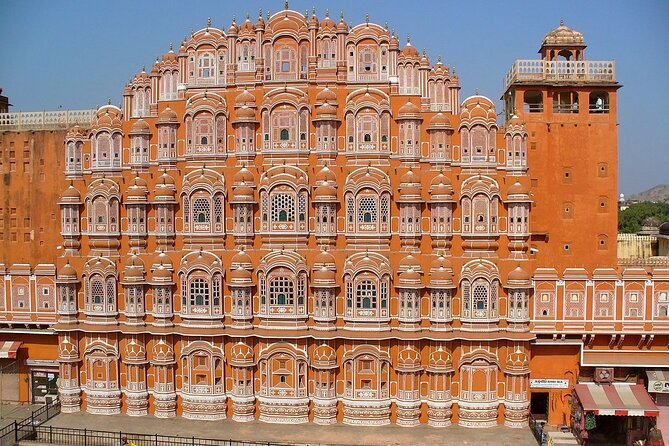
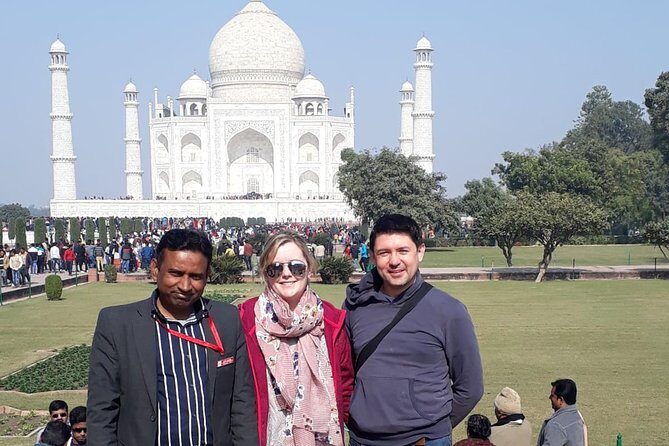
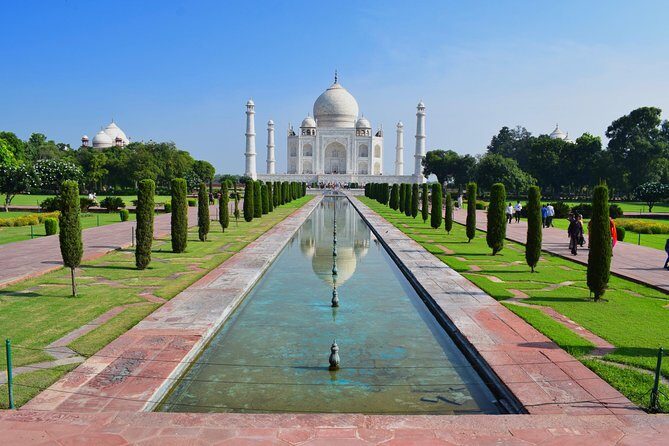
Day two is about Mughal grandeur, and it starts early for a reason. The Taj Mahal sunrise visit is included with admission and a private expert guide. Sunrise light hits the marble in a way that looks different from midday photos, and arriving early also means the area feels less crowded than later in the day.
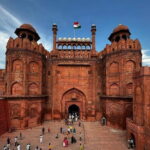
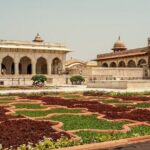
After the Taj, you move to Agra Fort, the huge red sandstone fortress that served as an imperial residence for centuries. Then comes Itmad-ud-Daula, sometimes called the Baby Taj. Even if you’ve seen the main Taj already, Itmad-ud-Daula is worth it because the smaller scale lets you focus on craftsmanship and design.
Then you hit the logistics reality: you travel by private air-conditioned vehicle to Jaipur (about five hours). The point isn’t speed for speed’s sake. It’s that you’re stacking the best Mughal sights in Agra first, then switching to Rajasthan architecture before the light changes too much.
What you’ll appreciate: the private guide doesn’t treat each stop like a checkbox. With narration, the Taj, Agra Fort, and Itmad-ud-Daula stop feeling like three unrelated stops and start feeling like one story of power, wealth, and symbolism.
Possible drawback: by the time you reach Jaipur, you may feel “site-saturated.” That’s normal. Plan to keep the evening easy unless your hotel location is perfect for a quick walk.
Day 3 in Jaipur: Amber Palace, City Palace, Jantar Mantar, and Hawa Mahal time
Jaipur day three is a classic sampler of royal-era design, with one hidden advantage: it’s easy to learn and easy to photograph. You begin at Panna Meena ka Kund, a symmetrical stepwell with ochre-toned arches. It’s short on time, but it’s visually strong, and it helps set the tone for a day full of Jaipur’s geometric patterns.
Then you go uphill to Amber Palace, a hilltop fort known for Hindu–Rajput architecture and detailed artistic work. This is one of those places where the guide matters: they’ll help you connect the fort layout and decorative elements. Important detail: the itinerary notes Amber Palace admission is not included, so budget for the ticket if your package doesn’t cover it.
Next is Jal Mahal, the so-called Water Palace sitting above Man Sagar Lake. You get a brief viewing window, and that’s okay because the real goal is to catch the look of it from the roads and viewpoints rather than plan a full long visit.
You continue to City Palace, which is included with admission. This is the “royal base” portion of Jaipur, with courtyards and museum spaces that let you slow down. Then you move to Jantar Mantar, the large stone astronomical observatory. It’s included, and it’s one of those stops where you start seeing how science and empire planning overlapped.
Finally, you get Hawa Mahal, the Palace of Breeze. The visit is short, but it’s iconic: pink sandstone, stacked façades, and those perforated windows designed so royal women could observe street activity. Even with limited time, it’s a good capstone.
Practical tip: this day is heavy on “architecture and details.” If you love craftsmanship, you’ll be happy. If you prefer living neighborhoods over monuments, mix in a quiet downtime at your hotel.
Day 4: Fly to Varanasi and make room for the ghats
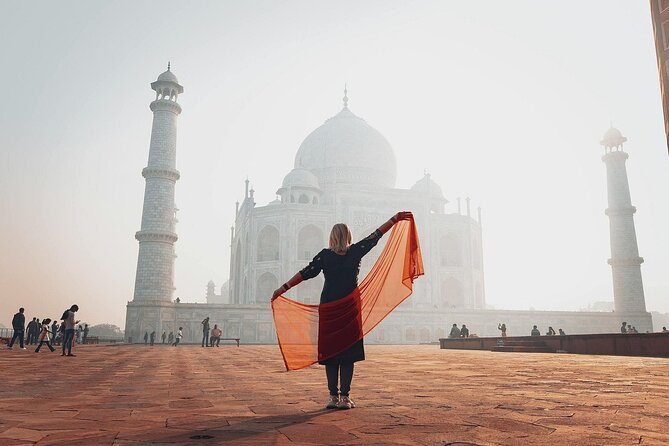
Day four shifts the mood from Rajasthan to Varanasi’s spiritual pulse. You travel from Jaipur back through the Delhi connection by flight (Jaipur → Delhi flight setup isn’t shown in detail, but the day is clearly built around transferring to Delhi airport and flying to Varanasi). Once you arrive, the driver picks you up and transfers you to your hotel.
After check-in, you get time to breathe—either relax or explore Varanasi’s spiritual atmosphere at your own pace. This “buffer” matters because Varanasi is intense in a good way, but you don’t want to hit it with zero energy.
What you’ll notice right away: Varanasi isn’t trying to be your theme-park day. It’s built around daily rituals, temple life, and river rhythms. Having a free afternoon helps you feel that instead of only hearing about it.
Consideration: you’ll likely want footwear that can handle uneven surfaces near ghats and temple areas. The tour provides the structure; you’ll still handle your own comfort.


Day 5: Assi Ghat rituals, Kashi Vishwanath Temple, Banaras Hindu University, then Ganga Aarti
This is the most emotionally charged day of the trip, and the sequence matters.
You start early at Assi Ghat, one of the sacred and calmer ghats. The morning rituals you see there set a baseline: how people pray, how the river is part of daily life, and how the city moves gently before the crowds build later.
Next you visit Shri Kashi Vishwanath Temple, one of the most sacred temples in Hinduism. It’s a focused stop—about paying respects—so keep your mindset respectful and practical. Temples can be crowded, so the private guide helps you navigate time and layout without stress.
After temples, you head to Banaras Hindu University. This isn’t just a sightseeing detour. It’s a chance to see Varanasi’s education side—one of Asia’s largest residential universities—so the city feels three-dimensional rather than purely religious-tour mode.
The itinerary also includes Kina Ram Aghori’s temple and ashram. This adds a more unusual cultural layer, tied to spiritual practice. Even if you don’t fully understand everything, having a guide keeps it from feeling like “random weird stop” and turns it into a meaningful visit.
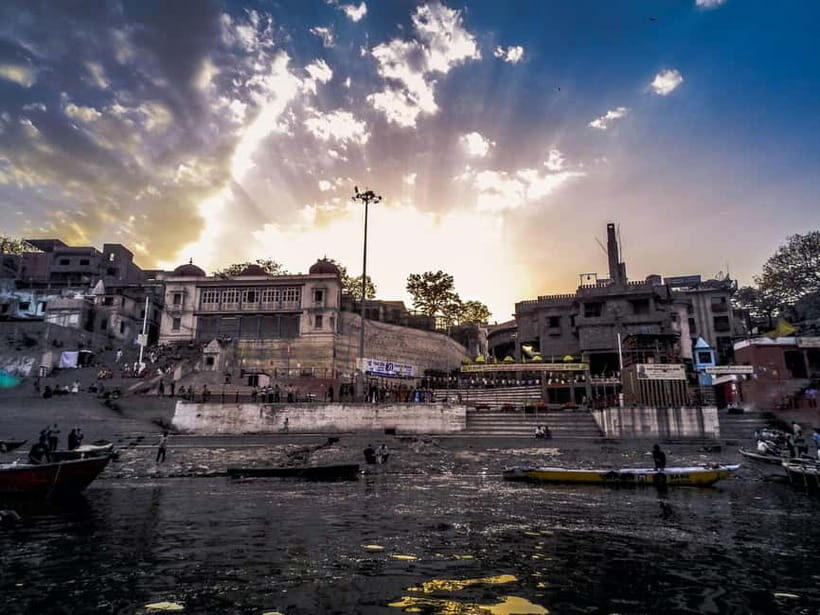
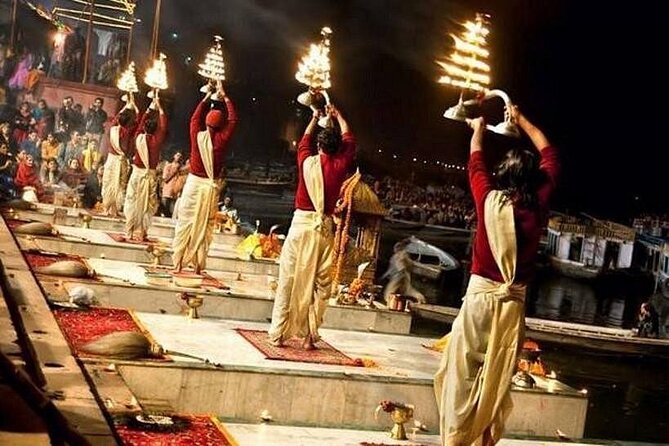
Then the day ends at Dasaswamedh Ghat for the evening Ganga Aarti. This is where you’ll understand why people travel here. Priests perform synchronized rituals with oil lamps, incense, conch shells, and Vedic chants. The choreography and sound pull you in, and sunset energy makes it feel like a daily event, not a staged show.
My advice: come a bit early, watch the flow, and don’t rush your photos. The best moments are often between the big claps and camera bursts.
Day 6: One last morning in Varanasi, flight back to Delhi, and drop-off
Day six keeps it simple. You have breakfast, then transfer to Varanasi airport for the flight to Delhi. When you land, the driver picks you up and drops you at your chosen location in Delhi, Gurugram, or Noida.
That final drop-off is more useful than it sounds. Delhi arrival can be disorienting, and having a driver waiting avoids the “now what” stress. It’s also a good way to end the tour without turning the last day into a separate mission.
What to consider: keep your bag organized. You’ll have flights and transfers in one day, so nothing should be hard to grab fast.
Price and value: what $6.91 per person doesn’t tell you

The listing shows a very low price point ($6.91 per person), but the real value depends on which option you choose. What matters most is whether you selected the all-inclusive tour option, because that’s when you get:
- 4-star hotel stays (5 nights) and breakfast
- monument entrance and fees handled with the tour option
- a fully organized private setup across the itinerary
Even outside of hotel and admissions, the tour includes the practical stuff that often costs extra when you book separately: private AC transport, a professional guide, all toll and parking, and travel day extras like bottled water and Wi‑Fi on board. Add in flights (including baggage allowance: 15kg check-in + 7kg hand baggage for each flight mentioned), and the package starts to look more reasonable for the time you’re saving.
One caution: some items are clearly not included. Lunch and dinner are on you, and at least Amber Palace is listed as not included for admission in the plan. If you want to avoid surprise spending, confirm your exact coverage before you commit.
Good fit if you hate logistics: if you’d rather pay for smooth handoffs—driver at each city, guide waiting, admission handled—this tour style is built for you.
Who this Golden Triangle with Varanasi tour suits best (and who should think twice)
This itinerary is best for you if:
- you want the classic Delhi–Agra–Jaipur monuments and don’t want to piece together transport
- you love history and architecture but also want the spiritual side of India in Varanasi
- you prefer private guiding so stops make sense instead of feeling like a camera walk-by
- sunrise Taj Mahal and a planned Ganga Aarti are top priorities
You might think twice if:
- you don’t want flights and moving every day
- you’re on a tight food budget (since lunch and dinner aren’t included)
- you hate any schedule that includes short stop times for major sights
One more practical note: the stated dress code is smart casual. For temple areas, you’ll still want to use common sense with modest, comfortable clothing so you feel at ease throughout the day.
Should you book it? My honest take
I’d book this tour if you want a clean, organized way to see four major places—Delhi, Agra, Jaipur, and Varanasi—without losing days to transit confusion or ticket-line headaches. The combo of Taj Mahal sunrise, major Jaipur landmarks, and the Assi Ghat to Dasaswamedh Ghat spiritual arc is a rare match of world-famous monuments and lived-in ritual.
I’d hold off or at least double-check details if you’re sensitive to extra spending on meals and if you care deeply about which monument admissions are included. Also, make sure you’re comfortable with a packed schedule, because the tour is designed to maximize key sights in limited time.
FAQ
How long is the tour?
It runs for about 6 days.
Is this tour private?
Yes, it’s a private tour/activity, and only your group participates.
Which cities are included?
The tour covers Delhi, Agra, Jaipur, and Varanasi.
Do I get hotel stays and breakfast?
You get 5 nights hotel stay with breakfast if you choose the all-inclusive tour option. The hotel option is listed as 4-star in that package.
Are flights included?
Yes. Flights are included from Jaipur to Varanasi and from Varanasi to Delhi, with baggage allowances listed as 15kg check-in and 7kg hand baggage.
Are monument tickets included?
Monument entrance and fees are included with the tour option. Amber Palace is specifically noted as admission ticket not included in the itinerary.
What meals are included?
Breakfast is included with the all-inclusive tour option. Lunch and dinner are not included.
Do I get pickup and drop-off?
Yes. Pickup and drop-off are included from the hotel or airport, and the driver can also drop you in Delhi, Gurugram, or Noida.
Is there free cancellation?
Yes. You can cancel up to 24 hours in advance for a full refund, and cut-off times are based on the experience’s local time.