REVIEW · NEW DELHI
4 Days Golden Triangle Tour India From Delhi
Book on Viator →Operated by India Voyages · Bookable on Viator
Four days, three unforgettable cities.
This Golden Triangle tour strings together Mughal-era masterpieces and Jaipur’s royal landmarks in a tight, practical route. You start with pickup from Delhi at 9:00 am and keep the comfort of a private group car all the way through. The pacing is great for first-timers who want big sights without playing taxi roulette across India’s traffic.
I especially liked having a safe, confident driver like Tabul or Sumit on the road, plus the kind of support that helps you get the most out of each stop instead of just collecting photos. The guides also come with strong English so the sites make sense fast. One thing to plan for: admission tickets are not included for many top sights like the Taj Mahal, Agra Fort, and Hawa Mahal, so you should budget extra on top of the tour price.
In This Review
- Key Highlights I’d Focus On
- Entering the Golden Triangle Flow From Delhi
- Agra’s Quiet Genius: Itmad-ud-Daula and Mehtab Bagh
- Itmad-ud-Daula, often called the Baby Taj
- Mehtab Bagh across the Yamuna
- Taj Mahal: How to Enjoy It Without Feeling Rushed
- The ticket reality
- How to get more from those two hours
- Agra Fort: When Mughal Power Gets Defensive
- Fatehpur Sikri: A Whole Capital That Didn’t Last
- Jaipur Break: Jal Mahal and the Lake Pause
- Hawa Mahal: The Breeze Palace and Its 953 Windows
- Jantar Mantar: Jaipur’s Stone Observatory
- City Palace: Courtyards, Galleries, and Royal Space
- How the Driving and Timing Work (Why It Matters)
- Value Check: Is $190 Worth It for 4 Days?
- Who This Tour Suits Best
- Should You Book This Golden Triangle Private Tour?
- FAQ
- What time does the tour start?
- Is pickup included?
- How long is the Golden Triangle tour?
- Are attraction tickets included?
- What meals are included?
- Is this tour private?
- How does the tour end in Delhi?
- Can I cancel for a full refund?
Key Highlights I’d Focus On
- Private group + pickup that keeps your day moving from the start (9:00 am)
- Driver support that handles traffic with confidence, so you stay calm and present
- Mughal highlights that start with the Baby Taj era at Itmad-ud-Daula, not the obvious stuff first
- Sunset-friendly Mehtab Bagh timing potential across the Yamuna (great for planning your photos)
- Jaipur’s royal lineup in one sweep: Hawa Mahal, Jantar Mantar, and City Palace
- Breakfast included (3 meals) so you’re not scrambling for food early
Entering the Golden Triangle Flow From Delhi
This tour is built for people who like order. You get a set start time (9:00 am), a private group setup, and a driver who’s there for the practical stuff: getting you to the gates, handling local movement, and keeping the day realistic.
That matters in India, because the hard part isn’t seeing the sights. The hard part is getting from one landmark to the next without wasting your time and energy. I like that the package covers tolls, parking, fuel, and local + interstate taxes, which means you avoid the add-on surprises that can pop up when you’re traveling independently.
Also, the itinerary covers a nice mix: Mughal monuments in Agra, a major royal/fortified stop at Fatehpur Sikri, and then the Jaipur landmarks that define the “pink city” look. It’s the classic Golden Triangle formula, but with enough structure that you don’t feel like you’re rushing for the sake of rushing.
You can also read our reviews of more tours and experiences in New Delhi


Agra’s Quiet Genius: Itmad-ud-Daula and Mehtab Bagh
The first Agra stops are a smart choice because they slow you down.
Itmad-ud-Daula, often called the Baby Taj
Itmad-ud-Daula is a Mughal mausoleum built between 1622 and 1628 by Nur Jahan for her father Mirza Ghiyas Beg. If you’re into the details—stonework, symmetry, and that jewel-box feel—this place hits hard. It’s described as a jewel box, and honestly, it gives you a preview of the elegance you’ll later see at the Taj Mahal.
The visit is listed at 1 hour, and that’s enough time to understand why it’s considered such a fine “warm-up” stop. You’re not just staring at buildings—you’re spotting how Mughal design language repeats and evolves.
One practical note: admission isn’t included for this stop. If you’re trying to keep your budget tight, add ticket costs to your planning spreadsheet early.
Mehtab Bagh across the Yamuna
Then you head to Mehtab Bagh, a charbagh garden complex on the opposite side of the Yamuna River. It’s popularly known as a sunset view point for the Taj Mahal.
It’s listed for about 30 minutes, so don’t expect a long stroll daydream. But it can be a really effective pause. If your timing lines up (and you’re thinking about photos), this is one of the best spots on the route to appreciate the Taj’s scale from a distance.
Again: admission isn’t included here, so expect a separate ticket.
Taj Mahal: How to Enjoy It Without Feeling Rushed
The Taj Mahal is the obvious headline, but the tour’s value is how it builds around it. You get a dedicated block of time—listed at 2 hours—which is the sweet spot for seeing the main areas, walking around the complex, and not feeling like you’re sprinting.
The Taj Mahal is described as the finest idiom of love, built by Emperor Shah Jahan in 1653 in memory of his wife. That story matters when you’re standing there. You start noticing proportions and craftsmanship more than just taking selfies.






The ticket reality
The Taj Mahal entry fee is not included. That’s the main thing I’d flag for planning. If you’re budgeting carefully, treat the tour price as transport + coordination + selected meals, and treat major monument entry fees as your separate spend.
Also, wear comfortable shoes. With the Taj, your feet do more work than you expect, especially if you want to move at a steady pace instead of crowd-fast.
How to get more from those two hours
You’ll enjoy it more if you go in with two goals:
- Spend time looking at the building as a whole, then zoom in on details.
- Don’t try to cover everything at maximum speed. Save your energy for the moments you actually stop for.
A good driver and a smooth schedule make this easier. You’re not guessing where the best lines are or how long everything will take.
Agra Fort: When Mughal Power Gets Defensive
After the Taj, Agra Fort gives you the other side of Mughal life: power, strategy, and protection.
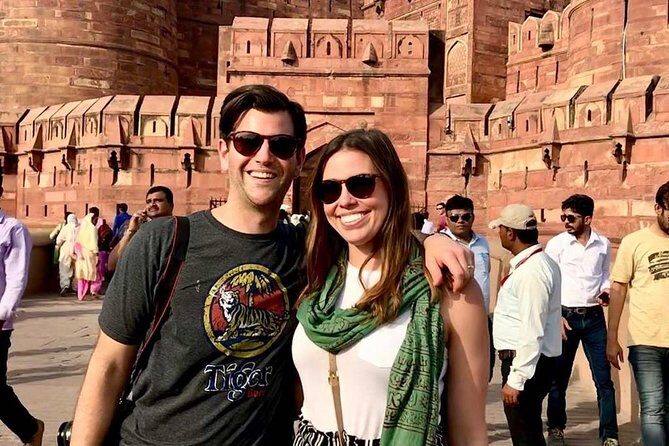
This is a UNESCO World Heritage site and was the residence complex of the Mughal dynasty until 1638. It’s also tied to a major late-life family conflict—where Shah Jahan was deposed and restrained by his son.
The tour lists 1 hour for Agra Fort. That’s enough time to understand the fort’s layout and atmosphere without feeling trapped in a long, wandering museum mood. The main drawback with forts is time: if you spend too long inside, you can lose the rest of the day. This timing helps prevent that.
Like the Taj, admission isn’t included here, so budget separately.
Fatehpur Sikri: A Whole Capital That Didn’t Last
Fatehpur Sikri is the “wait, this is a city?” stop.
It’s a short-lived capital of the Mughal empire between 1572 and 1585, during Akbar’s reign. Expect red sandstone buildings clustered in the center of the city. It’s listed as a non-guided visit, and that’s a meaningful detail.
If you like learning as you go, you’ll benefit from a little prep before you arrive—either reading a quick overview beforehand or asking your driver to explain key background points on the drive. When it’s non-guided, you can still have a great time, but you’ll want to bring your own curiosity.
The good news: admission is listed as free for Fatehpur Sikri in this tour setup. That makes it a strong value stop because you get a major experience without adding ticket cost.
Jaipur Break: Jal Mahal and the Lake Pause
Once you’re in Jaipur mode, the route includes a short, scenic pause at Jal Mahal.
Jal Mahal is a palace in the middle of Man Sagar Lake, constructed by Sawai Pratap Singh in 1799. It’s listed as only 10 minutes, and admission is free.
That short time is intentional. Think of it as a visual reset between travel days and the denser landmark blocks that follow. You’ll likely enjoy it most if you treat it as a postcard stop: quick look, quick photos, then move on.
Hawa Mahal: The Breeze Palace and Its 953 Windows
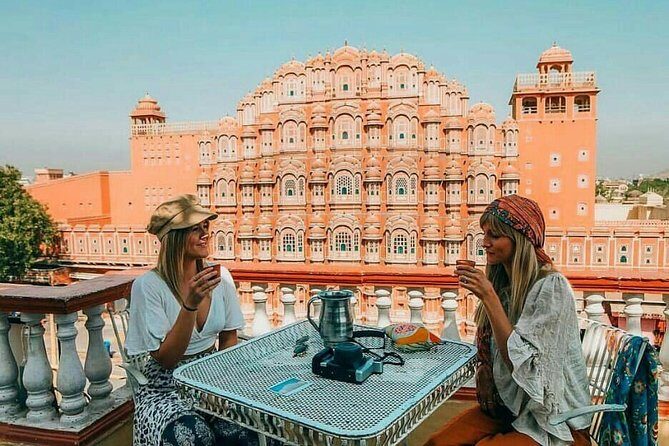
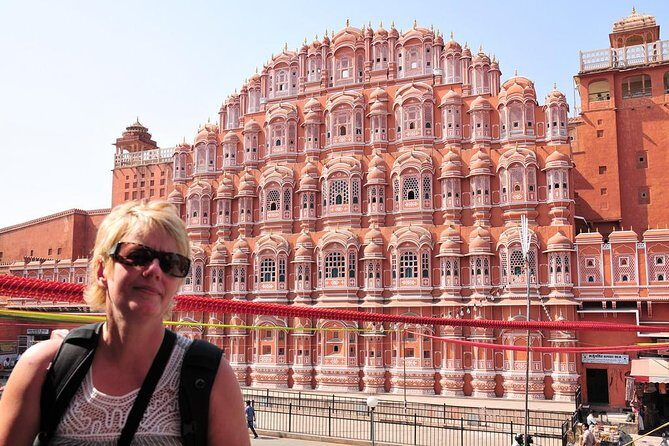
Hawa Mahal is one of those places you recognize even if you’ve never been. The building is a five-storey honeycombed beehive structure of pink sandstone, filled with 953 small windows called jharokhas.
The tour notes that it was known as a women’s chamber of the royal family, and the windows and latticework make it feel like the building is designed for watching the city from within.
The visit time is listed at 30 minutes. That’s enough to take in the facade details and understand why the structure is so iconic.
Admission isn’t included for this stop, so plan extra ticket costs here too.
Jantar Mantar: Jaipur’s Stone Observatory
Jantar Mantar is a different kind of wow.
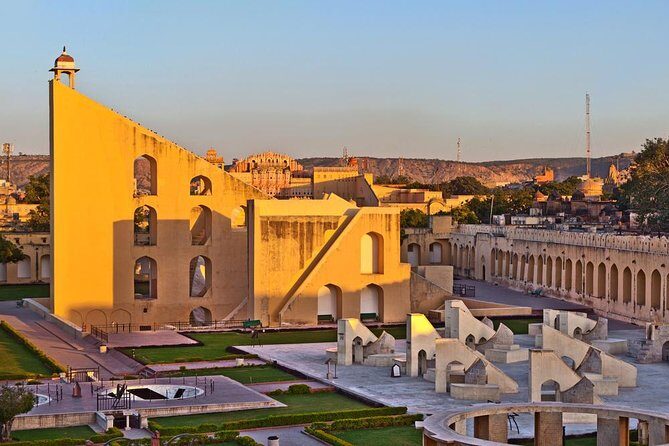
This astronomical instrument site was built in 1734 by the Rajput king Sawai Jai Singh second. It features the world’s largest stone sundial, and the time on-site is listed as 1 hour.
If you like science that feels old-but-precise, this is a great fit. Even if you don’t fully memorize how each instrument works, the sheer ambition of measuring the sky with stone gives you something to talk about afterward.
Admission isn’t included here either.
City Palace: Courtyards, Galleries, and Royal Space
City Palace rounds out Jaipur with the kind of royal complex that doesn’t feel like a single building so much as a whole system of courtyards, gardens, and galleries.
The tour lists 1 hour at City Palace, and admission isn’t included. Expect a mix of walk-through spaces where you can slow down and take in the layout.
This is where the Jaipur story shifts slightly from icon landmarks (like Hawa Mahal) into lived-in space—built to function, not just impress from one angle.
How the Driving and Timing Work (Why It Matters)
This tour is private and built around transport, not free-form hopping. You start at 9:00 am, and you finish with a Delhi handoff: transfer to Delhi airport/railway station or another location within Delhi based on your needs.
That end detail is useful. Golden Triangle tours sometimes end with a vague drop-off. Here, you get transfer support, which helps if you’re catching a flight or train the same day.
Also, I’d treat the driver role as part of the experience, not just logistics. The service notes include a lot of praise for Tabul and Sumit, especially for calm, careful driving and being available to adjust your schedule based on preferences. That flexibility is real value in cities where weather, crowds, and opening times can affect your day.
The other timing idea: Mehtab Bagh is a popular sunset viewpoint for the Taj Mahal. Even if your day isn’t perfectly aligned for sunset, Mehtab Bagh is still worth it because it gives you that long, architectural perspective.
Value Check: Is $190 Worth It for 4 Days?
Here’s how I’d think about the price.
At $190 per person for roughly 4 days, you’re paying for coordination, a private group car, and the costs that usually add up—tolls, parking, driver expenses, fuel, and local + interstate taxes—plus breakfast (3 times).
What’s not included is just as important. Admission tickets are not included for most of the headline sights (Taj Mahal, Agra Fort, Hawa Mahal, Jantar Mantar, City Palace, and also Itmad-ud-Daula and Mehtab Bagh). Some stops are listed as free (Fatehpur Sikri and Jal Mahal), which helps balance the budget, but you should still expect to pay for several major entries.
So the value equation looks like this:
- If you want a smooth, supported route with less decision fatigue, the tour price makes sense.
- If you hate paying separate entry fees and prefer to control every decision, a ticket-only self-guided plan might feel cheaper, but it comes with more stress.
Also: the package includes group discounts and a mobile ticket, which can help keep things straightforward once you arrive.
Who This Tour Suits Best
This is a great match for:
- First-time India visitors who want the Golden Triangle highlights without navigating trains, buses, and traffic on your own
- Solo travelers who still want privacy (private group) but appreciate help staying organized
- People who value safe driving and clear support, not just a checklist of monuments
It might be less ideal if you:
- Want fully guided experiences at every single site (Fatehpur Sikri is listed as non-guided)
- Have a tight budget and don’t want to add multiple monument admissions on top
Should You Book This Golden Triangle Private Tour?
I’d book it if you want the Golden Triangle in a clean, human-paced way: pickup, comfortable transport, a driver who handles the road calmly, and enough time at major sites to actually see them instead of rushing through gates.
But I wouldn’t ignore the ticket reality. This tour price is fair for the support you get, yet you’ll still need to budget for entry fees at many of the big attractions. If that extra cost fits your plan, the structure and timing make it a solid choice.
If you’re aiming for a low-stress first trip to Agra and Jaipur, this private 4-day setup is one of the more practical ways to do it—especially with the kind of driver help highlighted in the service experience.
FAQ
What time does the tour start?
The tour start time is 9:00 am.
Is pickup included?
Pickup is offered as part of the tour.
How long is the Golden Triangle tour?
The duration is 4 days (approx.).
Are attraction tickets included?
Admission tickets are listed as not included for several stops, including the Taj Mahal and Agra Fort. Some stops are listed as free, like Fatehpur Sikri and Jal Mahal.
What meals are included?
Breakfast is included for 3 days.
Is this tour private?
Yes, it’s described as private. Only your group participates.
How does the tour end in Delhi?
On arrival in Delhi, there is departure transfer to Delhi airport/railway station or another location within Delhi based on customer preference.
Can I cancel for a full refund?
You can cancel up to 24 hours in advance for a full refund. If you cancel less than 24 hours before the start time, the amount paid is not refunded.