Tigers are the main event here. Ranthambore National Park in Rajasthan is famous for Royal Bengal tigers, and the setting is part of the thrill: dry deciduous forest, plus the 10th-century Ranthambhore Fort sitting around the wild like a backdrop. You’ll ride into a protected zone and spend about 3 hours watching for movement, with a real chance to spot a big cat and plenty of other animals too (Royal Bengal tigers are the headline, with around 75 in about 1,400 sq km).
Two things I really like about this safari: the hotel pickup and drop-off makes the whole day simpler, and you can choose the feel you want with a jeep (smaller group) or a canter (bigger group, cheaper). You also get a mobile ticket and confirmation when you book, so you’re not scrambling on the day.
One main thing to consider: you can’t choose your exact zone in advance. Each safari goes into just one of the 10 zones based on availability, and tiger sightings can be pure luck even in good conditions.
In This Review
- Key Points You’ll Actually Care About
- Tiger Territory in Rajasthan: What Ranthambore Really Feels Like
- Your Day at the Park: Pickup, Entering a Zone, and the Real 3-Hour Window
- Jeep vs Canter: Which Vehicle Fits Your Style (and Your Comfort)
- Jeep Safari (smaller group, more personal)
- Canter Safari (bigger group, more economical)
- What You Might See: Tigers and the Whole Food-Chain Cast
- Guide and Group Reality: Expect Varying English and Different Communication Styles
- Price Value: Is $40.26 a Smart Deal Here?
- Best Timing Tips: How to Improve Your Odds Without Overthinking
- Who Should Book This Tiger Safari?
- Should You Book This Tiger Safari in Ranthambore?
- FAQ
- Where does this safari start?
- How long is the experience?
- What vehicle options are available?
- Is the safari permit included?
- Can I choose which zone I go to?
- What wildlife might I see besides tigers?
- Are meals included?
- Do I get a mobile ticket?
- Is the booking refundable or changeable?
Key Points You’ll Actually Care About
- Two vehicle options: Jeep holds up to 6 total; canter can hold up to 20.
- Time inside the park is about 3 hours, even if the full activity runs closer to 4 hours.
- One zone per safari from the park’s 10 zones, based on availability.
- Wildlife isn’t only tigers: deer, sloth bears, monkeys, hyenas, and leopards are all possibilities.
- Guiding style can vary, and not every guide may use English beyond basics.
- It’s good value for a shared permit safari with round-trip hotel service.
Tiger Territory in Rajasthan: What Ranthambore Really Feels Like
Ranthambore isn’t a zoo-style experience. It’s a working landscape where you drive roads built for park access, stop when wildlife shows up, and keep your eyes sharp for the small stuff that signals the big stuff. The park’s dry deciduous forest is the reason sightings can feel more possible during certain seasons: many trees drop leaves in the dry period, which means the ground isn’t always hidden the way it can be in thick wet-season growth.
What makes Ranthambore extra exciting for tiger fans is the sheer reputation. It’s one of India’s most iconic tiger reserves, and the tiger population estimate is roughly 75 tigers across about 1,400 square kilometers. That number matters because it explains why people talk about this park so confidently—there’s a real tiger base here, not just a rumor.
And then there’s the setting. The park is ringed by the 10th-century Ranthambhore Fort, so when you’re driving, the history vibe is never far off. It’s one of those places where you feel like you’re mixing time periods—medieval stone on the outside, wild wildlife on the inside.
You can also read our reviews of more tours and experiences in Sawai Madhopur

Your Day at the Park: Pickup, Entering a Zone, and the Real 3-Hour Window
This experience is built around a straightforward rhythm: you get picked up from your hotel in Sawai Madhopur, then you head to Ranthambore National Park for your 3-hour shared safari. The full activity is listed as about 4 hours, and that tracks with the reality of transport time—what you really care about is the time wheels are turning inside the reserve.
Here’s the key detail that shapes your odds: you’ll enter only one zone. Ranthambore has 10 available zones, and your safari runs in one of them depending on what’s open. That’s why the day doesn’t always play out the same for everyone. If you land in a more active zone, the chances rise. If your zone is quieter, you might come away with great non-tiger sightings instead—deer, monkeys, and other predators can still make the safari feel alive.
Stop-wise, your main moment is the safari itself in Ranthambore National Park. That’s where the wildlife spotting happens, and where your guide’s scanning matters—watching for tracks, movement in open areas, and sudden stops when something is spotted. The fort presence is most noticeable as you drive and orient yourself, but the core experience is still the slow, patient ride through the forest and grass edges.
A practical tip: treat the safari like a photography session, even if you don’t care about photos. Keep your phone/camera ready, sit so you can see through the open sides, and be prepared for quick changes. Wildlife doesn’t schedule itself.
Jeep vs Canter: Which Vehicle Fits Your Style (and Your Comfort)
You’ve got two ways to ride:
Jeep Safari (smaller group, more personal)
A jeep is shared with up to 5 other guests, for 6 people total. In real terms, this usually means you can hear the guide better and keep a tighter watch on what’s happening. If you like the feeling of being close to the action and less jostling, the jeep generally makes sense.
Canter Safari (bigger group, more economical)
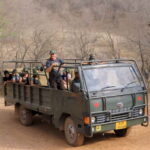
The canter is the bus-style shared option, with up to 20 travelers. It’s typically the more budget-friendly choice, and it can work well if you’re happy focusing on the drive and wildlife spotting rather than super-personal guide talk.
One caution: canter days can feel more “wait-and-go” depending on how your pickup and batching happens that morning. If you’re counting on a super-tight schedule, give yourself buffer time at the start of the day.
If you’re deciding, I’d pick based on your personality:
- Choose jeep if you want a calmer ride and easier conversation.
- Choose canter if you want the best value and don’t mind a bigger group.



What You Might See: Tigers and the Whole Food-Chain Cast
Yes, the tiger is the big target. But the safari becomes more than a single-animal chase because Ranthambore’s ecosystem throws surprises at you.
You might spot:
- different species of deer
- sloth bears
- monkeys
- hyenas
- leopards
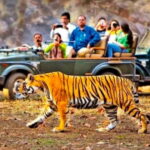
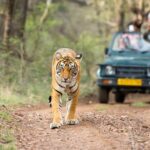
- and, of course, Royal Bengal tigers if you’re lucky (and your zone is active)
This matters because it changes how you should mentally prepare. If you only measure success as tiger sighting, you can leave frustrated even when you had a good safari. If you approach it as a chance to observe predators and prey in the same space, the day often feels richer.
Also: when people say Ranthambore is good for wildlife, they mean you’ll often see something even if it’s not the tiger you imagined. Deer flicking at the edges. Monkeys calling from branches. Tracks and movement patterns that explain what might come next.
Guide and Group Reality: Expect Varying English and Different Communication Styles
Your safari is guided through the reserve by the local operator, Guddu Bhai. Even when the driving and spotting effort are solid, communication can vary—especially around English.
In some cases, you may get a guide who uses only basic English with gestures and short phrases. That doesn’t automatically ruin the experience. Wildlife watching is visual. But it does mean you’ll get less detail about what you’re seeing unless you help the communication along.
Here’s how to make it work:
- Ask simple questions early and keep them short.
- If your guide’s English is limited, use your eyes and your phone camera zoom rather than waiting for a long explanation.
- If you can, download an offline translation app before you go. It can turn confusion into basic context fast.
The good news: a guide’s job in a safari is also about timing and scanning. Even basic language can still lead you to the good stops.
Price Value: Is $40.26 a Smart Deal Here?
At $40.26 per person, this safari is priced like a value option, and it makes sense because you’re paying for a shared safari permit plus hotel pickup and drop-off. Meals and accommodation aren’t included, so plan to eat before or after the safari.
The value question is really about what you’re buying:
- You’re buying access to a protected park zone and a structured ride.
- You’re not buying a guaranteed tiger sighting.
So the deal is best if you’re flexible. If you can handle the reality that your zone might not be the tiger hotspot of the day, then this price can feel fair—especially since you’re getting transport support and you don’t have to manage permits yourself.
Who gets the best value?
- First-timers who want a smooth, guided introduction
- Travelers who are okay with shared vehicles
- People who would rather do one quality safari than stretch for a more expensive private option
When you might feel less thrilled:
- If you’re tightly schedule-limited and can’t afford delays
- If tiger is the only metric that matters to you
- If you strongly prefer a specific time slot and then try to change it last minute (this is a non-refundable experience, so timing decisions count)
Best Timing Tips: How to Improve Your Odds Without Overthinking
Ranthambore tiger safari success is partly about luck, and partly about logistics: which zone you’re assigned and what time slot you get. The park runs safaris based on permits and availability, and once you’re locked into your slot, changes may not be possible.
Here’s the practical way to think about timing:
- Pick the time you want before you book, then plan your day so you don’t have to scramble.
- If you’re choosing between morning and afternoon options, know that you might not get to switch later without losing your payment. So choose with intention.
- If you’re doing more than one activity that day, schedule breathing room around pickup. The park day has moving parts.
Also, don’t waste energy on unrealistic expectations. Your best move is to dress for the ride, keep your eyes on the edges and open clearings, and treat every stop like it could be the one.
Who Should Book This Tiger Safari?
This safari is a strong fit if you want a classic Ranthambore experience without complicated planning. I’d especially recommend it for:
- couples or solo travelers who want shared value
- families who can handle a shared-group setting
- people who enjoy spotting wildlife and don’t need a long lecture to enjoy the day
- first-timers in Rajasthan who want hotel pickup, a permit included, and a focused chunk of time inside the reserve
If you’re the type who needs maximum control over the zone and communication, you might feel more comfortable looking at private or more customizable safari formats. This one is built around shared operations and availability.
Should You Book This Tiger Safari in Ranthambore?
Yes, if your priority is getting into the park with smooth pickup/drop-off and a 3-hour safari for a sensible price, while accepting that tiger sightings depend on the day’s luck and your assigned zone.
If you’re the kind of traveler who will stress out over not knowing the zone ahead of time—or you need highly detailed English commentary—then think twice and plan for a more flexible mindset. The experience is still worth it for many people because the wildlife around the tigers can be just as exciting, even when the tiger stays off the road.
If you want to maximize your fun, go in prepared: comfortable clothes for a bumpy ride, patience for waiting moments, and eyes up for deer, monkeys, and the signals that predators are nearby. That’s how Ranthambore works.
FAQ
Where does this safari start?
The safari includes hotel/lodge pickup and drop-off in Sawai Madhopur, India.
How long is the experience?
The activity duration is listed as approximately 4 hours, with about 3 hours spent on the shared safari inside Ranthambore National Park.
What vehicle options are available?
You can choose between a jeep (shared with up to 5 other guests, 6 total) or a canter (bus) that can accommodate up to 20 people.
Is the safari permit included?
Yes. The price includes a shared safari permit for the jeep or bus option you select at checkout.
Can I choose which zone I go to?
No. Each safari is limited to one of the 10 available zones, and the specific zone depends on availability.
What wildlife might I see besides tigers?
You may see deer, sloth bears, monkeys, hyenas, and leopards, along with the chance to see Royal Bengal tigers.
Are meals included?
No. Meals are not included.
Do I get a mobile ticket?
Yes. A mobile ticket is part of the experience.
Is the booking refundable or changeable?
This experience is non-refundable and cannot be changed for any reason.