REVIEW · NEW DELHI
4 Days Golden Triangle Tour from Delhi
Book on Viator →Operated by Taj Tours India · Bookable on Viator
Four days, three monuments, big payoff. This route works because it connects Delhi’s political sights to Agra’s Mughal masterpieces and then to Jaipur’s royal geometry in one smooth circuit. I love the airport pickup with flower garlands, and I also like that the schedule includes a sunrise Taj Mahal start that gets you there early. The main drawback is the pace: you’ll cover a lot, so traffic and walking add up fast.
I also like that this is set up for a small, private group with government-approved guides and private transportation, not a loose bus shuffle. Just know that lunch and dinner are on you, and monument entrance fees aren’t clearly guaranteed across every stop, so budget extra and confirm ticket rules for each site.
In This Review
- Key highlights worth paying attention to
- A Golden Triangle loop that actually makes sense in 4 days
- Airport pickup, 3-star stays, and how you get going fast in Delhi
- Old Delhi Day: Jama Masjid, Chandni Chowk rickshaw, Raj Ghat
- New Delhi stops: Qutub Minar, India Gate, and Humayun’s Tomb
- The drive to Agra: expect the clock to win
- Sunrise Taj Mahal: why the early start is the whole point
- Fatehpur Sikri on the way to Jaipur: a strong detour
- Amber Fort to City Palace: the Jaipur day that moves like a parade
- Jantar Mantar, Jal Mahal photos, and the softer side of Jaipur
- Birla Mandir and Galtaji Temple: two stops that feel more local
- Getting value for your money: what the $209 price usually covers
- Service quality and planning support: what to look for when you book
- Should you book this 4-day Golden Triangle from Delhi?
- FAQ
- What cities are included in the 4-day Golden Triangle tour?
- How long is the tour?
- Is this tour private or shared?
- What kind of hotels are included?
- Is airport pickup included in Delhi?
- What meals are included?
- Are monument entrance fees included?
- Are any rides included during sightseeing?
- What time do you visit the Taj Mahal?
- Is free cancellation available?
Key highlights worth paying attention to
- Sunrise Taj Mahal at about 6 a.m., for calmer light and faster entry.
- Old Delhi rhythm with a Jama Masjid stop plus a rickshaw ride through Chandni Chowk.
- Big-city history in one day: Qutub Minar, India Gate, Rashtrapati Bhavan, and Humayun’s Tomb.
- Agra Fort by rickshaw after the Taj visit, keeping the momentum going.
- Jaipur royal sights packed in: Amber Fort (with elephant ride experience), City Palace, and Jantar Mantar.
- A mix of famous and local stops like Jal Mahal photo time, Birla Mandir, and Galtaji Temple.
A Golden Triangle loop that actually makes sense in 4 days
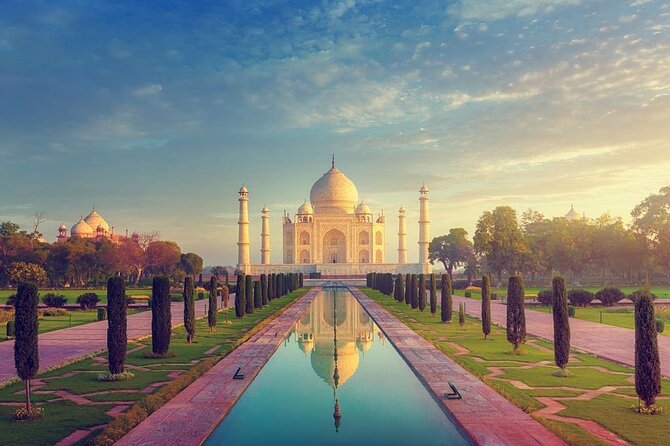
This tour is built for first-timers who want the headline landmarks without turning the trip into a logistics project. You get the classic Delhi–Agra–Jaipur triangle, but the plan also adds meaningful “in-between” stops so the story doesn’t feel like a checklist.
What makes it workable is the structure: pick up at the airport, sightseeing on a day-by-day arc, and overnight stays that break up travel. You’ll still have early mornings and long drives, but at least you won’t be guessing where to go next.
You can also read our reviews of more tours and experiences in New Delhi


Airport pickup, 3-star stays, and how you get going fast in Delhi
On day one, you land at Indira Gandhi International Airport, and a representative meets you with fresh Indian flower garlands. Then you’re transferred to your Delhi hotel in an air-conditioned car, check in, and you’re done for the day.
The stay is 3-star hotels for three nights, which is a reasonable match for a tour priced around the $209 mark with private transport and guides. One trade-off with 3-star lodging is that room condition can vary, so if your sleep matters a lot, you’ll want to request good room placement when booking.
I also like the practical touches: unlimited bottles of mineral water during the tour, and a guide at destinations who can explain what you’re seeing while you’re there.
Old Delhi Day: Jama Masjid, Chandni Chowk rickshaw, Raj Ghat
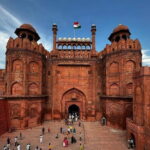
Old Delhi is where you get the sensory hit. The plan starts with Jama Masjid, India’s largest mosque, known for its big courtyard and scale. This is a good early anchor because it sets the tone: religion, street life, and monumental architecture all at once.
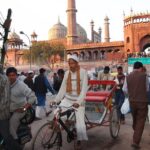
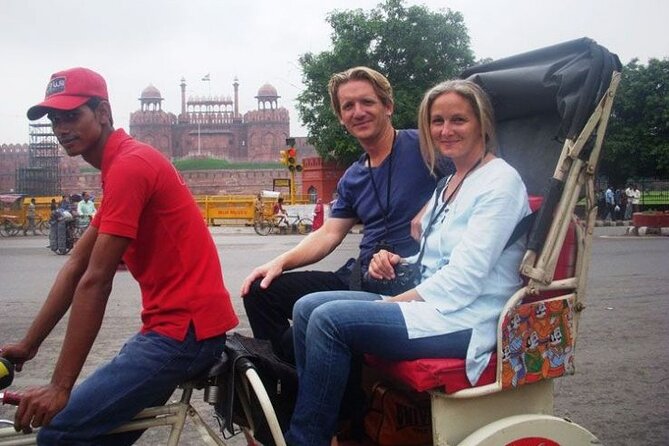
Next comes Chandni Chowk, and the tour adds a rickshaw ride through the lanes. That ride matters because it gets you into the market flow without you having to negotiate traffic and route decisions on your own. You’ll also be moving at the right speed for shopping streets: short bursts, frequent stops, and time to look.
After that, you visit Raj Ghat, the memorial on the west bank of the Yamuna where Mahatma Gandhi was cremated on January 31, 1948. The setting is more reflective than the market streets, so it helps balance the day. Quick heads-up: this is not a place for rushing. Even if the stop is short, plan to slow your pace for a few minutes.
New Delhi stops: Qutub Minar, India Gate, and Humayun’s Tomb
After Old Delhi, the tour shifts gears into the more monumental New Delhi and early imperial sights.
You’ll see Qutub Minar, the famous 72.5-meter minaret. It’s tied to the early period of Muslim rule in northern India, and it’s one of those landmarks that instantly makes you understand why people build cities around symbols.
Then it’s India Gate, the 42-meter archway that honors the roughly 70,000 Indian soldiers who died serving in the British Army during World War I. It’s a useful contrast to the earlier sites: instead of religious power or empire design, you’re looking at colonial-era memorial architecture and national memory all at once.
From there you make quick stops like Rashtrapati Bhavan, the President of India’s residence at the western end of Rajpath, and Humayun’s Tomb, completed in 1565 AD by Bega Begum, one of Humayun’s senior widows. I like Humayun’s Tomb because the garden layout (the chahar bagh style with paths and water channels) helps you read Mughal design. You’re not just looking at one building; you’re seeing how buildings and water are meant to work together.
The drive to Agra: expect the clock to win
After the big Day 2 sightseeing block, you drive to Agra by way of the Yamuna Expressway. The transfer is listed as about 3 hours, followed by check-in and an overnight stay.
This is where you should mentally “reset.” You’ll probably feel sight-heavy by this point, so treat the ride as recovery time. If you’re prone to getting car-sick, take that seriously early. Long-distance touring is still touring, even when the road is fast.





Sunrise Taj Mahal: why the early start is the whole point
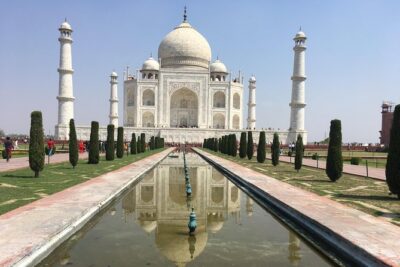
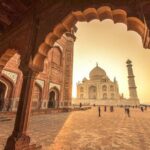
Day 3 begins with an early pickup, around 6 a.m., for a sunrise Taj Mahal visit. This is one of the few times in the itinerary where the timing genuinely improves what you get out of the experience.
The Taj Mahal at sunrise is not just about photos. Early light also makes the details easier to read on the marble surfaces, and it typically helps you get in before the wave of bigger crowds hits. The tour includes about 1.5 hours at the Taj, which is enough time to see the main views and do a slow walk without feeling like you’re trapped.
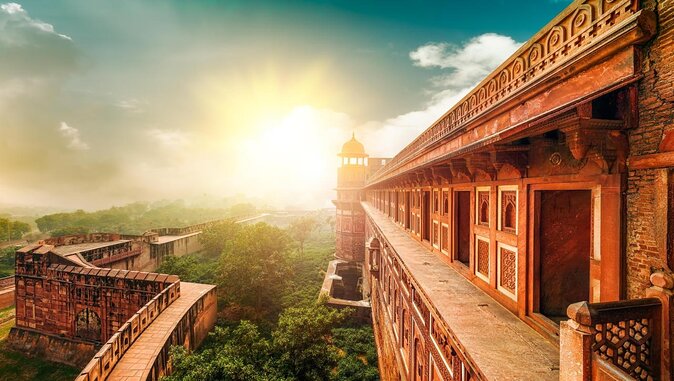
After the Taj, you return for breakfast and check out, then you head to Agra Fort. The plan includes a rickshaw ride to the fort, which keeps the energy moving without adding a lot of extra travel time. Agra Fort connects you back to Mughal power as a living military site, not just a memorial.
Fatehpur Sikri on the way to Jaipur: a strong detour
On day three, after Agra Fort, you travel toward Jaipur and stop at Fatehpur Sikri. The route notes it as about 37 kilometers from Agra, and it’s described as a red-sandstone city built in honor of the Sufi mystic Sheikh Salim Chisti by the Mughal emperor.
This stop is valuable because it stretches the Mughal story beyond Taj Mahal and Agra Fort. You get a sense of how rulers used cities, religious figures, and architecture together as political language.
Also, the plan lists Fatehpur Sikri admission as free on this day. Even if you treat that as “check at the site,” it’s still a smart add-on because it can reduce one of the usual budget surprises.
Amber Fort to City Palace: the Jaipur day that moves like a parade
Jaipur is the land of forts and optical lines, and this itinerary gives you a full royal core day.
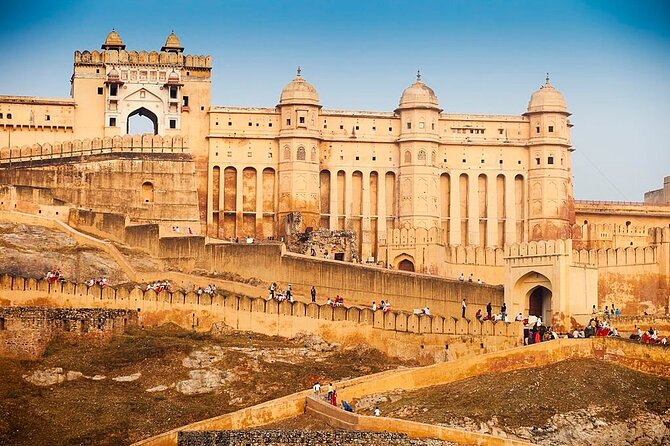
The day starts with Amber Fort, including an elephant ride experience. I’ll say this plainly: if you’re sensitive to animal-based activities, think carefully before you agree to the ride. If you do choose it, treat it as part of the historical show that Jaipur has become famous for, and don’t let it distract from the bigger architecture experience.
Amber Fort also sets you up for what Jaipur does best: layered viewpoints, dramatic courtyards, and palace walls that catch light in ways that make even short photo stops feel satisfying.
Next is City Palace of Jaipur, inside the walled city. The complex is attributed to Maharaja Sawai Jai Singh II, the founder of Jaipur, and the plan notes that parts of it are still home to the royal establishment. City Palace is a good change of pace after a big fort, because it feels more lived-in and less purely defensive.
Jantar Mantar, Jal Mahal photos, and the softer side of Jaipur
After City Palace, you visit Jantar Mantar, the observatory made by Maharaja Sawai Jai Singh II. It’s listed as a UNESCO World Heritage Site, and it’s described as the grandest of the five astronomical observatories he built. I love this stop because it makes science look physical. Even if you don’t study astronomy, you can still appreciate the precision of the instruments and the logic behind the layout.
Then you get a Jal Mahal photo stop. The water palace sits in Man Sagar Lake, and the famous effect is how it looks like it’s floating. This isn’t a long stay, but it’s worth the quick stop because it shows Jaipur’s style of framing views through water and skyline.
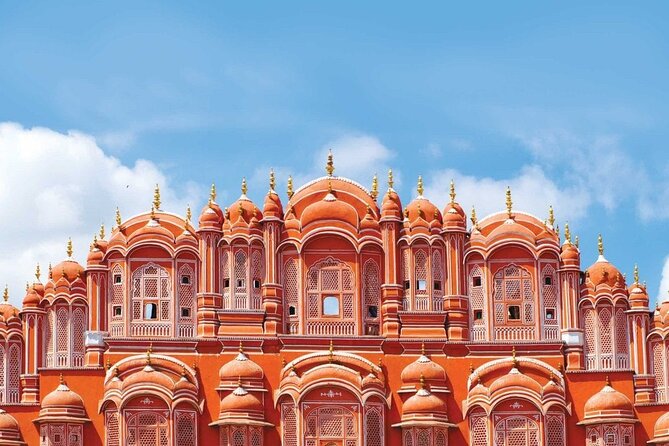
You also see Hawa Mahal, the Palace of Winds, built in 1799 as a summer resort for Sawai Pratap Singh and described as a place that also functioned as a safe haven for women of the royal household. The façade details are the star here, and it’s one of those buildings you understand instantly once you see it in person.
Birla Mandir and Galtaji Temple: two stops that feel more local
The day ends with a mix of spiritual and scenic stops that make Jaipur feel more than just forts and palace selfies.
Birla Mandir (Lakshmi-Narayan Temple) is built of white marble and sits at the base of Moti Dungari, dominating the skyline of south Jaipur. It’s a calmer kind of sightseeing than Amber Fort, and it’s a nice moment to slow down before the long trip back to Delhi.
Then there’s Galtaji Temple, also known as the Monkey Temple. The plan describes it as a historic pilgrimage site with temples, pavilions, and holy kunds (natural springs and water tanks) in a setting with low hills. Even if you don’t interact much with the local scene, the atmosphere feels different from the royal landmarks, and it adds variety on a packed final day.
Getting value for your money: what the $209 price usually covers
At around $209 for about 4 days, the value is in the bundle: private transport, 3 nights in 3-star hotels, guides at destinations, breakfast included on three mornings, and the key rides like the Delhi rickshaw and the Amber Fort elephant ride experience.
Unlimited bottled water is also a real cost saver in India, especially when you’re walking in heat and moving between neighborhoods.
What can change your final budget is entrances and meals. The tour states that monument entrance fees are not included. At the same time, the stop list sometimes marks admissions as included or free for specific sites. That mixed labeling is common in tour descriptions, so here’s my advice: before you go, ask the provider which tickets you’ll buy yourself versus which are already covered. Then you won’t get stuck at the gate wondering who pays.
Lunch and dinner are not included, so you’ll need to build in that everyday spending. If you’re on a strict per-day budget, plan your meal style early: simple local food can keep costs down, while full sit-down meals will add up fast.
Service quality and planning support: what to look for when you book
One reason Golden Triangle tours can feel either smooth or stressful is the humans running the background work. The tour provider behind this experience has shown strong communication in planning stages, including chat-based coordination with an agent named Aditya, plus reports of prompt pickup on arrival and a skilled driver named Gurdeep in at least one documented trip.
That matters because traffic and timing can get messy fast. When communication is clear and pickup is organized, you lose less time hunting down your driver and more time enjoying sights.
If you’re the type who wants a longer India arc, there’s also evidence of add-ons being supported, including a post-tour extension to Rishikesh. So if you’re building a bigger itinerary, it’s worth asking early.
Should you book this 4-day Golden Triangle from Delhi?
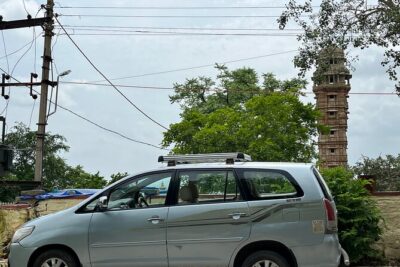
Book it if you want a straightforward first trip with the right headlines: Taj Mahal at sunrise, major Delhi monuments, and a Jaipur day that covers forts, palaces, observatories, and classic photo stops. It’s also a good fit if you prefer private organization over group chaos, because the plan is set up for your group only with a guide and private car.
Skip or reconsider if you hate early starts, don’t handle long drives well, or you’re very sensitive about animal rides. Also, because entrance fees and some meals aren’t fully spelled out in a single clean line, make sure you’re comfortable carrying some extra cash for tickets and food.
If you’re a confident planner with your own transport, you might build a cheaper DIY route. But if you want reduced friction, built-in guidance, and a schedule that hits the big monuments without losing the plot, this one is a solid value.
FAQ
What cities are included in the 4-day Golden Triangle tour?
The tour covers Delhi, Agra, and Jaipur.
How long is the tour?
It’s listed as approximately 4 days.
Is this tour private or shared?
It’s a private tour/activity, and only your group participates.
What kind of hotels are included?
You get 3 nights accommodation in 3-star hotels.
Is airport pickup included in Delhi?
Yes. A representative meets you at Indira Gandhi International Airport in Delhi and transfers you to the hotel by air-conditioned car.
What meals are included?
Breakfast (3) is included. Lunch and dinner are not included.
Are monument entrance fees included?
The tour description says monuments entrance fee is not included, so you may need to pay at sites depending on the specific ticket coverage.
Are any rides included during sightseeing?
Yes. There is a rickshaw ride in Delhi, and there is an elephant ride experience at Amber Fort. The plan also mentions a rickshaw ride to Agra Fort.
What time do you visit the Taj Mahal?
You visit the Taj Mahal for a sunrise tour with pickup from the hotel around 6 a.m.
Is free cancellation available?
Yes. Free cancellation is available if you cancel up to 24 hours in advance for a full refund.