REVIEW · NEW DELHI
New Delhi Slum Walking Tour
Book on Viator →Operated by Street Tours India · Bookable on Viator
Two hours that shift how you see Delhi. This New Delhi slum walking tour focuses on everyday life in Zakhira, using an English-speaking local guide to keep things respectful and grounded in real context. Instead of peeking from behind a camera, you’re guided through the lanes and you learn how community life works on the street level.
I love the small size. With a cap that’s described as up to 8 travelers (and listed as a maximum of 4 travelers in the activity details), you’re more likely to move like a semi-private group than a big crowd. I also love that it’s set up to be inclusive, never intrusive, with complimentary coffee or tea built into the plan.
One possible drawback: the subject matter is emotionally heavy. If you want a purely light, feel-good outing, this tour may feel uncomfortable at first—because it’s designed to show real life, not a theme park version.
In This Review
- Key takeaways before you go
- Why Zakhira matters in a short, 2-hour visit
- Meet at Moti Nagar and get your bearings fast
- The guide dynamic: Santan’s respectful style
- Traveling by public transport and foot (the real point)
- Zakhira for about an hour: what you should expect to see
- Coffee or tea breaks that feel like part of the day
- Respect rules: why the tour asks for boundaries
- Group size and pace: semi-private helps more than you think
- Price and value: $28.50 for two hours of real context
- Who should book this tour, and who might not
- Practical tips to make the experience better
- Should you book the New Delhi slum walking tour?
- FAQ
- FAQ
- How long is the New Delhi slum walking tour?
- Where is the meeting point?
- What area does the tour visit?
- How much time is spent at Zakhira?
- What size group is this tour?
- Is the guide English-speaking?
- Is coffee or tea included?
- Do you use public transportation?
- Do I get a mobile ticket?
- What is the cancellation policy?
Key takeaways before you go

- Zakhira as the main focus: You spend about an hour in Delhi’s largest slum district, not just a quick photo stop.
- Guide-to-community rapport: Santan is highlighted for a calm, respectful approach and easy conversation with locals.
- Public transit + walking: You’ll move the way many people do, and you’ll actually navigate the neighborhood on foot.
- Tea or coffee included: Expect a break that feels part of daily routine, not just a tourist perk.
- Photo boundaries: Your guide may ask you not to take photos once inside the area.
- Small-group pace: The tour is capped low to keep the experience conversational and not chaotic.
Why Zakhira matters in a short, 2-hour visit

If you only have a couple hours in Delhi, this tour is one of the few ways to see more than monuments and traffic. The goal is to help you understand the socioeconomic context of one of Asia’s largest informal settlements—by walking and talking, not by reading a lecture.
Zakhira is the named stop, and that matters because you’re seeing a major, established part of the city rather than a vague “slum sightseeing” route. The time on the ground is about an hour, which is long enough to get a sense of the rhythms—shops, lanes, and daily movement—without dragging you through it for half a day.
And yes, it’s still a slum tour, so your emotions will do their own thing. You may feel grateful, sad, curious, or all three in the same walk. That’s part of what makes it memorable.
You can also read our reviews of more walking tours in New Delhi



Meet at Moti Nagar and get your bearings fast

The meeting point is listed as 3/21, Block A, New Moti Nagar, Moti Nagar, New Delhi, Delhi 110015, India. It’s also noted as near public transportation, which helps if you’re staying in that part of town or plan to use metro/bus connections for the rest of your day.
This matters because the tour isn’t designed to start with a complicated checklist or a scavenger hunt. You show up, you meet the guide, and you begin moving—often right away—so you don’t lose energy before you even reach the neighborhood.
The tour ends back at the meeting point, so you don’t have to figure out a “what now?” moment once you’re done walking. In a city where logistics can be tiring, that simplicity is a real value.
The guide dynamic: Santan’s respectful style
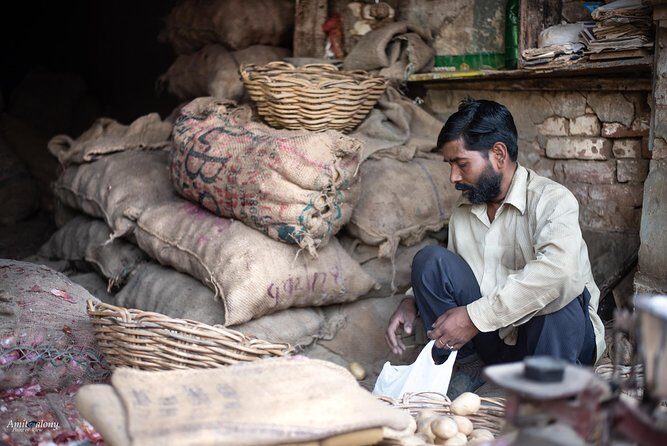
A big reason people rate this experience so highly is the guide approach. Santan is repeatedly named in the feedback as warm, respectful, and good with conversation. The tone matters here. You’re not being sent in to stare. You’re being introduced to people and spaces through a local who knows how to handle boundaries.
You’ll also want to listen for the way your guide frames what you see. The tour is meant to explain ongoing projects and the social context around the community, not just point at buildings and call it a day.
A practical tip: go with curiosity and patience, especially at the start. You may be asked to keep your behavior low-key in certain areas, and that’s not about control—it’s about respect for the people who live there.
Traveling by public transport and foot (the real point)
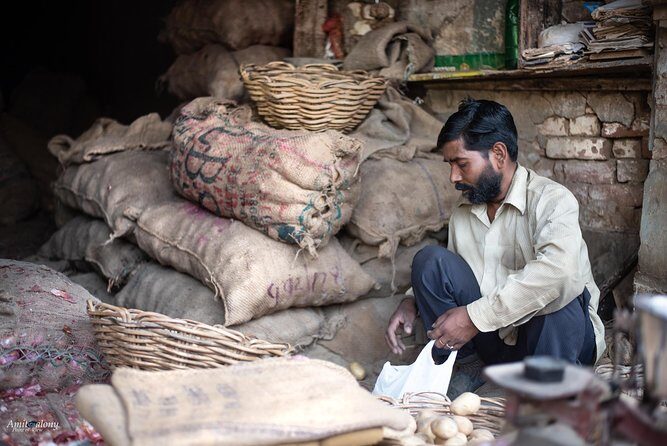
The tour includes travel like a local via public transportation, then it becomes a foot walk across the slum area. That’s not a “cool factor.” It’s the mechanism that keeps the tour from feeling staged.
When you ride and walk the same way people do, you get a clearer sense of how the neighborhood connects to the rest of Delhi. You also see the space as people experience it: tight lanes, small businesses, and everyday routines that don’t slow down for visitors.
This is also where the tour’s small group size helps. With fewer people, your guide can slow down when there’s something to explain, and you’re less likely to end up blocking doorways or turning a quiet lane into a bottleneck.
Zakhira for about an hour: what you should expect to see
The itinerary’s main stop is Zakhira, and the time allocation is about 1 hour. That hour is the core of the tour: you walk through the community, observe day-to-day life, and get context on how people organize their work and social support.
In the real world, you’ll likely notice everyday commerce—small shops and stalls—because the community functions as a place to live and work. Some guided moments may include seeing local food and drink in action. Multiple people mention chai during the walk, which fits the idea that you’re not only viewing the area but also tasting a piece of local rhythm.
You might also catch glimpses of practical work happening—one feedback highlight describes visiting a bakery area and watching the daily bread production process. That kind of stop can be fascinating because it reframes the story from only hardship to also skill, industry, and survival economy.
The best way to treat this hour: keep your questions respectful, and let your guide set the pace. If someone is explaining a project or a daily routine, treat it like you would at a friend’s home—listen first, react second.






Coffee or tea breaks that feel like part of the day
This tour includes complimentary coffee or tea. That sounds like a small detail, but it changes the feel of the experience. A drink break gives you time to slow down, ask questions, and adjust emotionally.
Chai shows up in several descriptions of the tour day, and it’s also a social glue. When you’re walking through places with intense living conditions, being able to sit for a moment is genuinely useful. It’s also a reminder that people here have normal human moments: talk, tea, and community connection.
If you’re thinking about what to bring, this is one reason you don’t need to plan food stops. Still, you should bring water, because walking in Delhi’s heat can wear you out faster than you expect.
Respect rules: why the tour asks for boundaries
One consistent theme in the provided information is that the tour is designed to be inclusive and not intrusive. That shows up as behavioral expectations once you’re in the lanes.
A specific example: your guide may ask you not to take photos after you enter the area. That’s important. Cameras can turn a neighborhood into a stage, and people living there deserve control over how they’re represented.
You can help the tour feel respectful by doing a few simple things:
- Keep your voice calm in tight spaces.
- Ask before you step into someone’s immediate area.
- Follow your guide’s cues on photos and how close you stand.
This is also where your mindset matters. You’re there to understand context. If you arrive treating it like content, you’ll feel tension fast—inside yourself and in the space.
Group size and pace: semi-private helps more than you think

The tour is capped low: up to 8 travelers is stated, and the activity detail also notes a maximum of 4 travelers. Either way, the point is the same: you’re not part of a large bus group.
That small size helps in a few practical ways. First, it makes it easier for your guide to keep a respectful distance when needed. Second, it gives you space to talk without shouting. Third, you’re more likely to notice details—like how people greet each other and how routines flow—because you’re not being pulled along in a stampede.
If you’re someone who hates crowded tours, this is a major part of the value.
Price and value: $28.50 for two hours of real context
At $28.50 per person, this tour sits in the budget range for Delhi experiences, but it’s not a “cheap to be casual” activity. You’re paying for a few things that usually cost more in other settings:
- A local, English-speaking guide with established community rapport
- Coordinated travel via public transport and on-foot navigation
- Time in the community focused on socioeconomic context, not a rushed drive-by
- Complimentary coffee or tea
If you compare it to “standard sightseeing” costs—tickets, transport, and a guide who might only give a few big-picture facts—this feels different. The price is reasonable for the amount of human time and the careful approach people describe around safety and comfort.
And because the group size is small, you’re more likely to actually get answers to your questions rather than hearing a generic script while you wait your turn.
Who should book this tour, and who might not
You’ll probably enjoy this tour if you like human-scale travel. It’s for people who want to see the other side of Delhi without turning it into spectacle. It also suits travelers who ask thoughtful questions and are okay with getting uncomfortable for a good reason.
You might want to skip or soften your expectations if you need a light mood day. This walk is about inequality and community life under pressure, and you’ll feel that weight. It’s also physically a walking experience on foot, so it’s best if you’re comfortable moving around in tight spaces for about an hour plus transit time.
If you’re traveling with kids, older adults, or anyone with mobility limits, check in with the operator ahead of time. The information says most travelers can participate, but real comfort still depends on your ability to walk and handle crowded lanes.
Practical tips to make the experience better
A few small choices will make this go smoother:
- Wear breathable clothing and shoes you can walk in.
- Bring water, even though coffee/tea is included.
- Keep your phone ready but follow photo guidance from your guide.
- Think of questions that focus on daily life and context, not shocking details.
Also: don’t come in expecting a clean “overview” that removes all uncertainty. You’re going to see complexity. The tour’s strength is that it doesn’t pretend life is simple.
Should you book the New Delhi slum walking tour?
Book it if you want a short, guided, on-foot look at Zakhira that prioritizes respect and conversation over spectacle. The value is strong: a local guide (often highlighted as Santan), public transit, complimentary coffee or tea, and a small-group pace that keeps the experience personal.
Don’t book it if you’re chasing comfort or pure distraction. This tour can feel emotionally heavy, and that’s by design. If you’re okay with that—and you can be patient and respectful—you’ll likely leave with a clearer, more human understanding of Delhi’s real world.
FAQ
FAQ
How long is the New Delhi slum walking tour?
The duration is listed as about 2 hours.
Where is the meeting point?
The meeting point is 3/21, Block A, New Moti Nagar, Moti Nagar, New Delhi, Delhi 110015, India.
What area does the tour visit?
The tour’s main stop is Zakhira, described as one of the largest slum areas in Delhi.
How much time is spent at Zakhira?
Zakhira is listed as a 1-hour stop.
What size group is this tour?
Tours are capped at up to 8 travelers to keep the group intimate, and the additional activity info lists a maximum of 4 travelers.
Is the guide English-speaking?
Yes. The tour description specifies an English-speaking local guide.
Is coffee or tea included?
Yes. Complimentary coffee or tea is included.
Do you use public transportation?
Yes. The tour description says you travel like a local via public transportation and then walk through the area.
Do I get a mobile ticket?
Yes. The tour features a mobile ticket.
What is the cancellation policy?
Free cancellation is available up to 24 hours in advance for a full refund. If you cancel within 24 hours of the start time, the amount paid is not refunded.