REVIEW · SAWAI MADHOPUR
Ranthambore National Park
Book on GetYourGuide →Operated by THE RANTHAMBORE TIGER · Bookable on GetYourGuide
One thing hits fast in Ranthambore: the jungle feels alive. This safari is built around real wildlife encounters from inside a vehicle, with a guide offering commentary so you know what you are seeing (and what to watch for).
I especially like two things: the focus on tigers wandering in their natural habitat and the fact that you explore with an English or Hindi live guide for context, not just a drive-through. One drawback to plan for: tiger sightings are never guaranteed, and group vehicle choice (jeep vs. canter) can affect how comfortable and how close you feel.
In This Review
- Key things to know before you go
- Ranthambore Safari Basics: what your 3 hours really looks like
- Jeep vs. canter: visibility, comfort, and sharing
- Tigers are the headline, but the real story is the tiger reserve
- Wildlife you might see: more than tigers on the move
- Your guide’s job: safety, spotting skills, and interpretation
- Photo time from inside the vehicle (and how to make it count)
- Pickup and hotel drop: lots of options, one simple flow
- Price and value: what $27 buys you in Ranthambore
- Who should book this safari (and who should skip it)
- Should you book this Ranthambore National Park safari?
- FAQ
- FAQ
- How long is the safari?
- Do I get entry tickets included?
- Are tiger sightings guaranteed?
- What vehicle will I ride in?
- Is food or drinks included?
- Do I need to send my passport or ID for park entry?
- What ID should I carry during the safari?
- What languages are spoken by the guide?
- Is pickup provided from all hotels?
- What’s not allowed during the safari?
Key things to know before you go

- Tiger reserve rules mean sightings are unpredictable even with expert driving.
- Jeeps fit up to 6 people; canters are larger (about 16–20) and you may share space.
- You’ll ride with a live guide (English or Hindi) giving on-the-spot wildlife commentary.
- Entry tickets are included, plus you typically skip the ticket line.
- Bring the right ID: you must send passport/ID details for park entry and carry the original during the safari.
- Time in the park is short (about 3 hours), so be ready to move fast and wait when needed.
Ranthambore Safari Basics: what your 3 hours really looks like
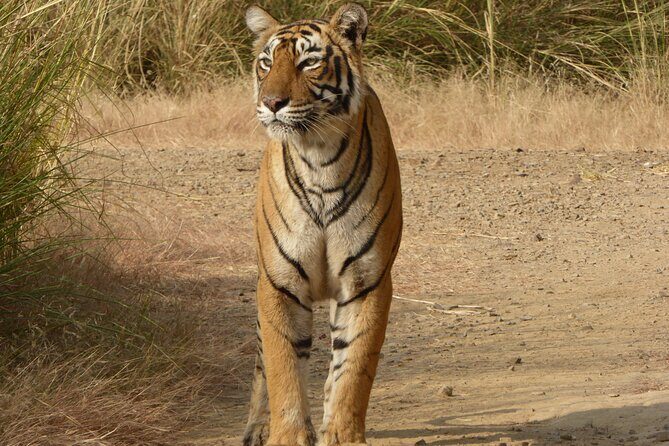
This is a 3-hour guided safari into Ranthambore National Park, managed by the Government Forest Department. You do not just buy a seat and hope for the best—you meet your guide, then you head into the reserve by vehicle, with stops chosen based on conditions inside the park.
The day flow is simple. You wait at your hotel for pickup (if you opted for it), meet the guide, then drive to the entrance. From there, you spend your time looking, listening, and reacting to what wildlife is doing in that moment. When the safari ends, you return to your hotel.
That short time window is the whole point. A safari in a tiger reserve is not a slow stroll; it’s motion plus attention. The guide’s job is to help you read signs and stay oriented, so you are not just staring into trees and hoping something moves.
You can also read our reviews of more tours and experiences in Sawai Madhopur.

Jeep vs. canter: visibility, comfort, and sharing
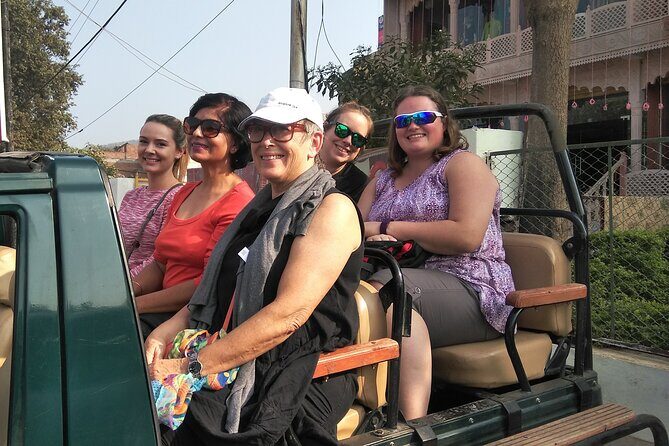
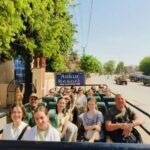
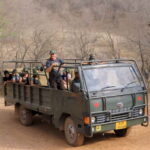
Your ride option matters more than most people expect. Jeeps accommodate up to 6 people, which usually means less squeezing and more room to shift for a look. Canters typically hold 16–20 passengers, and the group size can feel noticeable—especially when everyone is trying to watch the same side of the track.
So here’s the practical advice: if you care about comfort and quick camera angles, a jeep-style safari is easier on the senses. If you are fine with a bigger vehicle and shared space, a canter can still be a good way to experience the reserve while keeping the cost down.
Also watch for this: the safari can involve sharing the vehicle with other visitors. That is not automatically bad—it just changes the vibe and can make it harder to hear every bit of wildlife commentary if the group is loud.
Tigers are the headline, but the real story is the tiger reserve
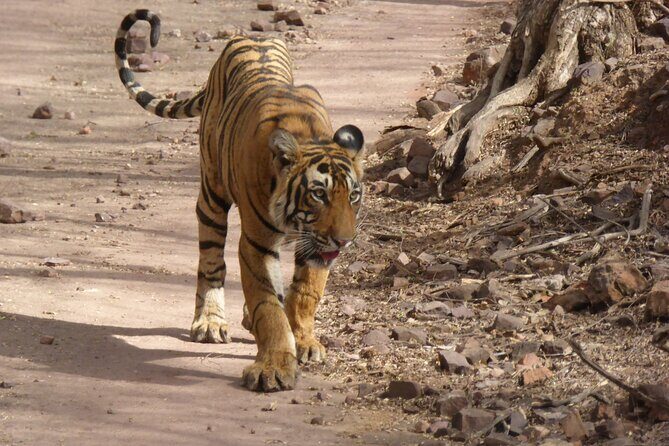
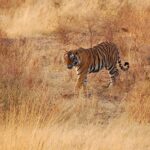
Let’s be honest about the main promise: you are in a tiger reserve, not a zoo. That means the Royal Bengal tiger can be anywhere—on a track, moving through undergrowth, or completely out of view for your entire session.
What your booking does provide is access and guidance. You go into the park, you get commentary, and you drive through areas where tigers are known to be seen. Some people even report dramatic luck: one well-reviewed experience highlights spotting a tiger along with two cubs, which is the kind of moment you remember for years.
Still, keep expectations grounded. If you arrive thinking tiger sighting is guaranteed, you will set yourself up for disappointment. Instead, treat this as a chance to experience Ranthambore’s ecosystem—where tigers, leopards, deer, hyenas, crocodiles, and more share the same terrain.
Wildlife you might see: more than tigers on the move

The best safaris feel like a live lesson in animal behavior. In Ranthambore, beyond the tiger focus, you can look out for leopards, bears, hyenas, deer, crocodiles, and wild boars. Even when the big cat isn’t visible, you can still get meaningful sightings—like smaller predators and herbivores that reveal what the reserve is doing that day.
What I like about this setup is the range. A tiger reserve is not just one species and a single track. As your guide drives and comments, you are learning the rhythm of the jungle: what signals might lead to predator movement, where animals tend to cross, and why certain spots are worth a slow pass.
And yes—watch for the “in between” moments. A deer moving quietly can tell you where activity is clustering. A distant snarl or sudden change in posture can mean something is nearby. The guide’s role is to help you notice those cues, not just the final sighting.
Your guide’s job: safety, spotting skills, and interpretation
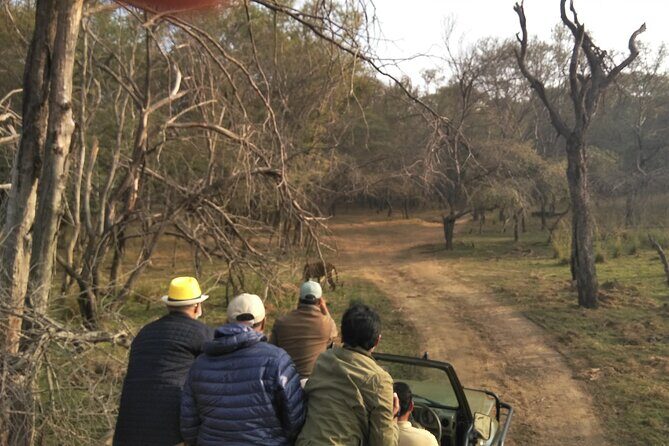
A safari is not only about where the vehicle goes—it’s also about how you understand what you see. The experience includes a live guide who shares commentary in English or Hindi and helps you move around safely within the vehicle rules.
You also get a sense that guides vary in style and language delivery. In one account, the guide Meetha stood out for being welcoming and knowledgeable, with the driver taking the group to multiple spots and ending with a tiger sighting. That kind of day happens when a guide understands wildlife patterns and keeps scanning intelligently.
Here’s the consideration you should plan for: if you are expecting English-only guidance, confirm language preference ahead of time. One experience described a mismatch where a foreigner safari booking ended up with mostly Indian-language commentary, which made it harder to track what animals were near. It doesn’t mean you will have that problem, but it is worth checking so you can enjoy the full value of the commentary.
Bottom line: a good guide helps you see more than you would on your own, and it makes the drive feel like a guided walk through clues.
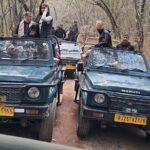
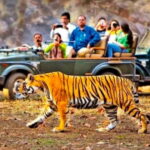

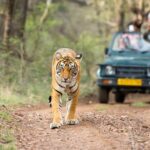
Photo time from inside the vehicle (and how to make it count)
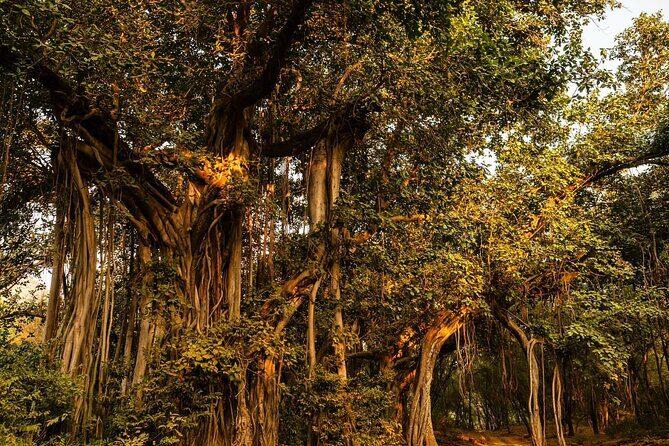
This safari is designed for photos from the safety of the vehicle. You are looking at animals at a distance, at angles that shift quickly, and sometimes through leaves. Even without a dedicated camera included, you can still get excellent shots using your phone or a small camera—if you’re ready when the moment happens.
Practical tips that fit the reality of this experience:
- Keep your lens protected from dust and quick movement.
- Stay alert when the guide signals a likely stop—photo chances can be brief.
- Take more frames than you think you need; jungle motion and quick pauses can fool focus.
- Expect shots to be uneven. In a reserve, your “best” angle is often the one you catch in the first seconds.
If you bring sunglasses (recommended), you’ll likely find scanning easier. They help when light cuts through trees and when you are tracking movement across open gaps.
Pickup and hotel drop: lots of options, one simple flow

The experience offers pickup from many hotels in the Ranthambore and Sawai Madhopur area. Your confirmation details should match your property, so you can plan around meeting the guide where you are staying.
There is one special case to note. If you are staying at Six Senses Fort Barwara Hotel, the standard pickup and drop is not included. The operator says you can arrange a tuk-tuk or car to bring and drop you at additional cost (given as Rs 3500 to Rs 4000). That is a real decision point: if you want a smooth start, factor in the extra time and cost of getting to the pickup point.
Also, you typically skip the ticket line. That matters because it helps protect your limited safari time. In a 3-hour experience, minutes you save at the gate can mean more minutes watching wildlife.
Price and value: what $27 buys you in Ranthambore
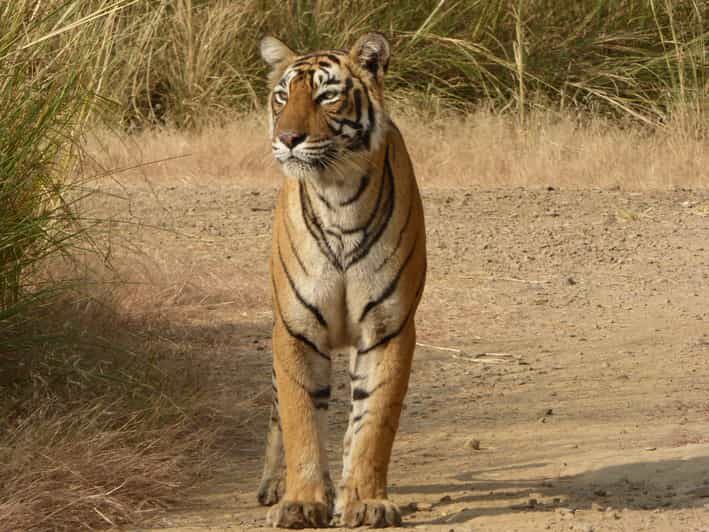
At around $27 per person for a 3-hour guided safari, the value depends on how you handle uncertainty. You are paying for access (entry tickets), a guide, and a vehicle safari inside a managed tiger reserve. You are not paying for a guaranteed tiger sighting.
From a value standpoint, here’s what makes this feel worthwhile:
- You get entry tickets included, so you are not scrambling for separate park admission.
- The live guide adds meaning, which can make even a “no big cat” day feel educational.
- Safari time in a tiger reserve is short, and the drive+watching setup is efficient.
The main reason some people feel the price is not always worth it is wasted waiting time. One account complained that part of the safari felt like standing around and waiting for an alert call, which left them feeling that the overall time-to-sighting ratio was low. You can’t control that completely—wildlife and park access rules set the pace—but you can control your expectations: treat this as a wildlife process, not a timed show.
Who should book this safari (and who should skip it)
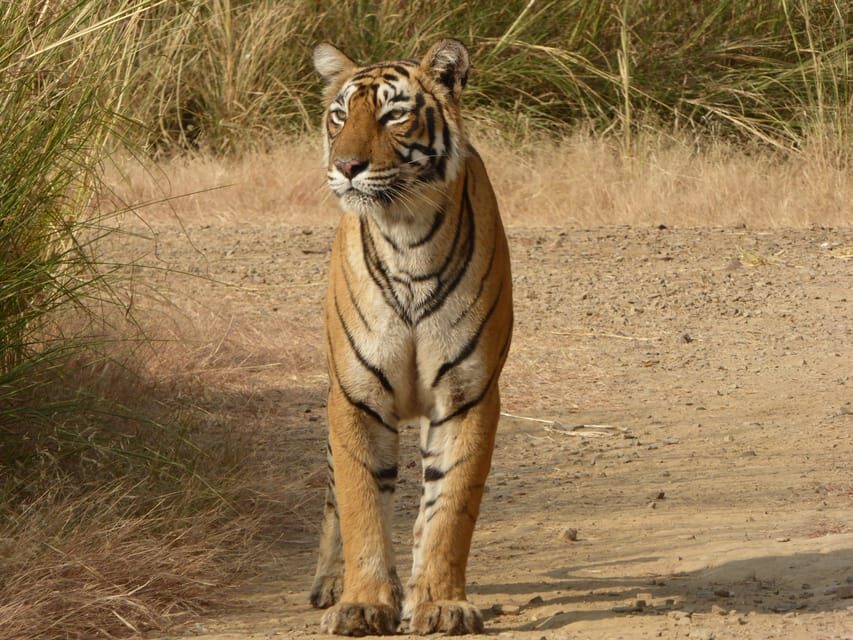
This works best for people who want to:
- Experience Ranthambore as a tiger reserve, not a zoo
- Get guide commentary while scanning for wildlife
- Enjoy wildlife photography from the vehicle instead of walking routes
It may not fit you if you:
- Want guaranteed tiger sightings (no safari can promise that)
- Are sensitive to group vehicle conditions (canters can feel crowded compared to jeeps)
- Are pregnant, because the safari is listed as not suitable for pregnant women
If you travel with a tight schedule, the 3-hour format is also helpful. It’s long enough for a meaningful wildlife search, but short enough to pair with other Ranthambore activities.
Should you book this Ranthambore National Park safari?
If your priority is a guided, entry-included wildlife safari in a tiger reserve—where you get expert commentary and a real chance at tiger sightings—then this is a solid pick. The combination of guided scanning and vehicle-based access makes it a practical way to experience Ranthambore’s jungle atmosphere.
I would book it if you:
- Are comfortable with wildlife unpredictability
- Prefer staying safe inside the vehicle and taking photos from there
- Want English or Hindi guidance and have the ID requirements ready
I would think twice if you:
- Need guaranteed tiger sightings
- Strongly require a small-vehicle experience (ask specifically about jeep vs canter before you go)
- Are staying at Six Senses Fort Barwara and don’t want to arrange extra transfer logistics
FAQ
FAQ
How long is the safari?
The safari is listed as a 3-hour guided tour in Ranthambore National Park.
Do I get entry tickets included?
Yes. Entry tickets are included, and the experience notes you can skip the ticket line.
Are tiger sightings guaranteed?
No. The tiger reserve nature means sightings are unpredictable and cannot be guaranteed.
What vehicle will I ride in?
Jeeps can accommodate up to 6 people. Canters typically hold about 16–20 passengers, and you may share the vehicle with other visitors.
Is food or drinks included?
No. Food and drinks, tea, and a camera are not included.
Do I need to send my passport or ID for park entry?
Yes. You are asked to send your passport or ID for park entry via WhatsApp or email after booking, and you cannot book without ID or passport.
What ID should I carry during the safari?
Carry your original passport or ID card during the safari. A copy is not a substitute for the original.
What languages are spoken by the guide?
The live tour guide is listed as available in English and Hindi.
Is pickup provided from all hotels?
Pickup is optional and depends on your location. Pickup and drop are not provided from Six Senses Fort Barwara Hotel, but you can arrange tuk-tuk or car transfer for an extra cost (Rs 3500 to Rs 4000).
What’s not allowed during the safari?
Smoking and alcohol/drugs are not allowed.