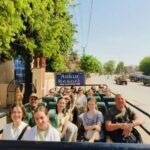
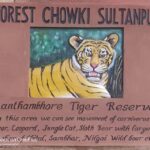
Ranthambore delivers tiger time. This 3-hour shared safari in Sawai Madhopur is built around one park zone (1 to 10, depending on availability) and a guided drive through Ranthambore National Park. You’re also in an area shaped by the Ranthambore Fort and scattered ruins, with water bodies that pull wildlife in during hot days.
I love two things here. First, Ranthambore Tiger Reserve entry and safari admission are included, so you’re not juggling extra tickets mid-trip. Second, the guide or forest ranger helps you identify and differentiate the park’s flora and fauna, which turns the drive into more than just scanning for animals.
One real consideration: tiger sightings aren’t guaranteed, and the vehicle situation can be tricky. Some people expect a jeep or gypsy-style ride, but if that’s sold out you may end up on a 16-seat canter instead, and the experience is non-refundable once booked.
In This Review
- Key highlights worth knowing
- Ranthambore in 3 hours: what a shared safari really gives you
- Pickup, zones, and the canter vs jeep reality
- Entering Ranthambore National Park: fort ruins, water bodies, and tiger odds
- Jogi Mahal near the fort: why this heritage stop fits the wildlife story
- What you might spot besides tigers (and where to focus your attention)
- The guide and ranger effect: turning spotting into a skill
- Price and value: is $41 a smart deal for Ranthambore access?
- Timing, heat, and what to pack for a 3-hour safari
- Who this safari suits best (and who should look elsewhere)
- Should you book the 3-hour shared safari in Ranthambore?
- FAQ
- How long is the safari?
- Do you include pickup and drop?
- Is entry to Ranthambore Tiger Reserve included?
- Are meals included in the price?
- Is a tiger sighting guaranteed?
- Is this a shared safari or a private activity?
- How many zones does the safari use?
- What vehicle might I ride in?
- What is the cancellation policy?
Key highlights worth knowing
- Zone-based safari timing: your safari runs in one zone (1 to 10) based on availability
- Fort + ruins in the same loop: history markers show up as you move through the park
- Water bodies change the game: animals gather around water, especially in summer heat
- More than tigers: sloth bear, hyenas, leopards, monkeys, and mugger crocodiles are all possible
- Real communication: some operators share pickup timing and even vehicle registration details ahead of time
- Be clear on vehicle type: jeep/gypsy vs canter can depend on what’s available
Ranthambore in 3 hours: what a shared safari really gives you
If you’re short on time in Rajasthan, a 3-hour Ranthambore safari can be a smart use of your day. The goal here is simple: get you into a single Ranthambore National Park zone and keep the drive moving long enough for the ecosystem to do its thing. Tigers are the headline, but Ranthambore is also about the web of life around them.
This is a shared safari by design, meaning it’s not a private two-person hunt for wildlife. You should expect a group setting with shared vehicles and shared spotting energy. The upside: you’re paying for access to the park with the right structure, not figuring it out on your own. The downside: you don’t fully control the zone you get, and that affects what you might see.
One more thing I like about how this works: the experience includes ranger or guide help for reading the forest. When someone points out what you’re actually looking at, you stop seeing “trees and grass” and start seeing tracks, feeding signs, and animal routes. That makes the hours feel longer in a good way, even if the tiger stays stubbornly out of view.
You can also read our reviews of more tours and experiences in Sawai Madhopur


Pickup, zones, and the canter vs jeep reality
Practical first: you get pickup and drop near your hotel in Sawai Madhopur. That removes the biggest headache for Ranthambore visits, which is often just getting to the right entrance and timing everything correctly.
Then comes the zone factor. Your safari is restricted to one zone, chosen based on availability (from 1 to 10). That matters because Ranthambore is not one uniform “tiger forest.” Different zones can feel different depending on terrain, cover, and where water sits. You’re not picking your zone on the fly, so your best move is to book early when you can.
Now, the vehicle question. The experience is described as a safari on shared vehicles, and you may ride in either a jeep/gypsy-style vehicle or a 16-seat canter (a larger open safari vehicle). A booking dispute in the feedback specifically mentions a switch from expected jeep to canter when jeeps were sold out, along with no easy refund. So here’s the practical advice: when you confirm your booking, ask what vehicle type you’re actually assigned and whether any change is possible if the first choice sells out.
Entering Ranthambore National Park: fort ruins, water bodies, and tiger odds
Ranthambore National Park is named after the fort that towers over the area atop a hill, and that sense of place shows up as you move in. As the safari route runs through the park, you’ll notice structures and ruins scattered around the jungle. It’s a mix of wildlife and human history right next to each other, and that combination is part of what makes Ranthambore feel different from other reserves.
The other big driver is water. The park is dotted with water bodies that give animals relief during scorching summer days. When it’s hot, water becomes a meeting point. That’s also where you increase your odds of seeing the park’s variety of wildlife, because species that don’t hang out in the same spots will still converge around reliable water sources.
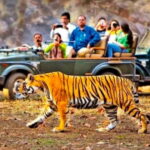
This is also a park where tigers have been known to hunt in full view of visitors. Tiger behavior can shift from day to day, but the important takeaway is this: don’t assume tigers only show up at a distance. The best sightings can happen when the timing is right and the animal decides you’re part of the landscape.
Because your time is limited to about 3 hours, efficiency matters. The design here is to get you into a productive zone, keep the drive going, and use ranger guidance to help you identify what you’re seeing while you’re still seeing it.
Jogi Mahal near the fort: why this heritage stop fits the wildlife story
The experience also includes a stop for Jogi Mahal, described as a heritage building connected to the days when tigers ruled this region. It sits about 500 meters from Ranthambore Fort, so it stays closely tied to the park’s main landmark.
Jogi Mahal is referred to as an old hunting resort for royal families during hunting expeditions into the nearby forests. That context matters because it explains a lot about why Ranthambore has always been a place of fascination and pursuit. Even though today the rules are about wildlife protection, the location tells you how long this area has been known for tiger presence.
Is this a full history museum visit? The details provided focus more on the role of the building than on a long indoor stop. Treat it as a brief but meaningful pause that connects the fort-and-ruins atmosphere to the wildlife story. It also helps break up the mental monotony of staring out of a vehicle for hours.
If you’re the type who likes animals but also likes understanding why a place developed this identity, Jogi Mahal adds weight to the outing without stealing too much time from the safari.
What you might spot besides tigers (and where to focus your attention)
Tigers are the goal, but a Ranthambore safari is rarely a single-species experience. With guide support, you’ll be scanning for multiple animals as the drive passes through varied cover and around water.
Here are the animals specifically mentioned as possible sightings:
- Deer (a key food source and a sign of habitat quality)
- Sloth bear
- Hyenas
- Leopards
- Around water bodies: mugger crocodiles
- Monkeys (often bold and active near certain areas)
The key is that these species don’t all use the landscape the same way. Deer may appear where cover and movement lines meet. Predators and scavengers can show up when prey activity makes a pattern. Around water, you can get a different set of animal behavior at the same time: reptiles lounging, birds watching, monkeys timing their raids.
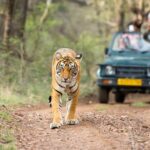
Also, tiger sightings are possible but not guaranteed. The description specifically notes that you may be able to spot an exclusive tiger in the grasslands. That detail is useful because it reminds you to keep your eyes up when the vegetation opens. Not all big cats appear only where everything is dark and tangled.
For your best odds in real life, don’t just hunt for the “tiger silhouette.” Pay attention to movement shifts: sudden quiet, lots of staring, repeated bird reactions, or a group of animals repositioning. Those moments often signal that something bigger is nearby, even if it stays hidden.



The guide and ranger effect: turning spotting into a skill
One of the strongest parts of this experience is the inclusion of guide or forest ranger help. You’re not just driving and hoping. You’re learning enough to make your own observations sharper in the moment.
The description highlights that you’ll identify and differentiate the park’s flora and fauna. That matters because when you understand what kind of vegetation you’re looking at, you can predict what kind of animals might use it. It also helps you interpret why the ranger pauses at certain spots.
In the feedback, one guide named Faiz is mentioned as being very wonderful and helpful throughout the safari. That lines up with what you want from a guide: quick, clear direction, and the ability to connect animal sightings to what’s happening in the habitat right now.
You’ll also get a more human kind of value from this. When someone can explain what you’re seeing, the safari stops feeling like a checklist and starts feeling like a guided field experience. That’s especially important in Ranthambore, where the environment can look similar even when the animals are not.
Price and value: is $41 a smart deal for Ranthambore access?
At around $41 for a 3-hour shared safari, this can be excellent value, mainly because the price structure includes several core costs:
- Safari admission
- Pickup and drop from nearby hotels
- Entry/Admission – Ranthambore Tiger Reserve
If you’ve ever pieced together a tiger safari day, you know how quickly separate ticketing, transport, and park access fees can stack up. Here, the experience bundles them, which reduces friction and stress.
What you’re buying is not guaranteed tiger time. You’re buying access and a structured chance at wildlife in an official protected area. For most people, that’s the right match for the price: reasonable for a short safari window, and fair if you’re flexible about outcomes.
Now the caution side of the math. The information provided says the experience is non-refundable and cannot be changed for any reason. So treat the booking as firm once you commit. That doesn’t mean it’s bad value. It just means you should book only when you’re confident your dates and timing are solid.
Also, because you might ride on a canter instead of a jeep depending on availability, your value depends on whether the vehicle assignment feels acceptable to you. If you strongly prefer one type of ride for comfort or viewing, confirm it before you finalize.
Timing, heat, and what to pack for a 3-hour safari
You’re in Rajasthan, and the safari is in a park with summer heat called out specifically. The park’s water bodies exist partly because they give wild animals relief when temperatures spike. You should assume you’ll feel that heat too, even if the drive keeps you moving.
Bring practical comfort items:
- Sun protection (cap/hat, sunscreen)
- Light layers that you can manage if the day warms up fast
- Water (even though meals aren’t included, you’ll still want hydration)
- Something for dust (a scarf or light face covering can help in dry conditions)
Timing matters in a different way too. Your safari is constrained to about 3 hours, so you want to arrive ready. If you’re late, you risk losing some of the best time window in your allotted zone.
If you’re sensitive to long periods of quiet scanning, plan your mindset. Safari success is often about patience. The best moments may come when you stop expecting something and start noticing smaller changes around you.
Who this safari suits best (and who should look elsewhere)
This experience fits well if:
- You want Ranthambore Tiger Reserve entry bundled into a short day plan from Sawai Madhopur
- You like a guided approach, where the ranger helps you spot and interpret wildlife
- You’re comfortable with a shared safari format and the reality of limited time
- You want a mix of wildlife plus a heritage stop at Jogi Mahal
It may not be the best fit if:
- You need a guaranteed tiger sighting (nothing here promises that)
- You’re very picky about the vehicle type (jeep/gypsy vs 16-seat canter can depend on availability)
- You rely on the ability to cancel or modify dates easily (the provided policy is non-refundable and not changeable)
If you’re the “one chance, one day” type, I’d still book it. Just go in with clear expectations: you’re here for the chance to see iconic wildlife in a real protected landscape, not for a guaranteed outcome.
Should you book the 3-hour shared safari in Ranthambore?
Book it if you want a well-structured, reasonably priced way to access Ranthambore National Park with pickup, included reserve entry, and ranger-style spotting help. The combination of tiger-focused driving plus learning support is the big reason this works, especially at a value price point.
Don’t book it if vehicle type matters to you and you’re unwilling to accept possible changes based on availability. Also, only commit if your dates are firm, since it’s non-refundable and not amendable.
If you do book, your best move is simple: confirm the zone assignment approach and ask what vehicle you’ll be using for your slot. Then settle in. Ranthambore has a way of turning a short drive into a full memory, even when the tiger keeps you waiting.
FAQ
How long is the safari?
The safari runs for about 3 hours.
Do you include pickup and drop?
Yes. Pickup and drop are offered near nearby hotels.
Is entry to Ranthambore Tiger Reserve included?
Yes. Entry/Admission for Ranthambore Tiger Reserve is included.
Are meals included in the price?
No. Meals are not included.
Is a tiger sighting guaranteed?
No. Tiger sightings are possible but not guaranteed.
Is this a shared safari or a private activity?
It’s described as a shared safari, and the activity details also say it’s private with only your group participating. Your exact on-vehicle setup can depend on availability.
How many zones does the safari use?
Each safari is limited to one zone, selected based on availability from zones 1 to 10.
What vehicle might I ride in?
The experience can involve different vehicle types based on availability. One feedback example mentions a switch to a 16-seat canter when jeep/gypsy options weren’t available.
What is the cancellation policy?
The experience is non-refundable and cannot be changed for any reason. If you cancel or ask for an amendment, you won’t get a refund.