REVIEW · BODH GAYA
Private guided tour of Bodh Gaya over 2 days
Book on Viator →Operated by 5 Senses Walks · Bookable on Viator
Bodh Gaya hits different when you slow down. This private 2-day tour strings together the major pilgrimage moments around the Mahabodhi Temple complex, then carries you to Nalanda and ends in Rajgir’s Buddhist and Jain sites. It is a practical way to see more than just the famous spots, with a guide who helps the places make sense.
I really like the way the itinerary balances big icons with calmer side stops. You get the bodhi story at the Bodhi Tree, the dramatic Great Buddha Statue, and quiet monastery time like the Thai Monastery, plus a Sujata Stupa that connects the enlightenment moment to a human story. One more thing I like: the guidance stays flexible, and the pace can be adjusted to your interests.
One consideration: food and beverages are not included, so you’ll want to plan for your own lunches/snacks between stops. Also, you start at 9:00 am, so comfortable shoes and a bit of water planning matter more than you might expect.
In This Review
- Key highlights
- Two days that connect Bodh Gaya, Nalanda, and Rajgir
- Day 1 in Bodh Gaya: Mahabodhi Temple to Sujata Stupa
- Mahabodhi Temple complex (about 1 hour)
- Bodhi Tree marker (about 45 minutes)
- Great Buddha Statue (about 1 hour)
- Thai Monastery (Wat Thai Buddhagaya) (about 1 hour)
- Sujata Kuti / Sujata Stupa (about 45 minutes)
- What this means for you on Day 1
- Day 2: Rajgir’s sites, Nalanda, and the hot springs finale
- Rajgir monuments: Buddhism and Jain connections (about 2 hours)
- Nalanda University (about 2 hours)
- Rajgir Hot Springs and ancient temples (about 1 hour)
- Why the guide and AC car make a real difference
- Hotel night with breakfast: a small inclusion that helps a lot
- Price and value: what your $175 really buys
- What to watch for before you go
- Should you book this private Bodh Gaya tour?
- FAQ
- What is the duration of the Bodh Gaya private guided tour?
- How much does the tour cost per person?
- Does the tour include pickup?
- What is included in the price?
- Are admission tickets included?
- What is not included?
- What time does the tour start?
- Can I get a full refund if I cancel?
Key highlights
- Private, guided, and tailored pace through the key UNESCO-style pilgrimage stops
- Mahabodhi Temple + Bodhi Tree focus on the core enlightenment landmarks
- Thai Monastery added for a wider view of Buddhist culture in India
- Nalanda University time with clear context for why it mattered
- Rajgir monuments + hot springs at the end of the trip for a change of mood
Two days that connect Bodh Gaya, Nalanda, and Rajgir
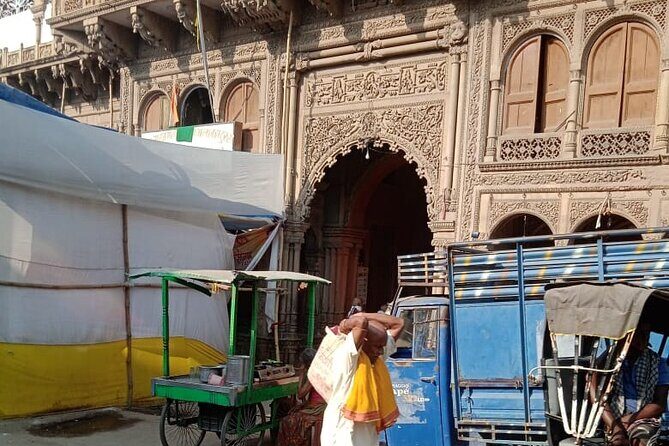
This is the kind of itinerary that makes the region feel like one story instead of three separate day trips. Day 1 stays in Bodh Gaya, where the Buddha’s enlightenment tradition shaped not only temples but also how people gather and practice. Day 2 expands outward: Nalanda gives you the learning side of the Buddhist world, and Rajgir adds the Jain and Buddhist layers that often overlap in this part of Bihar.
At $175 per person for a private guided tour, you are paying for the big stuff people usually struggle to DIY: a guide, an air-conditioned car, and a full day of movement between sites. The trip also includes your hotel night in Bodh Gaya with breakfast, which is a real value win because it reduces rushing and last-minute planning.
If you want a smooth cultural route without stitching together buses, drivers, and ticket lines on your own, this design works. You’ll spend your energy looking at the monuments and listening to the explanations, not managing logistics.
You can also read our reviews of more guided tours in Bodh Gaya
Day 1 in Bodh Gaya: Mahabodhi Temple to Sujata Stupa
Bodh Gaya is famous for a reason, but it can also be a little overwhelming if you only skim the highlights. The strength of this day is that it keeps returning to the same spiritual center while widening the lens.
Mahabodhi Temple complex (about 1 hour)
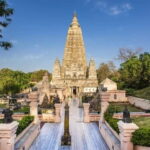
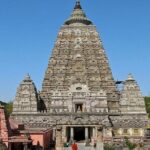
You begin at the Mahabodhi Temple world heritage site. This is the temple complex directly tied to the Buddha’s life, and the site is associated with the moment of enlightenment that happened under the bodhi tree area. The guide’s role matters here because the temple is not just one building; it is a whole structured space built around that sacred connection.
In plain terms: you’ll get oriented to what you are looking at and why it is considered so important across Buddhist traditions. This is also where many people naturally slow down, because the architecture and symbolism pull you toward stillness.
Bodhi Tree marker (about 45 minutes)
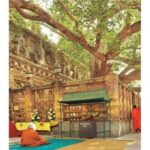
Next comes the Bodhi Tree area, the symbolic spot marking where the original tree stood. Even if you have seen photos, being there in person is different. It is one of those places where the details matter less than the meaning—this is the landmark people connect with for the enlightenment story.
This stop pairs well with the temple visit because it makes the site feel continuous: temple to marker to the idea of enlightenment.
Great Buddha Statue (about 1 hour)
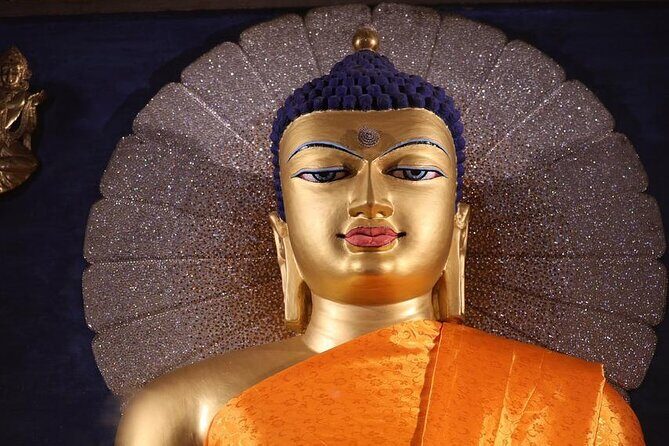
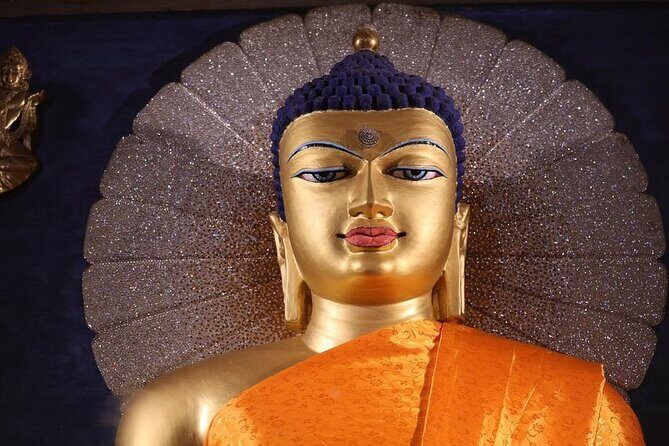
Then you head to the Great Buddha Statue, described as a towering figure (around 25 meters) in a seated lotus meditative pose. This stop is a good “reset” between the more symbolic temple areas. The statue gives you a visual anchor—big, calm, and meant to be noticed.
It also helps if you want variety in your day. Instead of only moving through corridors and courtyards, you get a more monumental sightline.
You can also read our reviews of more private tours in Bodh Gaya
Thai Monastery (Wat Thai Buddhagaya) (about 1 hour)
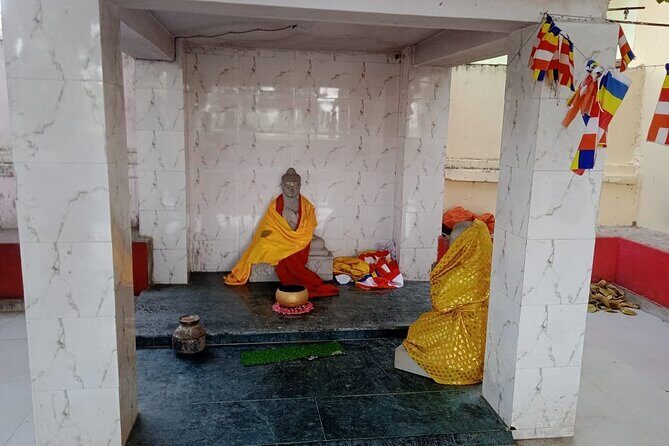
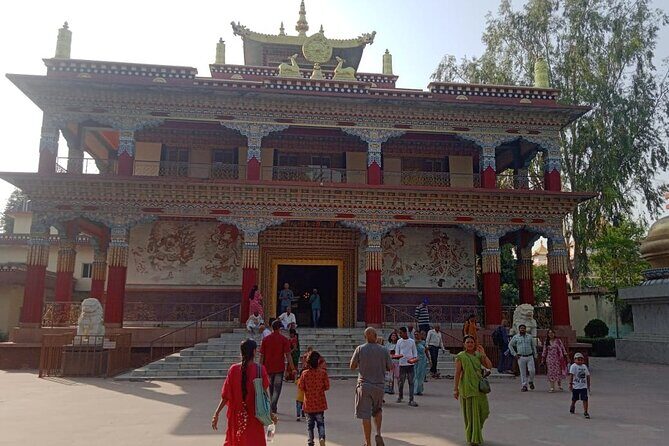
One of the nicest surprises on this day is the inclusion of the Thai Monastery, established in 1956 by Thailand’s government. It is the only Thai temple in India in this setting, and it adds a distinctly non-local flavor to Bodh Gaya’s Buddhist landscape.
This stop is valuable because it shows how a shared faith can take different forms in different countries. You also get a change of pace: monasteries often feel more like places to observe quietly than to rush through.
Sujata Kuti / Sujata Stupa (about 45 minutes)
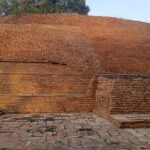
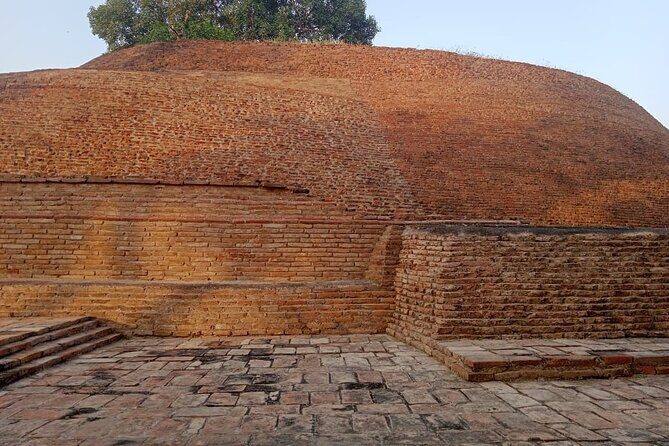
To close the day, you visit Sujata Kuti, tied to Sujata, the milkmaid from Bakraur, who is said to have fed Gautama Buddha milk and rice at this spot, helping end his seven days of fasting. It is a more human-scale part of the enlightenment story than the temple-and-tree framing.
I like that this stop prevents the day from becoming only symbolism. It reminds you that the Buddha’s path, as told in Buddhist tradition, includes real-life acts of help and recovery.
What this means for you on Day 1
This day is built around attention and flow. You’ll likely feel the spiritual center as you move between the temple core, the bodhi marker, and the statue. Then the Thai Monastery and Sujata Kuti widen the lens so the day feels more complete than a checklist of famous points.
Day 2: Rajgir’s sites, Nalanda, and the hot springs finale
Day 2 is where the tour expands beyond pilgrimage and into the wider history of belief in the region. You start with Rajgir’s monuments, then move to Nalanda, and finish with Rajgir Hot Springs.
Rajgir monuments: Buddhism and Jain connections (about 2 hours)
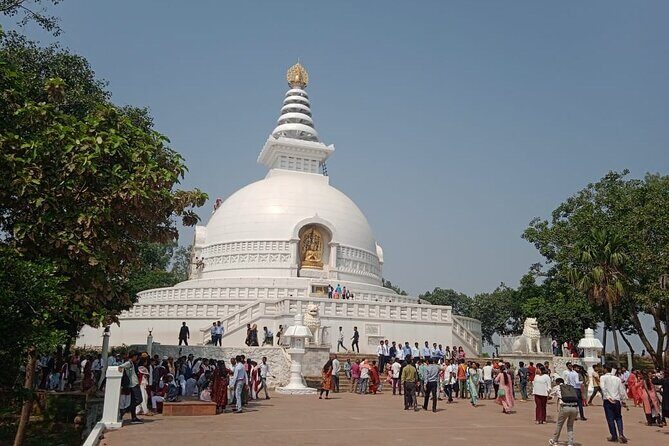
Rajgir is famous for monuments tied to both Buddhism and Jainism. The itinerary notes that both the Buddha and Mahavir spent time here, and you’ll visit several key sites, including Swarna Gufa, Griddhakuta Parvat, Vishwa Shanti Stupa, Sapataprani cave, and other related stops.
Why this works as a day opener: you instantly get variety. Rajgir is not only about one faith or one story. The site mix gives you a sense of how these religions overlap in place, memory, and sacred geography.
This is also a good time to slow down and listen, because cave sites and hill viewpoints can feel abstract if you don’t have context. A guide helps you connect what you see to the names you are hearing.
Nalanda University (about 2 hours)
Then you head to Nalanda, an ancient center of learning. The itinerary frames it as a world-renowned university founded in the 5th century CE, located in present-day Bihar. Seeing Nalanda with a guide is one of the biggest reasons this tour feels worth the price—because the ruins can look like scattered stone without explanation.
I like how the time is set aside for understanding. You are not rushed across the site. Instead, you get a chance to grasp what Nalanda represented: education as a major pillar of Buddhist culture and outreach, not just religion as ritual.
Rajgir Hot Springs and ancient temples (about 1 hour)
To close, you visit the Rajgir Hot Springs area and the ancient temples around it. This final stop is a useful change of pace after the monument-heavy morning. Hot springs add a sensory break, and ending with a different mood can make the whole trip feel more balanced.
If you have only ever visited temples, this is a nice reminder that sacred places often include everyday human comfort too—so even the ending feels less like one last hurried photo.
Why the guide and AC car make a real difference
This tour is private, so you are not stuck with an inflexible schedule designed for a big group. You move as one unit: your guide sets the flow, and your pace is less dictated by strangers’ needs.
The tour is run by Five Senses Tours, and the company is recognized by India’s Ministry of Tourism and is a member of IATO. That kind of formal recognition matters for basics like coordination and professionalism.
Most importantly, the guiding style is repeatedly described as patient and clear. In particular, the name Basant/Basanth comes up for being both articulate and careful, with explanations that help you connect what you see to what the sites represent. And the experience consistently highlights punctuality—so you start on time at 9:00 am, and you do not waste your day waiting around.
Add in the air-conditioned car, and your time between sites becomes less stressful. Even when the day is full, you’re not baking in the heat while trying to read street signs or figure out routes.
Hotel night with breakfast: a small inclusion that helps a lot
You get 1 night stay in a hotel in Bodhgaya with breakfast. That sounds simple, but it changes how Day 2 feels. Instead of rushing through the same day, you reset in the evening and start fresh the next morning.
Breakfast is included, while food and beverages are not. So this is a good time to think like a local: plan to eat meals off-tour with whatever is easiest nearby, and keep snacks or water on hand for the gaps between stops.
If you like having one plan that is already handled (hotel + breakfasts + transport + guide), this inclusion is part of the value.
Price and value: what your $175 really buys
Let’s talk value without pretending this is cheap or luxury. At $175 per person, you are funding a package that covers:
- A private guide for two days
- Air-conditioned car transport
- Your hotel night in Bodhgaya, plus breakfast
- Admission for the listed stops is noted as free in the itinerary
The real comparison is not to a ticket price. It’s to what you would pay if you tried to arrange the same combination: guide + driver + car + a hotel night. Even if you could find a bargain, you would still need to coordinate time and sequences, which is where day plans often go sideways.
Where this tour especially makes sense is for couples or families who want the sites handled in a clean flow. If you’re traveling with parents or someone who prefers not to navigate step-by-step, a private plan is often worth it fast.
What to watch for before you go
A few practical points so your two days feel calm instead of chaotic:
- Start time is 9:00 am. Plan for an early morning and keep your mornings light.
- Food and beverages aren’t included. You’ll want lunch/snacks sorted outside the package.
- Wear comfortable shoes. This is a day of multiple monuments and moving between locations.
- Bring small change and patience. Even when admissions are free, temple areas can still involve queues for entry and security routines.
- If you care about both Buddhism and Jain context, Day 2 in Rajgir is where you’ll feel that mix most clearly.
Should you book this private Bodh Gaya tour?
If your goal is a focused, guided route through Mahabodhi Temple, Nalanda, and Rajgir—with the logistics handled—this is a strong fit. You’ll get a sequence that makes the region’s sacred themes easier to understand, not just easier to photograph.
I would especially recommend it if:
- You want private pacing instead of group timing
- You like explanations that connect the dots between sites
- You prefer comfortable AC transport and a hotel night already lined up
- You care about learning stops like Nalanda, not just major temples
I’d think twice if you are someone who likes total freedom to wander, skip ahead, or eat completely off the grid with no structure. In that case, you might prefer a flexible day-by-day plan.
If you want a guided cultural itinerary that feels steady, respectful, and well-run, this one is worth booking.
FAQ
What is the duration of the Bodh Gaya private guided tour?
The tour runs for 2 days (approximately).
How much does the tour cost per person?
The price is $175.00 per person.
Does the tour include pickup?
Pickup is offered.
What is included in the price?
The included items are breakfast, 1 night stay in a hotel in Bodhgaya with breakfast, a guide, and travel by air-conditioned car.
Are admission tickets included?
The itinerary lists the stop admissions as Free for the major sites included in the route.
What is not included?
Food and beverages are not included.
What time does the tour start?
The start time is 9:00 am.
Can I get a full refund if I cancel?
Yes. You can cancel up to 3 days in advance of the experience for a full refund.