REVIEW · BODH GAYA
Full-Day Private Guided Bodhgaya Tour with Pick Up
Book on Viator →Operated by Shanti Tourism Bodhgaya · Bookable on Viator
Bodh Gaya feels overwhelming at first. This private guided route keeps the day organized, with an air-conditioned vehicle and a clear plan for the key spiritual sights, so you can focus on seeing rather than figuring out.
The best part for me is the pace. You hit the main temple complexes and monastery stops in a way that feels efficient, not frantic, and the guiding adds context as you move from site to site. Plus, you get bottled water and onboard WiFi, which helps when you’re bouncing between monuments for hours.
One thing to plan around: lunch isn’t included, and the tour notes that entrance fees for monuments aren’t included even though the listed admission tickets for each stop are marked free—so it’s smart to confirm the current on-site rules before you head in.
In This Review
- Key highlights you’ll feel right away
- Pickup at Café Coffee Day, then a calm start
- Mahabodhi Temple: the main stop with breathing room
- Thai Monastery: short visit, clear design cues
- Royal Bhutan Monastery: look for the clay-carving storytelling
- Indosan Nippon Japanese Temple: woodwork and 1972 origin
- Great Buddha Statue: your 80’ photo-and-reflection block
- Metta Buddharam Temple: mirrors and stainless steel detail
- How the 6–7 hour route stays smooth (and why that’s rare)
- Price and value: $51.06 per group makes private sense
- What to do to make the day easier on your body
- Who should book this private Bodh Gaya tour
- Should you book this tour?
- FAQ
- What time does the tour start?
- Where is the meeting point?
- How long is the tour?
- What stops are included?
- Are entrance fees included?
- Is lunch included?
- What’s included in the tour price besides the guide?
- Is this a private tour?
- What’s the cancellation policy?
Key highlights you’ll feel right away
- No-fuss private format: it’s only your group, so the schedule stays flexible for your pace
- Guide Amar’s impact: the overall feedback points to an excellent, smooth explanation style with no rushing
- A smart monastery mix: Thai, Bhutan, Japanese, and Thai-style temple design in one day
- Mahabodhi Temple gets the time: the longest stop (about 1 hour 30 minutes) for the main centerpiece
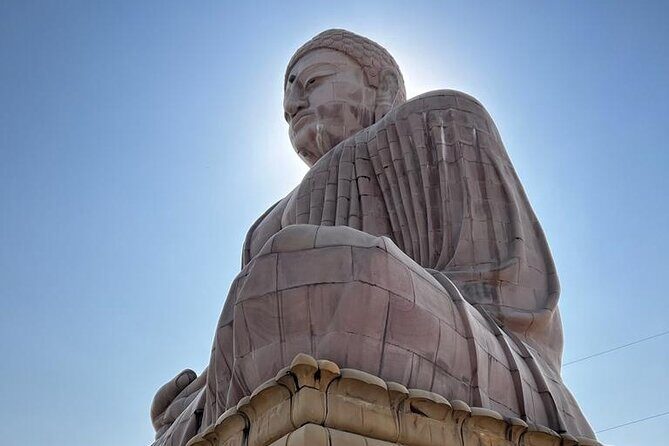
- The 80’ Buddha statue stop: a dedicated 40 minutes at the Great Buddha Statue
- Comfort included: AC car, bottled water, and onboard WiFi make a long temple day easier
Pickup at Café Coffee Day, then a calm start
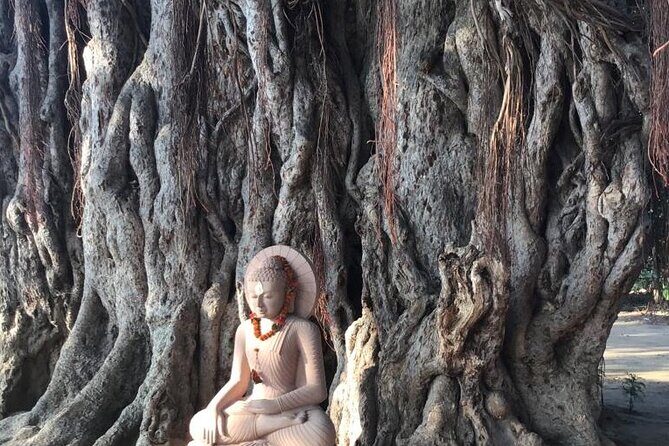
Your day begins at 8:30 am at Café Coffee Day on Domuhan-Bodhgaya Rd, near the Mahabodhi Cultural Centre, in Belsar, Bodh Gaya (824231). The tour is designed to bring you back to the same meeting point at the end, so you don’t need to manage another transport plan.
This is a private tour/activity, meaning only your group participates. The price is set per group (up to 2 people), so it’s a good fit when you want a real guide rather than joining a larger shared crowd.
On the comfort side, you’ll travel in an air-conditioned vehicle and get bottled water. On a hot day, that matters more than people think, especially when your schedule is temple-heavy and you’ll want to stay hydrated without hunting for supplies mid-route.
You can also read our reviews of more guided tours in Bodh Gaya
Mahabodhi Temple: the main stop with breathing room
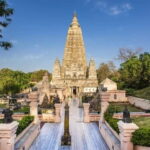
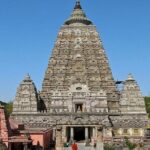
Mahabodhi Temple is the centerpiece of any Bodh Gaya visit, and this tour gives it the longest block: about 1 hour 30 minutes. It’s described as one of the four holy sites connected with the life of Lord Buddha. The location info in the tour description also helps anchor it: it’s about 115 km south of Patna and around 16 km from Gaya.
What I like about this stop in particular is the way it’s handled time-wise. A lot of tours rush the Mahabodhi Temple experience because it’s the famous one. Here, you get enough room to look carefully, take your time inside the complex, and actually understand what you’re seeing rather than just checking boxes.
You should also know the entry detail: the itinerary lists admission as free at this stop, but the overall tour notes that entrance fees for the monuments are not included. That doesn’t mean you’ll definitely pay. It just means you should be prepared to confirm what applies on the day you visit—especially if any rules change locally.
Thai Monastery: short visit, clear design cues
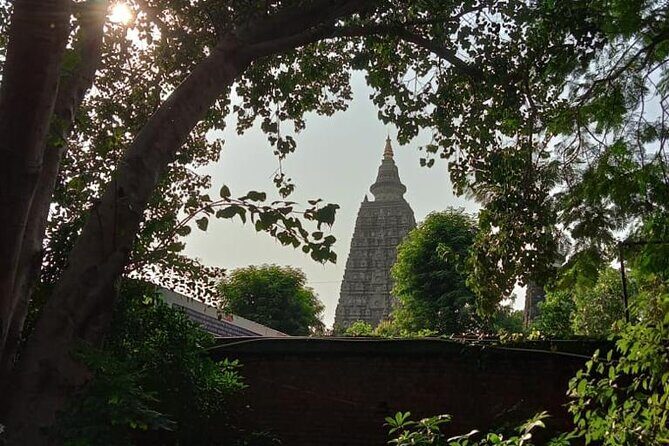
Next up is the Thai Monastery, scheduled for about 35 minutes. The tour description highlights its mission: spreading the messages of Lord Buddha and the principles of Buddhism, supported through collaboration connected to the government of Thailand.
Even with a shorter time slot, this is a valuable stop because it shows you Buddhism expressed through Thai monastic presence. In a single day, it helps you compare how different communities design temples, pace prayer spaces, and use ornamentation.
The admission note here is the same situation: the itinerary lists it as free, but the tour package says monument entrance fees aren’t included. Treat it as a “likely free, confirm on arrival” scenario so you’re not surprised if anything is updated.
Royal Bhutan Monastery: look for the clay-carving storytelling
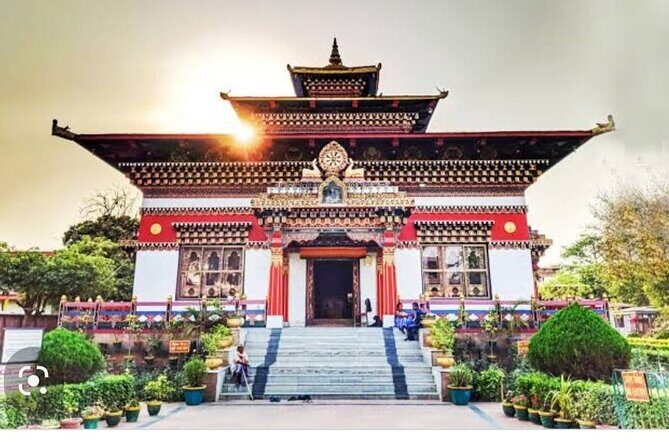
The Royal Bhutan Monastery is also about 35 minutes. The tour description calls it a “magnificent” monastery and temple, and it points to a specific feature: important instances from the life of Gautam Buddha shown through clay carving.
This is the kind of detail that makes a guided stop worth it. Without guidance, you might see carvings and move along quickly. With a guide, you’re more likely to notice the storytelling element and slow down where the images are doing the work.
Again, keep the same entry-note in mind: it’s listed as free in the itinerary, while the tour package says entrance fees aren’t included. If you’re trying to budget tightly, it’s worth asking your guide to confirm what you need before you enter.
Indosan Nippon Japanese Temple: woodwork and 1972 origin
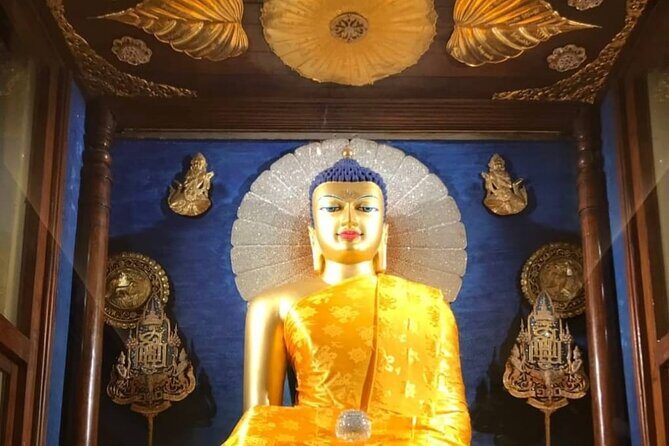
Then you’ll head to the Indosan Nippon Japanese Temple, also around 35 minutes. The tour description includes two concrete points that make this stop easy to identify: it was built in 1972 with help from international Buddhist communities, and the structure is carved out of wood, looking like a Japanese shrine.
That description matters for your expectations. If you’re used to stone-heavy temple architecture, this wooden, shrine-like design will feel noticeably different. It’s a good palate cleanser after other monastery styles, and the short timing works because you can focus on the building’s look and symbolism rather than needing a long guided session.
Like the other stops, the itinerary says admission is free, but the package lists entrance fees for monuments as not included. Confirming once is usually enough—you don’t want to repeat that question at every gate.
You can also read our reviews of more private tours in Bodh Gaya
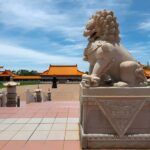
Great Buddha Statue: your 80’ photo-and-reflection block
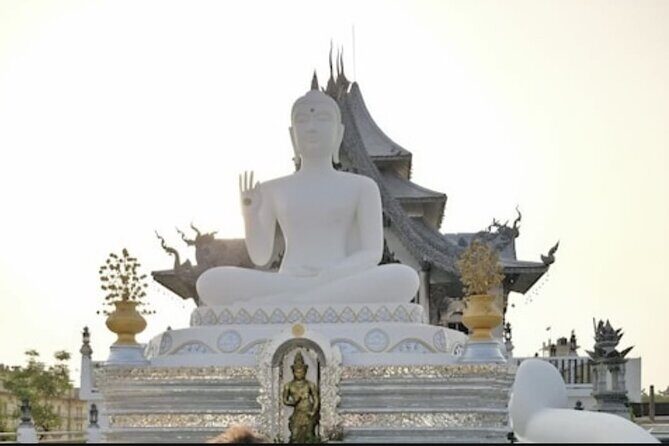
The Great Buddha Statue stop is scheduled for about 40 minutes. It’s commonly called the 80’ Buddha Statue, and the tour description adds a very specific ceremonial detail: it was unveiled and consecrated on November 18, 1989, with a ceremony attended by His Holiness the XIV the Dalai Lama.
That matters because it turns the statue from “big thing to look at” into “place with a known milestone.” Even if you’re not spending the time reading every inscription, having that context helps you understand why the statue is treated as important by visitors and worshippers.
A 40-minute slot is also a practical choice. You can take photos, pause for a moment of quiet, and still have time to move on without the day feeling dragged.
No entrance fees are listed in the itinerary for this stop, but the tour’s general note still says monument entrance fees aren’t included. So plan for the possibility of small charges or a requirement to carry a ticket, and confirm right before entry.
Metta Buddharam Temple: mirrors and stainless steel detail
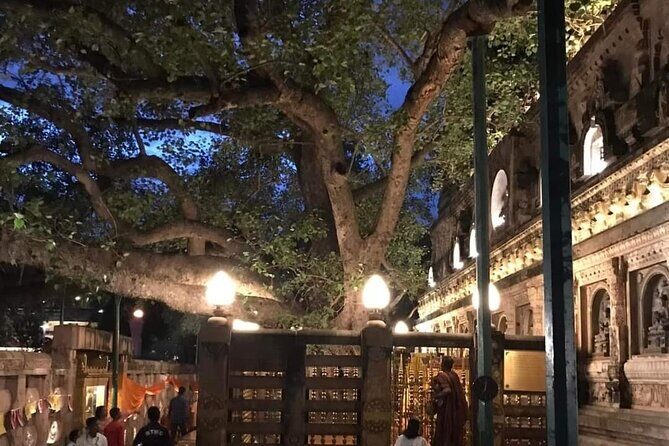
The final temple stop is the Metta Buddharam Temple, about 35 minutes. The description calls it a Thai temple with an outer shell of stainless steel and a decorative mosaic made using mirrors. It’s also described as seeing Thai temple style.
This is one of those places where the visuals do a lot of the explaining. Mirror mosaics catch light quickly, and stainless steel surfaces reflect movement and color, so it can feel like the space changes as you walk around it. With a guide, you can spend your time where the design elements are strongest rather than wandering aimlessly.
The same admission-note pattern applies: itinerary marks ticket as free, but the package says monument entrance fees aren’t included. Confirming once saves you stress, and it keeps your budget predictable.
How the 6–7 hour route stays smooth (and why that’s rare)
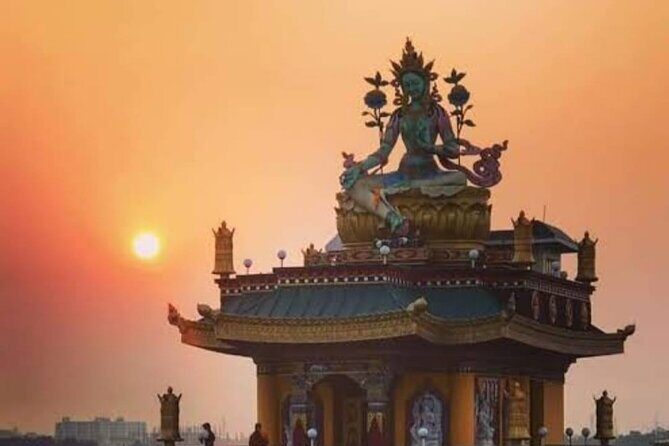
This tour runs about 6 to 7 hours, starting at 8:30 am. In plain terms, you’ll spend most of that day in temple and monastery spaces, plus travel time between them. The structure works because every stop has a reasonable time box and none of the sights are left to guesswork.
The most praised part of the experience is how it feels in motion. The overall feedback highlights that it covers the most important Bodh Gaya attractions in a very efficient way, with no rush. That’s exactly what I’d want if you’re short on days or you’re trying to do Bodh Gaya justice without turning the day into a sprint.
Guide quality is another strong point. One review specifically named Amar and praised his job. A good guide matters here because these sites can blur together visually. When you get the right context—why the monastery exists, what the design is trying to communicate, and what to pay attention to—you leave with a clearer mental map.
Price and value: $51.06 per group makes private sense
The tour costs $51.06 per group for up to 2 people. That means the value depends on how you book:
- If you go as a couple or with a second person, the cost per person drops sharply versus a per-person model.
- If you’re solo, you’re paying the group rate anyway, but you still get a dedicated vehicle and a dedicated guide.
Why this pricing can feel fair: you get pickup, an air-conditioned vehicle, bottled water, WiFi on board, and a guide for a full 6–7 hour day across multiple major sites. You’re not just paying for transit—you’re paying to keep the day organized and explained.
The one tradeoff is what’s not included. Lunch isn’t included, so you’ll want to eat before or after the tour. Also, the tour package says entrance fees for monuments aren’t included, even though the itinerary lists admissions as free for each stop. That’s not unusual in travel listings, but it’s a detail you should clarify before you enter gates.
If you want a “major sights, guided, not exhausting” day in Bodh Gaya, this private format is a strong value approach.
What to do to make the day easier on your body
You’ll be visiting multiple religious sites, so the comfort details matter. The tour provides bottled water and an AC car, which helps a lot. Still, bring what you’ll need for hours on your feet.
My practical checklist:
- Wear comfortable shoes (temple areas can involve uneven surfaces)
- Consider light layers and something to cover shoulders as you enter areas that expect it
- Bring a small hat or sunglasses for the statue stop, since you’ll likely be in open light
- Keep a bit of cash handy in case a site requests anything beyond what you were told
- Plan to grab lunch on your own since it’s not included
This is especially important if you’re trying to do Bodh Gaya as part of a longer itinerary in Bihar or you’re coming from a bus/train ride the same day.
Who should book this private Bodh Gaya tour
This tour fits best if you:
- Want a private guide and hate the pressure of group timetables
- Care about the differences between monastery traditions (Thai, Bhutan, Japanese, and Thai-style temple design)
- Have limited time and want a well-paced “greatest hits” route
- Prefer comfort perks like AC transport and onboard WiFi during travel between stops
It may be less ideal if you love wandering with zero structure. The schedule is organized, so you’ll stick to the plan. But for most first-timers, that’s exactly the point.
Should you book this tour?
I’d book it if you want a smooth Bodh Gaya day with a dedicated guide and a route that hits the core spiritual sights without a rushed feeling. The overall feedback emphasizes exactly that efficiency-without-rushing style, and the guide performance is a standout point, including Amar being specifically mentioned.
If you’re sensitive to costs, do a quick confirmation on the “entrance fees not included” vs “admission ticket free” note. Once you have clarity, it’s a strong, practical way to see Bodh Gaya’s major sites in one go.
FAQ
What time does the tour start?
The tour starts at 8:30 am.
Where is the meeting point?
You meet at Café Coffee Day, Domuhan-Bodhgaya Rd, near the Mahabodhi Cultural Centre, Belsar, Bodh Gaya, Bihar 824231.
How long is the tour?
It runs about 6 to 7 hours.
What stops are included?
The itinerary includes Mahabodhi Temple, Thai Monastery, Royal Bhutan Monastery, Indosan Nippon Japanese Temple, Great Buddha Statue, and Metta Buddharam Temple.
Are entrance fees included?
The tour lists entrance fees for monuments as not included, while the itinerary also marks admission tickets as free for the stops. It’s best to confirm what applies on the day you go.
Is lunch included?
No. Lunch isn’t included.
What’s included in the tour price besides the guide?
You get an air-conditioned vehicle, bottled water, WiFi on board, and a guide.
Is this a private tour?
Yes. It’s private, and only your group participates.
What’s the cancellation policy?
There is free cancellation. You can cancel up to 24 hours in advance for a full refund.