Three cities in three days, without the chaos.
This private Golden Triangle plan strings together Delhi, Agra, and Jaipur with a personal chauffeur, guided stops, and air-conditioned comfort, so you spend less time figuring out logistics and more time looking at what makes each place matter. I love how it layers big-name monuments with classic Old Delhi energy on Day 1.
I also love the smooth pacing of hotel check-in, morning timing for major sights, and the fact that pickup can meet you at the airport, station, or even your hotel in Delhi, Noida, and Gurugram. One thing to consider: many headline monuments show entry as not included, so decide early if you want the option that covers monument entry fees or if you’ll budget for tickets.
In This Review
- Key highlights for your Golden Triangle days
- Why this private Golden Triangle route feels easier than DIY
- Day 1 in Delhi: Qutub Minar, Lotus Temple, and Old Delhi with breathing room
- Qutub Minar: start with the UNESCO heavyweight
- Lotus Temple: free, modern, and calm
- India Gate, Parliament House, and Rashtrapati Bhavan: big-picture Delhi
- Agrasen Ki Baoli and Humayun’s Tomb: Mughal-era atmosphere and a cooler feel
- Chandni Chowk and Jama Masjid: shop lanes and monumental scale
- Red Fort and the ride to Agra: a day that moves, not a day that drags
- Day 2 Agra: sunrise Taj Mahal, Agra Fort, Baby Taj, and Fatehpur Sikri time
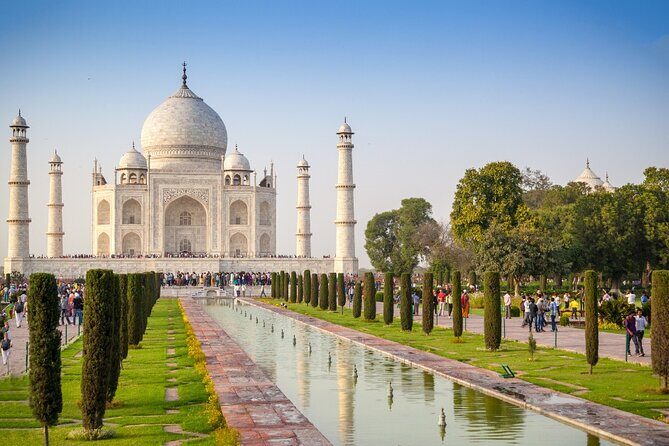
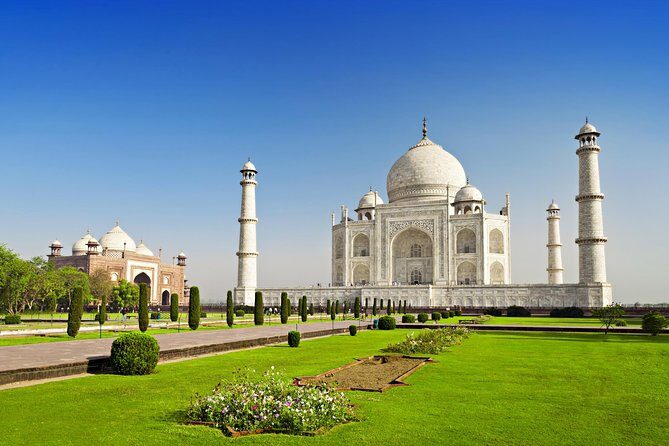
- Taj Mahal at sunrise: the iconic visit, timed to feel special
- Agra Fort: power, walls, and the Mughal edge
- Itmad-ud-Daula: the Baby Taj stop that teaches you to slow down
- Fatehpur Sikri and Chand Baori: big sights, shorter time blocks
- Transfer onward to Jaipur and overnight
- Day 3 Jaipur: Hawa Mahal, Jantar Mantar, City Palace, Jal Mahal, and Amer
- Hawa Mahal: the red sandstone facade photo moment
- Jantar Mantar: UNESCO time-telling instruments
- City Palace: where Jaipur’s royal system becomes physical
- Royal Gaitor Tumbas and Jal Mahal: quieter stops with strong atmosphere
- Amer: your final major heritage stop before heading back to Delhi
- Private AC driving, pickup coverage, and car types that match your group
- Price and value: what $134.20 per person really covers
- Who should book this Golden Triangle tour, and who might not love it
- Should you book this Private Golden Triangle 3-Day Tour?
- FAQ
- What cities are included in the 3-day Golden Triangle tour?
- Is pickup included, and where does it pick you up?
- Do we travel in a private air-conditioned vehicle?
- What car will we use for our group size?
- Are hotel rooms included in the price?
- Is breakfast included?
- Are monument entry fees included?
- Are any meals included besides breakfast?
- How long is the drive back to Delhi after Jaipur?
- What’s the cancellation policy for a full refund?
Key highlights for your Golden Triangle days
- Pickup that actually meets you: airport, railway station, or hotel in Delhi, Noida, and Gurugram
- English-speaking driver in a private AC vehicle with fuel, tolls, parking, and taxes handled
- Delhi Day 1 mix of UNESCO sites, government landmarks, and Old Delhi markets
- Early Taj Mahal time plus Agra Fort and the Baby Taj-area tombs
- Jaipur classics in one route: Hawa Mahal, Jantar Mantar, City Palace, and Amer
- Driver Sangam is noted for care—friendly, chatty, and attentive to your needs
Why this private Golden Triangle route feels easier than DIY
The Golden Triangle is famous for a reason: Delhi sets the stage with layered Mughal and older monuments, Agra throws you straight into Taj Mahal territory, and Jaipur gives you Rajasthan scale and color. The problem is time. If you piece this together on your own, you burn hours on transit, ticket lines, and figuring out what’s worth your limited attention.
This tour is built to reduce that friction. Your private AC vehicle handles the driving, and the driver’s English makes the day calmer when you hit questions like where to stand for the best sightlines, how long a stop will take, and what order makes sense with heat and crowds. If you’re going with family, or you just hate being rushed, private transport is a big quality-of-life upgrade.
You also get flexibility in how your trip is assembled. There’s an option for 2 nights of accommodation, plus breakfast (2), which helps you start early without hunting down food first thing in the morning. And because it’s only your group, you’re not stuck negotiating pace with strangers.
You can also read our reviews of more private tours in New Delhi



Day 1 in Delhi: Qutub Minar, Lotus Temple, and Old Delhi with breathing room
Day 1 is a smart mix of Delhi’s must-sees and its lived-in neighborhoods. You’ll start with Qutub Minar, then shift from modern landmark architecture to Mughal-era power, and end in Old Delhi where the lanes turn sightseeing into a sensory workout (in a good way).
Qutub Minar: start with the UNESCO heavyweight
Qutub Minar is a UNESCO World Heritage Site tied to the late 1100s, and it’s the kind of place where you instantly get why this site became a magnet for travelers. Expect a real monument visit—plan on about an hour, and note that entry is listed as not included.
Tip that helps: wear sun protection. Delhi mornings can still bite, and this is a long vertical monument moment where you’ll want to move slowly and take in details without rushing.
Lotus Temple: free, modern, and calm
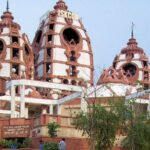
Next up is Lotus Temple. The architecture is instantly recognizable—flower-like shapes, bright and clean lines, and a visitor atmosphere that feels different from the fortress-style sights. The stop is short (around 30 minutes) and entry is free.
If you need a mental break after Qutub Minar, this is it. Use the time to reset your energy before the day turns older and louder.
India Gate, Parliament House, and Rashtrapati Bhavan: big-picture Delhi
From there you’ll pass key government landmarks: India Gate, Parliament House (Sansad Bhavan), and Rashtrapati Bhavan. Most of these stops are free and quick, which works well on Day 1. You get context for how the city’s ceremonial and political identity sits alongside its historic layers.
This section is also useful if you like “orientation” sightseeing. Seeing these buildings early makes your later Old Delhi walks feel less random, more connected.
You can also read our reviews of more tours and experiences in New Delhi





Agrasen Ki Baoli and Humayun’s Tomb: Mughal-era atmosphere and a cooler feel
Agrasen Ki Baoli is a protected stepwell site, and even without an entry fee here, it’s the kind of spot where you slow down. The architecture and the setting encourage quiet looking.
After that, you head to Humayun’s Tomb, a Mughal mausoleum commissioned in the 1500s. Entry is listed as not included, and you’ll want about an hour. This is a high-payoff stop for photography and for understanding how Mughal design shaped later Indian monumental architecture.
Chandni Chowk and Jama Masjid: shop lanes and monumental scale
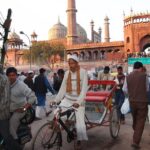
Then you shift into Old Delhi with Chandni Chowk, known for spices, dried fruits, silver jewelry, and saris. This is a stop that feels different from museum-style visits because you’re walking active market streets. The time listed is about an hour.
After that, you’ll visit Jama Masjid, one of India’s largest mosques, also free. This is a major “religious architecture” moment. Even if you don’t climb or linger too long, it’s worth giving yourself space to feel how scale works here.
Red Fort and the ride to Agra: a day that moves, not a day that drags
Red Fort is next. Entry is listed as not included, and plan for about an hour. This is the kind of stop where you’ll appreciate not being pushed along too hard—you want to see enough to understand its role as a Mughal residence until the 1800s.
Then comes the handoff: lunch at a local restaurant, followed by a drive toward Agra using the Yamuna Express Way. The drive time is about 3 hours, and you’ll reach your Agra hotel for the night with the rest of the day free.
Practical reality check: after a full Delhi day, you don’t need extra sightseeing pressure in Agra. Use the evening to reset, eat something simple, and sleep well.
Day 2 Agra: sunrise Taj Mahal, Agra Fort, Baby Taj, and Fatehpur Sikri time
Day 2 is all about Mughal magnificence, with early timing for the Taj Mahal experience. If you care about light, patience, and not feeling like you’re fighting the day, this is the heart of the tour.
Taj Mahal at sunrise: the iconic visit, timed to feel special
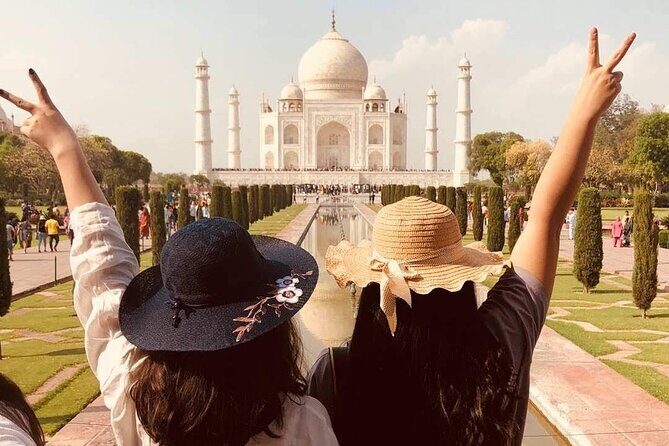
You’ll start with the Taj Mahal. The tour includes a guided visit inside, and the time block is about 3 hours. Entry is listed as not included.
The biggest value here is timing. Sunrise gives you better light and often a calmer moment to take it in. Even if you’ve seen photos before, the scale and the symmetry hit differently when you’re standing there in real morning air.
Tip: keep your plans flexible. The Taj Mahal area can feel busy at peak hours, so having a guide and driver coordinating the flow helps.
Agra Fort: power, walls, and the Mughal edge
Next is Agra Fort, another UNESCO World Heritage Site and one of the most iconic forts in India. Entry is listed as not included, and you’ll have about an hour.
Agra Fort is a different kind of history from the Taj. It’s more fortress, more rule-and-control, and less romantic marble. You can think of it as the Taj’s political “why,” built around the same Mughal story.
Itmad-ud-Daula: the Baby Taj stop that teaches you to slow down
Itmad-ud-Daula, often called the Baby Taj, is next. Entry is free here, and the stop is short (about 30 minutes).
This is a great choice inside a tight day. It encourages attention to detail—tombs, gardens, and design choices that don’t need a giant crowd to be meaningful.
Fatehpur Sikri and Chand Baori: big sights, shorter time blocks
After that, you’ll head to Fatehpur Sikri, a fortified city founded by Emperor Akbar in the 1500s. Entry is free and the stop is about an hour.
Then you’ll visit Chand Baori, an ancient stepwell with more than 3,500 steps. Entry is listed as not included, and you’ll have around 30 minutes.
Both stops are “teacher stops.” They show you that Mughal and North Indian monumental design wasn’t only about palaces and marble. It included water engineering, city planning, and religious spaces. The time blocks are tight, so go in ready to focus on the main forms: courtyards, layouts, and how people moved through space.
Transfer onward to Jaipur and overnight
Finally you arrive in Jaipur and check into your hotel for an overnight stay. The travel segment is about 5 hours, which is normal for this leg. The upside: after a full day, you don’t waste the evening trying to plan dinner and next-day landmarks.
Day 3 Jaipur: Hawa Mahal, Jantar Mantar, City Palace, Jal Mahal, and Amer
Jaipur Day 3 has a classic lineup: palace exterior drama, astronomy instruments, royal interiors, and then Amer’s hilltop feel. It’s a day that mixes color and architecture with a bit of walking stamina.
Hawa Mahal: the red sandstone facade photo moment
You start with Hawa Mahal, the Palace of Breeze. It’s built in 1799 and has that five-storey shape you’ve probably seen a thousand times in photos. Entry is listed as not included, and the stop is about 45 minutes.
This is a short but meaningful stop if you focus on why the facade exists. Those windows weren’t built for looks only—they tie back to how royal life moved in relation to public streets.
Jantar Mantar: UNESCO time-telling instruments
Next is Jantar Mantar, a UNESCO World Heritage Site with 19 astronomical instruments commissioned by Sawai Jai Singh II. Entry is listed as not included, and the stop is about 45 minutes.
This is the kind of attraction people sometimes skip because it looks like stone structures. Don’t. It’s a reminder that science was part of royal planning, and the design is meant to measure and observe. Use your guide here—this stop becomes much easier to understand with someone explaining how the instruments work.
City Palace: where Jaipur’s royal system becomes physical
City Palace is next, and you’ll spend about 2 hours. Entry is listed as not included.
This is a heavier stop than the exterior-only sights. It’s where you get a sense of administrative and ceremonial life. If you like interiors, courtyards, and a structured sense of how power shows itself, you’ll enjoy this portion.
Royal Gaitor Tumbas and Jal Mahal: quieter stops with strong atmosphere
Then you’ll visit Royal Gaitor Tumbas, cremation grounds associated with Maharajas. Entry is listed as not included, and it’s about 30 minutes.
After that is Jal Mahal, the Water Palace in the Man Sagar Lake area. Entry is free, and the stop is around 15 minutes. Even short stops help here—Jal Mahal gives you a “view break” from continuous palace walking.
Amer: your final major heritage stop before heading back to Delhi
Amer comes next. You’ll have about an hour, and entry is listed as free. Amer is one of Jaipur’s most recognizable heritage areas, and the visit wraps the tour’s story arc nicely: from royal Jaipur planning to the larger, fortified Amer setting.
After Amer, you’ll transfer back to Delhi, around 5 hours, with drop-off in Delhi or at Jaipur airport.
Private AC driving, pickup coverage, and car types that match your group
The tour is private, meaning only your group participates. That matters more than it sounds. In cities like Delhi, traffic and timing can be unpredictable, and private transport gives you flexibility to respond without waiting on strangers.
Pickup is broad: airport, railway station, hotel, or any location in Delhi, Noida, and Gurugram. If you’re arriving late or switching hotels, that’s genuinely helpful.
Car choice depends on group size:
- For 1–3 passengers: Maruti Dzire or Toyota Etios Sedan
- For 4–5 passengers: Maruti XL6 or Toyota Crysta SUV
- For 6–10 passengers: Minivan or Tempo Traveler
This is the right approach for comfort. A bigger group in a small car becomes misery fast. Here, at least, the plan tries to fit the vehicle to the number of people.
And your private AC vehicle includes fuel, tolls, parking, and taxes. That means fewer surprise add-ons mid-trip.
Price and value: what $134.20 per person really covers
At $134.20 per person, you’re paying for more than a ride between attractions. You’re paying for the structure that keeps a three-day visit from turning into a chaotic checklist.
What the package can include:
- Private AC vehicle with driver, including fuel, tolls, parking, and taxes
- Tour guides and monument entry fees if you choose the option that includes them
- Pickup service in the Delhi region
- 2 nights of accommodation if you book the hotel-inclusive option
- Breakfast (2)
What it does not include:
- Meals (besides breakfast if your option has it)
- Personal expenses such as shopping
- Some major sites are listed with admission not included, so budget for tickets depending on your selected option
Here’s how I’d judge value: the tour is most worth it if you want someone else to manage routes and timing. If you’re the type who loves wandering for hours on your own, you might still enjoy private transport, but you may resent guided time blocks. If you want an efficient plan with a driver who can keep you on track, this is strong value.
Also, there’s a group discount and a mobile ticket. If you’re traveling with friends or family, those small efficiency perks can add up.
Who should book this Golden Triangle tour, and who might not love it
This tour fits best if you:
- Want a private experience across three major cities
- Appreciate guided visits at big monuments and UNESCO sites
- Prefer airport-to-hotel pickup and someone handling driving stress
- Are traveling in a group size that benefits from the right car category
You might want a different setup if you:
- Hate early mornings (sunrise Taj Mahal is built into the plan)
- Want totally free-form time with no structured stops
- Don’t want to think about separate monument entry fees
One last note on quality: a driver named Sangam is highlighted for friendliness and for caring about your needs, plus strong English skills. If your comfort and confidence come from good communication, that’s a real plus.
Should you book this Private Golden Triangle 3-Day Tour?
If you want the Golden Triangle without the headache, I think this is a smart booking. You’re getting a private AC vehicle, wide pickup coverage around Delhi, and guided visits that help you understand what you’re seeing instead of just chasing photos. The hotel option and breakfast (2) are also a practical advantage, especially when your days start early.
I’d book it if you’re okay with pre-planned stops and you’re ready to budget for monument tickets depending on your chosen entry-fee option. If you’re traveling during hotter parts of the year or you’re on a tight schedule, the private transport value is even higher.
FAQ
What cities are included in the 3-day Golden Triangle tour?
The tour covers Delhi, Agra, and Jaipur. You’ll see major sights in each city across three days.
Is pickup included, and where does it pick you up?
Pickup is available from the airport, railway station, hotel, or any location in Delhi, Noida, and Gurugram.
Do we travel in a private air-conditioned vehicle?
Yes. You get a private AC vehicle with an English-speaking driver, and the vehicle cost includes fuel, tolls, parking, and all taxes.
What car will we use for our group size?
For 1–3 passengers, it’s Maruti Dzire or Toyota Etios Sedan. For 4–5, it’s Maruti XL6 or Toyota Crysta SUV. For 6–10, it’s a minivan or Tempo Traveler.
Are hotel rooms included in the price?
Hotel accommodation is included only if you select the option that includes hotels. The package mentions 2 nights of accommodation with that option.
Is breakfast included?
Yes. The package includes breakfast (2).
Are monument entry fees included?
It depends on the option you select. The package notes tour guides and monument entry fees are included if that option is selected; many individual monuments are listed as admission not included.
Are any meals included besides breakfast?
No. The tour lists meals are not included (other than the included breakfast).
How long is the drive back to Delhi after Jaipur?
After the Jaipur city portion, the journey back to Delhi (or drop-off at Jaipur airport) is approximately 5 hours.
What’s the cancellation policy for a full refund?
You can cancel for a full refund if you cancel at least 24 hours before the experience start time. If you cancel within 24 hours, the amount paid is not refunded.