REVIEW · NEW DELHI
Private 3 Day Delhi ,Agra ,Jaipur Golden Triangle Tour
Book on Viator →Operated by Akbran Tours · Bookable on Viator
Golden Triangle, minus the stress. This private 3-day plan strings together Delhi, Agra, and Jaipur with a driver, a private guide, and hotel pickup/drop-off so you spend less time figuring things out and more time looking up.
I like that you’re not stuck with guesswork on arrival. The guide helps with the language barrier and the logistics, while you ride in a private, air-conditioned car with bottled water.
The big trade-off is time and pacing. You’ll start early (especially for Taj Mahal) and you’ll do long drives between cities, and meals like lunch and dinner aren’t included.
In This Review
- Key Highlights Worth Your Time
- Private Pickup Across the Golden Triangle (and Why It Matters)
- Day 1 in New Delhi: Tombs, Temples, Old Delhi, and a Night in Agra
- Sunrise Taj Mahal and Agra Fort: The Morning You Don’t Want to Miss
- Jaipur’s Big Stops: Amber Palace to Jantar Mantar in One Smart Day
- Entrance Tickets, Guides, and the Small Things That Save Big Time
- Price and Value: What $119.15 Per Person Really Buys
- How to Pack and Plan for Comfort (Smart Casual, Early Mornings)
- Who Should Book This Golden Triangle Tour
- Should You Book This Private 3-Day Delhi–Agra–Jaipur Tour?
- FAQ
- How long is the private tour?
- Where does the tour go?
- Does the tour include hotel pickup and drop-off?
- Is the Taj Mahal skip-the-line ticket included?
- What meals are included?
- Is the rickshaw ride in New Delhi included?
- What kind of hotel stay is included?
- What car will you ride in?
- What’s the cancellation policy?
Key Highlights Worth Your Time
- Taj Mahal at sunrise, with skip-the-line entry planned for you
- Hotel pickup/drop-off each day, so you’re not hunting meeting points
- Private guide in each city, which really helps with context and questions
- Monument entrance tickets included across Delhi–Agra–Jaipur
- Old Delhi by foot and rickshaw option, with the Jama Masjid area built for it
- Jantar Mantar + stepwell stops in Jaipur, not just photo landmarks
Private Pickup Across the Golden Triangle (and Why It Matters)
This is a truly private setup—only your group rides together in the car. That means fewer waiting games than standard group tours, and you can keep a steady rhythm as you hop between world-famous sights and quieter moments.
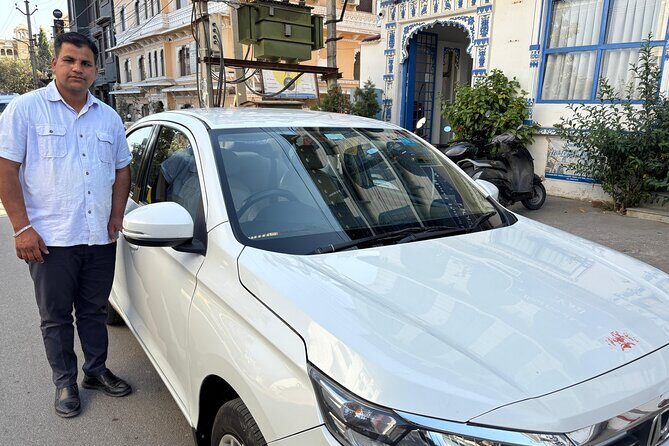
The vehicle is matched to group size: sedan cars for 1–2 people, a 7-seater SUV for 3–5, or a 12-seater minibus for 6–10. Add bottled water and air-conditioning, and you’ve got the basic comfort you’ll want for India’s traffic and heat swings.
You also get hotel pickup and drop-off each day. That one detail alone can save you hours of planning and stress—especially if you’re landing at Delhi Airport or staying in a hotel far from main sights.
You can also read our reviews of more private tours in New Delhi
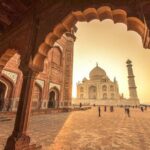


Day 1 in New Delhi: Tombs, Temples, Old Delhi, and a Night in Agra
Day one feels like getting your bearings fast. You start with a lineup that explains Delhi’s layers, from Mughal grandeur to India’s modern identity.
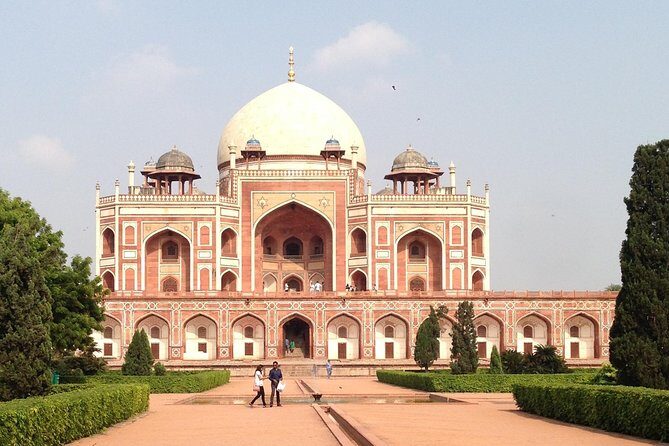
Humayun’s Tomb (about 1 hour, admission included) sets the tone. It’s often described as the first major Mughal-style tomb in the region, and it’s a good place to start because the architecture tells a story even when you’re tired.
Next you head to the Lotus Temple (around 30 minutes, admission included; closed on Monday). It’s a Bahá’í House of Worship, shaped like petals. If you’re sensitive to design and symbolism, you’ll enjoy how calm it feels compared with the nearby city energy.
Then it’s India Gate (about 30 minutes, admission ticket included). It’s a war memorial, so it’s not just a photo stop—it gives you a way to understand how modern India remembers its past.
After that, you do exterior photo stops for major government buildings, including the President House (outside viewing). These are quick, but they break up the long day and help you see how the city is laid out.
Lunch comes next at a local restaurant (not included), then the ride switches gears toward Old Delhi.
Old Delhi is where the tour gets fun and sensory. You’ll visit Chandni Chowk (about 30 minutes; admission free). This is one of the oldest market areas in Old Delhi, and your guide’s role matters here: you’ll know where to look, what to avoid, and when to slow down for better photos.
You then go to Jama Masjid (about 30 minutes; admission included). It’s one of India’s biggest mosques and can hold a huge number of people at once. After the mosque visit, you can enjoy a rickshaw ride (tri cycle) through the narrow streets—but note that the rickshaw ride in New Delhi is listed as not included, so budget for it if you want the experience.
You finish Old Delhi with Red Fort (about 15 minutes, admission included). It’s a fast stop, more about snapping the view and getting the Mughal timeline than about deep exploration—good for keeping the day from running too long.
Then you drive to Agra, roughly 3.30 hours on the way via the Yamuna Expressway. You’ll make an en-route washroom stop at a highway hotel. After arrival, you check in and rest overnight in Agra.
Practical note: if you’re the type who likes downtime, don’t plan anything heavy after you arrive. Day two starts early.
Sunrise Taj Mahal and Agra Fort: The Morning You Don’t Want to Miss
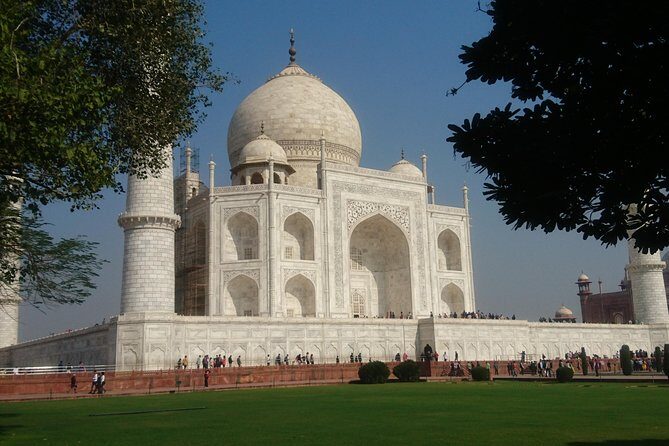
Day two is built around one goal: seeing the Taj Mahal in good light. You’ll have a 0600 meet-up at your hotel with your private guide, then you visit the Taj Mahal during sunrise.
The value here is not just the monument—it’s the timing. Sunrise light turns the marble into something close to a soft glow, and early entry helps you dodge some of the crowd chaos that can flatten the experience later in the day.
You’ll spend around 2 hours at the Taj Mahal (admission included). Your guide’s job is to help you read the details: symmetry, materials, and the way the complex is designed to funnel your attention. If you’ve ever felt lost at a famous site, a private guide changes everything.
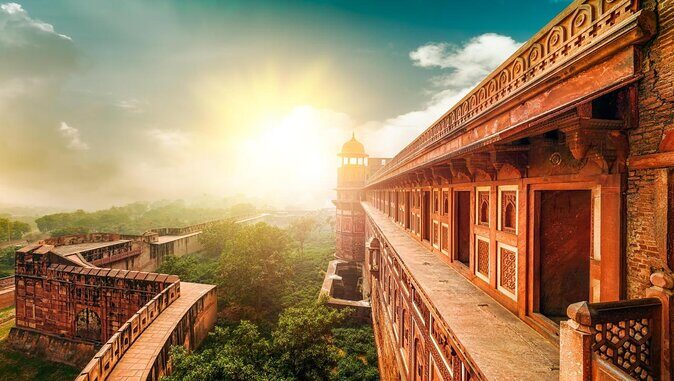
After Taj Mahal, you return to your hotel for breakfast, then check out. Next is Agra Fort (about 1 hour; admission included). This is where the royal family once lived, and the experience feels more lived-in than the Taj. It’s also a good chance to stand back and understand the geography that made Agra so strategic.
Then you drive to Fatehpur Sikri (about 1 hour to reach; about 2 hours to explore). This former Mughal capital includes palaces built in red stone, and it’s one of those places where the scale can surprise you. If you like architecture and city planning, you’ll probably appreciate the layout more than pure souvenir hunting.
After Fatehpur Sikri, you head to Jaipur and transfer to your hotel for an overnight stay. The drive time is roughly 4 hours.
Jaipur’s Big Stops: Amber Palace to Jantar Mantar in One Smart Day
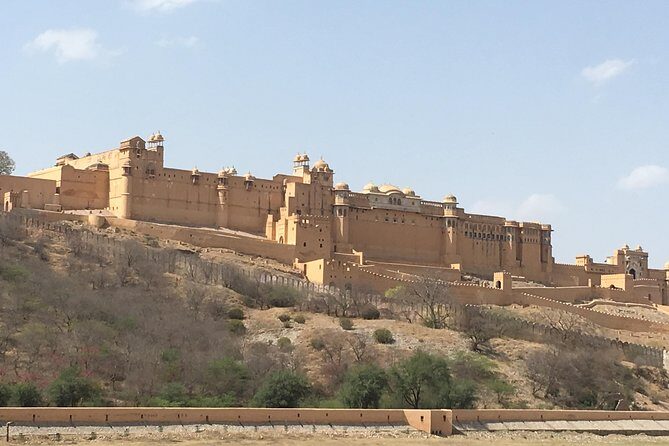
Day three is your Jaipur highlights day, with forts, palaces, and sites tied to daily life in the old city.
You begin at Amber Palace (Amber Fort area) (about 1 hour; admission included). Amber is hilltop, with ramparts and cobbled paths. Wear shoes you trust, because this is not a stroll in flip-flops kind of day. Your guide helps you move through the complex efficiently so you’re not just wandering hallways.
Next is Jal Mahal (Water Palace) (about 15 minutes; admission included). You’ll view it mostly from outside, and the fun is in noticing how a palace made for royal leisure fits into the surrounding landscape and water system.
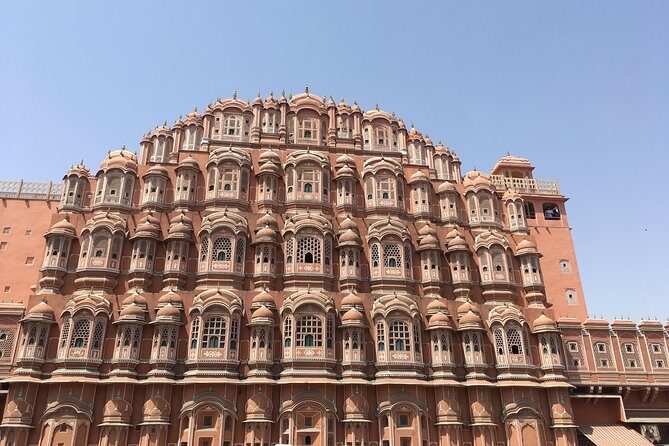
Then comes Hawa Mahal (Palace of Wind) (about 15 minutes; admission included). It’s built in red and pink sandstone and famous for the 953 small windows that once allowed women in the palace to view city life while staying unseen from outsiders. Even if you don’t go inside much, it’s a standout silhouette when you’re standing close.
Next you visit City Palace of Jaipur (about 1 hour; admission included). This was the administrative and ceremonial seat of the Maharaja, and now it’s a museum. The courtyard spaces and how different buildings serve different roles make it feel like a functioning complex, not just a static set piece.
After City Palace, you head to Jantar Mantar (about 1 hour; admission included). It’s a collection of old astrological instruments and includes the largest sundial in the world, built in 1734. If you like science history, this is one of the more surprising stops in the whole Golden Triangle.
Then you have lunch at a local restaurant (not included) and continue.
You also visit Panna Meena ka Kund, a stepwell near Amber Fort (about 15 minutes; admission included). It was built for people of Amer to collect water, and it later served temples nearby. This is one of those practical, human-scale stops that refreshes your brain after big monuments.
Finally, you visit Gaitore Ki Chhatriyan (about 15 minutes; admission included). It’s associated with the Rajput Kachwaha dynasty’s royal crematorium grounds, and Maharaja Jai Singh II chose the site in the 18th century.
After all of that, you drive back to New Delhi for drop-off at your hotel or airport (drive time about 5 hours). You’ll stop for lunch earlier, and after the long day, you’ll likely be happy to land somewhere familiar.
Entrance Tickets, Guides, and the Small Things That Save Big Time
This tour includes entrances for monuments during the tour from Delhi to Agra and Jaipur. It also specifically lists skip-the-line entrance for the Taj Mahal and other monuments. In real life, that can mean fewer hours standing around and more time actually looking.
You’ll also get private guides in each city. The names vary, but I’ve seen guide names like Deepak Kumar and B.L. Kumavat connected to this kind of service, and they’re the kind of people who make the facts stick without making it feel like school.
You’ll also carry a mobile ticket. That’s a small detail, but it’s useful when you’re juggling passes and paperwork.
Bottled water is included, and you’re covered for monuments through the day—what’s missing is your meal planning.
You can also read our reviews of more tours and experiences in New Delhi





Price and Value: What $119.15 Per Person Really Buys
At $119.15 per person, you’re paying for a lot that usually costs extra when you DIY.
Here’s what’s included in the package:
- 2 nights of accommodation in a three-star hotel (twin sharing)
- Private guide in each city
- Bottled water
- Entrance tickets for monuments during the tour
- Skip-the-line for the Taj Mahal and other listed monuments
- Breakfast (2 days)
What’s not included:
- Lunch and dinner
- Rickshaw ride in New Delhi (if you choose it)
- Gratuities (optional)
- Christmas/New Year Eve gala dinner charges (if your dates fall then, you pay the hotel directly)
So the value is strongest if you want the convenience of private transport, not to negotiate entry lines, and to get someone to explain what you’re seeing. If you’re the kind of person who loves planning every detail, you might spend less on paper. But you’ll likely spend more time managing tickets, timing, and transit.
Also, the operator warns you about room sharing: twin-sharing by default, and if you book three people, triple-sharing is default unless you want two rooms and pay an extra charge. That matters for comfort and quiet time.
How to Pack and Plan for Comfort (Smart Casual, Early Mornings)
The dress code is smart casual. In practice, that means comfy layers and shoes you can walk in, since forts and Old Delhi streets involve steps and uneven surfaces.
The tour operates in all weather conditions, so plan for rain or heat. The route includes outdoor time at tombs, markets, and viewpoints, and Jaipur forts especially don’t stop because weather changes.
Finally, think about energy. Day one runs long with a city-to-city drive. Day two starts at 0600. Day three is a full Jaipur day plus the long return to Delhi.
Who Should Book This Golden Triangle Tour
I’d point this tour toward:
- First-time India visitors who want a clean entry route into Delhi, Agra, and Jaipur
- People who don’t want to juggle tickets and timing across multiple cities
- Small groups that prefer private transport over bus tours
It’s also a good match if you like explanations and want the guide to help you connect the dots—especially for Taj Mahal, Agra Fort, Fatehpur Sikri, and Jantar Mantar.
The main mismatch is if you’re looking for slow travel. This is a packed schedule with early mornings and long drives.
Should You Book This Private 3-Day Delhi–Agra–Jaipur Tour?
If you want the Golden Triangle experience with hotel pickup, private guiding, and entrances handled, this is an easy yes. The sunrise Taj Mahal piece alone justifies serious planning time, and skip-the-line access is exactly the kind of detail that pays off.
Book it if you can handle long drives and you’re okay budgeting for lunch and dinner. Also check your travel day if you’re aiming for the Lotus Temple—it’s closed on Monday.
Don’t book it if you hate early mornings or you want total flexibility to linger in one place longer than the schedule allows. This tour is designed to keep things moving—smoothly, but still moving.
FAQ
How long is the private tour?
The tour is 3 days approximately, with transfer times that depend on traffic.
Where does the tour go?
It covers New Delhi, Agra, and Jaipur as a Golden Triangle route.
Does the tour include hotel pickup and drop-off?
Yes. Hotel pickup and drop-off are included each day.
Is the Taj Mahal skip-the-line ticket included?
Yes. Skip-the-line entrance for the Taj Mahal is included, along with entrance tickets for other monuments on the tour.
What meals are included?
You get breakfast (2). Lunch and dinner are not included.
Is the rickshaw ride in New Delhi included?
No. The rickshaw ride is not included, even though it’s an optional activity during the Old Delhi segment.
What kind of hotel stay is included?
You get 2 nights in a three-star category hotel on a twin-sharing basis.
What car will you ride in?
Car type depends on group size: sedan for 1–2 people, 7-seater SUV for 3–5, and 12-seater minibus for 6–10.
What’s the cancellation policy?
You can cancel for a full refund up to 24 hours in advance of the experience start time. If you cancel less than 24 hours before, the amount paid is not refunded.