REVIEW · NEW DELHI
4-Days Private Golden Triangle Tour: Delhi, Agra & Jaipur by Car
Book on Viator →Operated by Keeper Landwey · Bookable on Viator
A four-day Golden Triangle by car saves you from train stress and line chaos. The best part is how much you cover while still keeping it private, with pickup in Delhi and a dedicated chauffeur.
I like that you get government-approved local guides who explain what you’re seeing, not just the names. I also like the hands-on extras like the tuk-tuk ride in Old Delhi and the battery van at the Taj Mahal, which cuts down the most annoying walking.
One thing to plan for: monument entry fees are extra (about $70 per person), and the schedule packs big sights early—especially the sunrise Taj timing.
In This Review
- Key highlights that make this tour practical
- What you’re really buying: privacy, guidance, and saved time
- Money and value: $171 plus the real entrance fee
- The car setup: why a chauffeur changes the trip feel
- Day 1 in Delhi: Old + New in one long but friendly half-day
- Qutub Minar, Lotus Temple, and the modern pulse of the capital
- Humayun’s Tomb and the garden-tomb idea
- Old Delhi lanes: Chandni Chowk, Jama Masjid, and spice markets
- End of Day 1: drive to Agra and reset at your hotel
- Day 2 in Agra: sunrise Taj Mahal and the practical photo plan
- Sunrise Taj Mahal: the early start is worth it
- Agra Fort and Itmad-ud-Daulah: the story behind the big monument
- Day 3 in Jaipur: forts, palaces, and the winds-into-the-sky moment
- Jaigarh Fort: views over the Aravallis
- City Palace: the royal center you can walk through
- Jal Mahal: the lake palace photo stop
- Hawa Mahal: the Palace of Wind and its five-storey drama
- Jantar Mantar: the observatory that makes math look physical
- Food breaks that fit the schedule
- The guides: why names keep showing up
- Planning notes you should not ignore
- Should you book this 4-day Golden Triangle by car?
- FAQ
- What is the starting price and what’s extra?
- Are hotels included in the price?
- How does pickup in Delhi work?
- Is the tour private?
- Is there any special timing issue for the Taj Mahal?
- What is the cancellation rule?
Key highlights that make this tour practical
- Private car for your group across Delhi, Agra, and Jaipur, with hotel/airport pickup and drop-off
- Tuk-tuk ride in Old Delhi plus quick transitions between neighborhoods
- Sunrise Taj Mahal visit with a battery van ride from parking to the gate
- Three nights in hotel options (3-, 4-, or 5-star) with breakfast when you choose that upgrade
- Guides and route handling that focus on photos and timing, including crowd-smart choices in Agra
- Car type matches group size, from a sedan up to a 12-seater van
What you’re really buying: privacy, guidance, and saved time
The headline is a Golden Triangle loop—Delhi, Agra, Jaipur—handled end-to-end by car. That matters because Indian city driving can be unpredictable, and moving between sights on your own often turns into a day of negotiating rides, tickets, and meeting points.
With this format, your day runs around a plan and a person. You’re not just dropped at sites; you have a guide who can point out what to notice and how to photograph it. In the reviews, guides like Zain in Delhi, Sadiq in Agra, Brajesh in Jaipur, and Maahi (often praised for Agra) show up repeatedly as the reason the days feel smooth and worth it.
The value equation is this: the base price is $171 per person, but the important monument tickets are not included in that figure. Still, you’re getting a private chauffeur, bottled water, parking/tolls handled, plus breakfast if you pick hotel accommodations. For most people, that’s the difference between a fun trip and a trip that feels like logistics.
You can also read our reviews of more private tours in New Delhi



Money and value: $171 plus the real entrance fee

Let’s do the math you actually care about. The tour price starts at $171 per person. Entrance fees are extra at $70 per person for monuments, and tips for guides/drivers are not included.
So your likely out-of-pocket for sights is closer to $241 per person, before any extra meals, souvenirs, or optional upgrades. That can still be a fair deal because you’re not just paying for access—you’re paying for someone to manage timing and avoid wasted hours.
Also note the quiet detail: some stops are outside views or places with easier access, while the big names (like Taj Mahal and other major monuments) are the ones tied to entry fees. This is why the total cost is more than just the headline price.
The car setup: why a chauffeur changes the trip feel
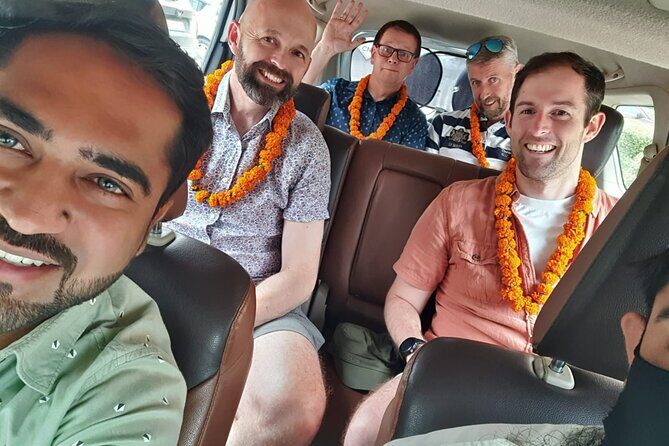
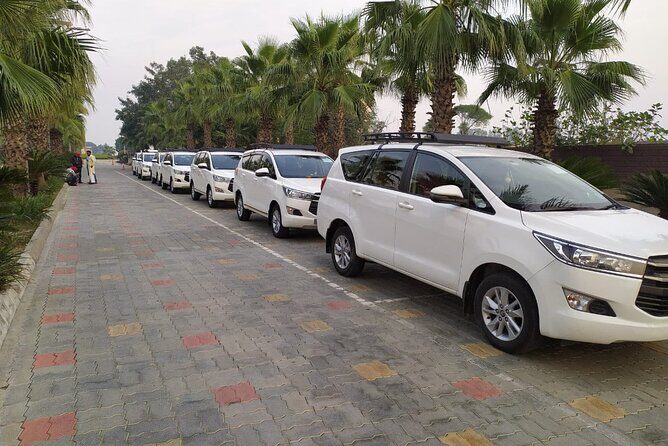
A private car is not just comfort. It’s timing control. You don’t have to worry about finding transit, translating addresses, or arriving late because a ride app got confused.
Car size is matched to group size:
- 1 to 2 people: four-seater sedan
- 3 to 5 people: six-seater wagon
- 6 to 9 people: nine-seater van
- 10 to 12 people: twelve-seater van
Your pickup is also flexible: you can choose a start time between 7:00 AM and 11:00 AM and get picked up from anywhere in Delhi, Noida, Gurugram, Ghaziabad, or Faridabad. That flexibility is a big deal if you’re already staying in the city and don’t want to lose time getting to a meeting point.
Day 1 in Delhi: Old + New in one long but friendly half-day
Your first day is designed to help you understand Delhi fast: modern architecture, then Old Delhi lanes, then back to the bigger travel rhythm that continues to Agra.
Qutub Minar, Lotus Temple, and the modern pulse of the capital
You’ll start with Qutub Minar, then head to the Lotus Temple. Lotus is one of those places where the architecture does most of the talking. It’s a Baháʼí House of Worship, completed in 1986, and it welcomes visitors of all faiths.
Then you pass key Mughal-era landmarks like the Red Fort. Even when you’re only viewing from the outside, it helps to see the scale of what the empire built and how the city grew around those power centers.




Humayun’s Tomb and the garden-tomb idea
Next up is Humayun’s Tomb, a UNESCO site and known as one of India’s first garden tombs. This stop is useful because it gives you a reference point before Agra’s mausoleum style takes over tomorrow.
If you love photography, Delhi is where you’ll practice your angles. Guides like Arhan/Arham are often praised for knowing exact photo spots, and that skill matters most on the first day when your eye is still waking up.
Old Delhi lanes: Chandni Chowk, Jama Masjid, and spice markets
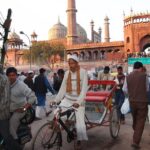
Then the tour shifts into Old Delhi mode with Chandni Chowk and Jama Masjid, plus a visit to Khari Baoli, a major wholesale spice market. The day can feel busy on the ground, but your guide helps you keep it organized—what to walk into, what to view quickly, and when to step back.
You’ll also get a tuk-tuk ride in Old Delhi. It’s short, but it’s a fun way to break up the walking and helps you cover more ground without feeling like your legs have filed a complaint.
There’s even time for quick stops like Agra later on—because Day 1 ends with the drive to Agra. That’s a long day, but it keeps your overall Golden Triangle efficient.
End of Day 1: drive to Agra and reset at your hotel
After Delhi sightseeing, you drive to Agra and drop at the hotel for downtime. This matters because sunrise Taj needs you rested.
Day 2 in Agra: sunrise Taj Mahal and the practical photo plan
Agra is the reason many people book the whole trip. But the best experience isn’t just the Taj itself—it’s how you arrive there and what you do after.
Sunrise Taj Mahal: the early start is worth it
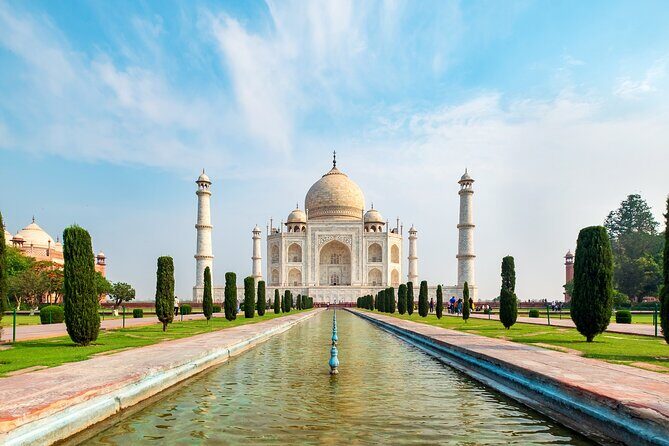
The Taj Mahal visit is timed early with a sunrise start. That’s not a random gimmick. The light changes fast, and the crowds can be lighter when you go early.
You’ll also use a battery van ride from parking to the gate, which makes a real difference. You skip some of the longest walk once you’re already excited, and you’ll have more energy to slow down once inside.
Important timing note: Taj Mahal is closed every Friday. If your trip overlaps a Friday, you’ll want to confirm how the operator handles that date shift.
Agra Fort and Itmad-ud-Daulah: the story behind the big monument
After Taj, you’ll see Agra Fort. Then you visit Itmad-ud-Daula, often called the Baby Taj. It’s a great complement because it shows the Mughal marble-inlay style in a more intimate way.
Guides in Agra get especially strong marks for crowd-smart timing and photos. People highlight hosts like Sadiq, who helped avoid crowds and guided them to the best spots, and Aman/Maahi, who are praised for turning architecture and history into something you actually understand while you’re standing there.
Day 3 in Jaipur: forts, palaces, and the winds-into-the-sky moment
Jaipur is where the tour slows down just enough to feel like a different kind of India. The city looks designed for photos, but the key is how the sites connect: power, water, design, and astronomy.
Jaigarh Fort: views over the Aravallis
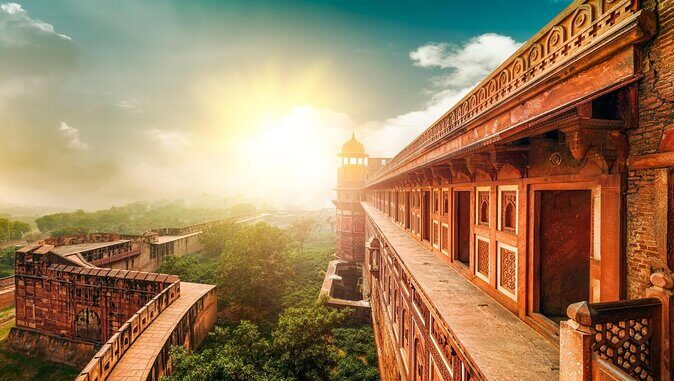
You start with Jaigarh Fort, built in 1726 under Maharaja Sawai Jai Singh II, perched above the Aravallis. Forts are always about defense, but the better payoff here is how the views frame the city and the hills.
City Palace: the royal center you can walk through
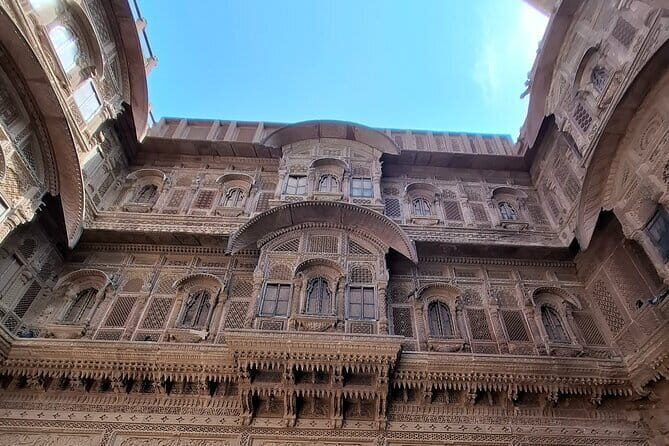
Then you move into the City Palace of Jaipur. It’s still a working reference point for royal-era design, with courtyards and palace buildings that show how space and authority were staged.
Jal Mahal: the lake palace photo stop
Next is Jal Mahal in the middle of Man Sagar Lake. You don’t spend a long time inside, but it’s a classic visual break—perfect if you want a scene that feels less like stone and more like reflections.
Hawa Mahal: the Palace of Wind and its five-storey drama
Then comes Hawa Mahal, the five-storey, pyramid-shaped facade built in 1799. This stop is a favorite because it’s instantly recognizable, and the details reward you when you look up from the street.
Jantar Mantar: the observatory that makes math look physical
Your day ends at Jantar Mantar, a UNESCO World Heritage site and one of the best-preserved ancient observatories in India. It’s not just a landmark; it’s a reminder that this region has always been good at turning observation into structure.
Food breaks that fit the schedule
This tour doesn’t pretend you’ll eat like a food blogger. It does something more useful: it gives you short breaks and lets your guide recommend places nearby.
In Delhi, you’ll get a stop around Connaught Place for lunch ideas, and in Old Delhi the guide helps you connect market wandering with practical eating. In Agra and Jaipur, the pattern repeats: 45 minutes or so for food, not a half-day chase through restaurants you might not even like.
The guides: why names keep showing up

The biggest consistent strength in the feedback is the guide quality and style, not just the route. People repeatedly praise guides for:
- explaining what you’re seeing in a way that clicks
- spotting the best photo angles and timing
- keeping the pace respectful while still hitting all the key stops
Some guide names that show up often include Zain in Delhi, Sadiq in Agra, Maahi in Agra, Faizal for Taj Mahal days, Brajesh in Jaipur, and Arhan/Arham as someone who can even act like a photographer.
Drivers also get credit for punctual pickups and safe, smooth driving—names like Mukul, Manoj, and Dushyant appear in the feedback. That matters, because if the driving is stressful, the sights don’t feel as good.
Planning notes you should not ignore
A few details can change your experience:
- Taj Mahal closure on Fridays. If your trip is on a Friday, confirm what changes.
- Hotel blackout dates: Dec 24 and Dec 31 are hotel blackout dates and require a mandatory gala dinner costing $99 per person if you book accommodations those nights.
- Rooms are typically twin-sharing. Triple-sharing can happen by default for 3 people, unless you request 2 rooms and pay an extra charge.
- Carry valid photo ID. You’ll need travelers’ photo ID in your mobile for monument entry.
- Start day affects routing: If you start on a Thursday, your second day will be in Jaipur.
- Mobile ticket is used, so have your confirmation handy on your phone.
Should you book this 4-day Golden Triangle by car?
Book it if you want the Golden Triangle highlights without turning the trip into logistics homework. The private chauffeur, the included chauffeur handling (parking/tolls/fuel), the guide support, and the timing tools like the battery van and sunrise Taj make this a comfortable way to do it.
Skip it or think twice if:
- you hate early mornings (sunrise Taj is part of the plan)
- you want fewer stops and more slow wandering
- you’d rather build your own route and manage tickets yourself
If you like guided sightseeing that still gives you room to breathe, this is a strong fit—especially for first-time Golden Triangle visitors who want to see Delhi, Agra, and Jaipur efficiently.
FAQ
What is the starting price and what’s extra?
The tour price starts at $171 per person. Entrance fees for monuments are not included and are listed as $70 per person. Tips for guides and the driver are also not included.
Are hotels included in the price?
Hotel accommodations are included only if you book the hotel option. When you choose it, you get three nights in 3-, 4-, or 5-star hotels with breakfast.
How does pickup in Delhi work?
Pickup is offered from anywhere in Delhi, Noida, Gurugram, Ghaziabad, or Faridabad. You can choose any pickup time between 7:00 AM and 11:00 AM.
Is the tour private?
Yes. It’s a private tour/activity, so only your group participates.
Is there any special timing issue for the Taj Mahal?
Yes. The Taj Mahal is closed every Friday. The tour also includes an early morning sunrise visit.
What is the cancellation rule?
You can cancel up to 24 hours in advance for a full refund. If you cancel less than 24 hours before the experience starts, the amount paid is not refunded.