REVIEW · JAIPUR
Jaipur Heritage Walking Tour
Book on Viator →Operated by Backpack India · Bookable on Viator
Jaipur turns into a story when you walk. This small-group tour gives you an insider angle on the city through local architecture students, with breakfast and street-level landmarks like Ajmeri Gate and Hawa Mahal. You’re not just looking at monuments, you’re hearing why they were built and how the old city still works today, block by block.
I love how the guide connects Ajmeri Gate to everyday life, including how transport around the old city has changed. And I really like the way Hawa Mahal’s 900 windows gets explained like engineering, not just a photo spot.
One consideration: there have been reports of guide issues, including cases where the guide didn’t show up and messages weren’t answered. If you book, I’d plan to confirm details the day before and have a backup plan for getting help locally.
In This Review
- Key things to know before you go
- Small group of 10: why this walk feels different
- Breakfast in the middle of real Jaipur
- Ajmeri Gate: more than a photo stop
- Isarlat Sargasooli and the logic of building design
- Tripolia Bazar: royal access, then public use
- Hawa Mahal: 900 windows as engineering, not magic
- Jalebi Chowk: the courtyard-square detail that ties it together
- Govind Devji Temple: ending with a calmer note
- Price check: why $16 can be a good deal
- Timing, distance, and the practical stuff that matters
- Who this Jaipur walking tour suits best
- Before you book: the one thing to verify
- Should you book the Jaipur Heritage Walking Tour?
- FAQ
- How long is the Jaipur Heritage Walking Tour?
- What is the group size limit?
- Is breakfast included?
- Are digital photos included?
- Is water included?
- Are admission tickets included for all stops?
- What time does the tour run?
- Where does the tour start and end?
- Can I cancel for a refund?
Key things to know before you go
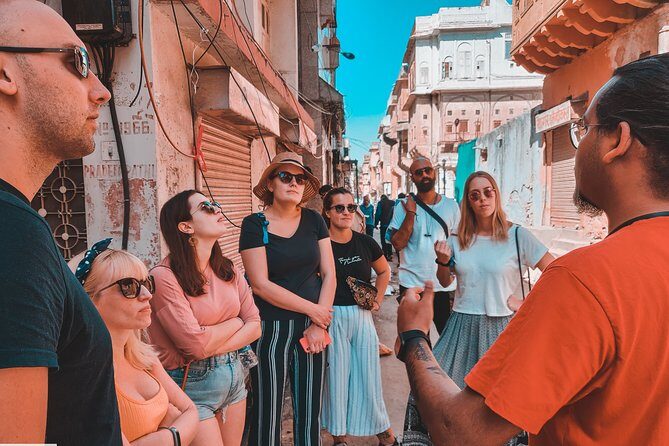
- Max 10 travelers means you actually get answers instead of just hearing background noise
- Architecture-student perspective gives you the why behind the walls, gates, and window grids
- Rajasthani breakfast included so you start fueling up before you hit the streets
- Digital photos included as a small but helpful souvenir you don’t have to hunt for later
- Stops like Ajmeri Gate and Hawa Mahal focus on real city functions, not only postcard views
- About a 3km walk keeps it manageable, even if Jaipur sidewalks make you think twice
Small group of 10: why this walk feels different
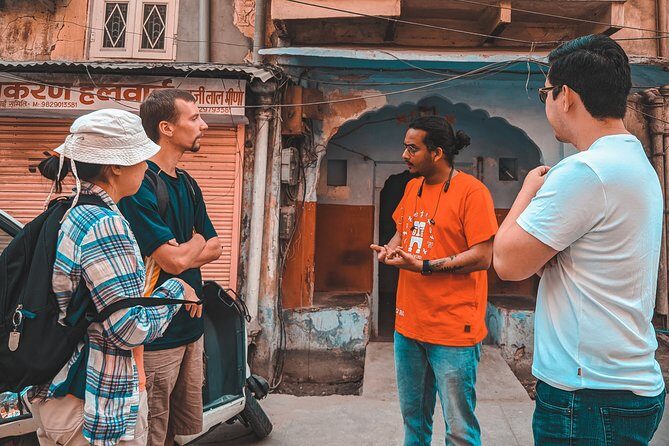
This tour is capped at 10 travelers, which matters in a city as busy as Jaipur. With a smaller group, the guide can slow down for questions and for the kind of details you’d otherwise miss. That makes the experience feel more like learning with a teacher than following a line.
It also helps with navigating the old-city feel. You’ll be moving through active areas where people are shopping, trading, and going about their day. In that setting, a guide who knows the streets and the architecture logic is a real advantage.
You can also read our reviews of more walking tours in Jaipur



Breakfast in the middle of real Jaipur

You get a Rajasthani breakfast included, plus a water bottle. I like this setup because it makes the first hour less rushed and more comfortable. If you’ve ever tried to sightsee on an empty stomach, you know why that’s important.
The breakfast also gives you a cultural “warm-up” before you start reading the city through buildings, gates, and courtyards. And since the tour ends at a different location, fueling up early helps you keep energy for the final stretch.
One practical note: dress for morning walking. Even if the tour runs in a morning window, you’ll still feel it once you’re out in the streets.
Ajmeri Gate: more than a photo stop
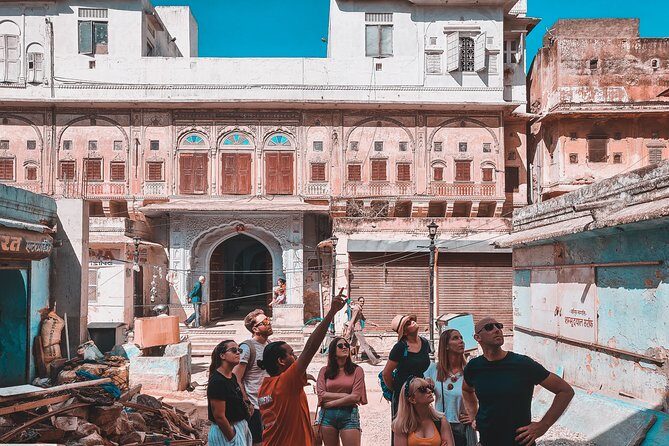
Ajmeri Gate is one of the most active gates in the old city, so it’s a great place to start. Here, you’ll get the history and the original purpose of the gate, plus how transport around this part of the city has evolved into what you see now.
What I like about this stop is the way it turns the gate into a living piece of infrastructure. Instead of treating it like a static monument, the guide frames it as a boundary, a route, and a meeting point that still affects daily movement.
What to watch for: you’ll get more out of this stop if you’re paying attention to how people flow through the area. The guide’s story makes more sense when you can see the movement happening in real time.
Isarlat Sargasooli and the logic of building design
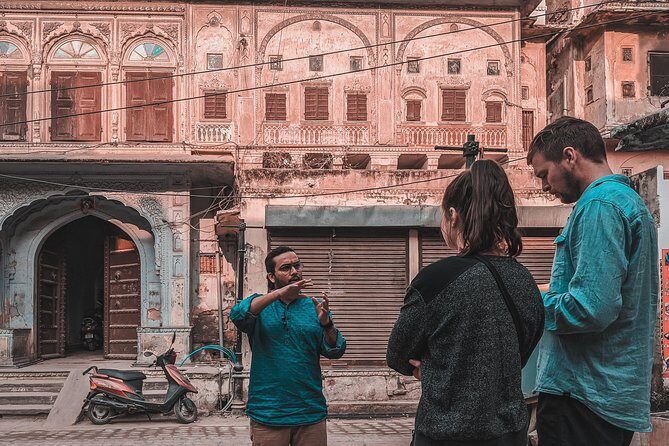
Next up is Isarlat Sargasooli, where you’ll be looking at the setting in front of the structure and hearing architecture-focused explanations. The emphasis here is on the thoughts behind the construction—why it looks the way it does and what it would have meant in its time.
This is one of the reasons the tour is worth your time even if you’ve seen photos of Jaipur before. You’re not only getting visual landmarks; you’re getting the design logic behind them.
Possible drawback: if you’re expecting a long, sit-down temple moment or heavy time inside buildings, this stop is more about observation and interpretation at the street level. Plan on listening closely while you walk.
Tripolia Bazar: royal access, then public use

At Tripolia Bazar, you’ll learn how the Tripolia gate served as a private entrance for the royal family, and how it later opened to the general public during a specific political moment tied to a former king of Jaipur.
This stop is short, but it’s the kind that helps you understand Jaipur as a system—where power was expressed through gates, access points, and controlled movement. In a city with huge palaces and symbolic architecture, learning who could enter where changes how the place makes sense.
Tip for your photos: think of the gate as part of the surrounding street story. Frame it with the context of movement and color around it, not just as a standalone monument.
You can also read our reviews of more historical tours in Jaipur




Hawa Mahal: 900 windows as engineering, not magic
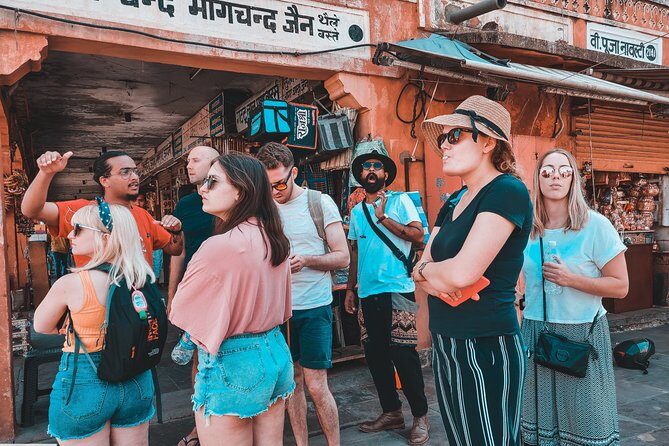
Hawa Mahal, also called the Palace of Wind, is the big signature stop. You’ll hear why it’s arguably even more iconic than Amber Fort, at least in terms of how Jaipur presents itself visually.
The guide focuses on the building’s over 900 windows and the science/engineering behind how it works. That makes this stop click for many people, because the palace stops being a “pretty facade” and becomes a structure with a practical purpose.
You’ll also be able to take it in without rushing. The time here is about 20 minutes, which is enough to look up and then look at your surroundings and street life below.
One heads-up: admission tickets aren’t listed as included for this stop. If you want to go inside or access specific viewpoints, you may need to pay separately depending on current on-site rules.
Jalebi Chowk: the courtyard-square detail that ties it together

Jalebi Chowk is a square in the backyard area of City Palace, connected to a serpentine road that links to the main east-west route. It’s also where you get another layer of city planning—how the road shapes the flow, and how squares act like social rooms for the neighborhood.
This is one of those stops that’s easy to underappreciate if you’re only there for photos. But with the guide’s context, you start seeing Jaipur as a set of relationships between gates, roads, and palace spaces.
You’ll have about 20 minutes here, and the admission ticket detail is listed as free for this stop. So it’s a good pause point without added hassle.
Govind Devji Temple: ending with a calmer note
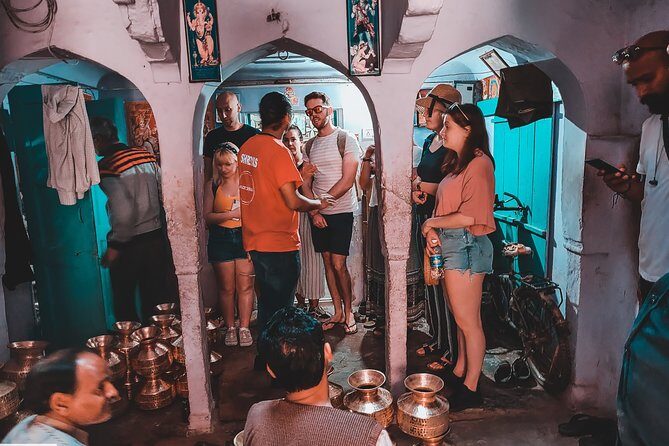
The tour’s story ends at Govind Devji Temple, described as a famous Krishna temple. After this stop, the group shifts to a chai shop setting for Q&A.
I like this ending format because it’s not just “walk, look, leave.” The Q&A gives you a chance to ask what you’re still confused about—architecture choices, city layout, or what to do next in Jaipur. It’s also a natural place to take a breath after the busier old-city sections.
Admission isn’t noted as included for this stop, so if you plan to enter specific areas, expect that you might need to cover fees on-site.
Price check: why $16 can be a good deal
At $16, this tour is priced like a budget-friendly way to see big names and learn the design thinking behind them. The value comes from the combination, not from one feature alone:
- Breakfast included (Rajasthani start)
- English-speaking guide
- Small group max 10
- Water bottle
- Digital photos included
That said, the price doesn’t necessarily cover every entrance fee. Some stops are listed as free, while others note that admission tickets are not included. Also, GST isn’t included in the listed price, so your final total may be a bit higher than you expect.
Still, if you want a guided walking route that hits major landmarks like Ajmeri Gate and Hawa Mahal without paying for a private guide, $16 is the kind of deal that can work well.
Timing, distance, and the practical stuff that matters
The tour runs in the morning window, with hours listed as 8:00 AM to 12:00 PM, Monday through Sunday. Duration is about 2 to 4 hours depending on pacing and group flow.
You’ll be walking around roughly 3 km, which is a comfortable distance for most people—especially if you take breaks at each stop. The bigger issue isn’t the distance, it’s the sidewalks and street crossings. Wear shoes you trust.
The tour also ends in a different location from where it starts. That matters for planning your next meal or your onward transport. Build in a little time so you’re not sprinting to your next ticket.
Weather matters too. The experience is marked as requiring good weather, and if it’s canceled for poor weather, you’ll be offered a different date or a full refund.
Who this Jaipur walking tour suits best
This is a great fit if you want:
- an architecture-leaning look at Jaipur (gates, window design, planned access)
- a small group experience instead of a big crowded march
- breakfast included so your morning is smoother
It’s less ideal if you:
- want lots of time inside monuments (some places may involve separate admission)
- need a very flexible start time beyond the listed morning window
- are the type who hates any chance of last-minute communication issues (because there are reports of guide non-arrival)
Before you book: the one thing to verify
Because there are reports of guide no-shows and lack of responsiveness, I’d handle this like a smart traveler:
- confirm your meeting details the day before
- arrive a bit early
- save the provider contact info and any local help options near your lodging
If everything lines up, this tour can be a solid, low-cost way to see Jaipur with real context.
Should you book the Jaipur Heritage Walking Tour?
If you like walking, enjoy architecture stories, and you’re happy with a morning tour that ends somewhere else, this is a strong value at $16—especially with breakfast and digital photos included. The route hits major landmarks like Ajmeri Gate and Hawa Mahal while keeping the focus on how the city functions.
Just don’t ignore the main warning sign from the feedback: guide reliability has been a problem for some bookings. If you’re willing to plan a little extra and confirm details, you can reduce that risk and still get a very worthwhile Jaipur morning.
FAQ
How long is the Jaipur Heritage Walking Tour?
It lasts about 2 to 4 hours.
What is the group size limit?
The tour has a maximum of 10 travelers.
Is breakfast included?
Yes. A Rajasthani breakfast is included.
Are digital photos included?
Yes. You receive complimentary digital photos from the tour guide.
Is water included?
Yes. A water bottle is included.
Are admission tickets included for all stops?
No. Some stops have admission listed as free, while others note that admission tickets are not included.
What time does the tour run?
It runs daily within the window of 8:00 AM to 12:00 PM.
Where does the tour start and end?
The meeting point is near public transportation. The activity ends in a different location from where it starts.
Can I cancel for a refund?
Yes. You can cancel for free, and if you cancel at least 24 hours in advance you get a full refund.