REVIEW · JAIPUR
Jaipur Full-Day Heritage Tour with Guide
Book on Viator →Operated by Jaipur City Tour Travels · Bookable on Viator
Early-morning Jaipur has a floral soundtrack. This full-day tour starts with the morning flower market, then moves through big-name sights and quieter corners of the Pink City in an easy, guided order. I like that you begin with a sensory stop (colors, smells, vendor chatter) and that you’re not stuck negotiating transport, since you get a private A/C vehicle with pickup and drop-off. One thing to plan for: some monuments later in the day don’t include entry tickets by default, so you may want to budget for add-on fares.
This is a structured day built around classic Jaipur highlights—Amer, a stepwell, Jal Mahal, royal tombs, Hawa Mahal, Jantar Mantar, and City Palace—plus an on-the-ground guide to help you connect the dots. The day runs about 8 hours, with short stops that still give you time to look closely, take photos, and ask questions.
In This Review
- Key Highlights You’ll Actually Feel
- First Stop: Jaipur Flower Market, Colors Before the Crowds
- Amer Fort and the 1592 Story You Can See With Your Own Eyes
- Panna Meena ka Kund Stepwell (Square, Symmetrical, Surprisingly Clever)
- Jal Mahal: Quick Look at the Water Palace Built in 1699
- Royal Gaitor Tumbas: The Kacchhawa Dynasty’s Cenotaphs
- Hawa Mahal Windows, Jantar Mantar Science, City Palace Court Life
- Hawa Mahal: 953 Honeycomb Windows Built for Breezes
- Jantar Mantar: Pre-Modern Engineering in 30 Minutes
- City Palace: Two Hours at the Heart of the Pink City
- A/C Comfort and English Support That Keeps the Day Moving
- Price vs. Real Value: How Much You’ll Pay in Total
- Who Should Book This Jaipur Heritage Tour (and Who Should Skip It)
- Should You Book This Full-Day Heritage Tour?
- FAQ
- How long is the Jaipur Full-Day Heritage Tour with Guide?
- Do I get pickup and drop-off?
- Is the transportation air-conditioned?
- What’s included besides the guide and vehicle?
- Is admission included for all monuments?
- Are meals included?
- What time of day does the tour start?
- How much is the tour?
- Can I cancel for a full refund?
- Do I need to carry a ticket?
Key Highlights You’ll Actually Feel
- Morning flower market start that sets the tone before the day gets hot and crowded
- Amer Fort for a real block of time plus the nearby Panna Meena ka Kund stepwell
- Photo-and-views stops like Jal Mahal and Hawa Mahal without dragging the schedule
- Royal Gaitor Tumbas for a calmer, more grounded feel than the main “postcard” sights
- Jantar Mantar + City Palace so you get both science and court life in one day
- Reliable comfort from a private A/C vehicle, bottled water, and driver support
First Stop: Jaipur Flower Market, Colors Before the Crowds

The day begins with the flower market, and it’s the right kind of start. You arrive early enough that the energy feels purposeful, not rushed. Think heaps of marigolds and other blooms, baskets, vendors calling out prices, and the sweet, grassy perfume that hangs in the air when you’re close to the stalls.
You’ll have about 30 minutes here. That’s not long, but it’s enough time to walk the lanes slowly, grab a few photos, and listen to what the guide points out about local uses of flowers and everyday market life. Since the stop lists admission as free, there’s no extra ticket to worry about.
Practical notes I’d follow: wear comfortable shoes (you’ll be moving through market spaces), and keep your camera strap short. If you’re sensitive to strong scents, you’ll still be able to appreciate the scene, just step back when the air gets thick near the densest stalls.
You can also read our reviews of more guided tours in Jaipur



Amer Fort and the 1592 Story You Can See With Your Own Eyes
Amer is the big, classic anchor of the day. It’s about 11 kilometers from Jaipur, and you’ll spend around 2 hours here—enough time to look around without feeling like you’re speed-walking through history.
The fort is associated with Maharaja Man Singh I, who built it in 1592. You’ll see why people come here again and again: the scale, the fortifications, and the way the complex sits in its setting. A good guide makes the difference, because Amer isn’t just “a fort”—it’s a whole visual language of power, planning, and style.
What’s valuable for you in a day like this is context. When your guide explains what you’re looking at—where people lived, how the fort was used, and how it connects to later Jaipur—you don’t just memorize names. You actually understand what the building is doing.
If you’re trying to decide how much you want to tour today, Amer is also the place where you’ll feel the time most. Two hours is a good compromise for first-timers: enough to get your bearings and not enough to exhaust you for the rest of the day.
Panna Meena ka Kund Stepwell (Square, Symmetrical, Surprisingly Clever)

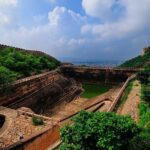
After Amer, you’ll hit Panna Meena ka Kund, a 16th-century stepwell in the Amer area. This stop is only about 30 minutes, but it’s one of those places where a short visit can still feel satisfying because the design is so specific.
You’re looking for the symmetrical, crisscross step layout and the square design. The stepwell worked as community water storage, and that history matters because it turns the architecture from “cool to photograph” into “useful, built for real life.”
Why I think this stop is a smart addition to the day: it slows the pace. After looking at fort structures, stepwell architecture gives your eyes a different kind of pattern—straight lines, repeats, and geometry you can spot quickly even without technical explanations.
Then there’s your next viewpoint stop…
Jal Mahal: Quick Look at the Water Palace Built in 1699
Jal Mahal is often described as the underwater (or Water) Palace. Whatever name you use, the idea is the same: you get a strong visual of palace architecture tied to water.
The stop lists about 15 minutes. That’s short, so treat it as a look-and-learn moment: let the guide explain what you’re seeing, then take your photos from the best angles you’re given. Jal Mahal is said to have been built in 1699, and it’s been renovated multiple times since then. That detail is useful because it reminds you the palace isn’t a single “frozen” moment—it’s a structure that has lived through changing eras.
Even with limited time, this is worth it because Jal Mahal gives you contrast. Amer is all about walls and elevation. Jal Mahal shifts the mood—lighter, watery, and more about reflection than fortress power.
Royal Gaitor Tumbas: The Kacchhawa Dynasty’s Cenotaphs

Next comes Royal Gaitor Tumbas, with about 45 minutes allocated. This is one of the most interesting “less hectic” stops on the schedule because it’s focused on royal cenotaphs—memorial structures associated with the Kacchhawa dynasty.
You’ll learn that the Kacchhawa dynasty ruled Jaipur from 1727 AD to 1947 AD. The site is described as well-maintained, and it’s one of those places where you can feel the weight of time without fighting crowds for every photo angle.
A note on tickets: Royal Gaitor Tumbas lists the admission ticket as not included in the base stop details. If your booking option includes monument entry tickets, this may be covered. If not, you’ll likely need to pay on the ground—so keep some cash or card ready.
You can also read our reviews of more historical tours in Jaipur




Hawa Mahal Windows, Jantar Mantar Science, City Palace Court Life
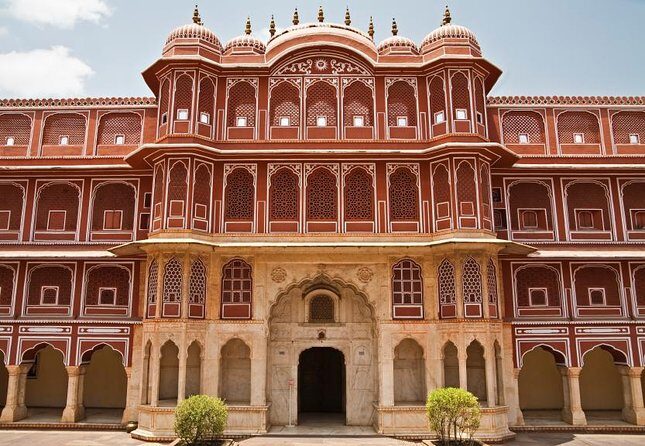
This is the cluster where you see why Jaipur became famous in the first place: the breeze-catching palace, the astronomical observatory, and the big palace complex all in one run.
Hawa Mahal: 953 Honeycomb Windows Built for Breezes
Hawa Mahal is famous for its honeycomb-shaped windows. The stop gives you about 45 minutes. Built in 1799, it’s designed for summer comfort—those windows let air pass through the façade.
This isn’t just a photo stop. A good guide can help you understand how the design relates to climate. Even if you’re only here for under an hour, you can still notice the pattern and see why the palace became an icon of Jaipur’s architectural style.
Admission for Hawa Mahal is listed as not included in the stop details, so plan for it unless you’ve selected the option that includes monument entry tickets.
Jantar Mantar: Pre-Modern Engineering in 30 Minutes
Jantar Mantar gets about 30 minutes. It’s the Jaipur astronomical observatory, built by Sawai Jai Singh II in 1729. The big idea here is that this isn’t only an art-and-culture city. Jaipur also built instruments for measuring the sky long before modern tools.
In a short time, you won’t master the science, but you can still walk away with a clear sense that these are purpose-built structures. Your guide can point out what each instrument was used for, and that makes the site feel logical instead of random shapes on a plaza.
Like the others in this block, the stop details list entry as not included.
City Palace: Two Hours at the Heart of the Pink City
Finally, you’ll spend about 2 hours at the City Palace complex. It’s within Jaipur’s walls and designed and constructed by Maharaja Sawai Jai Singh II. The architecture is described as a blend of Mughal and Rajput styles, which is one of the big reasons this complex works well as a “capstone” stop.
Two hours gives you enough time to slow down. This is where you can connect earlier stops to the idea of a court city—why rulers built the way they did, how they represented power, and how architecture shaped daily life.
As with Hawa Mahal and Jantar Mantar, the stop details list admission as not included.
A/C Comfort and English Support That Keeps the Day Moving
The biggest practical win here is the way the day is handled: private A/C vehicle, hotel/airport pickup and drop-off, driver support, bottled water, and fuel/parking/taxes covered. That matters because Jaipur’s traffic and distances can chew up time fast. When you’re paying for a guided circuit, you want the transportation to work like a system, not a chore.
You’ll also have a professional tour guide on the day. The included details say entry tickets may be covered if you select the option that includes monuments. Either way, your guide’s job is to translate what you’re seeing into something you’ll remember tomorrow.
From past experiences shared by people who’ve used similar services in Jaipur, names like Shamshu, Ali, and guides such as Abdul or Sunny show up as part of the team. The pattern is consistent: prompt pickup, clear communication, and helping you handle transitions smoothly when you’re moving between major sites.
I also like that this is positioned as a private tour for your group, with group discounts available. That means your pace is less likely to be dragged by strangers with different priorities.
Price vs. Real Value: How Much You’ll Pay in Total
The listed price is $11.35 per person, and that’s shockingly low for a full 8-hour day with pickup/drop-off and a private A/C vehicle. The value is clearest when you compare what’s included: transport, driver service, bottled water, and guide support.
But here’s the part you should plan for: monument entry ticket coverage isn’t automatic for every stop. The stop details list admission ticket free for the flower market, Amer, Panna Meena ka Kund, and Jal Mahal. For Royal Gaitor Tumbas, Hawa Mahal, Jantar Mantar, and City Palace, admission is listed as not included unless your booking includes it as an add-on option.
So what should you do? If you hate ticket lines or you’d rather avoid last-minute spending, choose the option that includes monument entry tickets. If you’re fine handling a few purchases yourself, you can keep the base price and pay only where needed.
Meals aren’t included, and tips aren’t included. That’s normal, but it’s worth factoring into your day so you’re not caught hungry between stops.
Who Should Book This Jaipur Heritage Tour (and Who Should Skip It)
This tour fits best if you want a strong first look at Jaipur in one day without planning transport. It’s also a good match if you like variety: you get market culture, fort and architecture, a stepwell design lesson, a water palace photo moment, royal tombs, and two major “icon” sites plus City Palace.
It might not fit if your travel style is slow and museum-heavy. Some stops are short by necessity—like Jal Mahal at 15 minutes and Jantar Mantar at 30 minutes. If you want long, detailed time inside every building, you’ll likely want a custom itinerary.
Families should do well because the day is structured and the transportation is comfortable. If anyone in your group is sensitive to walking or heat, you’ll want to wear breathable layers and plan for sunscreen, water, and shade breaks during the midday portion.
Should You Book This Full-Day Heritage Tour?
I’d book this if you want a well-paced sampler of Jaipur’s most recognizable heritage sights, plus one morning stop that feels genuinely local. The early flower market is the kind of start that makes a whole day feel more human than just “checkpoints.” And the A/C vehicle with pickup and drop-off is a big value anchor for an 8-hour day.
Before you confirm, do two quick things:
- Check whether monument entry tickets are included for the paid sights (Royal Gaitor Tumbas, Hawa Mahal, Jantar Mantar, City Palace).
- Plan for the fact that the day runs about 8 hours, with several sites and short-to-medium viewing windows.
If you dislike structured schedules or you only care about one or two monuments, you might get better value by picking fewer stops and staying longer in those places. But if you’re aiming for a solid, guided overview of Jaipur, this is a strong option.
FAQ
How long is the Jaipur Full-Day Heritage Tour with Guide?
It’s about 8 hours.
Do I get pickup and drop-off?
Yes. Hotel/airport pickup and drop-off are included.
Is the transportation air-conditioned?
Yes. The tour includes a private A/C vehicle with an English-speaking driver.
What’s included besides the guide and vehicle?
Bottled water, fuel charge, parking fee, and taxes are included.
Is admission included for all monuments?
Not all. The flower market, Amer, Panna Meena ka Kund, and Jal Mahal are listed as free admissions in the schedule. Royal Gaitor Tumbas, Hawa Mahal, Jantar Mantar, and City Palace are listed as not included in the schedule details, though monument entry tickets may be covered if you select the option that includes them.
Are meals included?
No. Meals aren’t included.
What time of day does the tour start?
It starts with the morning flower market, so you’ll want to be ready early.
How much is the tour?
The price is $11.35 per person.
Can I cancel for a full refund?
Yes. You can cancel up to 24 hours in advance for a full refund.
Do I need to carry a ticket?
You’ll receive a mobile ticket.