REVIEW · NEW DELHI
Half-Day Private Walking Tour of Old Delhi
Book on Viator →Operated by Shivalik Holidays · Bookable on Viator
Old Delhi has a way of grabbing you fast.
This private walking tour in Shahjahanabad (Old Delhi’s 17th-century walled city) is a smart way to see the lanes up close, without getting lost in the flow of shops and people. I love how the route mixes landmark faith sites with the everyday bazaar streets, and I love that you get chai and street snacks included while your guide keeps the pace manageable. The one thing to plan for: Jama Masjid entry costs extra (INR 300 per person) and you’ll be walking for about 3–4 hours in busy lanes.
The tour is built for real atmosphere: spice wholesale energy at Khari Baoli, colorful textile lanes, paratha stops, and then the big scale of Jama Masjid. You’ll start and end near Red Fort Metro Station (Lal Qila), which makes it easy to plug into the rest of your day in Chandni Chowk. If you prefer quiet, this is not that kind of sightseeing—Old Delhi is loud, crowded, and wonderfully alive.
In This Review
- Key highlights on foot in Shahjahanabad
- Why Old Delhi works best on a walking route
- Start at Red Fort Metro Station and get your bearings fast
- The main bazaar street: a quick taste of how Old Delhi trades
- Gurudwara Sis Ganj Sahib: a free spiritual pause
- Khari Baoli: spice and dry fruit wholesale energy you can see
- Colorful cloth and saree lanes: shopping streets with real meaning
- Parathas on the street: the best kind of included food stop
- Jewellers street: when Old Delhi turns into a detailed close-up
- Jama Masjid: big 17th-century scale, plus the extra entry fee
- Price and value: what $21 includes (and what it doesn’t)
- Timing, weather, and how to stay comfortable
- Who this Old Delhi private walk is best for
- Should you book this Old Delhi walking tour?
- FAQ
- How long is the Half-Day Private Walking Tour of Old Delhi?
- Where does the tour start and end?
- Is the tour private?
- What’s included in the price?
- Is pickup included?
- Is Jama Masjid entrance fee included?
- What language will the guide speak?
- What if the weather is bad?
- Can I cancel and get a refund?
Key highlights on foot in Shahjahanabad
- Private group, local pacing: Only your group joins, so you’re not stuck waiting for strangers.
- Temple stop with free entry: Gurudwara Sis Ganj Sahib is included at no admission cost.
- Khari Baoli spice and dry fruit market: Wholesale intensity you can actually smell and see.
- Colorful cloth-and-saree shopping streets: Great for photos and for understanding how trade works here.
- Parathas + chai included: A food break that fits the walk instead of derailing it.
- Optional Jama Masjid inside visit: If you want it, budget the INR 300 entry fee.
Why Old Delhi works best on a walking route
Old Delhi is the kind of place where streets feel like they fold into each other. That sounds poetic, but it’s also practical: walking is the only way you’ll really understand how the markets connect, where the spice stalls sit, and how temples rise into the chaos. A guided format matters here because the “important bits” aren’t always marked like museum exhibits; they’re hidden in plain sight inside the flow of daily commerce.
With this tour, you’re not trying to cram everything into one day. You get a tight window of around 3–4 hours, which is a sweet spot for first-timers. Long enough to feel the character, short enough to stay comfortable if the heat or crowds build. And because it’s private, you can ask questions, slow down when something catches your eye (a food stall, a shop sign, a doorway), and keep moving without the awkward awkwardness of a big group.
One more practical win: the tour includes bottled water. In Old Delhi, that’s not a small detail. It keeps you from turning the tour into a dehydration hunt between stops.
You can also read our reviews of more walking tours in New Delhi



Start at Red Fort Metro Station and get your bearings fast
You meet at Red Fort Metro Station (Lal Qila), which is right in the Chandni Chowk area. I like this because it’s close to public transport and doesn’t force you into a confusing maze of internal addresses. Once you’re gathered, your guide can set expectations immediately: how long you’ll walk, what to watch for in the crowd, and how you’ll move between markets.
This location also helps you time your day. If you’re visiting other sights in central Delhi, you can plan the rest of your route around a start/end point that’s easy to reach. And since the tour ends at the same meeting spot, you won’t need to “figure out how to get back” while you’re already tired.
The tour also uses a mobile ticket, which is useful if you’re bouncing between activities. Just keep it accessible on your phone so you’re not digging around mid-walk.
The main bazaar street: a quick taste of how Old Delhi trades
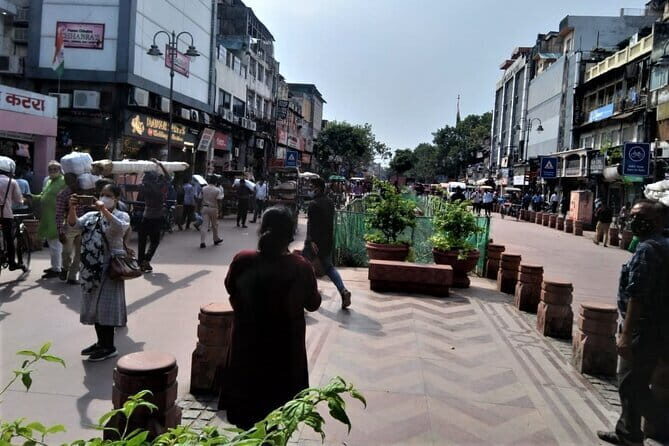
One early highlight is the tour’s walk along Old Delhi’s main shopping street, a famous bazaar area that’s been recently revamped. That matters more than you might think. Old Delhi isn’t frozen in time—you’ll see modern touches layered over older lanes, and you’ll notice how crowds and shopfronts shape the street’s rhythm.
This is the moment where you start learning the layout. You’ll get a feel for:
- where foot traffic naturally funnels,
- how shops cluster by category,
- and why certain intersections feel like hubs.
It’s also a good warm-up before the food and market stops. You can look, orient yourself, and get a sense of what your guide means when they point out why a particular lane is the place to go for textiles, spices, or jewelry.
Gurudwara Sis Ganj Sahib: a free spiritual pause

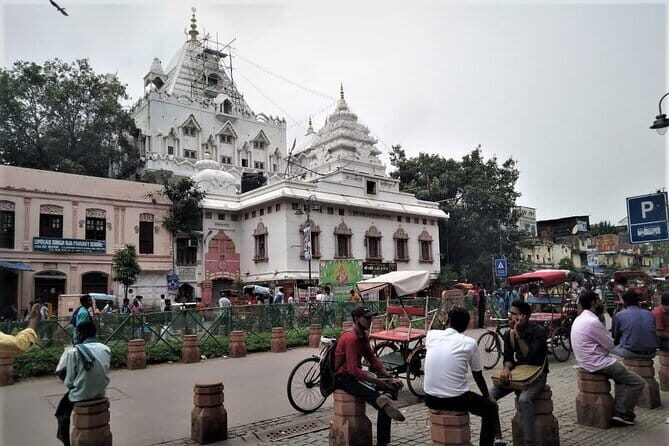
Next up is Gurudwara Sis Ganj Sahib, a well-known Sikh temple in the heart of Old Delhi. It’s scheduled for about 30 minutes, and importantly, admission is free.
This is a good stop for your brain. Old Delhi’s markets can feel nonstop, even when you’re enjoying them. Temples give you a structured change of pace. You’ll see how faith spaces sit inside everyday street life—close enough that the bazaar energy continues around it, but calm enough that you can actually slow your thoughts.
It’s also a useful cultural reset before the sensory overload of Khari Baoli. After the Gurudwara, you’ll step back into commerce with a little more focus.
Khari Baoli: spice and dry fruit wholesale energy you can see

After the temple pause, the tour shifts into raw market realism with Khari Baoli, a wholesale market known for spices and dry fruits. The time here is about 20 minutes, which is short on paper but right for this kind of stop. Wholesale markets are intense; you don’t need an hour to understand what’s happening.
Here’s what makes Khari Baoli worth it:
- the visual mix of spices and ingredients,
- the sheer scale of wholesale trade,
- and the way the lanes feel built for quick buying and sorting.
Also, this is where your guide earns their keep. A good heritage walk isn’t just moving you from one photo spot to the next—it helps you interpret what you’re seeing. You’ll get context for why certain items are grouped together and how this kind of wholesale street fits into the broader Old Delhi economy.
And because snacks and chai are included on the tour, you’re not relying on luck to find the right stall later. You’ll have food breaks built into the route.
You can also read our reviews of more private tours in New Delhi






Colorful cloth and saree lanes: shopping streets with real meaning

Old Delhi isn’t only about food and spices. You also get time for a wholesale colorful cloths and sarees market stop (the tour keeps it flexible as you move through the streets). This part is fun even if you’re not planning to buy. It shows you how the city organizes craft and retail by lane and category.
Why I like including this: textiles tell a different story than monuments. Instead of asking you to look up at buildings, it makes you look at materials, colors, and the way shopkeepers present merchandise. You also get a feel for why Chandni Chowk-area streets have their reputation: they’re not random shopping streets. They’re structured commercial corridors.
If you do want to shop, remember this is still a working bazaar. Keep your expectations realistic. You’re not in a mall with clean aisles and quiet staff. It’s a place where bargaining and decisions happen fast.
Parathas on the street: the best kind of included food stop

One of the more practical and enjoyable parts of the walk is time to admire the street and enjoy the paranthas (Indian bread) shops. The tour pairs this food moment with the rest of the market experience, which is the right way to do it in Old Delhi.
The tour includes snacks, including chai/tea and some local famous street snacks. That means you’re not walking around hungry, then trying to solve the food question from scratch while everyone else crowds into the same stalls. You get a built-in break that keeps your energy steady for the later temple and mosque areas.
A good tip for paratha breaks here: go with your guide’s recommendations. When you’re in a market lane, you’ll see many stalls that look good—your guide helps you pick a place that fits the tour rhythm and avoids unnecessary waiting.
Jewellers street: when Old Delhi turns into a detailed close-up
Next comes a famous jewellers street of Old Delhi. This is the part you’ll notice even if you’re trying to focus on walking. Jewelry streets pull you in with shine and close-up detail.
What’s valuable about this stop isn’t only the sparkle—it’s the way the street feels specialized. You’re no longer sampling random variety. You’re seeing an industry concentrated into a narrow corridor, where shopfronts, displays, and staff skills are all tuned to the same customer needs.
Even if you don’t buy, this section is worth it for the visual “training” it gives you. You learn to spot:
- different display styles,
- how shops organize products by type,
- and how busy lanes are managed for buyers.
Just be aware that it can also be a high-pressure shopping environment if you’re easily overwhelmed. If you want low-stress browsing, tell your guide you’d rather move briskly and window-shop for photos.
Jama Masjid: big 17th-century scale, plus the extra entry fee
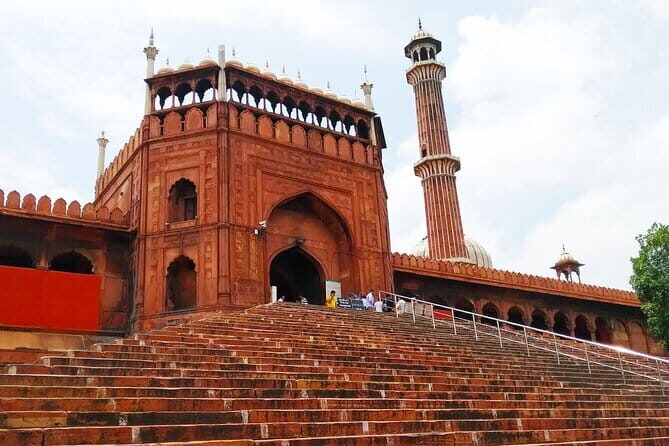
The final major landmark is Jama Masjid, one of the biggest and world-famous 17th-century mosques built by Shah Jahan. The time here is about 30 minutes, and this is the one big “not included” cost on the tour.
Jama Masjid entrance fee is INR 300 per person and not included. You can pay directly on the spot if you wish to enter.
How to think about this decision:
- If you want the interior and full landmark experience, budget the fee early so it doesn’t distract you later.
- If you’re short on money or time, you can still use this stop for street-level views and the general atmosphere.
Either way, Jama Masjid adds scale to what you’ve already seen. Up to this point, the tour is about lanes and markets. Jama Masjid shifts your perspective to architecture and the sheer size of the religious complex. That contrast makes the walk feel complete.
Price and value: what $21 includes (and what it doesn’t)
The tour price listed is $21, and the included value is clear and practical:
- Experienced authorized English/French speaking guide
- Chai/tea and some local street snacks
- Bottled water
- Pickup offered
- Group discounts
- Mobile ticket
- Private tour (only your group)
For a private heritage walk of around 3–4 hours, that inclusion list is what makes the price feel reasonable. A guide plus food plus water removes two major friction points in Old Delhi: navigation and hunger.
The main extras you should plan for are:
- Jama Masjid INR 300 per person if you enter
- Shopping and personal expenses
- Lunch (not included)
This is where you get good value if you treat the tour as a “half-day foundation.” You’ll be set up to continue exploring on your own afterward—knowing how the lanes connect and having already tasted a few local classics.
Timing, weather, and how to stay comfortable
This experience requires good weather. That’s a real factor in Old Delhi, because your route is outdoors and it’s designed for walking. If weather turns, you should expect a change of date or a refund (the operator offers a fallback plan when conditions are poor).
On timing, the tour is built around a comfortable walking window for most people: it lasts about 3–4 hours. It also notes that pregnant travelers who can walk for 3 hours can join, which suggests the pace is steady but not extreme.
So what should you do to make the tour smoother?
- Wear shoes that handle uneven pavement and tight lanes.
- Stay hydrated (you get water, but you’ll still feel better if you drink it).
- Keep your expectations flexible around crowds—Old Delhi is a real working city, not a stage set.
Who this Old Delhi private walk is best for
I think this tour fits best when you want:
- a concentrated Old Delhi overview without spending a full day,
- a guided route through major streets and markets,
- food breaks that don’t derail the schedule,
- and a private group format that’s easier to manage.
You’ll especially enjoy it if you’re a food person, a first-timer in Old Delhi, or someone who wants to understand how the city trades—spices at Khari Baoli, textiles in the cloth lanes, and jewelry street specialization.
It’s less ideal if you’re looking for a quiet, slow museum-style experience, or if you’re uncomfortable in crowded streets. Also, if you know you definitely want to enter Jama Masjid, factor in the INR 300 fee ahead of time.
Should you book this Old Delhi walking tour?
If you want an efficient, high-value introduction to Shahjahanabad, I’d say yes—especially because chai and street snacks are included and the route hits both marketplaces and major religious landmarks. The private format is a big deal here; it helps you move with fewer hassles in a place where crowds can slow anyone down.
The only reason I’d hesitate is if the extra Jama Masjid entry fee would be a budget problem, or if you prefer to avoid tight, busy lanes. If neither is an issue, this is a solid choice to make your Old Delhi time feel organized, tasty, and worth your effort.
FAQ
How long is the Half-Day Private Walking Tour of Old Delhi?
It’s scheduled for about 3 to 4 hours.
Where does the tour start and end?
It starts and ends at Red Fort Metro Station (Lal Qila), in the Lal Qila / Chandni Chowk area.
Is the tour private?
Yes. It’s a private tour/activity, and only your group participates.
What’s included in the price?
The tour includes chai/tea and some local street snacks, bottled water, and an experienced authorized English/French speaking guide.
Is pickup included?
Pickup is offered, so you’ll want to confirm the pickup details with the operator when you book.
Is Jama Masjid entrance fee included?
No. Entrance to Jama Masjid costs INR 300 per person and is not included. You can pay on the spot if you want to enter.
What language will the guide speak?
The guide is listed as English/French speaking.
What if the weather is bad?
This experience requires good weather. If it’s canceled due to poor weather, you’ll be offered a different date or a full refund.
Can I cancel and get a refund?
Yes. You can cancel for a full refund up to 24 hours in advance of the experience’s start time, and cancellations are free.