REVIEW · NEW DELHI
From Delhi : 3 Day Private Luxury Golden Triangle Tour By Car
Book on Viator →Operated by Amsah Tours · Bookable on Viator
Golden Triangle in three days sounds intense. This one works because it is private, tight, and built around big sights you can actually enjoy without getting stuck in logistics.
I like the balance of famous UNESCO stops and hands-on local moments like Old Delhi shopping lanes and a rickshaw ride. I also like the way the tour spreads your time across Delhi, Agra, and Jaipur so you are not just driving past the best bits.
One consideration: it is a packed schedule with an early sunrise start and long road time, so you will want stamina and a flexible attitude.
In This Review
- Key things to know before you go
- Why this private 3-day Golden Triangle by car is a smart value
- Day 1 Delhi Sights: Qutub Minar, Humayun’s Tomb, and Old Delhi by rickshaw
- Qutub Minar and Mehrauli area: UNESCO from the first stop
- Lotus Temple: modern spiritual design in a tight stop
- India Gate and the formal government center sights
- Agrasen ki Baoli: a quiet stop that adds contrast
- Humayun’s Tomb: Mughal power made walkable
- Chandni Chowk, Jama Masjid, and the rickshaw ride
- Red Fort: the big finale of Delhi day one
- The long road to Agra begins
- Agra check-in: how to make the most of your first night in town
- Day 2 Agra and beyond: Taj Mahal at sunrise, Agra Fort, and the stepwell detour
- Taj Mahal at sunrise: the emotional payoff and the timed inside visit
- Agra Fort: architecture + history with guide help
- Itmad-ud-Daula, also called Baby Taj
- Chand Baori in Abhaneri: a big stepwell detour
- Drive to Jaipur and hotel check-in
- Day 3 Jaipur: Jal Mahal, City Palace, Jantar Mantar, and Hawa Mahal
- Panna Meena ka Kund: a quick, included stop
- Jal Mahal: the palace in Man Sagar Lake
- City Palace of Jaipur: built 1721 and still the ceremonial heart
- Jantar Mantar: UNESCO astronomy tools from 1734
- Hawa Mahal: the Palace of Winds, finished with a fast photo hit
- Price and inclusions: what you actually get for about $20 per person
- Comfort, pacing, and the real role of the guides and drivers
- Who this tour suits best (and who should look elsewhere)
- Should you book this Golden Triangle by car?
- FAQ
- What cities are included in this 3-day tour?
- How long is the tour?
- Is this tour private?
- What’s included in the price?
- Are pickup and mobile tickets included?
- What is the cancellation window?
Key things to know before you go
- Private vehicle with AC and on-board WiFi makes the long drives more bearable
- Sunrise Taj Mahal plus a guided inside visit (about 2 hours)
- Old Delhi time with local guides and a short rickshaw experience
- A mix of included and free monument stops means you should check what tickets are covered
- Pro guide support is a standout, with English-language explanations praised (including Shamin and Nikhil)
Why this private 3-day Golden Triangle by car is a smart value
This tour is designed like a well-run road trip: you get a private car, guided visits, and a sequence of stops that target the headline sights of Delhi, Agra, and Jaipur. The biggest practical win is how much decision fatigue it removes. Instead of figuring out which ticket lines to hit first, you follow a plan, show up on time, and a guide handles the story and the pacing.
You also get real comfort for a multi-day itinerary. The vehicle has air-conditioning and WiFi on board, which matters when the schedule is full and you will spend hours moving between cities. The tour also includes buffet lunch at the hotel plus breakfast at the hotel (when hotel options are booked), so you are not constantly hunting for meals.
The reviews consistently point to one theme: guides and drivers who keep things smooth. Names that came up include Siddhi, Shamin, Nikhil, Imran Khan, Imran Bey, and drivers like Rahul and Jeetu. If you care about clear explanations and calm, steady transport, this is where the tour earns its reputation.
The pace is still the pace. You will start early on the Taj day, and you will be on the road for longer stretches than a city-only trip. If you want slow travel, this is not that. But if you want maximum classic India per day, this is a strong fit.
You can also read our reviews of more private tours in New Delhi



Day 1 Delhi Sights: Qutub Minar, Humayun’s Tomb, and Old Delhi by rickshaw
Day 1 is a classic Delhi sampler, and it is arranged so you see both imperial-era landmarks and the energy of Old Delhi markets.
Qutub Minar and Mehrauli area: UNESCO from the first stop
Your day begins at Qutub Minar, a UNESCO World Heritage site tied to Qutub-ud-din Aibak, founder of the Delhi Sultanate. The minaret’s spiraling staircase and its design inspiration (thought to be based on the Minaret of Jam) are exactly the kind of detail a good guide can translate into something you can picture, not just read on a plaque. The allotted time is about one hour, with free admission noted in the schedule.
If you love architecture, this is a great first “anchor.” It sets a tone: Delhi here is not just modern megacity traffic—it has a deep visual language.
Lotus Temple: modern spiritual design in a tight stop
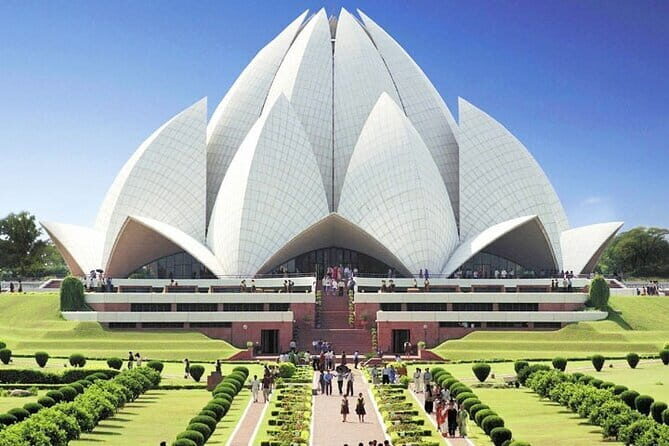
Next is the Lotus Temple, built in 1986 with a distinctive flower-like shape. The time is shorter, about 30 minutes, and admission is free. This is less about monuments and more about form: you get a quick hit of contemporary design before the day shifts into Mughal-era and market life.
India Gate and the formal government center sights
You then move to India Gate, a war memorial near the Rajpath. Even if you do not care about war memorials, the architecture and the setting make it a good orientation stop. The schedule includes additional exterior-looking landmarks: Parliament House (Sansad Bhavan), whose circular form references the Ashoka Chakra, and Rashtrapati Bhavan, the president’s official residence. These stops are brief, around 30 minutes total for India Gate, and you should use them as a photo-and-context break before heading into the older city.
You can also read our reviews of more tours and experiences in New Delhi






Agrasen ki Baoli: a quiet stop that adds contrast
Agrasen ki Baoli is a stepwell and a protected monument. It is listed as 60 meters long, with admission free. This is one of those Delhi stops that feels removed from the big-ticket monuments nearby. You get a change of pace without losing time.
Humayun’s Tomb: Mughal power made walkable
Then come the Mughal highlights: Humayun’s Tomb, scheduled for about one hour, and admission is included. It is the tomb commissioned for Mughal Emperor Humayun in 1558 by Empress Bega Begum. This is a key site on any Delhi list, but what makes it work in this tour is the guide time. You spend enough time to understand layout and purpose, instead of snapping photos and rushing out.
Chandni Chowk, Jama Masjid, and the rickshaw ride
The Old Delhi segment is where this day turns energetic. Chandni Chowk gets about one hour, focused on the shopping streets—spices, dried fruit, silver jewelry, vivid saris, and stalls for things like essential oils. This is a good segment if you want to buy gifts or just watch how commerce looks when it is not packaged for tourists.
Next is Jama Masjid, one of the largest mosques in India, built by Shah Jahan between 1650 and 1656. Admission is included and the guide time is about one hour.
After that, you get a short rickshaw ride in Old Delhi (about 30 minutes). The tour frames the ride historically: it links to the area’s development after Shahjahan shifted the capital from Agra to Delhi in 1638, and notes that Jahanara constructed a square where the market grew. The practical value here is that it helps you experience the area’s scale and flow without walking every inch in the heat.
Red Fort: the big finale of Delhi day one
You finish at Red Fort, allotted one hour. Admission is noted as free in the schedule, and the guide can connect it to the fact that it served as the main Mughal residence for nearly 200 years until 1856. Even with a short visit, it is a powerful ending beat because it ties together Delhi’s imperial story.
The long road to Agra begins
Later, you shift into movement. The plan includes a local lunch stop and then a drive via the Yamuna Expressway toward Agra, scheduled for about 3 hours. By the time you check in, you have “free at leisure” time for the evening.
Agra check-in: how to make the most of your first night in town
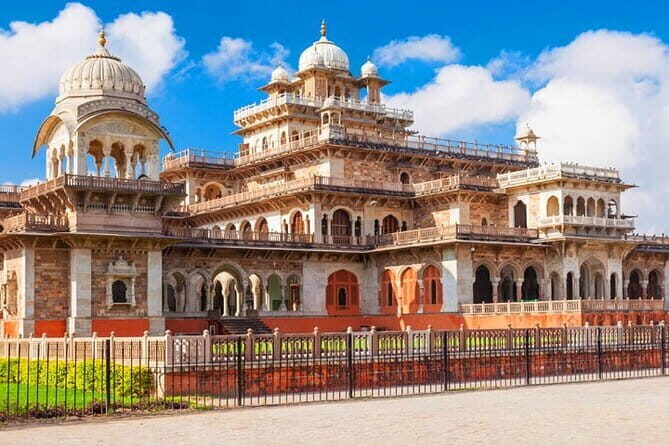
Agra is where the itinerary turns from “see everything” into “arrive ready for the big morning.”
Once you reach Agra, the schedule has a quick transition: hotel check-in and then a lighter evening. That matters. The Taj Mahal day is early, so you do not want to spend your first night running around. A guide plus a planned day-to-day route gives you a chance to rest, regroup, and not waste energy chasing last-minute tickets.
This tour’s inclusion style is also helpful here. If you booked the option with hotels, you have two nights accommodation built into the overall value. That means you are not juggling extra bookings while planning the busiest days of your trip.
If you prefer to stay flexible, you still can. You get leisure time after check-in, which gives you the option to wander nearby markets or just enjoy downtime, depending on what your body wants.
Day 2 Agra and beyond: Taj Mahal at sunrise, Agra Fort, and the stepwell detour
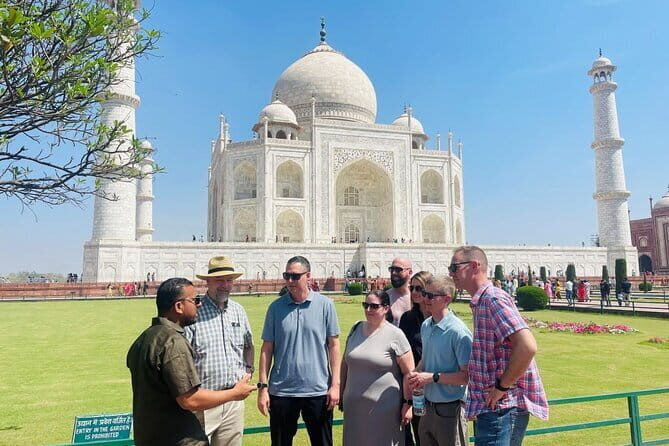
Day 2 is the headline day, starting with sunrise at the Taj Mahal.
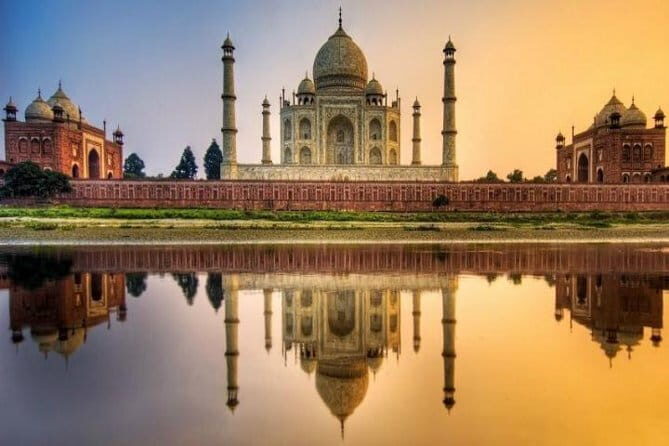
Taj Mahal at sunrise: the emotional payoff and the timed inside visit
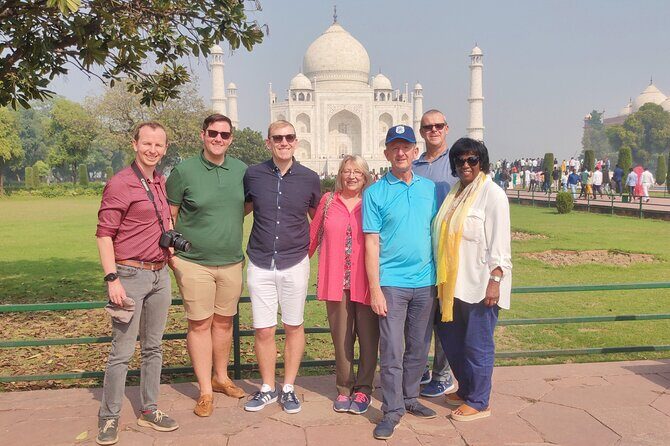
The tour has you wake up early for the sunrise view of the Taj Mahal, then continue with a guided tour inside for about two hours, with admission included.
This is where private guiding pays off. You get the site explained in a way that helps you look longer at the details instead of just moving from one photo angle to another. The inside time is long enough to feel meaningful, but not so long that you lose the day.
A practical tip that came up in the feedback is timing. One review specifically suggested that 5:30 am is a good time window to reduce crowds, and another cautioned to avoid summer if you can because the heat can be intense. So if you are traveling in hot months, treat the sunrise start not as a sacrifice, but as the best way to make the day tolerable.
Agra Fort: architecture + history with guide help
After Taj, you go to Agra Fort, scheduled for about one hour with admission included. Agra Fort is UNESCO-listed, and the guide helps connect the apartments and layout to Mughal-era life and power. The value here is not only the monument—it is the clarity. With a guide, you can actually follow what you are looking at.
Itmad-ud-Daula, also called Baby Taj
Next is Itmad-ud-Daula, often called Baby Taj, about 30 minutes with admission included. It is a Mughal mausoleum in Agra, and the tour keeps it compact. This is a good “breather” after the heavier Taj and Fort segments: you get beautiful Mughal design without feeling like you are stuck in one site for hours.
Chand Baori in Abhaneri: a big stepwell detour
Then comes a twist: Chand Baori in Abhaneri, about one hour with admission included. The stepwell is described as a massive, ornate structure from the 8th and 9th centuries, reached by 3,500 steps. Even if you do not do every step, the scale is the point. It is a different type of sight than marble mausoleums, and it breaks up the day nicely.
Drive to Jaipur and hotel check-in
After Chand Baori, you head to Jaipur, with about 5 hours of travel time in the schedule. You check in at your hotel and get an overnight stay.
This is a sensible placement for Jaipur. You arrive ready for day three’s Jaipur sights, not trying to force everything on the day you travel.
Day 3 Jaipur: Jal Mahal, City Palace, Jantar Mantar, and Hawa Mahal
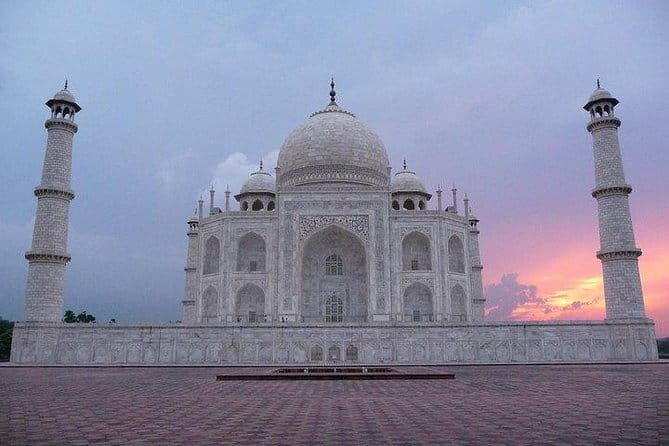
Jaipur day is about variety: a scenic palace-in-the-water moment, then palace and observatory architecture, and finally the instantly recognizable Hawa Mahal.
Panna Meena ka Kund: a quick, included stop
You start with Panna Meena ka Kund, listed for about 15 minutes with admission included. The schedule keeps it short, so treat it like a quick visual stop that adds another piece of Jaipur’s water-and-step architecture theme.
Jal Mahal: the palace in Man Sagar Lake
Next is Jal Mahal, a palace located in the middle of Man Sagar Lake. The tour notes renovation and enlargement by Maharaja Jai Singh II of Amber in the 18th century, with admission included and about 30 minutes allocated.
If you like photogenic settings, this is the stop that changes the pace. It also adds contrast to the dry stone look of many forts and palaces, because water changes how light behaves on the building and the surrounding view.
City Palace of Jaipur: built 1721 and still the ceremonial heart
You then visit City Palace of Jaipur, with about one hour and admission included. The schedule notes it was constructed in 1721 and served as the administrative and ceremonial seat of the Maharaja of Jaipur, where religious and cultural events took place. This is a good stop to understand how Jaipur was organized as a kingdom, not just as a sightseeing list.
Jantar Mantar: UNESCO astronomy tools from 1734
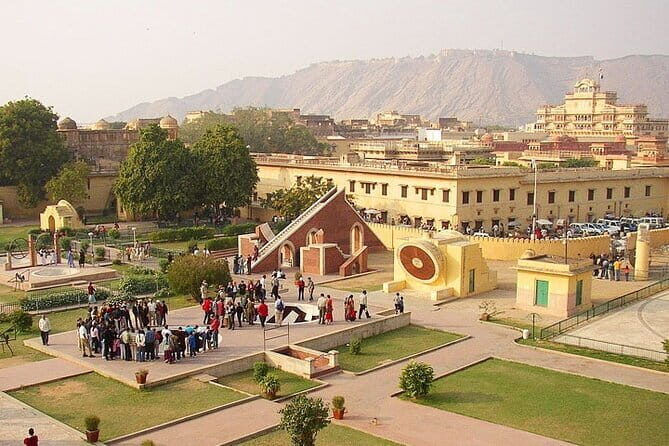
After City Palace comes Jantar Mantar, UNESCO-listed and built in 1734 by Sawai Jai Singh II. The tour’s allotted time is about one hour, with admission included.
This is a fun stop even if you are not a science person. The architecture is meant for measurement and observation, so it feels practical and intentional. With a guide, you can connect the idea of astronomy to the physical structures you are looking at.
Hawa Mahal: the Palace of Winds, finished with a fast photo hit
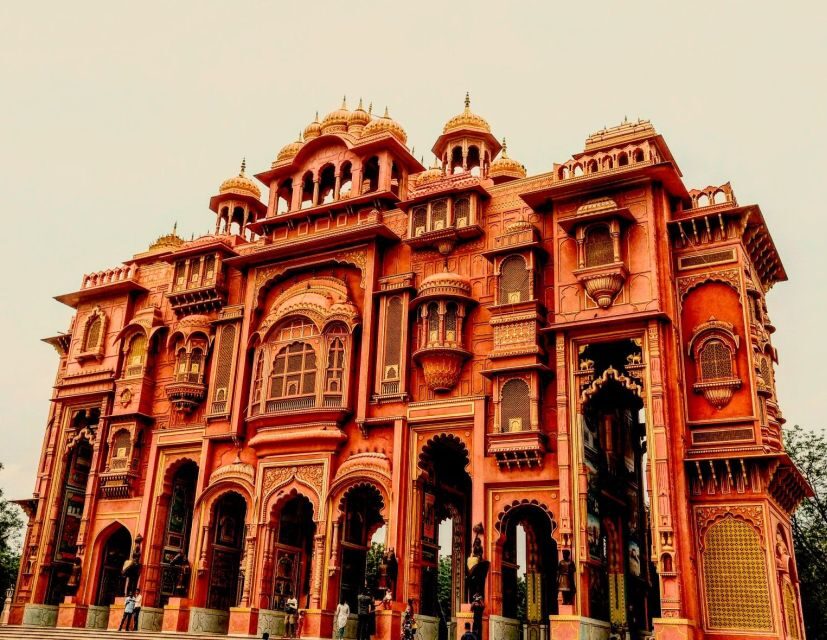
Finally, you end at Hawa Mahal (Palace of Wind). It is noted as built from red and pink sandstones and scheduled for about 15 minutes with admission included. This is the classic Jaipur skyline sight—short enough that you do not feel rushed, but long enough to appreciate the repeating façade pattern.
Price and inclusions: what you actually get for about $20 per person
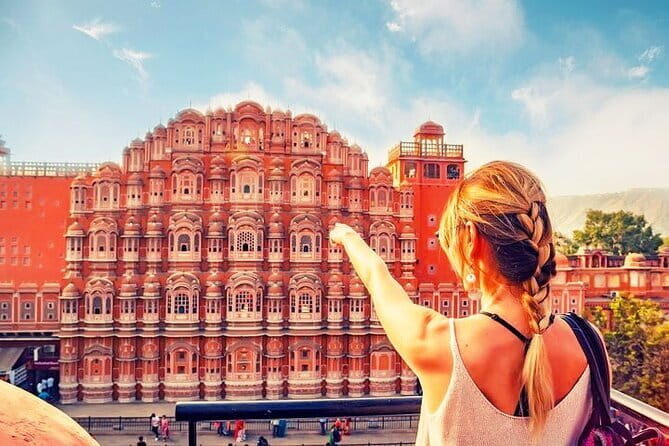
At $20 per person, this is priced like a budget-friendly way to stitch together the Golden Triangle with guiding and tickets. The value is not just the price tag—it is what is wrapped in.
Included items in the plan include:
- All sightseeing with private local guides
- Entrance fees to monuments
- Buffet lunch at the hotel and breakfast at the hotel
- Air-conditioned vehicle and WiFi on board
- Pickup offered and mobile ticket
- All fees and taxes
- Two nights accommodation only if you choose the option that includes hotels
One important check: some stops show free admission in the schedule, while others list admission as included. Either way, you will still be guided and on track, but it is smart to confirm what your ticket package covers before you go, especially if you are comparing deals.
Also, tipping is not included—so factor in optional gratuities if you want to show appreciation for your guide and driver.
Comfort, pacing, and the real role of the guides and drivers

In a tour this structured, the guide is not a decoration. The reviews make it clear that the best guides here do two things: they explain the sites in clear English (Shamin was specifically praised), and they match the energy of the group so you do not feel yanked around.
The driver also matters because you are on the road a lot. One review highlighted a calm driver with a clean car for the entire time (Rahul was mentioned). Another review praised responsiveness from the guide and driver pair (Nikhil and Jeetu were named).
If you care about shopping, this tour can help. Siddhi was praised for taking people to multiple sites and enabling bargain shopping, with the group feeling comfortable and at ease. That is not just a perk. It can save you time and reduce the awkwardness that sometimes comes with markets.
Pacing is the other thing to plan for. This itinerary is built as a sequence of short-to-medium timed visits. That means you are not wandering for hours on your own. If you like structure, you will feel taken care of. If you need lots of free time inside monuments, you might find it a bit “scheduled.”
Who this tour suits best (and who should look elsewhere)
This tour is a strong fit if you want:
- A private Golden Triangle route with guides in each city
- Sunrise Taj Mahal without having to coordinate transport and tickets yourself
- Comfortable road travel thanks to AC and on-board WiFi
- A day plan that includes both major monuments and Old Delhi market energy
It is less ideal if you:
- Want lots of unscheduled time inside each site
- Get easily exhausted by early starts and long drives
- Are traveling with very strict pacing needs (because the schedule is tight)
Should you book this Golden Triangle by car?
I would book it if you want classic India highlights with minimal friction: private transport, guided monument time, and a sunrise Taj morning that you do not have to plan from scratch. The reviews strongly suggest the guides here can make sites click, and that the driving is handled calmly.
Book it with one practical mindset: this is not a slow scenic weekend. It is a 3-day plan that moves, and it pays off if you show up ready to start early and keep a steady pace.
If you double-check whether your booking includes hotels and confirm what your monument admissions cover, you will be in great shape to enjoy the value of the whole run.
FAQ
What cities are included in this 3-day tour?
The tour covers Delhi, Agra, and Jaipur, with sightseeing stops in all three places.
How long is the tour?
It runs for about 3 days.
Is this tour private?
Yes. It’s described as a private tour/activity, meaning only your group participates.
What’s included in the price?
Included items list private local guides, entrance fees, buffet lunch at the hotel, breakfast at the hotel, an air-conditioned vehicle, WiFi on board, and all fees and taxes. Two nights accommodation is included only if you book the option that includes hotels.
Are pickup and mobile tickets included?
Yes. Pickup is offered, and you receive a mobile ticket.
What is the cancellation window?
You can cancel for a full refund up to 24 hours in advance of the experience start time. Changes made less than 24 hours before start time are not accepted.