REVIEW · NEW DELHI
5 Days Golden Triangle
Book on Viator →Operated by Agra Voyage · Bookable on Viator
Three cities, one smooth ride. This 5-day Golden Triangle route strings together Old and New Delhi, the Mughal hits in Agra, and Jaipur’s forts and palaces with a private guide-led pace. I like that you start with a morning pickup (hotel, Gurgaon/Noida, or the Delhi airport) and spend each day seeing major landmarks without having to stitch plans together yourself.
I also really like the “get your bearings fast” mix of sights plus small moments that feel local—like the Chandni Chowk rickshaw ride through the market area. You’ll get a proper guide to explain what you’re looking at, not just a list of stops.
One thing to watch: the Taj Mahal is closed on Fridays, and this tour targets a sunrise visit on Day 3. If your dates land on a Friday, you’ll want to plan around that reality.
In This Review
- Key highlights to look for
- The Golden Triangle in 5 Days: Why this route works
- Delhi Day 1: Jama Masjid, Chandni Chowk, Rajghat, and New Delhi’s icons
- Old Delhi stops that actually make sense together
- Then the city changes gear in New Delhi
- The real consideration in Delhi: comfort and dress
- Qutub Minar and Lotus Temple: a sharp contrast in architecture
- Agra Day 2: Mughal power at Agra Fort, the Baby Taj, and a sunset viewpoint
- Agra Fort: where Mughal life was built
- Itmad-ud-Daulah (Baby Taj): a quieter kind of beauty
- Mehtab Bagh: the sunset plan
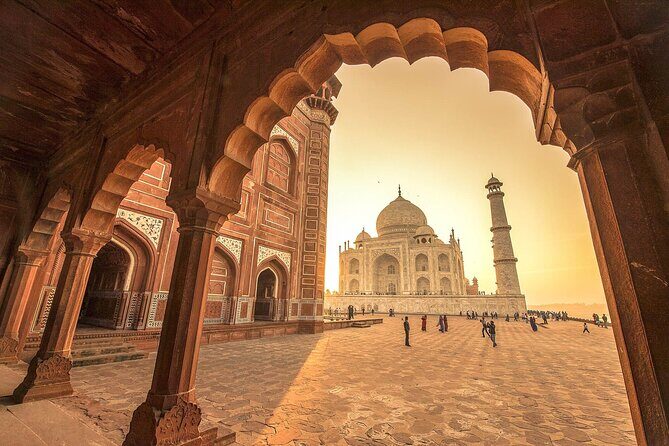
- Taj Mahal at sunrise on Day 3: worth the early start
- The one date issue: Taj Mahal closure on Fridays
- Then it’s off to Jaipur
- Jaipur en route: Fatehpur Sikri and Abhaneri stepwell breaks the trip nicely
- Amber Fort, City Palace, and Jantar Mantar: your full Jaipur “wow” day
- Who you’ll rely on: the guides and the driver make the difference
- Price and value: what $25 covers, and what depends on your options
- Should you book this 5-day Golden Triangle tour?
- FAQ
- How long is the 5 Days Golden Triangle tour?
- Where does the tour start and how do pickups work?
- Is there a live guide on the tour?
- Do I get hotel stays and breakfast included?
- Are monument tickets included?
- Is the Chandni Chowk rickshaw ride included?
- Do you visit the Taj Mahal at sunrise?
- Is free cancellation available?
- Are tips included in the price?
Key highlights to look for
- Old Delhi + New Delhi in one guided day
- Chandni Chowk by rickshaw for market-level views
- Agra sunset viewpoint at Mehtab Bagh
- Taj Mahal sunrise with early morning pickup
- Amber Fort, City Palace, and Jantar Mantar on Day 4
- Hotel and tickets depend on your selected options
The Golden Triangle in 5 Days: Why this route works
You’re basically doing the classic triangle of North India—Delhi, Agra, Jaipur—without losing days to travel logistics. The backbone is simple: you’re picked up, driven in an air-conditioned SUV or sedan, and guided through the big monuments with a live city tour guide.
This style of trip works best when you want high-value sightseeing but don’t want to manage tickets, timing, and transfers. You’ll still move at a human pace, too. For example, the drive from Delhi to Agra is listed as about 200 km / around 3 hours via the Yamuna Expressway, which is long but manageable for a day trip.
One practical bonus: unlimited water and napkins are included, which matters in India where heat can sneak up on you even on “cooler” days. Add in that tolls, fuel, taxes, and parking are covered, and the trip feels more predictable.
And yes, there are optional add-ons (hotels with breakfast, monument tickets, and the rickshaw ride depending on your selected entrances option). That’s not a deal-breaker—it’s just important for value math (more on that later).
You can also read our reviews of more tours and experiences in New Delhi

Delhi Day 1: Jama Masjid, Chandni Chowk, Rajghat, and New Delhi’s icons
Day 1 is a full-on Delhi sampler. Your chauffeur picks you up at about 9:00 am from your hotel in Delhi/Gurgaon/Noida or from the Delhi airport. From there, you’ll roll straight into Old Delhi with a professional guide.
Old Delhi stops that actually make sense together
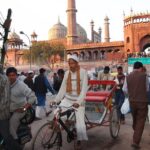
You’ll start at Jama Masjid, then head into the Chandni Chowk area for a rickshaw ride. This is one of the easiest ways to see the market flow without trying to navigate it on foot the whole time. You’ll also get the vibe of Old Delhi by seeing the lanes, stalls, and crowds up close.
After that, you drive past the Red Fort and visit Rajghat. That pairing gives you a contrast: one is a visual reminder of imperial power; the other shifts the mood toward remembrance and reflection.
Then the city changes gear in New Delhi
Once you’re done with Old Delhi, the tour continues into New Delhi for a more monumental, spread-out feel. Expect Humayun’s Tomb, India Gate, and Parliament House.
Then comes a stop that’s both culturally important and very practical: a gurudwara where thousands are fed every day. Even if you don’t plan to eat, it helps to see a place where community service is part of daily life, not a performance for tourists.
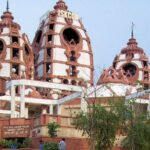
You’ll finish the day with Qutub Minar and Lotus Temple. Qutub Minar is a towering landmark and a great “gravity point” at the end of a sightseeing-heavy day. Lotus Temple adds a different style of calm—simple lines, light-filled interior energy, and a slower feeling than the lanes of Old Delhi.
The real consideration in Delhi: comfort and dress
This day stacks a lot of major sites. You’ll want comfortable shoes and clothes you can adjust for mosque and temple visits. Also, markets can be crowded and noisy—so go in expecting that. It’s part of the fun.






Qutub Minar and Lotus Temple: a sharp contrast in architecture
By the time you reach Qutub Minar and the Lotus Temple, your brain is already full of Delhi. That contrast is useful. Qutub Minar gives you the historic skyline feel—tall, dramatic, and easy to understand from multiple angles as you move around.
Lotus Temple is different: it’s calmer and more modern in mood. It’s a good place to reset for a few minutes before heading back to your hotel for the night.
If you like architecture, this combo is a strong close to Day 1 because it shows how Delhi can shift from ancient monumental form to a contemporary, minimalist spiritual design without changing cities or neighborhoods.
Agra Day 2: Mughal power at Agra Fort, the Baby Taj, and a sunset viewpoint
Day 2 is a travel day with a mission. After breakfast and checkout, you head from Delhi to Agra—again, about 200 km / around 3 hours via the Yamuna Expressway. When you arrive, you check in, freshen up, then meet your guide.
Agra is often treated as a one-day Taj sprint. This itinerary gives you more than that, and that’s what I like. You get a proper arc: power, refined tomb architecture, then a planned sunset view.
Agra Fort: where Mughal life was built
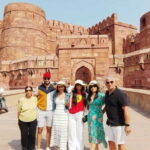
You’ll tour Agra Fort, described here as the residence of the Mughal dynasty, built by Emperor Akbar in 1565 AD. Forts like this reward patience: you’ll spot defensive walls and palace-scale details that help you understand why kings needed more than one kind of space—protection, ceremony, and daily living.
Itmad-ud-Daulah (Baby Taj): a quieter kind of beauty
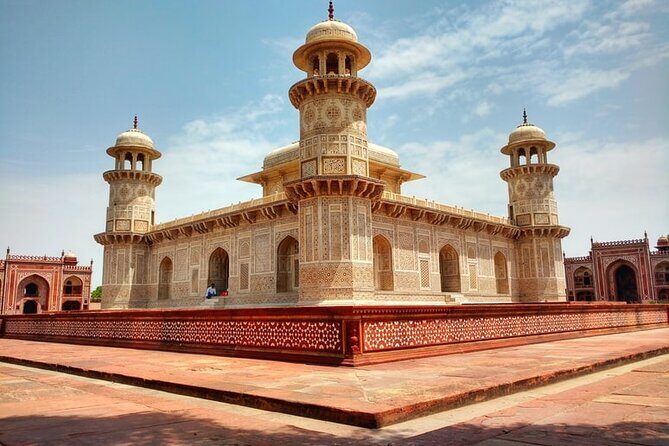
Next is Itmad ud daulah, often called Baby Taj. This stop matters because it lets you see Mughal tomb design before you compare it to the big masterpiece later. If you like gradual learning, this is a smart move.
Mehtab Bagh: the sunset plan
Then you’ll visit Mehtab Bagh (Moon Garden), set up specifically for a sunset view of the Taj Mahal from across the water. Even if you’ve already heard a lot about the Taj, sunset views from a different angle can change how the monument lands in your mind.
Practical note: on Day 2 you’re not chasing sunrise. You’re building context, then closing with the light and atmosphere that make Agra feel cinematic.
Taj Mahal at sunrise on Day 3: worth the early start
Day 3 is the big event. Your guide comes to the hotel to pick you up for Taj Mahal in sunrise. The idea is simple: you arrive before the day gets fully loud and hot, and the Taj is often at its most photogenic when the light first wakes up the marble.
After the visit, you return to the hotel for breakfast. Then comes the next shift: you check out and start the drive toward Jaipur.
The one date issue: Taj Mahal closure on Fridays
This itinerary notes a clear constraint: Taj Mahal remains closed on Friday. Since the plan is sunrise on Day 3, you’ll want to double-check your day-to-day calendar before you lock in your dates. If you’re traveling around a Friday, ask how the route adjusts so you don’t end up with a sad day of waiting.
Then it’s off to Jaipur
Once you’re done with Taj time, the tour continues onward. This is a long day in spirit even if the driving is broken up by key stops. Bring a layer for early morning and keep your water handy.
Jaipur en route: Fatehpur Sikri and Abhaneri stepwell breaks the trip nicely
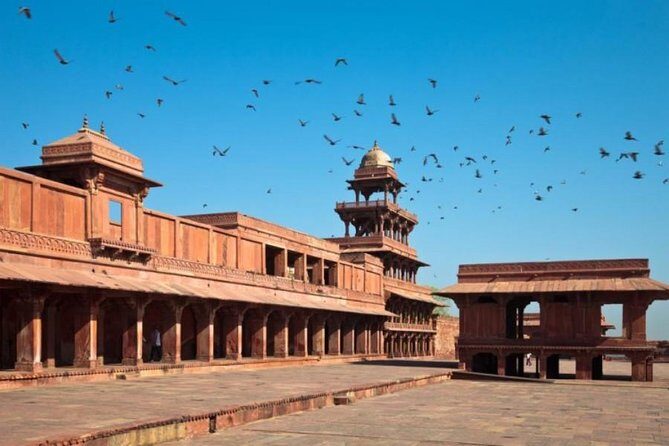
The road between Agra and Jaipur isn’t wasted here. On the way to Jaipur, you’ll stop at Fatehpur Sikri, also described as an abandoned city / ghost city, built by Mughal Emperor Akbar.
Then you’ll visit Abhaneri Step Well, built in the 8th century AD. If you’re the type who likes seeing what most people skip, these two stops help Jaipur feel earned instead of rushed. You’re not just moving between cities; you’re collecting different eras of North Indian architecture.
A good mindset here: expect uneven walking surfaces and some heat. You’ll get the best experience if you slow down, take photos safely, and don’t rush every corner.
Amber Fort, City Palace, and Jantar Mantar: your full Jaipur “wow” day
Day 4 is where Jaipur really shows off. After breakfast, you start with Amber Fort, set in the Aravalli range mountains. This stop is described here as a mix of Indo-Islamic architecture plus gold-plated painting, mirror work, and European architecture influences. That blend is exactly why Amber stands out on a sightseeing list—it feels like multiple worlds stitched into one complex.
Next is City Palace, built by Sawai Jai Singh, where you’ll see the royal collections of the Kachawas dynasty. This stop gives context. Without it, Jaipur’s forts can feel like just walls and views. With it, you start understanding the mindset that produced them.
Then comes Jantar Mantar, a set of nineteen architectural astronomical instruments built by Rajput king Sawai Jai Singh, completed in 1734 CE. The tour specifically notes the world’s largest stone sun dial, and that it’s a UNESCO heritage site. If you like science-history crossovers, this is the most satisfying “not just another palace” stop of the day.
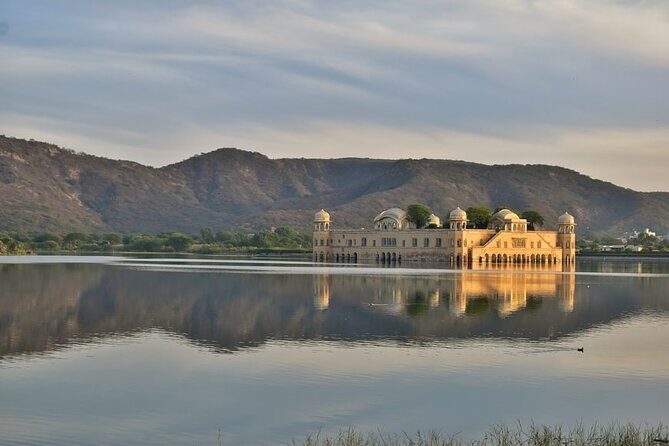
You’ll also have photo stops for Hawa Mahal and Jal Mahal, so you can see famous silhouettes even if you don’t spend a ton of time inside every related structure.
Finally, you can explore local arts in Jaipur. That’s your chance to buy something small that feels like Jaipur, not just a souvenir shelf.
Who you’ll rely on: the guides and the driver make the difference
The tour is private, and you’ll have a live guide. That matters because the stops are famous, but understanding them takes a good explainer.
From the names that come up in feedback, Nameera is praised for attentive service in Jaipur. In Agra, Shahe gets strong mentions for explaining both Agra Fort and the Taj Mahal. Kalim is noted for information-packed guiding and making the experience feel smooth for families, while Kalaam is praised for being very informative around Agra highlights.
And don’t underestimate the driver side. One name that shows up is Guddu, praised for driving well and for helping people feel safe.
Even with a strong guide, do your part: ask quick questions as you go, confirm what time you’re leaving the next morning (especially for sunrise days), and keep expectations realistic—this is a monument-focused circuit.
Price and value: what $25 covers, and what depends on your options
The listed price is $25.00 per person for the 5-day Golden Triangle. On paper, that can look like a steal. The key is how the inclusions are structured here.
Included basics that help your budget:
- A/C sedan/SUV car
- Pickup and drop-off
- Unlimited water and napkins
- Live city tour guide
- All tolls, fuel, taxes, and parking
- Monument tickets if you selected that option
- Hotel with daily breakfast if you selected that option
- Rickshaw ride in Chandni Chowk if the entrances option is selected
- Mobile ticket and group discounts are listed features
Not included:
- Tip/gratuities
So the value call is really about what you select. If you choose the hotel and monument ticket options, you’re essentially paying for a full guided circuit with fewer surprises. If you don’t, you’ll likely still get the drive and guide, but you may need to cover some site costs and meals separately.
My practical advice: before you book, check which option you’re getting for hotel + breakfast and monument tickets. That’s the difference between feeling like a complete package and feeling like you assembled parts of one.
Should you book this 5-day Golden Triangle tour?
Book it if:
- You want a first-timer friendly Golden Triangle that hits Delhi, Agra, and Jaipur in one trip.
- You prefer a guided route that removes the stress of arranging transport between cities.
- You like the idea of sunrise Taj Mahal and a planned Agra sunset viewpoint at Mehtab Bagh.
- You’re okay with a tight schedule and want your days to be full.
Skip it or think twice if:
- You’re traveling on a Friday, since the Taj Mahal is closed.
- You prefer slow travel with long breaks, not monument-to-monument days.
- You don’t want to deal with optional inclusions (hotel, breakfast, monument tickets, and rickshaw ride can depend on what you select).
If you’re aiming for maximum sightseeing in 5 days and you like having a guide answer the why behind the wow, this is a solid choice. Just align your dates with that Friday closure reality, and double-check what’s included in your option set.
FAQ
How long is the 5 Days Golden Triangle tour?
It’s listed as 5 days (approx.).
Where does the tour start and how do pickups work?
The start is Delhi, India. Your chauffer picks you up about 9 am from your hotel in Delhi, Gurgaon, Noida, or from the Delhi airport.
Is there a live guide on the tour?
Yes. The tour includes a live city tour guide.
Do I get hotel stays and breakfast included?
That depends on your selected option: hotel with daily breakfast is included if you choose the option.
Are monument tickets included?
Monument tickets are included if you select the option.
Is the Chandni Chowk rickshaw ride included?
The rickshaw ride in Chandni Chowk is included if the entrances option is selected.
Do you visit the Taj Mahal at sunrise?
Yes. On Day 3 you’ll visit the Taj Mahal at sunrise. Also note: the Taj Mahal remains closed on Fridays.
Is free cancellation available?
Yes. You can cancel for a full refund up to 24 hours in advance of the experience start time.
Are tips included in the price?
No. Tip/gratuities are not included.