REVIEW · NEW DELHI
Delhi: Evening City Tour Of Delhi All Inclusive
Book on Viator →Operated by Bloom India Journeys · Bookable on Viator
Dusk in Delhi feels like a movie. This evening city tour is interesting because it strings together iconic landmarks with a guide, all within a tight window, so you get orientation fast. I especially like the hotel pickup and drop-off (less hassle, more sightseeing), and that entrance fees are handled so the experience stays smooth. One possible drawback: the stops are short, so you’ll mainly get quick looks and photo time rather than long, slow wandering.
I also like the human touch—guides such as Asif, Ana, and Riyaz come across as organized and supportive, with a pace that keeps you from feeling rushed. In the same way, they can turn a simple drive-by into real context, including what you’re looking at and why it matters.
Finally, the practical inclusions add up: an air-conditioned vehicle, bottled water, parking fees, and a mobile ticket. It’s listed as private for your group, which is great if you want your time to stay focused instead of mixed with lots of strangers.
In This Review
- Key Things You’ll Notice About This Evening Tour
- Planning Your Evening: When 2–3 Hours Feels Just Right
- India Gate’s War Memorial Axis: A 35-Minute First Stop That Sets the Tone
- Rashtrapati Bhavan in 15 Minutes: The Presidential Residence From the Outside
- Lodhi Gardens: Tombs in a 90-Acre City Park for a Calmer Pace
- Safdarjung Tomb: A Mughal-Style Finish Near Lodhi Road
- What’s Included (and Why It’s More Than a Checklist)
- The Guide Factor: When Someone Like Asif, Ana, or Riyaz Controls the Pace
- Price and Value: Is $39.69 a Good Deal for Delhi at Night?
- Who Should Book This Evening Loop (and Who Might Skip It)
- Should You Book This Delhi Evening City Tour Of New Delhi All Inclusive?
- FAQ
- How long is the Delhi evening city tour?
- What does hotel pickup and drop-off include?
- Which attractions are visited?
- Is an entrance fee included?
- How long are the stops at each location?
- What’s the price per person?
- Is bottled water provided?
- Do I need to bring a ticket?
- Is this tour private?
- Can I cancel for free?
Key Things You’ll Notice About This Evening Tour
- Hotel pickup and drop-off to cut down your pre-trip logistics
- AC transport and bottled water so the ride stays comfortable
- Entrance fees included so you don’t scramble for tickets
- Four major stops in one loop (India Gate, Rashtrapati Bhavan, Lodhi Gardens, Safdarjung Tomb)
- Short, efficient timing that suits limited evenings and layover schedules
- Guides who slow down for good photos and take care of the details
Planning Your Evening: When 2–3 Hours Feels Just Right
This is a short evening outing, listed at about 2 to 3 hours, and it starts with pickup from your hotel. That structure matters in Delhi, where getting around can eat time. By bundling the sights into one route, you can spend your evening looking—not negotiating.
You’ll likely move in stages: first a quick drive to the opening landmark, then short stops in a planned order, then back to your hotel. Even with breaks built in, keep your expectations realistic: you’re seeing highlights, not everything.
If you’re working with a layover or a strict schedule, the pace can stretch to fit extra time, and that’s where a well-run guide really shows. It’s also a smart tour for first-timers who want a guided route through Delhi’s “greatest hits” without building an itinerary from scratch.
Tip: wear shoes you can walk in comfortably. Even in gardens and memorial areas, the ground can be uneven, and you’ll want to move easily during photo stops.
You can also read our reviews of more city tours in New Delhi


India Gate’s War Memorial Axis: A 35-Minute First Stop That Sets the Tone
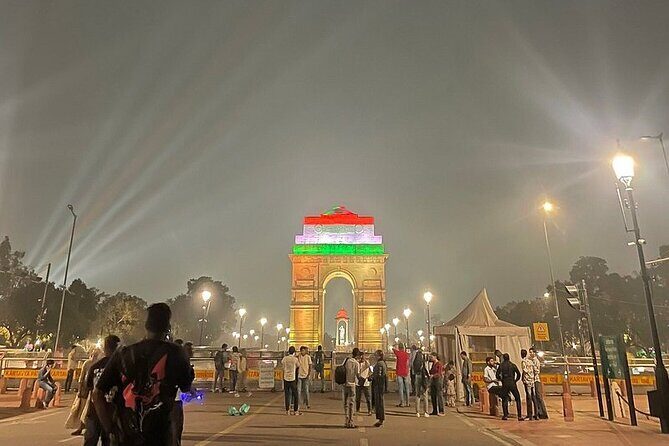
The tour begins (after pickup) with India Gate, and you’re there for about 35 minutes. This isn’t just a big arch for photos—India Gate is the All India War Memorial, sitting astride Rajpath on the eastern edge of New Delhi’s ceremonial axis. That positioning gives it a “you are on the main stage” feel.
What I like about using India Gate as the first stop is the way it gives you orientation. Once you understand the setting—Rajpath, the memorial purpose, the scale—you start noticing the city’s layout in the rest of the evening.
During your time here, you can aim for classic angles and also take a moment to read the memorial context before you rush off. Because the stop is timed, the guide’s job becomes key: they’ll help you look at the right features without you having to guess.
One thing to consider: India Gate is a memorial space, so even if it’s evening and photo-friendly, keep your tone respectful and follow any on-site rules.
Rashtrapati Bhavan in 15 Minutes: The Presidential Residence From the Outside
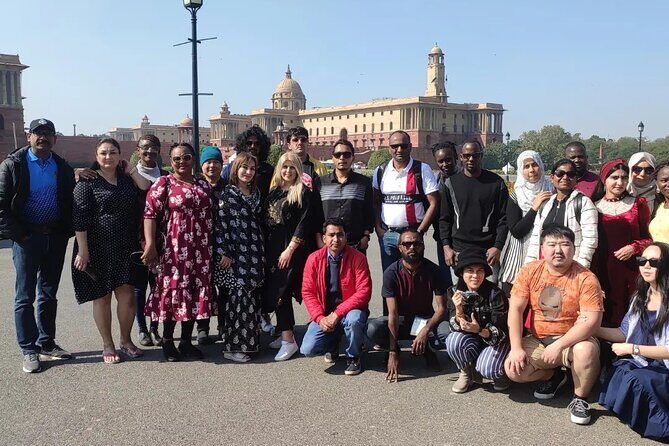
Next up is Rashtrapati Bhavan for around 15 minutes. This is the residence of India’s President, and it’s designed by Sir Edwin Lutyens and Herbert Baker. Even if you only get a short window, the building’s scale and symmetry help you grasp how central this area is to India’s public life.
I like the value of this stop because it connects architecture to politics in a way that feels real, not abstract. The guide can point out what makes the residence emblematic of Indian democracy—its secular, plural, and inclusive traditions—so the visit feels grounded in meaning, not just stone and columns.
Since your stop is brief, you should expect more of a stop-and-view experience rather than a long interior visit. If you’re hoping for a slow museum-style tour, this part might feel a bit short—but that’s also why the overall itinerary works.
Quick consideration: because this is a major official residence, you should be ready for the fact that access and viewing can be limited by local circumstances. The tour still gives you the chance to understand what you’re looking at and where it sits in the larger New Delhi layout.
Lodhi Gardens: Tombs in a 90-Acre City Park for a Calmer Pace
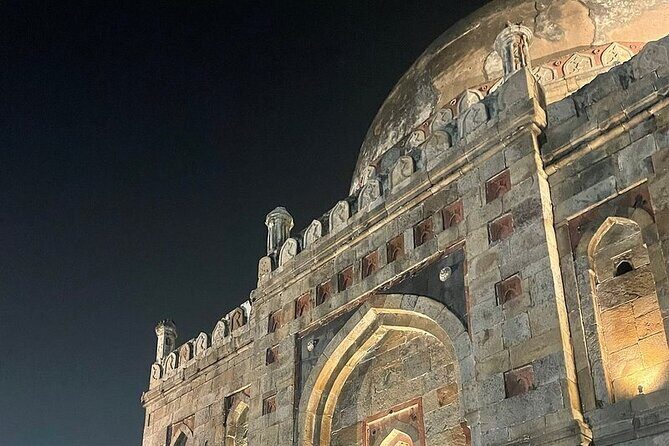
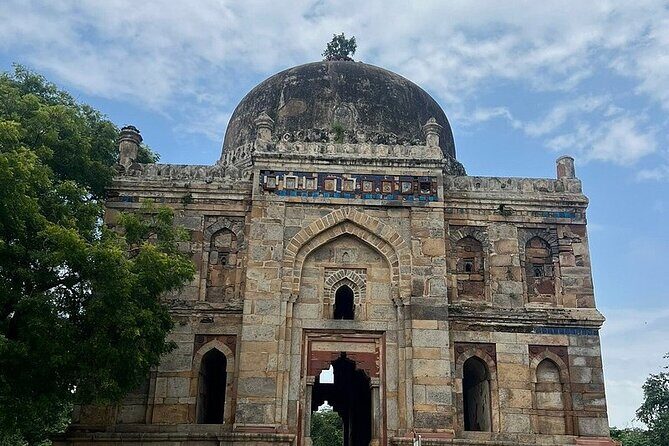
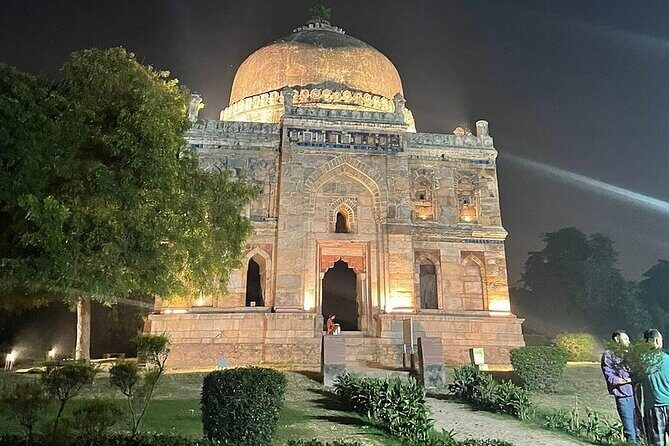
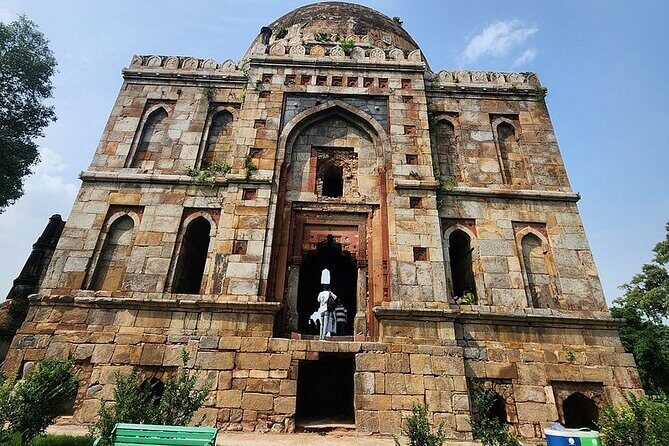
Then you shift from ceremonial monuments to a quieter setting: Lodhi Gardens, about 40 minutes. This is a city park spread across about 90 acres, filled with historic tombs and architectural highlights.
This is the stop I’d call the breath of fresh air in the plan. Instead of moving fast from one monument to the next, you get time in a green space with major monuments inside it. You’ll have a chance to see key structures linked to Mohammed Shah’s Tomb and the Tomb of Sikandar Lodi, plus features like the Shisha Gumbad and Bara Gumbad.
What makes this stop valuable is that it teaches you how Delhi’s history can sit inside everyday life. You’re not just at a standalone attraction—you’re walking through a landscape where time is part of the park’s identity.
A practical note: you might want to slow down here for photos and details. Short stops can cause people to rush, but this is exactly where a good guide helps you notice what’s worth looking at—patterns, shapes, and the names that map to real structures.
If you’re visiting in an evening time slot, it can feel especially pleasant, since the light often turns more forgiving for architecture and stonework.
Safdarjung Tomb: A Mughal-Style Finish Near Lodhi Road
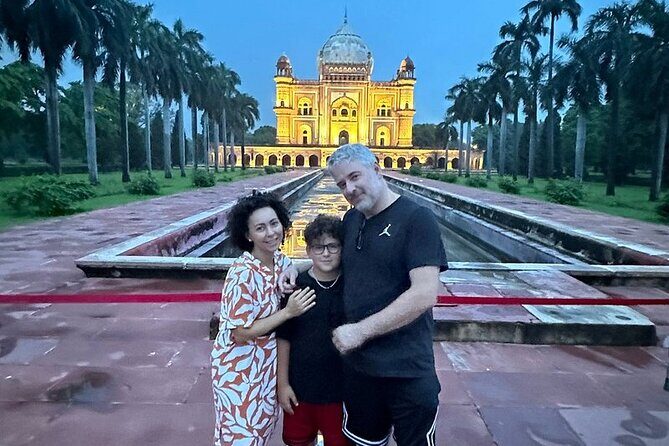
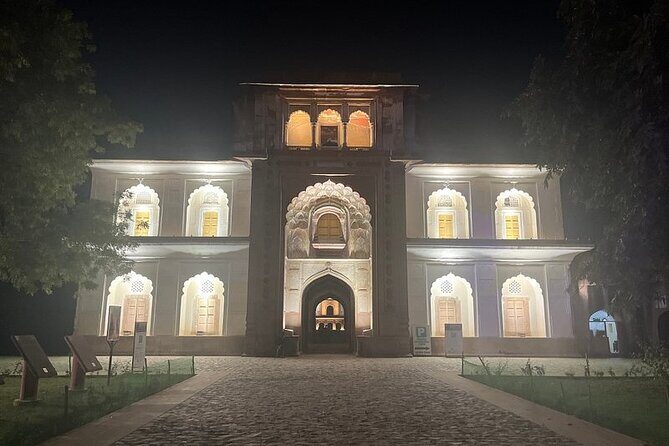
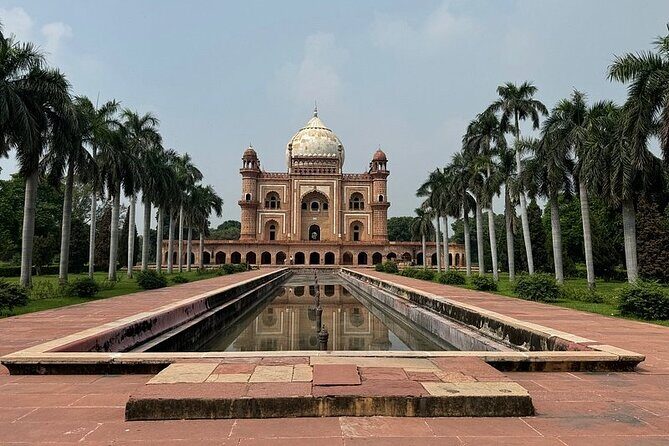
The last major site is Safdarjung Tomb, also about 40 minutes. This tomb is dedicated to Safdar Jang, a ruler of Awadh in medieval India, and it’s located near Safdarjung Airport at the intersection of Lodhi Road and Aurobindo Marg.
I like this stop as a closing moment because it shifts the feel again—into a more focused architectural experience. If India Gate is about scale and civic meaning, and Rashtrapati Bhavan is about grandeur and state symbolism, Safdarjung Tomb becomes about forms you can actually study for a bit before you move on.
The guide’s role matters here. Even without long explanations, you’ll get the story behind the tomb so it doesn’t feel like just another building. When the guide connects Safdar Jang to the larger medieval context, you start seeing why this kind of tomb fits into Delhi’s broader timeline.
One consideration: since it’s near a busy road network and tied to a specific location, the area can feel more functional than scenic. That doesn’t ruin it, but it helps to know what kind of atmosphere you’re walking into—less postcard and more “stop, learn, and photograph thoughtfully.”
You can also read our reviews of more evening experiences in New Delhi




What’s Included (and Why It’s More Than a Checklist)
This tour is priced at $39.69 per person, and it’s structured to reduce decision fatigue. You’re not coordinating tickets, hunting for transport, or calculating small expenses mid-day.
Here’s what’s included, and what it practically means:
- Air-conditioned vehicle: Delhi evenings can still be warm, and traffic can stretch your ride. AC helps your energy last through all four stops.
- Tour guide: You’re getting context built into the route, not just a ride with random time stops.
- Entrance fees included: This matters for a city where tickets can interrupt your flow.
- Parking fees: You’re not dealing with odd add-ons.
- Hotel pickup and drop-off: Less stress, especially if you’re unfamiliar with routes.
- Bottled water: A small inclusion that helps you stay comfortable through walking and stops.
You also get a mobile ticket, and the tour offers group discounts. The tour is listed as private for your group, meaning your experience won’t be shared in the same way a very large group tour might be.
Overall, the inclusions turn this from a “try to plan your own highlights” into a guided, timed circuit.
The Guide Factor: When Someone Like Asif, Ana, or Riyaz Controls the Pace
The strongest praise across the experience is how the guide shapes the whole outing. Names that stood out include Asif, Ana, and Riyaz—each mentioned for being friendly, organized, and good at explaining what you’re seeing.
I like this because it shows the difference between just visiting landmarks and actually understanding them in the moment. When a guide takes their time at each stop, you’re more likely to get good photos, learn the key story beats, and avoid the common problem of rushing through major sights without knowing what they are.
A theme I’d pay attention to: guides on this tour are described as making you feel safe and supported, and also as taking pictures so you can relax instead of constantly juggling your phone and angles. Another helpful detail from the experience style: you may also get some attention to lesser-known spots in Delhi, not just the top icons.
One more thing: if you have limited time, guide-led timing is everything. The itinerary is compact by design, so a guide who knows how to keep things organized can make the difference between an okay evening and a memorable one.
Price and Value: Is $39.69 a Good Deal for Delhi at Night?
Let’s talk value in a grounded way. At $39.69 per person, you’re paying for a full evening circuit: pickup/drop-off, AC vehicle, a guide, multiple entrance fees, parking fees, and bottled water.
The best way to judge value here is to compare the parts you’d normally have to arrange yourself:
- If you pay for transport plus multiple entry tickets plus a guide, costs add up quickly.
- The tour handles the timing, which is hard to do on your own when you’re unsure of routes.
- You get a pre-planned sequence, which is ideal for short evenings.
If you’re comfortable navigating Delhi on your own, you could build a DIY route. But if you want to reduce effort and keep your focus on seeing, this price starts to make sense fast—especially because entrance fees are part of the deal.
My advice: treat this as a “high-efficiency orientation tour.” You’re not buying a long, in-depth day program; you’re buying a well-run evening circuit that covers key highlights.
Who Should Book This Evening Loop (and Who Might Skip It)
This tour fits best if you want:
- A guided introduction to New Delhi’s major landmarks
- A night plan that doesn’t require ticket planning
- A comfortable route with hotel pickup and AC transport
- Short stops that still feel meaningful because a guide explains them
It may be less ideal if you want:
- Long stays, slow pacing, or deep museum-style time
- Lots of interior access at every stop
- A purely independent schedule
The tour is listed so that most travelers can participate, so it’s generally friendly for a wide range of visitors. Just keep your expectations aligned with the timing: you’re seeing four headline sites, and you’ll spend enough time to understand them without turning it into a full day.
Should You Book This Delhi Evening City Tour Of New Delhi All Inclusive?
I’d book it if your goal is a smooth, well-timed evening where you see India Gate, Rashtrapati Bhavan, Lodhi Gardens, and Safdarjung Tomb with less friction than DIY. The combination of hotel pickup, AC transport, included entrance fees, and a guide makes it feel like a practical shortcut to real context.
If you’re the type who loves photo stops but also wants to know what you’re photographing, this route works well. And if you appreciate guides who manage pacing—so you don’t feel lost or left behind—this tour’s style should suit you.
One last practical note: it’s listed with free cancellation up to 24 hours in advance, so you’re not taking a big risk if your plans change.
FAQ
How long is the Delhi evening city tour?
It’s listed at 2 to 3 hours (approx.).
What does hotel pickup and drop-off include?
You’ll be picked up from your hotel and returned after the tour.
Which attractions are visited?
You’ll stop at India Gate, Rashtrapati Bhavan, Lodhi Garden, and Safdarjung Tomb.
Is an entrance fee included?
Yes. Entrance fees are included for the stops where tickets are required.
How long are the stops at each location?
India Gate is about 35 minutes, Rashtrapati Bhavan about 15 minutes, Lodhi Garden about 40 minutes, and Safdarjung Tomb about 40 minutes.
What’s the price per person?
The price is $39.69 per person.
Is bottled water provided?
Yes, bottled water is included.
Do I need to bring a ticket?
You get a mobile ticket.
Is this tour private?
It’s listed as a private tour/activity, meaning only your group participates.
Can I cancel for free?
Yes. Free cancellation is available up to 24 hours before the experience starts for a full refund.