REVIEW · AMRITSAR
From Amritsar: Wagah Border Day Trip
Book on GetYourGuide →Operated by Taj Voyages Tour - TVT India · Bookable on GetYourGuide
Two borders, one full day.
This Amritsar day trip strings together two big emotional hits: Gurudwara Sri Harmandir Sahib and the nightly Wagah ceremony. I love that the Golden Temple stop is not just photo time, it also puts you inside the flow of the langar (the free community kitchen). I also love the energy at Wagah, where the Indian and Pakistani border ritual feels loud, dramatic, and very real. One thing to consider: service quality can vary depending on the driver and guide, so you may want to set clear expectations for explanations and timing.
You’ll move around in an air-conditioned van with hotel pickup and drop-off, in a small group capped at 10. The day runs about 8 hours, with guided time at the major stops, lunch in between, and a planned evening return after the ceremony. Add in street-level Amritsar shopping and the classic thick, creamy lassi served in traditional clay cups, and you get a day that feels both structured and local.
In This Review
- Key things I’d circle before you go
- Golden Temple, langar, and the calm that hits before the noise
- Jallianwala Bagh and Amritsar streets: remembrance plus shopping time
- Punjabi fort and a Golden-Temple-like Hindu shrine stop
- Lunch, thick lassi in clay cups, and planning for the evening ceremony
- Wagah Border beating retreat: how to watch the show without losing the meaning
- Price, small-group value, and the one risk to manage
- Should you book the Wagah Border day trip?
- FAQ
- How long is the Wagah Border Day Trip from Amritsar?
- What’s included in the price?
- Are monument or entry fees included?
- Is this tour a small group?
- Do you get an English-speaking guide?
- Is alcohol allowed on this tour?
- Is the tour suitable for pregnant women?
Key things I’d circle before you go
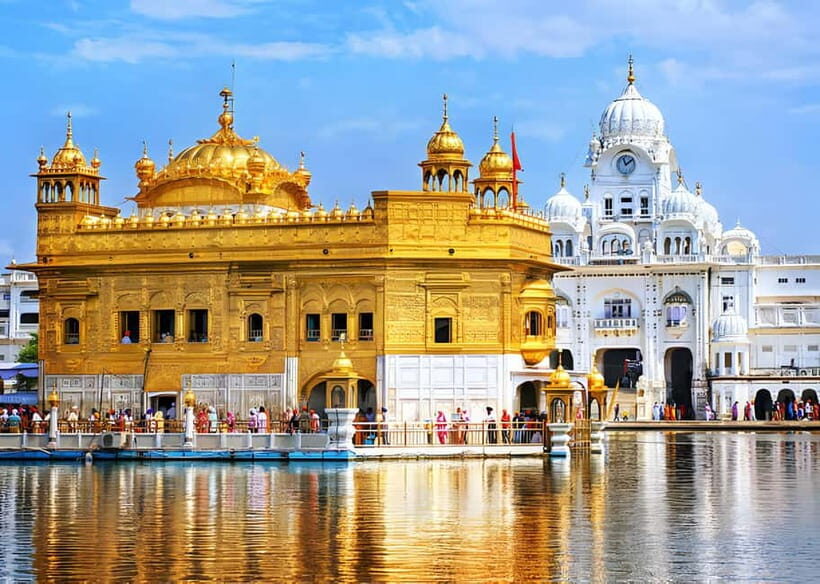
- Golden Temple with langar energy: guided time on one of the most visited Sikh holy sites in India.
- Jallianwala Bagh as a true memorial stop: you pause at a nationally significant historic garden and remembrance space.
- Punjabi culture stops between big sights: a historic fort focused on Punjabi culture and history, plus a Hindu temple that resembles the Golden Temple.
- Real Amritsar flavors: lunch time plus the must-try thick, creamy lassi in clay cups.
- Wagah Border with the beating retreat: an evening ceremony that mixes military performance with crowd emotion.
- Small-group pacing: limited to 10 people, which helps when you’re threading through crowds and traffic.
Golden Temple, langar, and the calm that hits before the noise
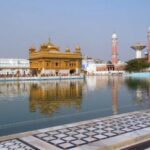
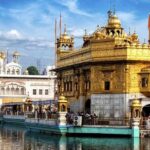
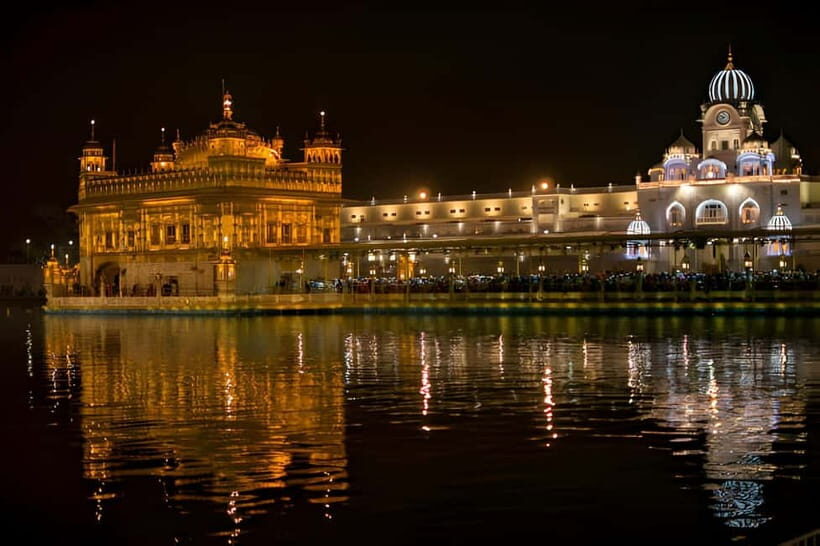
Your day starts in Amritsar with morning pickup, then a straight shot toward the Golden Temple complex, known as Gurudwara Sri Harmandir Sahib. This is one of those places where the scale is hard to understand until you’re there: millions of people visit each year, and the campus runs like a well-practiced rhythm.
The best part of the stop for me is how the experience isn’t only about the building. You’ll also get a guided look at the huge community kitchen, where free meals are served to about a lakh people every day. That detail matters because it changes how you see the whole place. Instead of treating the temple as a landmark, it feels like a system built for daily life, not only for special occasions.
You’ll also spend roughly 2 hours on the guided sightseeing portion, which is long enough to take in the main sights without feeling like you’re being rushed through. If entry fees apply at a specific monument later in the day, those are not included, but the Golden Temple experience itself is handled as part of your guided time.
Tip for making the most of this morning: go in ready to slow down. The Golden Temple is not the kind of place where speed helps. If you’re the type who likes details, you’ll get a lot out of the guided explanation before you move on.
You can also read our reviews of more tours and experiences in Amritsar


Jallianwala Bagh and Amritsar streets: remembrance plus shopping time
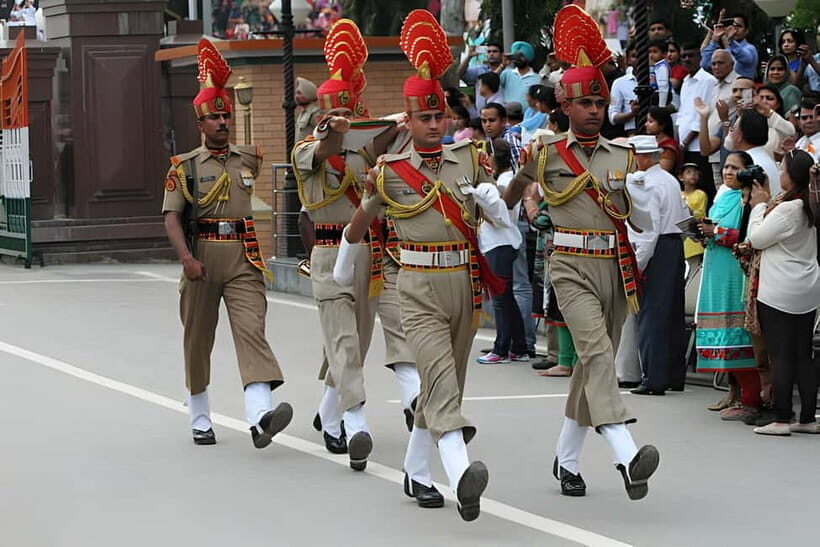
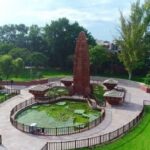
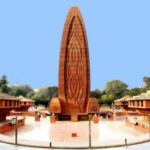
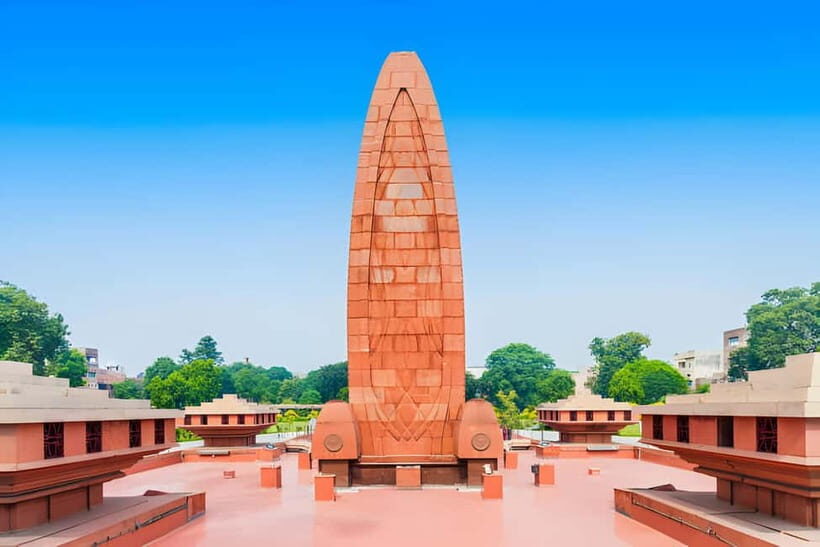
After you leave the Golden Temple area, the next stop shifts tone. Jallianwala Bagh is a nationally significant historic garden and memorial, and it’s one of the places in Amritsar where history sits in the open, not in a museum display case.
From a pacing point of view, this stop works well because it creates a contrast. You start the morning with spiritual focus and community service, then you move into remembrance. That balance makes the rest of the day feel less like a checklist.
Once you’re done there, lunch comes next, followed by time to wander the streets and shop. This is where Amritsar shows off what it’s famous for: shopping. You’ll have guided time set aside, but you’ll also get enough freedom to browse at your own pace instead of only moving with the group.
What to watch for: shopping time can eat attention fast. If you’re planning to buy gifts or local items, decide early what you want, and keep your energy for the evening ceremony ahead. You’ll be on your feet at multiple stops, and Wagah requires a good mood and patience.
Also, keep in mind this day mixes serious remembrance and loud evening spectacle. If you’re sensitive to heavy history, give yourself a quiet minute at the memorial before you head to lunch.
Punjabi fort and a Golden-Temple-like Hindu shrine stop
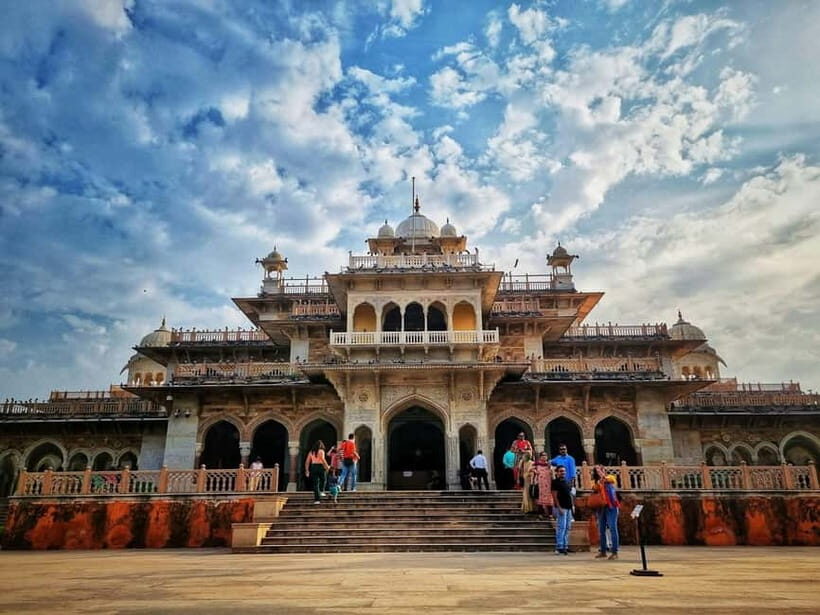
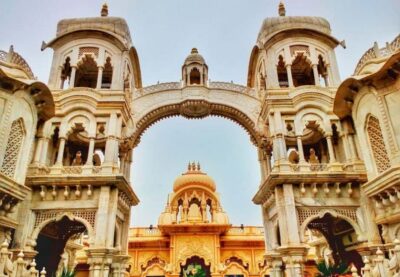
In between the major anchors, this tour includes additional cultural stops. You’ll visit a historic fort tied to Punjabi culture and history. You’ll also see a Hindu temple that resembles the Golden Temple.
Those details are small on paper, but they do something useful for the day. They break the schedule into more than just two big-name attractions. Instead of feeling like a straight line from the Golden Temple to Wagah, you get a chance to notice how different traditions and storytelling styles sit side by side in Punjab.
Because the exact sites aren’t named in the core tour description, I suggest thinking of these as context stops. They’re meant to help you connect what you saw earlier (the religious architecture and community focus) with the wider cultural landscape you’re traveling through.
This part of the day is also where your guide’s English explanations matter. If your guide is good at putting places into words, you’ll get more out of these stops than you would from photos alone. If the communication is weak, these segments can feel like “more stops, less meaning,” so it helps to keep your expectations realistic.
Lunch, thick lassi in clay cups, and planning for the evening ceremony
Punjabi food is part of the program, and lunch is built in as a full 1-hour block. This is your chance to reset, eat something you can actually enjoy after a busy morning, and refuel before the border ceremony.
The tour’s highlight beverage is thick, creamy lassi served in traditional clay cups. That’s one of those details that turns a generic food stop into a real local memory. Clay cups also mean the drink feels special even if you’ve had lassi before, because it’s tied to the traditional way it’s served.
For me, the value here is timing. You’re not eating when you’re exhausted and rushed. You’ve got a set window, and you can eat with enough breathing room to enjoy it rather than just survive it.
How to make this part of the day work for you:
- Eat enough that you won’t be shaky during the ceremony.
- Keep an eye on your schedule so you arrive at Wagah with energy, not with a rushed stomach.
- If you’re a picky eater, you’ll still have a lunch slot, but I’d personally treat it as a “Punjabi food first” moment and aim for something simple.
One more note: alcohol and drugs are not allowed on the tour. That’s a helpful boundary for a family-friendly, event-focused day, but it also means you should plan to stick to water or soft drinks if that matters to you.
Wagah Border beating retreat: how to watch the show without losing the meaning
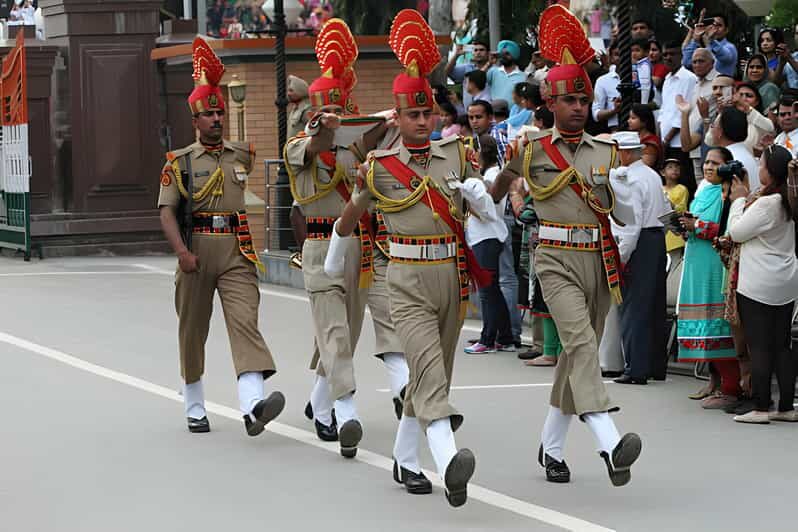
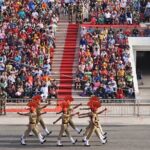
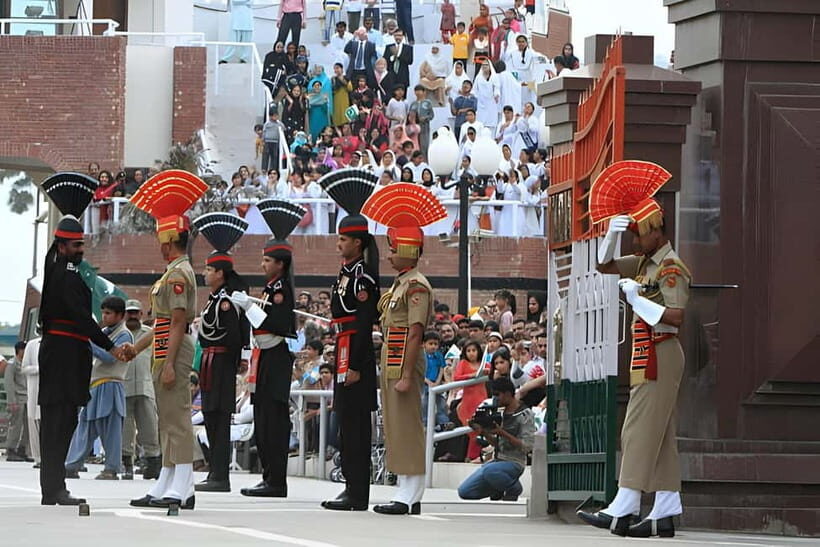
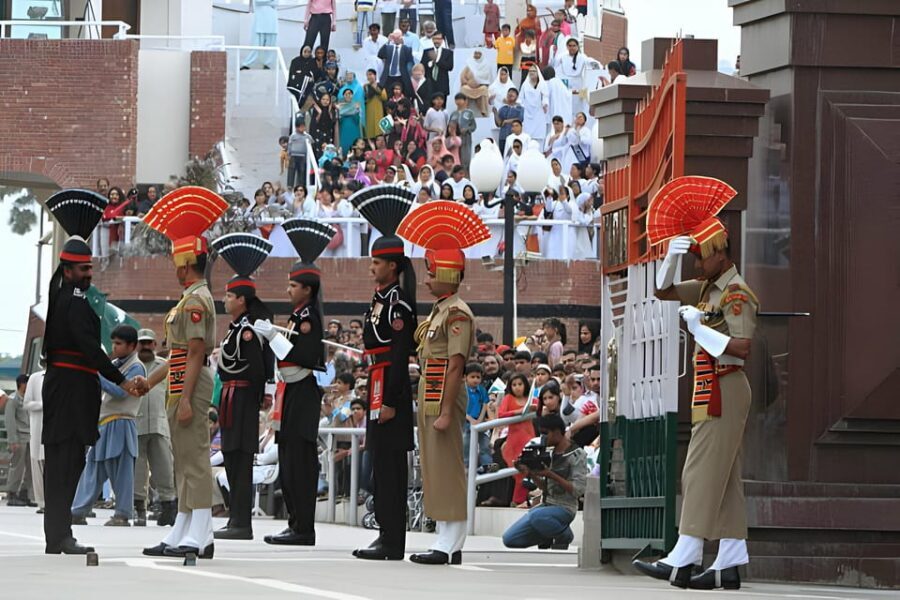
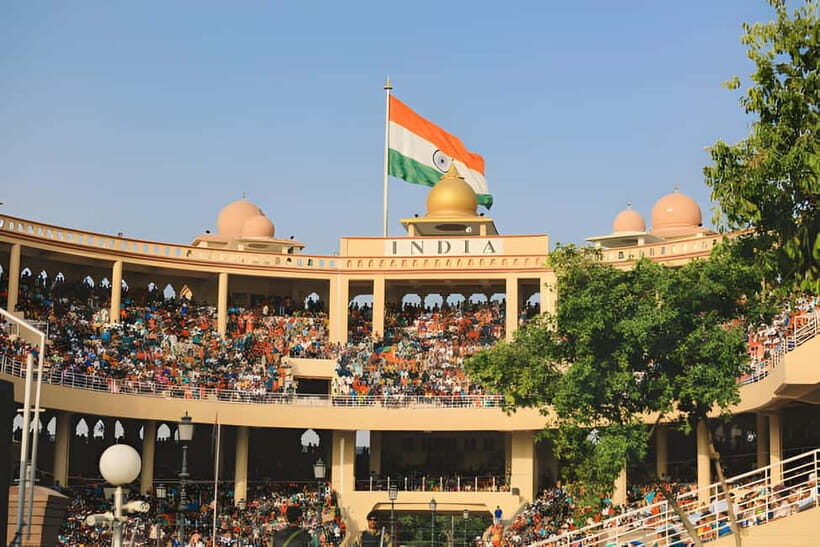
Wagah is the emotional peak of the day. The border between India and Pakistan turns into a daily performance ritual known for the beating retreat ceremony in the evening. This is where the Indian Army performances and the crowd’s reaction take center stage, with nationalistic music and lots of audience energy.
The ceremony is intense, but it’s also structured. Your tour includes guided time and sightseeing here for about 3 hours, which is long enough to get oriented and settle into your viewing position. This matters because the border setup can feel like organized chaos from a distance. You’ll want that time to get your bearings, especially if it’s your first time.
A big practical reason to come with a guide: you’re not just watching. You’re also hearing the context. When the guide explains what’s happening and why it matters, the ceremony stops being only spectacle. It becomes a window into how both sides stage ceremony and control at the same physical location.
One extra bonus you might find in some versions of this outing is a stop near the Partition Museum area. It’s the kind of place that can pull the day back toward reflection, especially after a loud ceremony. If it’s offered on your exact departure, it’s worth considering.
Just remember the tone shift. Wagah is dramatic and crowd-driven. If you want a quieter moment, take it in earlier, like at Jallianwala Bagh, and don’t expect Wagah to feel like a museum. It’s performance, with history in the background.





Price, small-group value, and the one risk to manage
At $32 per person for an 8-hour day with hotel pickup/drop-off and air-conditioned transportation, this trip is priced like a solid “organized access” deal. You’re not only paying for the vehicles. You’re paying for guided sightseeing, a live English tour guide, and the structure that helps you fit multiple major stops into one day.
Here’s what the price likely covers:
- Transportation (air-conditioned) plus parking and taxes
- Pickup and drop-off from your accommodation
- Guided time at the main stops
- Skip-the-ticket-line support where applicable
Entry fees to monuments are not included, so if a later stop has a ticket price, you’ll pay that separately.
The small-group limit of 10 is also part of the value. In a crowd-filled city like Amritsar, smaller groups usually mean less waiting and fewer people to manage at each stop. That can make the day feel smoother, especially at Wagah.
Now for the real risk: tour quality can depend heavily on your driver and guide. One day might feel like clear explanations and good pacing; another day might feel like basic transportation with limited guidance. If you care about commentary (history, what you’re seeing, why it matters), I’d prioritize tours like this that explicitly list live English guiding. Then, when you meet your team, ask for a quick plan: what time you’ll be at each stop and how the schedule handles lunch and the border viewing.
Also, this tour is not suitable for pregnant women, and alcohol and drugs are not allowed. Keep those limits in mind for a comfortable day.
Should you book the Wagah Border day trip?
Book it if you want one day that covers both spiritual Amritsar and the loud evening ceremony at Wagah, and you’re happy to follow a timed plan with a small group. The combination of Golden Temple guided time, Jallianwala Bagh remembrance, Punjabi lunch, clay-cup lassi, and the beating retreat show is the kind of packed itinerary that works best with a guide and transport lined up.
Skip or reconsider if you strongly prefer total independence, or if your top priority is deep, consistent guiding throughout the day. Because service quality can vary, I’d go in with realistic expectations and be ready to advocate for clear explanations if they’re not offered right away.
FAQ
How long is the Wagah Border Day Trip from Amritsar?
The duration is 8 hours.
What’s included in the price?
Hotel pickup and drop-off, air-conditioned transportation, and all taxes and parking are included. A live English tour guide and skip-the-ticket-line support are also part of the experience.
Are monument or entry fees included?
No. Entry fees to monuments are not included.
Is this tour a small group?
Yes. The group is limited to 10 participants.
Do you get an English-speaking guide?
Yes, the tour includes a live tour guide in English.
Is alcohol allowed on this tour?
No. Alcohol and drugs are not allowed.
Is the tour suitable for pregnant women?
No, it’s not suitable for pregnant women.
##