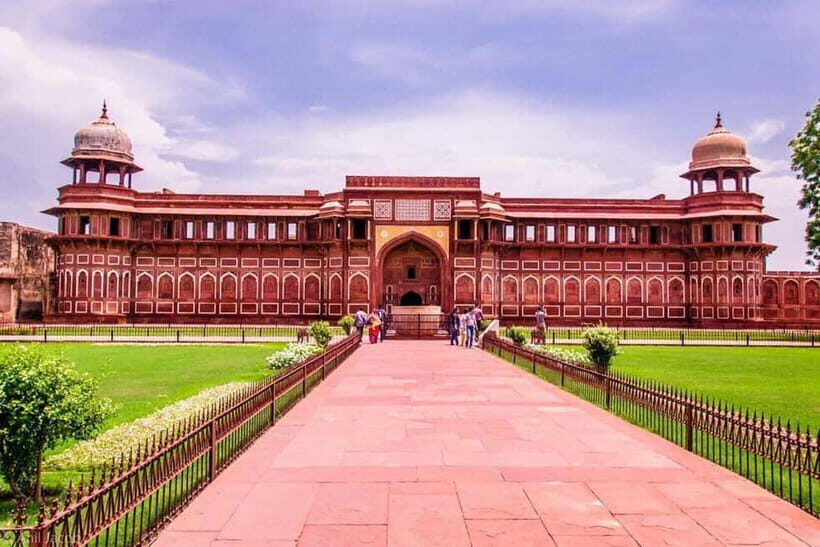
REVIEW · NEW DELHI
Delhi: Best 4 to 8 hour Old and New Delhi City Tour-All Inclusive
Book on Viator →Operated by Tajmahal Tour Holidays · Bookable on Viator
Delhi in one day feels oddly manageable. You get the Old + New Delhi contrast fast: start at Qutub Minar, swing through New Delhi landmarks like India Gate and Parliament, then finish in Old Delhi with Jama Masjid, a stepwell visit, and Chandni Chowk. It works because the day is guided and timed, not just a list of places you rush through.
I love two things most. First, the mix of major sights that are genuinely different from each other—Qutub Minar and Humayun’s Tomb bring UNESCO-level scale, then the temples and mosques shift the mood completely. Second, I like the practical comfort: an air-conditioned car with driver and bottled water keeps the transfers easier, and the rickshaw ride gives you Old Delhi flavor without needing a full day of navigating streets.
One consideration: it is a time-packed route, so you may not have long lingering moments at every corner. Also, entry fees depend on whether you choose the all-inclusive monument ticket option, so check that before you arrive and assume everything is covered.
In This Review
- Key highlights to look for
- Why This Old-and-New Delhi Mix Works in 4 to 8 Hours
- Getting Around: AC Car, Pickup, and a Pace That Doesn’t Feel Chaotic
- Qutub Minar: Seeing Delhi’s Towering Brick Minaret Up Close
- Humayun’s Tomb: The First Garden Tomb Feeling in UNESCO Style
- New Delhi Stops: India Gate and Parliament Photo Moments
- Lotus Temple: A Quiet Break That Changes the Mood
- Jama Masjid: Old Delhi’s Monumental Mosque and Courtyard Time
- Agrasen Ki Baoli: The Stepwell Detour Most People Skip
- Chandni Chowk and the Included Rickshaw Ride: Old Delhi Energy Without the Stress
- Guide Quality Makes the Day: From Anil to Adil to Singh
- Price and Value: What $19 Gets You (and When the All-Inclusive Option Matters)
- Who Should Book This Tour, and Who Might Want a Different Plan
- Should You Book This Old-and-New Delhi City Tour?
- FAQ
- How long is the Delhi Old and New City Tour?
- Where does the tour take place?
- Is pickup included?
- What’s included in the tour besides transportation?
- Which sites are included in the route?
- Are there any stops with free admission?
- Is this tour private?
- How do you receive tickets?
- What is the cancellation policy?
Key highlights to look for
- Qutub Minar and Humayun’s Tomb together: two UNESCO stops that bookend the day with big-time architecture and a calm garden setting
- India Gate and photo stops in New Delhi: quick, easy landmark moments with minimal walking
- Lotus Temple plus Jama Masjid: two faith-focused sites that feel very different, side-by-side in one day
- Agrasen Ki Baoli stepwell: a rare, quietly dramatic 14th-century detour with lots of atmosphere
- Chandni Chowk with rickshaw ride: shopping and street life, plus a fun way to get oriented
- Guide-led flow with included water and parking: makes the day smoother than self-planning
Why This Old-and-New Delhi Mix Works in 4 to 8 Hours

This tour is built for one very specific problem: Delhi is huge, and your first day can easily turn into buses, taxis, and indecision. Here, I like that you get a clear storyline. The day starts with UNESCO landmarks, moves into New Delhi’s ceremonial center, then drops you into Old Delhi’s markets and monumental mosque courtyard.
The smart part is how the route balances heavy hitters with lighter stops. You don’t just pile on monuments; you also get short windows for photos, walking, and atmosphere—enough time to feel the place without turning your day into a marathon.
And that Old-to-New transition is not just geography. Qutub Minar and Humayun’s Tomb give you brick-and-stone history and symmetry. Then Lotus Temple brings a calm, modern spiritual vibe. Finally, Jama Masjid and Chandni Chowk shift you into the daily rhythm of Delhi—noise, movement, and people doing everyday things.
If you want the highlights but still like to breathe and look around, this is a solid way to do it.
You can also read our reviews of more city tours in New Delhi


Getting Around: AC Car, Pickup, and a Pace That Doesn’t Feel Chaotic
You’re picked up with pickup offered, and you ride in an air-conditioned car with a driver. That detail matters more in Delhi than you might expect. Even when you are excited, heat and traffic can drain your energy fast. Bottled water is included, so you can keep going instead of hunting for refills every couple of hours.
The schedule runs about 4 to 8 hours, which gives flexibility depending on traffic and how much you want to linger. The stops are timed (for example, around 45 minutes at Qutub Minar and Humayun’s Tomb), so you’re not left standing around wondering what comes next.
One more practical win: parking and taxes are included, which removes the small stress of figuring out where to meet the guide, where to queue, and how to move efficiently between areas.
The only downside is that the day is structured. If you fall in love with one site and want to stay for an extra hour, you’ll feel the schedule nudging you onward.
Qutub Minar: Seeing Delhi’s Towering Brick Minaret Up Close
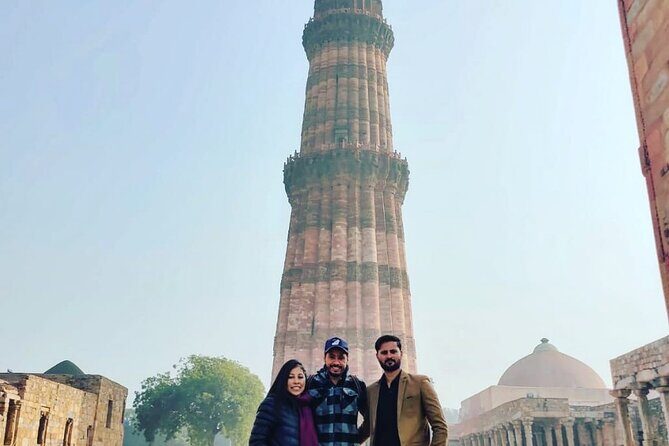
Qutub Minar is stop one for a reason. It is the tallest brick minaret, built starting in 1192, and it’s part of the Qutub complex within a UNESCO World Heritage Site area. Even if you are not a history nerd, the scale is the hook. The tower keeps drawing your eyes upward, and the surrounding complex gives you plenty of angles for photos.
You get roughly 45 minutes here, plus the tour includes the admission ticket (in the version that includes monument tickets, see the ticket note later). With a guide, the time feels more useful because you know what to notice: the craftsmanship, the overall layout, and why the Qutub complex is such an important stop.
What I’d recommend for your visit: look at the tower from more than one spot. The minaret looks different depending on where you stand, and you’ll start spotting the design logic rather than just admiring the height.
If you’re coming to Delhi for the first time and want one “wow” moment early, Qutub Minar is it.
Humayun’s Tomb: The First Garden Tomb Feeling in UNESCO Style

Next is Humayun’s Tomb, also UNESCO-listed and often described as the first garden tomb of India. It’s associated with Mughal Emperor Humayun, and the purpose of the tomb is tied to his wife’s decision after his death.
You have about 45 minutes here, which is a good amount of time for a garden tomb. You can walk through the spaces slowly, stop for photos, and still have time to take in the layout without rushing.
This is one of those places where your guide’s explanations make a real difference. The architecture works like a visual map. Once you understand the “why” behind the setting, the garden-and-tomb concept stops feeling like a name and starts feeling like an experience.
My practical tip: go in expecting a calmer pace than at Qutub Minar. If you’ve been sweating through the morning, this stop gives your eyes and shoulders a break.
New Delhi Stops: India Gate and Parliament Photo Moments
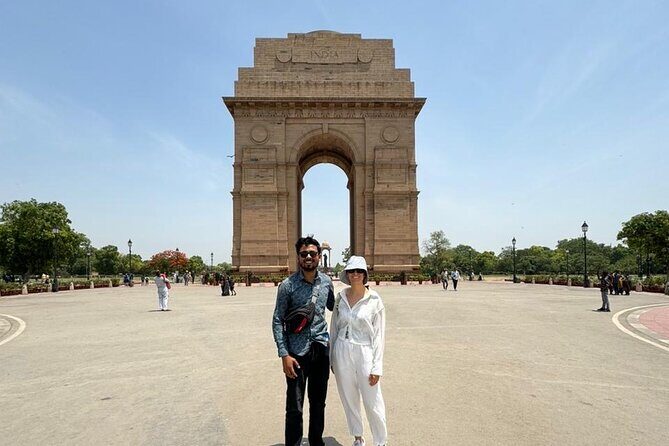
After the UNESCO sites, the tour shifts into New Delhi. India Gate is quick but meaningful. It includes the Tomb of the Unknown Soldier, with names of 13,300 Indian army servicemen carved on the wall who died during the First World War. The stop is around 15 minutes, and admission here is free.
This is not a long visit, but it’s a powerful one if you take a moment to read or at least stand close enough to see the names. Even a short pause can change the vibe of the day.
Then you’ll drive past Parliament House and get a chance for photos. Time here is also about 15 minutes and it’s free for the photo stop. The route also goes by the Presidential House, since the tour includes passing major New Delhi government landmarks before returning toward your accommodation.
If you like efficiency, these are good stops. Minimal walking, easy photo opportunities, and a sense of how Delhi looks when it acts like a capital city.






Lotus Temple: A Quiet Break That Changes the Mood
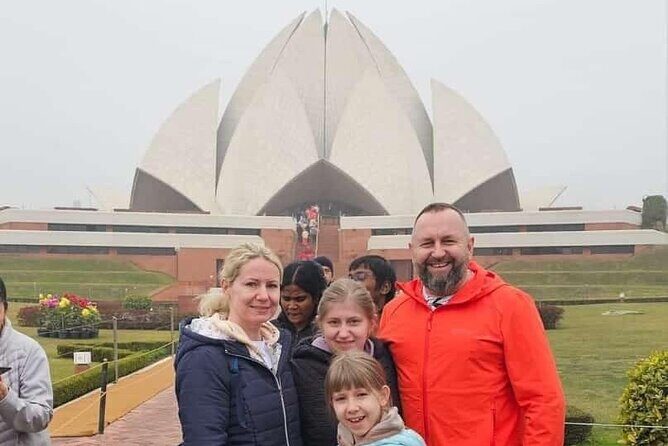
Lotus Temple is one of those places that feels different the moment you arrive. It’s famous for its lotus-like shape, designed to reflect the beauty and symmetry of the lotus flower, which is meaningful across several Eastern and Indian faith traditions—including the Bahá’í Faith.
You get about 45 minutes, and admission is included in the ticket-covered option. This is a great reset between Old Delhi’s crowds and New Delhi’s broad avenues. The atmosphere is more open and calm, and it often feels like you can finally slow down your thinking.
What to do with your time: step back and watch how people move through the space. It’s not just architecture; it’s also how the setting invites a quieter kind of attention.
If you are traveling with someone who prefers moments of calm—not only monuments—Lotus Temple is often the stop that helps everyone agree the day was worth it.
Jama Masjid: Old Delhi’s Monumental Mosque and Courtyard Time
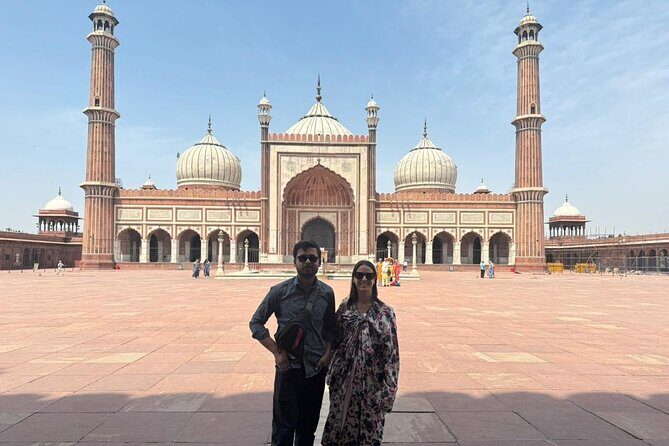
Then you head into Old Delhi with Jama Masjid. This is a major one: it’s described as the largest mosque in India, built in 1656 with the help of 5,000 workers. You’ll spend about 30 minutes here, and admission is included in the ticket-covered option.
It sits in front of the royal residence area associated with Red Fort, which makes the mosque feel like part of a larger historical picture rather than a standalone building. In the courtyard, you can walk around, take in the scale, and get a real sense of how the space functions.
The only caution I’d give: keep your expectations realistic about time and movement. Old Delhi sites can be busy, and you may not want to treat it like a quiet museum visit. Instead, treat it like a live place—look, listen, and enjoy the fact that the city is still in use.
Jama Masjid is a strong Old Delhi anchor.
Agrasen Ki Baoli: The Stepwell Detour Most People Skip
Agrasen Ki Baoli is a short stop, but it’s memorable. It’s a historic stepwell in the heart of Delhi, built in the 14th century by Maharaja Agrasen. The description notes there are 103 steps, and you’ll have around 15 minutes here, with admission free.
This is the kind of place that rewards a pause. Stepwells are not just structures; they’re clues to how cities handled water, design, and daily life long before modern plumbing.
Because it is short, it won’t dominate your day. Instead, it gives you a different flavor of Delhi history—one that’s less about big royal monuments and more about practical engineering and architecture.
If you like variety in your stops, don’t skip this one.
Chandni Chowk and the Included Rickshaw Ride: Old Delhi Energy Without the Stress
Chandni Chowk is where Old Delhi turns into something you can feel in your chest. The tour includes about 30 minutes at the market area, with admission described as free for this part. It’s known as one of Delhi’s oldest and most iconic marketplaces, where you can shop and eat.
But the real value here is the combo: you also get a rickshaw ride in Old Delhi. That matters because navigating crowded areas on foot can be slow and confusing, especially if you don’t know where the lanes lead.
With the rickshaw included, you get a guided-style way to experience street life while still leaving time to explore on your feet. You’re not just viewing from outside a bus window; you’re moving through the neighborhood.
Practical tip: if you plan to snack, keep your expectations flexible. This is a market, so smells, sounds, and crowds change constantly. Go in curious, not picky.
Chandni Chowk is a good ending because it lets you close the day with something sensory rather than another monument.
Guide Quality Makes the Day: From Anil to Adil to Singh
A tour is only as good as how it’s explained. In the feedback for this program, guides are repeatedly described as approachable and attentive, with clear explanations at each stop. Names that show up include Anil, Adil, Singh, and Gurvinder, plus driver partners like Rameshwar.
Even without getting personal, that pattern matters. When you have a guide who answers questions and keeps things organized, you spend less time guessing and more time looking at the right details.
I also appreciate when a guide helps you understand the difference between what you see and what it means. Qutub Minar and Humayun’s Tomb can look impressive on their own, but their design logic becomes more real when someone connects it to the story of the people who built them.
So if you care about context—not just photos—this is one of the tour’s strongest reasons to choose it.
Price and Value: What $19 Gets You (and When the All-Inclusive Option Matters)
At $19 per person, this tour is priced to be accessible, especially for a day that includes a car, guide time, parking, and bottled water. The base value is the ability to hit multiple sites in one go without spending hours coordinating transport yourself.
The key variable is monument tickets. The included list notes monument tickets (if you select All Inclusive option). That means you should think about your priorities:
- If you want fewer hassles and like the idea that major entries are handled, choose the all-inclusive ticket option.
- If you’re the type who prefers paying only for what you choose, look closely at what’s covered in your selected version.
Either way, you also get the rickshaw ride and the scheduled entry time windows that keep the day from drifting. For many first-time visitors, that structure is the best part of “value.” It’s not just the sites—it’s the reduced friction.
Who Should Book This Tour, and Who Might Want a Different Plan
This tour is a great fit if you:
- are on a first Delhi trip and want Old and New Delhi highlights in one day
- like guided explanations and clear stop timing
- want a manageable day length (around 4 to 8 hours) instead of an all-day slog
- prefer comfort between neighborhoods with AC car and bottled water
You might consider a different approach if you:
- have trouble with steps or uneven walking, since Agrasen Ki Baoli involves a stepwell with lots of stairs
- want long, slow museum-style visits where you can spend an hour or two in just one place
- hate being on a schedule (this day is designed to move)
Should You Book This Old-and-New Delhi City Tour?
I’d book it if your goal is simple: see the big Delhi hits, understand what you’re looking at, and end the day in Old Delhi where the city feels real.
Pick it especially if you value a guide-driven flow, an AC car for transfers, and the convenience of a plan that includes both UNESCO sites and the market/mosque side of town. The route is well balanced: architectural anchors in the morning, reflective photo and temple stops in the middle, and Old Delhi street life to finish.
Just check the ticket option you select. If monument entries are important to you, the all-inclusive choice is the cleanest way to keep your day stress-free.
FAQ
How long is the Delhi Old and New City Tour?
The tour duration is listed as about 4 to 8 hours.
Where does the tour take place?
It takes place in New Delhi, India, covering Old Delhi and New Delhi sights.
Is pickup included?
Yes, pickup is offered, and you travel in an air-conditioned car with a driver.
What’s included in the tour besides transportation?
The tour includes a tour guide, parking and taxes, bottled water, and a rickshaw ride in Old Delhi. Monument tickets are included only if you choose the all-inclusive option.
Which sites are included in the route?
Key stops are Qutub Minar, Humayun’s Tomb, India Gate, Parliament House photo stop, Lotus Temple, Jama Masjid, Agrasen Ki Baoli, and Chandni Chowk.
Are there any stops with free admission?
The tour notes India Gate and the Parliament House photo stop as free, and also lists Agrasen Ki Baoli and Chandni Chowk as free in the schedule.
Is this tour private?
Yes. It’s described as private, meaning only your group participates.
How do you receive tickets?
The tour includes a mobile ticket and confirmation is received at the time of booking.
What is the cancellation policy?
You can cancel free of charge up to 24 hours in advance for a full refund. Changes or cancellations within 24 hours are not refundable.