Jaipur does pottery well, and this class puts you at the wheel fast. I like that it’s hands-on from the first clay roll, not a long demo, and I also love the small group size (up to 5), which means you get real feedback as you work. The electric wheel makes the whole process less intimidating, especially if you’re trying throwing for the first time, but you should know it’s weather-dependent and runs for about two hours, so it won’t be a slow wander.
You’ll start at Clay Botik and follow a straightforward flow: learn the clay basics, throw and center on the wheel, then raise your pot’s walls and do the finishing steps so your piece is ready to take home. You also get tools for decorating, plus a welcome drink, so the session feels like a complete mini-craft experience instead of just sitting near the wheel.
Here’s my quick take: if you want something creative that still fits a travel schedule, this is a solid use of a half-day chunk—especially with kids 10+ who are old enough to focus for the full session.
In This Review
- Key highlights worth your attention
- Wheel pottery in Jaipur at Clay Botik: what you’re really signing up for
- Meeting point and what to do before you go
- Inside the 2-hour class: how the session flows
- Using the electric wheel: throwing and centering without panic
- Getting hands-on: exploring the wheel on your own
- Raising your pot and drying it for a take-home souvenir
- Decorating tools and making it yours
- Included beverages and what to plan for
- Small-group energy: up to 5 people makes the learning click
- Price in context: $30.76 for a real craft session
- Who should book this wheel pottery workshop in Jaipur
- When weather matters: plan for the outdoor reality of Jaipur days
- Should you book? My practical verdict
- FAQ
- How long is the Wheel Pottery Workshop in Jaipur?
- Where is the meeting point?
- What’s included in the price?
- Is hotel pickup and drop-off included?
- What are the age and group limits?
- Are there different time slots available?
- What if plans change or weather is bad?
Key highlights worth your attention
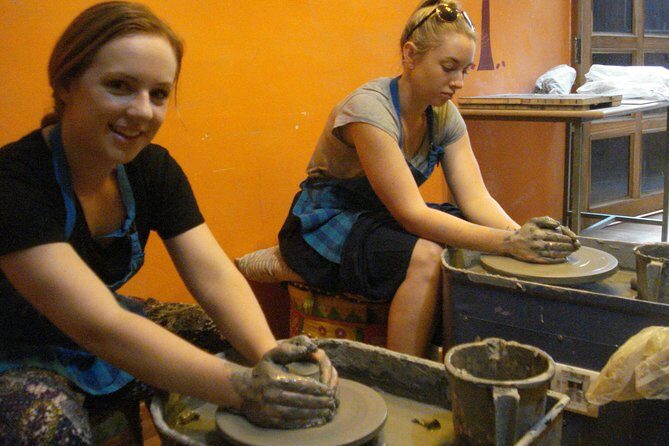
- Up to 5 people per booking, so you won’t feel lost in a big crowd
- Electric wheel throwing, which helps beginners get a smoother start
- Throw, center, raise steps included, taught in a practical order
- Decorate your own pot with tools provided at the studio
- You keep the pot as a keepsake, not just a photo op
- Choice of time slots, so you can match it to your Jaipur day
Wheel pottery in Jaipur at Clay Botik: what you’re really signing up for
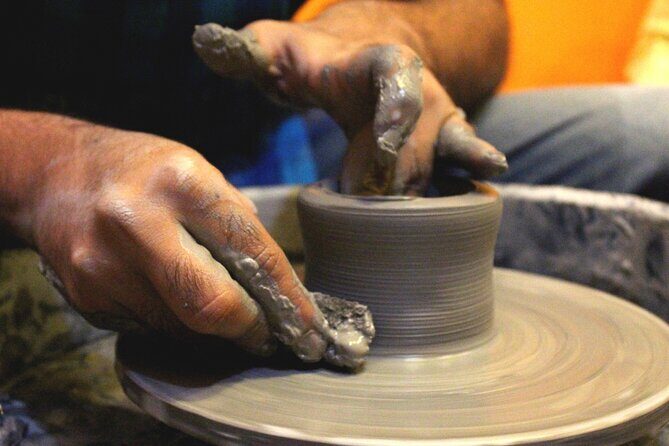
This isn’t a pottery museum moment. This is a made-by-you moment. You sit at a wheel, you handle clay, and you learn the sequence potters use to turn spinning chaos into something that looks like a vessel. The big appeal for me is how physical it is: your hands do the work, and you learn by repeating the same motions until they make sense.
Also, Jaipur is full of craft stops that can feel like watching other people work. Here, you’re doing the work. The class centers on Rajhastani pottery skills, and it specifically teaches the classic steps—throwing, centering, and raising a pot’s form—so you can connect what you’re doing with why it matters.
One more practical point: the workshop is run by Clay Botik, and the session is designed to fit into a typical travel day. You’re there for about two hours and the activity ends back at the meeting point. That structure helps if you’re trying to pack in sights without turning your schedule into a stress test.
You can also read our reviews of more tours and experiences in Jaipur


Meeting point and what to do before you go
You’ll meet at Clay Botik, Panchsheel Enclave, 29, Jawahar Lal Nehru Marg, Lal Bahadur Nagar, Chandrakala Colony, Malviya Nagar, Jaipur, Rajasthan 302017, India. There’s no hotel pickup or drop-off included, so plan to get there on your own using nearby public transportation.
That matters because pottery sessions don’t always start late in the way sightseeing tours sometimes do. You want to arrive with enough time to settle in, listen to the intro, and start working without rushing. If you’re using a rideshare or taxi, give yourself buffer time—traffic can be unpredictable, and you’ll feel better if you’re not arriving breathless.
You’ll get a mobile ticket, so have it ready on your phone. Once you check in at the studio, you can treat the rest of the time like a guided class: follow the instructor’s pace, watch for technique cues, and don’t fight the clay when it fights back. (It will.)
Inside the 2-hour class: how the session flows
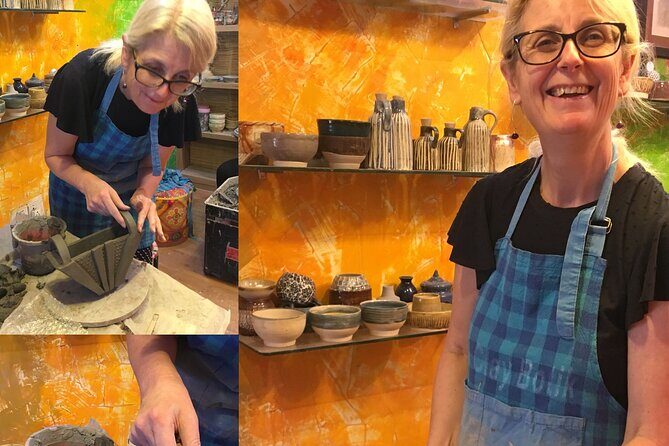
The workshop runs for about two hours and stays focused on the actual craft steps. You’ll get an introduction to the pottery process and then you move into hands-on practice on the electric wheel. The class isn’t just you watching someone else do the steps—it’s learning the workflow and then trying it yourself.
The sequence generally goes like this: you learn about the clay and the wheel motions, you practice throwing and centering, you raise the pot’s walls, and then you finish/dry the piece enough to take it away. Decoration happens too, with tools provided so you can personalize your pot.
Because the class is tight on time, it helps to mentally commit to doing the steps in order. If you jump ahead or spend too long on one part, it can be harder to finish the pot properly before the session ends. The good news is the workshop is small, so you can ask quick questions and get nudged back on track.
Using the electric wheel: throwing and centering without panic
One of the most beginner-friendly parts of this experience is that you’re on an electric wheel. That’s a real advantage for first-timers. Hand-powered wheels can be tricky because you have to manage rhythm and speed at the same time. With electric speed control, you can focus more on hand placement and pressure.
You’ll learn key skills that potters use to shape clay while it spins:
- Throwing: shaping clay into a rough vessel form
- Centering: steadying the clay so it spins evenly
- Raising: pulling up and forming the pot’s walls
These are the fundamentals for a reason. When you center clay, you’re basically solving the problem that makes the rest of the pot either work or fall apart. When you raise, you’re learning how to shape thickness and height without collapsing the walls.
What I like about this format is that the instructor approach is practical. You don’t need to know pottery jargon to benefit. Just follow the physical cues: how to position your hands, how to apply pressure gradually, and how to keep movements controlled. If you’ve ever tried something artsy and felt clumsy, this class is built to help you turn clumsy into repeatable.
Getting hands-on: exploring the wheel on your own
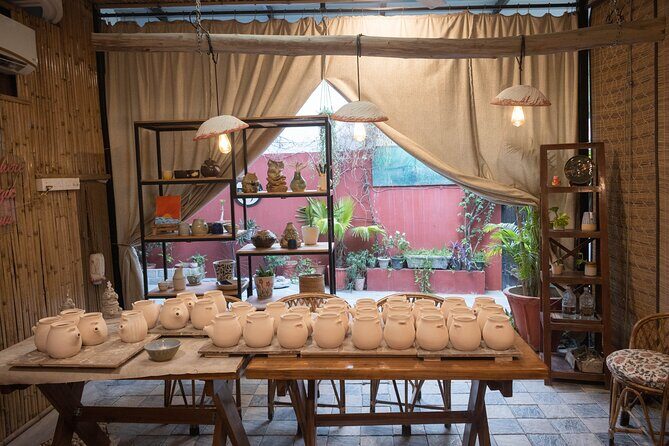
After the intro, you get time to explore clay on the moving wheel yourself. That personal practice is where you actually learn. You can hear advice all day, but technique clicks when your hands feel what the clay wants.
And yes, the clay will teach you. Early on, you’ll probably find it resists in ways that feel weird—spinning clay can surprise you, even if you’re careful. That’s normal. The electric wheel helps keep the spin consistent, but your job is still to coordinate steady pressure with clean hand positioning.
The session design is smart here: it balances instruction and independent practice. If it were only lecture, you’d miss the learning curve. If it were only practice with no guidance, you’d risk forming bad habits. This workshop gives you the middle path: you learn, then you practice immediately.






Raising your pot and drying it for a take-home souvenir
The most exciting part is raising the pot—turning a centered mound into a real container shape. This step is less about raw strength and more about control. You’re shaping the vessel’s walls while keeping the form stable.
Once the pot is formed, the class includes steps to dry the pot. Drying matters because your keepsake needs to be in a usable state at the end of the session. You’re not leaving your work on a shelf for days unless the workshop says otherwise—your pot is the souvenir that comes with the experience.
Here’s the practical expectation to hold onto: your final pot is a handmade piece, not a perfect showroom product. It’s made in a short workshop window. That’s part of the charm. If you treat the class like a learning process, you’ll enjoy your results more, even if the shape isn’t symmetrical in the way mass production is.
Decorating tools and making it yours
Once the main form is done, you’ll be able to decorate your pot using available tools at the workshop. This is where the class shifts from technique to personal style.
Even if you’re not an artist, decoration is a great equalizer. A simple pattern or careful marks can look great on a hand-thrown shape. And because the studio provides the tools, you won’t be scrambling for supplies or worried about whether your design will work.
I like that the workshop treats decoration as part of the full experience, not an afterthought. You leave with a finished souvenir feel, which makes the two-hour session feel more complete.
Included beverages and what to plan for
The workshop includes beverages and bottled water. You can also expect a welcome drink as part of the experience. Those small comforts matter in a hands-on class because you’ll be focused on your hands, your posture, and the clay’s consistency.
Food and drinks beyond what’s specified aren’t included. So if you’re taking the class when hunger is about to hit, plan a snack or meal before you go. This is especially important in Jaipur, where you might be touring nearby and your timing could drift.
Clothing is the other big practical consideration. The data doesn’t spell out a dress code, but pottery always involves mess. Wear clothes you’re comfortable getting clay on, and consider tying back hair. You don’t want to waste your creative energy worrying about a tiny spot of clay.
Small-group energy: up to 5 people makes the learning click
This is a private tour/activity with only your group participating, and the booking maximum is 5 people. That’s a meaningful detail.
With a small class, you’re more likely to get quick corrections when you need them. You can ask questions without waiting for the instructor to cycle back. And you’ll generally waste less time—important in a workshop that lasts roughly two hours.
It also helps you feel less self-conscious. Clay pottery can look intimidating at first glance, especially if you’re watching someone throw well. In a tiny group, you learn at your own pace and your mistakes feel normal rather than something to hide.
If you’re coming as a couple or with older kids, this size keeps the experience focused and manageable. If you’re solo, you still get that attention level that beginners usually need.
Price in context: $30.76 for a real craft session
The price is $30.76 per person for about two hours, including clay and tools, beverages (plus bottled water), and you take home your pot. On paper, it’s easy to think of this as a cheap class. In practice, it’s better to think of it as a guided craft session with materials and a souvenir outcome built in.
You’re paying for several things at once:
- instruction on the fundamentals (throw, center, raise)
- the materials and tools (clay is included)
- the electric wheel time and setup
- a keepsake pot at the end
- a small-group format that supports learning
That combination usually costs more when you break it apart. If you were to pay for a craft guide plus materials separately, the total often jumps quickly. Here, the workshop bundles the whole experience in a way that feels fair—especially in a city where you might spend similar amounts on tours that don’t put you in the driver’s seat.
If you’re comparing to general sightseeing tickets, it’s a totally different kind of value. This is not about seeing Jaipur. This is about making a small piece of Jaipur with your own hands.
Who should book this wheel pottery workshop in Jaipur
This workshop is a strong fit if you want hands-on cultural time that still respects your schedule. It’s also ideal if you like learning practical skills that you can explain later.
It suits:
- first-time pottery lovers
- families with kids 10+
- couples or friends who want a shared activity that feels different from shopping or monuments
- anyone who prefers small groups and direct coaching
You might think twice if you’re short on time and need something longer or more flexible than two hours. Also consider whether you’re sensitive to getting a little messy. Pottery is physical and hands-on by nature.
When weather matters: plan for the outdoor reality of Jaipur days
The experience requires good weather. That’s the kind of detail you should take seriously because it affects whether you’ll keep your slot or get rescheduled. Jaipur can have heat and changeable conditions depending on the season, so if your plans are tight, it helps to book a time slot with some buffer around it.
The upside is the workshop accounts for this. If the class can’t run due to poor weather, you’ll be offered a different date or a full refund.
Should you book? My practical verdict
Yes, you should book this wheel pottery workshop if you want a short, skill-based craft experience in Jaipur where you actually make something. The electric wheel lowers the learning curve, and the small group size makes the instruction usable instead of generic. Add the welcome drink and the fact that you take home your pot, and it becomes a great use of two hours.
If you’re the type who loves hands-on activities and doesn’t mind getting a little clay on your sleeves, this is an easy yes. If you only want to watch or you’re extremely time-pinched with no flexibility at all, then you may be happier with a different kind of Jaipur experience.
FAQ
How long is the Wheel Pottery Workshop in Jaipur?
It runs for approximately 2 hours.
Where is the meeting point?
You’ll meet at Clay Botik, Panchsheel Enclave, 29, Jawahar Lal Nehru Marg, Lal Bahadur Nagar, Chandrakala Colony, Malviya Nagar, Jaipur, Rajasthan 302017, India.
What’s included in the price?
Clay and the tools required for the workshop are included, along with bottled water and beverages. Your pot is also included as a keepsake, and you’ll have a welcome drink.
Is hotel pickup and drop-off included?
No. Hotel pickup and drop-off are not included.
What are the age and group limits?
The minimum age is 10 years old, and the maximum is 5 people per booking.
Are there different time slots available?
Yes. You can choose from available time slots.
What if plans change or weather is bad?
You can cancel for a full refund up to 24 hours in advance. If the experience is canceled due to poor weather, you’ll be offered a different date or a full refund.