REVIEW · DHARAMSALA
7 Days Dharamsala – Dalai Lama home Trek
Book on Viator →Operated by India Trekking Tours · Bookable on Viator
A trek that starts with spirit, not just trails. This 7-day Dharamsala to nearby villages route pairs hiking, camping nights, and temple visits with a proper first day in town, including time around the Dalai Lama’s temple area.
I like two things a lot. First, you get a private guide who can pace you and explain what you’re walking through, instead of everyone muddling along. Second, the tour includes most meals plus lodging, which matters when you’re spending days away from restaurants and decision-making.
One drawback to plan for: you’ll need to bring your own sleeping bag, and the whole trip depends on good weather for safe trekking.
In This Review
- Key Things to Know Before You Go
- Why Dharamsala Is the Perfect Start Point for a Trek
- Day 1: Pickup, Free Time in Dharamsala, and Temple Area Visits
- Day 2: Satobari Village, Pine Forest Descent, and Your First Campsite Flow
- Day 3: Gradual Ascent, Village Walks, Meadows, and Camping Under Stars
- Day 4: Bridge Crossing, Rhododendron and Pine Forests, and a Chai Break
- Day 5: Kunal Pathri Devi Temple and the Triund/Kangra View Day
- Day 6: Snow-Capped Peak Views from a Grassy Ridge to Bahgsu Nallaha
- Day 7: Breakfast, Then Transfer Out to Airport or Bus Station
- Guide Quality and Comfort: What the Included Setup Feels Like
- What You’ll Need to Bring (And Why It Matters)
- Value Check: Is $381.30 Worth It for a 7-Day Trek?
- Timing and Logistics: The Early Start and Private Group Style
- Who This Trek Suits Best (And Who Should Think Twice)
- Should You Book This 7-Day Dharamsala Trek?
- FAQ
- What time does the tour start?
- Is airport or bus station pickup included?
- Are meals included during the trek?
- Do I need to bring a sleeping bag?
- Is this tour private?
- Does the trek depend on weather?
Key Things to Know Before You Go
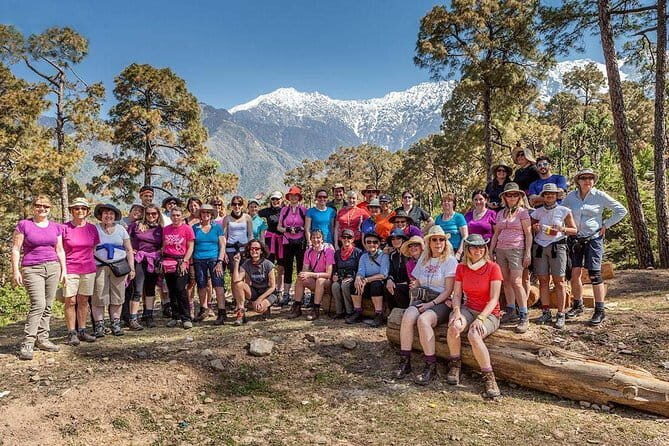
- Private, guided pacing: you’re not sharing the experience with strangers.
- Comfort planning is mostly handled: lodging is included, and many meals are provided.
- Temple stops are part of the walking: Kunal Pathri Devi Temple is a key highlight.
- Early start day: meeting time is 6:00 am.
- Bring a sleeping bag: it’s not included.
- Weather matters: if conditions are poor, the trip may be rescheduled or refunded.
Why Dharamsala Is the Perfect Start Point for a Trek
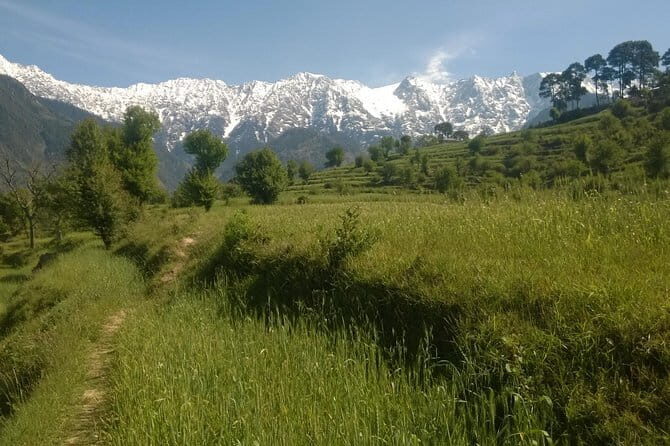
Dharamsala has a special vibe right at the start of your journey. It’s known as the spiritual home of his Holiness the Dalai Lama, and that shows in the way the town is organized around faith, learning, and quiet reflection. For you, that means the trip doesn’t feel like a generic hike that you just “happen to” take near a city. It feels like you’re stepping into a place with meaning before you step onto the trail.
You also get the advantage of a town base. Day 1 gives you room to orient yourself, grab your bearings, and ease into the altitude and pace. The trek is the main event, but Dharamsala sets the tone: simple, practical, and deeply local.
You can also read our reviews of more hiking tours in Dharamsala
Day 1: Pickup, Free Time in Dharamsala, and Temple Area Visits
Your day starts with a practical setup: morning pickup from the airport or bus station and transfer to the hotel. The meeting time is listed as 6:00 am, so plan for an early wake-up and a quick transition from travel mode to trekking mode.
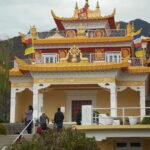
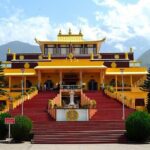
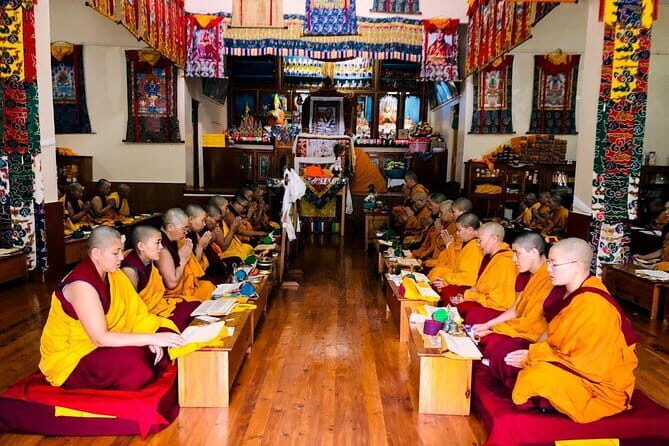
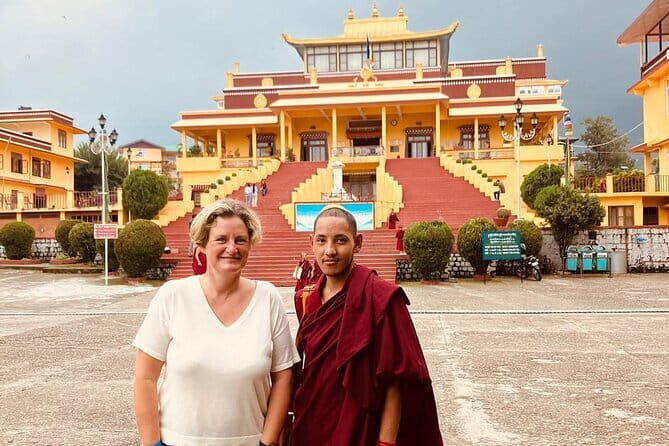
After you arrive, you’ll have free time to explore Dharamsala before you meet later for the next phase of the trip. This is where you’ll likely appreciate the town’s layout and the way life moves around spiritual spaces. Since the experience includes time to visit the Dalai Lama’s temple, you’re not just driving through sightseeing—you’ll have a real chance to slow down.
One small thing to watch: the tour states there are no meals at the hotel. Breakfast and other meals are included during the trek, but you’ll want to budget for any food needs you have in town on Day 1.
Day 2: Satobari Village, Pine Forest Descent, and Your First Campsite Flow
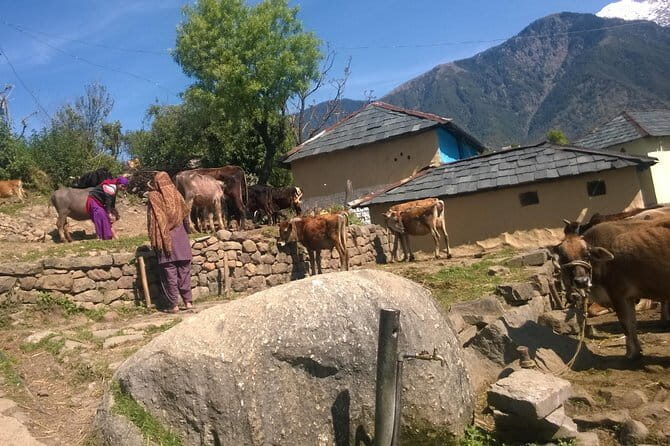
Day 2 is your launch day onto the trail. After breakfast at your hotel, you transfer to the start point for trekking. The first stretch is described as undulating, so you’re warming up rather than immediately hitting a wall.
Then you reach Satobari Village, and the walking shifts. From there you begin a descent through pine forests toward your next stop (the itinerary text cuts off at the village name, but the key idea is clear: you’re moving into deeper forest scenery and down toward a camping area).
For you, this is a good day to learn the rhythm of the trek:
- steady steps through forest shade
- breathing control during changes in elevation
- getting used to carrying yourself without the comfort of frequent stops
A private guide helps here because the pacing can be adjusted to your group, instead of sticking to one speed for everyone.
Day 3: Gradual Ascent, Village Walks, Meadows, and Camping Under Stars
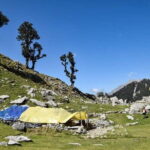
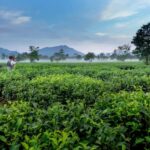
Day 3 keeps the effort consistent. You continue with a gradual ascent, moving along a trail that passes charming villages, open meadows, and more pine forests.
There’s also a short descent described, which helps break up the physical load. And importantly, you spend your first night under the stars on the camping portion of the trek. That’s not just a romantic idea. Nights like this often feel like the real payoff for hiking—quiet air, darker skies, and a slower pace than you get in towns.
What I’d suggest: if you’re the type who enjoys taking photos or just sitting still to feel the air, Day 3 is your chance. The route style here supports that kind of enjoyment because it’s scenic, village-connected, and not just nonstop climbing.
Day 4: Bridge Crossing, Rhododendron and Pine Forests, and a Chai Break
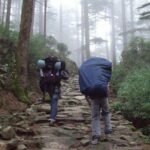
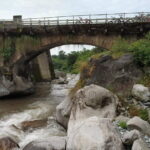
On Day 4, you start by crossing a bridge, then begin an ascent through rhododendron and pine forests for about two hours. That’s long enough to feel like a proper hiking segment, but it’s still structured enough to know you’re “working toward something.”
Then comes one of those small moments that makes a trek feel human: you’ll come across a local chai (tea) shop for a rest. Even if you only stop for a short break, it’s a good reset—warm drink, quick conversation, and a chance to see daily life outside the tourist rhythm.
If you tend to underestimate how much time food breaks take in the mountains: this stop is worth enjoying, not rushing. It also helps you match your energy for the rest of the day after a climb.
Day 5: Kunal Pathri Devi Temple and the Triund/Kangra View Day
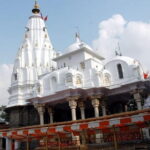
Day 5 is the big “effort plus reward” day. The itinerary calls it a challenging ascent to Kunal Pathri Devi Temple.
What you’re really walking for is what happens when you arrive: you get a stunning view of Triund and the Kangra valley besides Dharamsala, and you’ll also feel Dhauladhar Mountain very close.
This is the kind of viewpoint that makes you stop talking for a minute. Even if you’re not a big “look at mountains” person, this route’s planning builds a payoff: you climb, you reach a temple, and you’re rewarded with a wide-open horizon.
One practical note: temple days often involve different kinds of walking surfaces and some crowd flow near sacred spaces (even if your group stays private). If you have concerns about footing or stamina, your guide can manage the pace and breaks, which is one reason I like the private format.
Day 6: Snow-Capped Peak Views from a Grassy Ridge to Bahgsu Nallaha
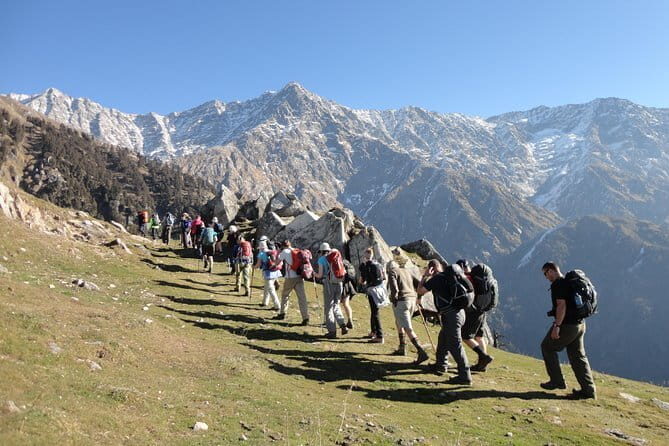
Day 6 begins after breakfast at the campsite, and the walking continues over a grassy ridge. The key detail here is the view: it’s described as giving lasting memories of snow-capped peaks surrounding the area.
Then the route turns steeper, with a steep descent to Bahgsu Nallaha. A descent can be harder on your legs than the climb—so think about how you’ll protect your knees. Use shorter steps. Take your time on the downhill. Your private guide can help by watching your group and adjusting how quickly you move.
This is also a good day to check your hydration and energy because it’s easy to feel fine on the ridge and then get tired once the route steepens.
Day 7: Breakfast, Then Transfer Out to Airport or Bus Station
After your last breakfast at the campsite, the trek wraps up with a transfer to Dharamsala airport or bus station.
This final day is intentionally lighter on decision-making. You’ll likely appreciate that after several days of moving, you’re not scrambling to arrange your own transportation. It’s a clean exit so you can get back into travel mode without adding stress.
Guide Quality and Comfort: What the Included Setup Feels Like
This tour stands out because it’s not only “guide-led trekking.” It includes English speaking guide, trekking and camping/lodging arrangements including permits, and private transportation. That combination matters. Permits and logistics can be invisible when they work well, and painful when they don’t. Here, they’re handled.
The experience also includes a sleep-and-eat plan:
- Breakfast (6)
- Lunch (4)
- Dinner (4)
That’s a lot of built-in food, which keeps you from hunting down meals every time the trek shifts. One review highlighted a stay at Sky Heaven Resort with delicious food and kind staff, and I see that as a sign the town portion is taken seriously rather than treated like a quick stopover.
On the communication side, one review specifically praised Sachin for being easy to communicate with and efficient at organizing the adventure. Another noted Anil as a great guide. Those names aren’t just trivia; they hint at what you want from a private trek setup: clear communication before you go, plus guidance that makes the route feel manageable.
What You’ll Need to Bring (And Why It Matters)
The tour tells you clearly what’s missing: you have to bring your own sleeping bag.
That’s the one item that can change your comfort a lot on camping nights. If you have a sleeping bag that’s rated for cool mountain conditions, you’ll likely sleep better and feel more rested for the next walking day.
Beyond that, the tour is set up so you don’t have to micromanage details like permits and lodging. Your main prep job is physical readiness and bringing the essentials so the accommodation plan works.
Value Check: Is $381.30 Worth It for a 7-Day Trek?
At $381.30 per person for a 7-day experience, you’re paying for more than walking. Based on what’s included, you’re covering:
- English speaking guide
- trekking and camping/lodging arrangements including permits
- private transportation
- most meals (6 breakfasts, 4 lunches, 4 dinners)
- all fees and taxes
- a private tour setup (only your group)
Now the trade-off: you’re also responsible for bringing a sleeping bag. And because it’s weather-dependent, there’s some risk of shifting dates if conditions aren’t right.
In practical terms, this price looks like good value if you like the idea of paying upfront so you don’t have to figure out the moving parts yourself. If you already have gear and you don’t mind a guided pace, the included structure is what makes the cost feel reasonable.
Timing and Logistics: The Early Start and Private Group Style
The meeting time is 6:00 am, which is early but also common for mountain walking days. I like early starts because they tend to give you cooler morning conditions and more predictable travel before the day gets heavy.
You also get pickup from the airport or bus station, and the hotel is described as being near public transportation. That’s helpful if you arrive early, need to solve a small problem, or want an easy path to connect with local transport.
The tour is private, meaning only your group participates. That can be a major quality-of-life upgrade on treks. You’re more likely to get pacing that matches your group’s stamina, and it’s easier to ask questions without competing with a larger crowd.
Who This Trek Suits Best (And Who Should Think Twice)
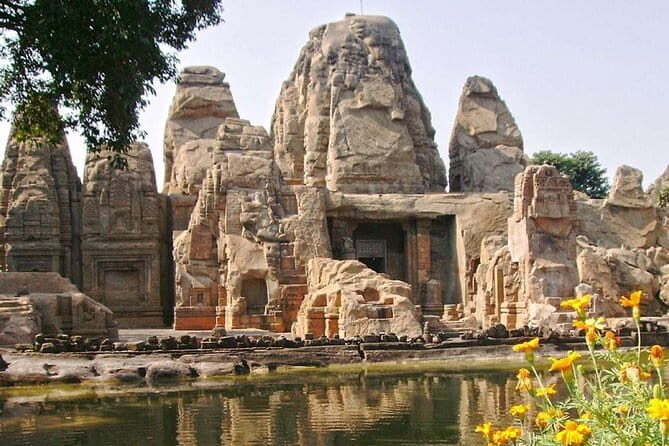
This trek is built for travelers who want a mix of outdoor effort and cultural temple time, without handling permits and logistics. If you like the idea of hiking with a guide and stopping for meaningful places like Kunal Pathri Devi Temple, you’ll probably enjoy the structure.
It also says most travelers can participate, which suggests the route is designed with a range of ability in mind. Still, the itinerary includes a challenging ascent on Day 5 and a steep descent on Day 6, plus multiple elevation changes.
So I’d think twice if you:
- have trouble with steep descents
- don’t have a warm enough sleeping setup (again, you supply the sleeping bag)
- aren’t comfortable with a trip that requires good weather
If you’re solid on walking and you want a guided, included package, this is a strong fit.
Should You Book This 7-Day Dharamsala Trek?
I’d book it if you want a private guide experience with multiple camping nights, temple visits, and real mountain views like Triund and Kangra. The value looks solid because so many parts are included: lodging, permits, transport, and a large share of meals.
I’d pass or ask extra questions if you’re very sensitive to steep trail days, or if you don’t plan to bring a proper sleeping bag for cold nights. And because weather can affect trekking, go with flexible expectations.
If you want a thoughtful way to see Dharamsala beyond temples and into the hills, this one is worth a serious look.
FAQ
What time does the tour start?
The meeting/start time is listed as 6:00 am.
Is airport or bus station pickup included?
Yes. The tour includes morning pickup from the airport or bus station and transfer to the hotel, and it also includes a transfer out on the last day.
Are meals included during the trek?
Yes. Breakfast is included 6 times, lunch 4 times, and dinner 4 times. The tour notes that there are no meals at the hotel.
Do I need to bring a sleeping bag?
Yes. You have to bring your own sleeping bag.
Is this tour private?
Yes. It’s described as a private tour/activity, so only your group participates.
Does the trek depend on weather?
Yes. The experience requires good weather, and if it’s canceled due to poor weather, you’ll be offered a different date or a full refund.