REVIEW · NEW DELHI
5-Day Golden Triangle Tour with Cultural Heritage-Taj & More
Book on Viator →Operated by Magic Carpet Tours · Bookable on Viator
Golden Triangle, but with a plan.
This 5-day trip stitches together Delhi, Agra, and Jaipur using private air-conditioned transport and a seasoned guide so you spend more time looking up and less time figuring out. I like that it’s built around iconic Mughal and Rajput landmarks (Taj Mahal, Agra Fort, Fatehpur Sikri, Amber-era forts, and Jaipur’s royal sights) and that your day starts early and moves efficiently between cities. I also like that many stops list admission tickets as included, which helps you avoid the scattershot feeling of paying entry fees one by one. One consideration: it’s a lot of monuments in a short window, and the travel legs between cities can eat into your energy if you like slow mornings.
What makes this one feel different is the daily rhythm: worship spaces, spice smells, major memorials, then big-ticket architecture—then down the road again. Guides named Ali, Aman, Raj, and Mehraj show up in the praise for being attentive and fun, and that matters because these sites come with a lot of context you’ll miss if you’re reading alone. I’d treat the day schedule as an active itinerary, not a relaxed sightseeing stroll—especially if you’re sensitive to walking, sun, or early starts.
In This Review
- Key highlights you’ll feel on the ground
- Golden Triangle in five days: what this route really feels like
- Delhi morning circuit: Bangla Sahib, Khari Baoli, and India Gate
- Humayun’s Tomb and Lotus Temple: UNESCO and calm architecture
- Agra day: Taj Mahal and Agra Fort in one hit
- Fatehpur Sikri to Jaipur: Akbar’s dream city
- Jaigarh Fort, Jal Mahal, and Chokhi Dhani: Jaipur beyond postcards
- Jaipur royal core: City Palace, Jantar Mantar, and Hawa Mahal
- Private transport, included entry, and snacks: where the money goes
- Where your guide really changes the trip
- Who should book this 5-day Golden Triangle tour
- Should you book this 5-day tour?
- FAQ
- How long is the Golden Triangle tour?
- Is pickup included from Delhi?
- What’s the price per person?
- Are entrance tickets included for the main sites?
- Does the tour include meals or hotel accommodation?
- Is this tour private, and can I cancel for a refund?
Key highlights you’ll feel on the ground
- Door-to-door pickup in Delhi plus private, air-conditioned car makes the route feel controlled instead of chaotic
- Admission is included for many stops like Taj Mahal, Humayun’s Tomb, and key Jaipur sights, reducing extra costs
- A guide who keeps the story straight: names like Ali, Aman, Raj, and Mehraj are repeatedly mentioned for patient answers
- Chokhi Dhani evening culture adds something social beyond forts and palaces
- Mobile ticket + in-car water and light snacks help you keep moving without constantly hunting for supplies
Golden Triangle in five days: what this route really feels like
The Golden Triangle is the classic loop for a reason: Delhi shows you layered India’s capital story, Agra delivers the Mughal climax, and Jaipur captures Rajput power and math-made-visible in the form of Jantar Mantar. This tour compresses the big names into 5 days, so the value is in organization—your guide handles timing and interpretation while the car handles the distances.
Price-wise, at $325 per person (with 5 days roughly covered), you’re paying for more than driving. You’re paying for private transport, a guide, and a schedule where a lot of entrances are listed as included. The main tradeoff is that you won’t have the luxury of choosing which sights to skip. If you love structure and want the highlights without decision fatigue, it’s a strong fit. If you prefer lots of free time, plan to adjust expectations (and pack patience for city-to-city travel).
Also note what’s not included: accommodation and meals. That means your hotel nights and food choices remain your responsibility. In practice, that can be good: you can pick where to stay based on your own budget and taste. But you should budget food and rest days into your plan.
You can also read our reviews of more historical tours in New Delhi



Delhi morning circuit: Bangla Sahib, Khari Baoli, and India Gate
Day 1 starts with a spiritual reset at Gurudwara Bangla Sahib. This is a calm, white complex where you’ll see devotion at work, not just monuments as photo backdrops. The stop runs about 30 minutes, with admission included. Practical tip: if you can, dress respectfully (your shoulders covered and modest clothing help) because this is a functioning place of worship.
Then you hit Khari Baoli, described as Asia’s largest spice market. The point here isn’t shopping until your suitcase breaks—it’s the sensory jolt. You get the smell of saffron and cardamom and dried chilies right away, which is a great way to understand how food and trade shaped Delhi over centuries. You have about 30 minutes, admission included. Consider setting a simple goal: try one spice you’ve never used before, or buy a small mix you can actually finish at home.
India Gate follows for about 15 minutes. It’s a war memorial, so don’t treat it like just another arch for a quick shot. Even in a short visit, it gives context for modern India and the way public space carries collective memory.
What I like about bundling these three stops is variety. You’re moving from worship to trade to national memory without getting stuck in a single theme all morning. The potential drawback is that it can feel fast. If you’re the type who likes to linger in quiet places, you might wish those first stops were longer.
Humayun’s Tomb and Lotus Temple: UNESCO and calm architecture
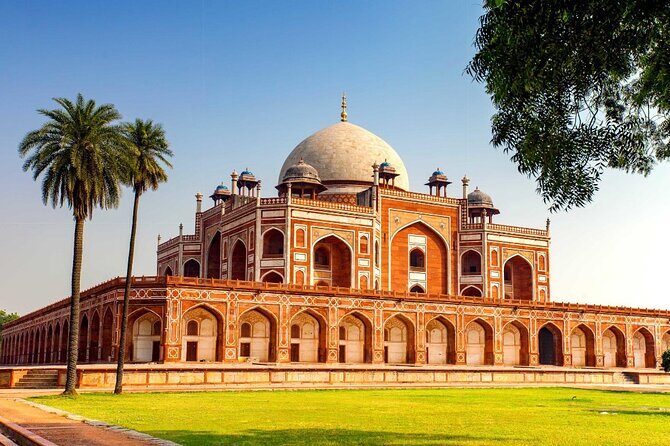
After the busy feel of market streets, Humayun’s Tomb slows you down. It’s a UNESCO World Heritage site and a major step in Mughal mausoleum design. You’re allotted about 1 hour, admission included. This is a smart anchor on Day 1 because it gives you architectural vocabulary. When you later see the Taj Mahal, you’ll recognize how these ideas develop—materials, symmetry, and the way gardens frame grandeur.
Next is the Lotus Temple, about 30 minutes, admission included. The shape is the star: a flowerlike structure made for quiet reflection, open to all faiths. The practical value here is that it changes the pace of your day. Between forts and tombs, you need a mental breather.
One consideration: if you’re sensitive to crowds, Lotus Temple and major tomb sites can get busy depending on the day. The tour’s structure helps, but you should still plan for people and bright sunlight.
Agra day: Taj Mahal and Agra Fort in one hit
Day 1 transitions to Agra with a travel segment of about 4 hours. The tour then continues on Day 2 with the headliner: the Taj Mahal. You get about 2 hours, and admission is included. The Taj Mahal works best when you go in knowing it’s more than a pretty building. It’s a full design system: white marble, water and garden layout, and the way the structure holds light differently as the day changes. Even without taking it apart line by line, you’ll feel the intention.
Then you roll into Agra Fort for about 1 hour, admission included. This fort is a different mood from the Taj. Instead of romance-in-marble, you get defense, power, and the practical side of empire. I like placing it after the Taj because it rounds out the story: love, yes, but also control and governance.
Possible drawback: Agra can feel intense if you’re there midday. You’ll still have time for good photos, but you’ll want to plan water, hat, and sunscreen. The tour provides bottled mineral water and light snacks in the vehicle, which helps you keep your energy steady between stops.
Fatehpur Sikri to Jaipur: Akbar’s dream city
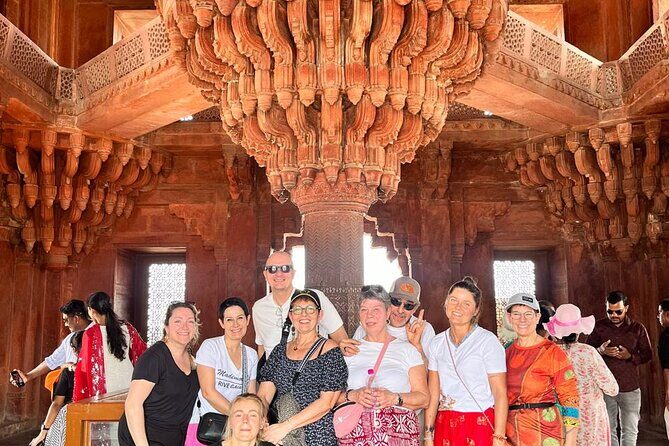
Day 2 includes Fatehpur Sikri for about 2 hours. Admission is listed as free, and that matters because it’s one less surprise cost. The site is set near the Aravalli hills, in red sandstone, with grand courtyards and silent arches. The real value here is how it shows imperial ambition beyond one monument. You’re seeing a whole city concept, not just a single building.
Then you drive to Jaipur for about 4 hours. Admission is listed as free during the Jaipur transfer window.
Tip for this part of the tour: if you have the energy, ask your guide to connect what you’re seeing in Fatehpur Sikri back to what you saw in Mughal tomb architecture. The timeline clicks faster when the guide ties sites together in plain language.
The main consideration is fatigue. Two big cultural sites back-to-back (Taj Mahal, Agra Fort, then Fatehpur Sikri) plus travel can compress your senses. You may want to keep your evening plans simple after the Jaipur arrival.
You can also read our reviews of more tours and experiences in New Delhi




Jaigarh Fort, Jal Mahal, and Chokhi Dhani: Jaipur beyond postcards
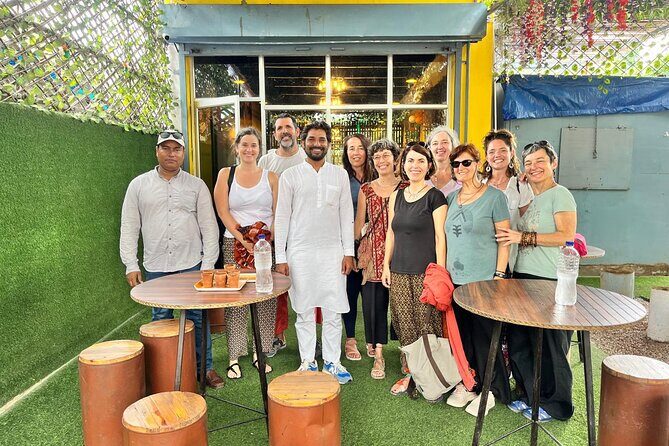
Day 3 focuses on Jaipur-area experiences with a mix of military architecture, scenic views, and cultural evening entertainment.
Start with Jaigarh Fort, about 2 hours, admission included. It’s a Rajput military architecture highlight built in 1726 by Maharaja Jai Singh II. The practical appeal of this fort is that it teaches you how forts worked: guarding wealth, controlling movement, and turning hills into natural defense.
Then there’s Jal Mahal for about 15 minutes, admission included. It’s the “blink and you’ll miss it” stop—floating in Man Sagar Lake with hills in the background. Don’t expect a long stay. Use the time well: get your photos quickly, enjoy the view, and then keep moving.
The big swing of Day 3 is Chokhi Dhani for about 3 hours, admission included. This is where Rajputana culture and rural-themed performances come in—folk dances, puppet shows, and fire performances—plus bazaar-style shopping and food options. The value is balance. You’ve already seen monuments. Now you get a taste of how people live the stories through dance, costume, and performance.
If you’re not into staged cultural shows, this might feel like a lot. But for first-time visitors, it’s an easy way to experience Jaipur flavor without hunting on your own after a full day of sightseeing.
Jaipur royal core: City Palace, Jantar Mantar, and Hawa Mahal
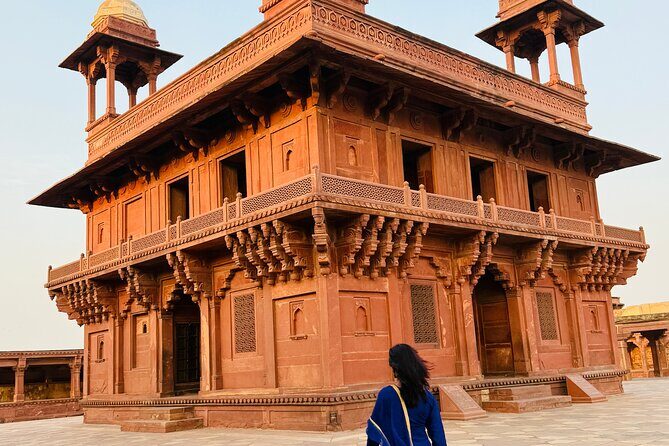
Day 4 is the three-stop “royal core” sweep, and it’s efficient.
City Palace takes about 1 hour, admission included. This is the central palace complex with ornate halls and courtyards. I like this stop because it connects Jaipur’s royal identity to the physical city layout. It’s not just one building; it’s a functioning statement.
Next is Jantar Mantar for about 1 hour, admission included. This is the astronomical observatory built by Maharaja Sawai Jai Singh II, and it’s UNESCO-listed. The practical value is that it makes science visible in stone. You’ll see how measurements worked in the pre-electric era. If you’re into maps, math, or how humans made sense of the sky, this is a standout.
Then comes Hawa Mahal for about 45 minutes, admission included. The honeycomb façade with thousands of tiny windows is the star. Built in 1799 as an extension of the City Palace, it’s designed so palace women could observe street life with privacy. It’s one of the few places in Jaipur where architecture has an obvious social job.
One consideration: Day 4 includes a lot of indoor and courtyard movement with sun in between. Wear shoes that handle uneven stone and bring a layer in case interiors feel cooler than you expect.
Private transport, included entry, and snacks: where the money goes
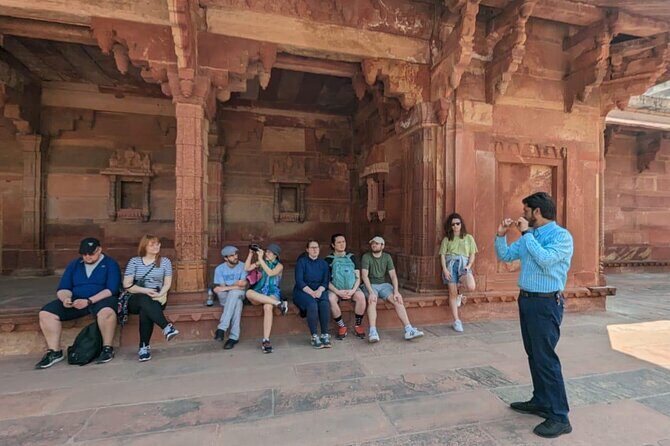
This tour’s value shows up in the details you can feel day-to-day:
- Private, air-conditioned vehicle cuts down stress between Delhi, Agra, and Jaipur. This matters because the drive times are meaningful: about 4 hours to Agra on Day 1, 4 hours to Jaipur on Day 2, and about 4 hours back toward Delhi on Day 5.
- In-car refreshment means water and light snacks while you’re on the road. You’ll still need full meals elsewhere, but the small support helps keep everyone comfortable.
- Many admission tickets are included across key stops like Taj Mahal, Humayun’s Tomb, Agra Fort, Jaigarh Fort, Chokhi Dhani, City Palace, Jantar Mantar, and Hawa Mahal. Fewer entry-fee decisions add up.
- Mobile ticket and pickup offered reduce friction when you arrive.
The possible drawback is that since the tour is private for your group and structured tightly, it’s less flexible than a self-guided route. If you want long photo sessions or spontaneous cafe breaks, you’ll need to negotiate that with your guide on the spot.
Where your guide really changes the trip
The itinerary is strong, but what makes it memorable is interpretation. The praise highlights guides such as Ali, Aman, Raj, and Mehraj for being attentive, fun, and patient with questions. That’s not a small point. These monuments have layers—names, dynasties, design purposes, and social details. A good guide helps you connect that information without making it feel like a lecture.
A practical way to use your guide’s strengths: ask for one connection question each day. For example:
- How does the Mughal approach to gardens and symmetry show up from Humayun’s Tomb to the Taj Mahal?
- What’s the difference in mindset between Agra Fort and the Taj Mahal?
- Why did Jaipur’s rulers build an observatory like Jantar Mantar?
If your guide answers with clarity and patience, the tour becomes more than a checklist.
Who should book this 5-day Golden Triangle tour
This works best if you:
- Want the major Delhi, Agra, and Jaipur highlights without spending hours planning logistics
- Like a guided story and appreciate context at major sites
- Prefer private car comfort over public transit when travel time is long
- Want the option of a cultural evening with Chokhi Dhani
You might want to reconsider if you:
- Need lots of free time to wander on your own each day
- Get worn out by packed schedules and long drives
- Expect the trip price to cover meals and hotel nights (it doesn’t)
One more practical note: the tour lists “near public transportation” and says most people can participate. That’s helpful if you need day-to-day support, but it doesn’t remove the reality that you’ll still be walking in heritage sites and moving between stops.
Should you book this 5-day tour?
If your goal is a well-organized Golden Triangle with private transport, included entry at many key sites, and a guide who can answer your questions in plain language, I think it’s worth serious consideration. At $325 per person, the value is strongest when you count what you’d otherwise pay for guide time, private car comfort, and multiple admission tickets.
My decision rule is simple: book it if you want structure and you’re happy trading flexibility for convenience. Skip or modify it if you want slow travel and lots of unscheduled hours. Either way, plan for an active pace, bring sun protection, and budget your own accommodation and meals so you can relax inside the schedule instead of worrying about logistics.
FAQ
How long is the Golden Triangle tour?
It runs for 5 days (approximately).
Is pickup included from Delhi?
Yes, pickup is offered, and the tour provides door-to-door service from your Delhi accommodation.
What’s the price per person?
The price is $325.00 per person.
Are entrance tickets included for the main sites?
Admission is listed as included for several stops such as Gurudwara Bangla Sahib, Khari Baoli, Humayun’s Tomb, Lotus Temple, Taj Mahal, Agra Fort, Jaigarh Fort, Chokhi Dhani, City Palace, Jantar Mantar, and Hawa Mahal. Some stops show free admission.
Does the tour include meals or hotel accommodation?
No. Accommodation and meals/beverages are not included.
Is this tour private, and can I cancel for a refund?
It’s a private tour/activity where only your group participates. The policy says free cancellation up to 24 hours in advance for a full refund.