REVIEW · NEW DELHI
4-Day Delhi, Agra and Jaipur Private Tour
Book on Viator →Operated by Thrive Holiday · Bookable on Viator
You’ll see the Golden Triangle without the usual stress. This private, air-conditioned ride is built around comfort and flexibility, with a professional driver and local guides handling the heavy lifting. I like that the plan stays respectful, with a No Tourist Trap Guarantee, so you won’t get pushed into commission stops.
Two highlights I really enjoy are the early-morning sunrise Taj Mahal setup (plus a battery golf cart to save your feet) and the mix of Old Delhi and New Delhi landmarks on day one. One consideration: it’s an active, fast-paced style of touring, and you’ll be out and moving from one big sight to the next.
In This Review
- Key Things That Make This Tour Worth Your Attention
- Comfort-First Golden Triangle, Not a Stop-and-Run
- Entering Old Delhi and New Delhi in One Day
- Sunrise Taj Mahal and Agra Fort: The Moment You Came For
- Chand Baori to Jaipur: Short Detour, Big Payoff
- Jaipur’s Royal Sights: Forts, Palaces, and Giant Instruments
- Albert Hall Museum and Patrika Gate Before You Return to Delhi
- Price, Tickets, and the Real Cost of a Comfortable Golden Triangle
- Should You Book This Private Golden Triangle Tour?
- FAQ
- What’s included in the tour price?
- Are monument entrance tickets included?
- Do I get pickup and drop-off at hotels or the airport?
- How do you handle the Taj Mahal being closed on Fridays?
- What if Lotus Temple or Red Fort are closed on Mondays?
- What dress code do I need for temples?
- Is a passport required?
- Can I cancel and get a refund?
- Final Call: Is This the Right Golden Triangle Choice?
Key Things That Make This Tour Worth Your Attention

- Private AC vehicle with a pro driver so you can relax and keep your schedule practical
- Sunrise Taj Mahal timing with the color-shift view and a battery golf cart to the entrance
- A day-one Old Delhi route that combines major Mughal sites with Sikh temple calm
- Agra to Jaipur routing with a stepwell detour at Chand Baori in Abhaneri
- Jaipur day built for big sights like Amber Fort, City Palace, and Jantar Mantar
- Temple dress expectations (shoulders and knees covered) so you can plan ahead
Comfort-First Golden Triangle, Not a Stop-and-Run
This tour is designed for people who want the Golden Triangle done right, but without the chaos. You travel in your own private, air-conditioned vehicle with a professional local driver. That matters more than it sounds, especially in Delhi traffic, where “meeting points” and long waits can eat your day.
The other big factor is the approach to shopping and side stops. There’s a strict No Tourist Trap Guarantee, meaning no pressure to visit commission-based shops. I like that because it keeps you focused on what you came for: Delhi’s monuments, Agra’s Mughal masterpieces, and Jaipur’s royal-era sights. You’re still free to browse on your own, but you’re not herded into paid detours.
Finally, the tour is private. It’s just your group in the vehicle, and you’re working with local guides in Delhi, Agra, and Jaipur. That helps your questions get answered in the moment instead of later, when details are harder to remember.
You can also read our reviews of more private tours in New Delhi



Entering Old Delhi and New Delhi in One Day
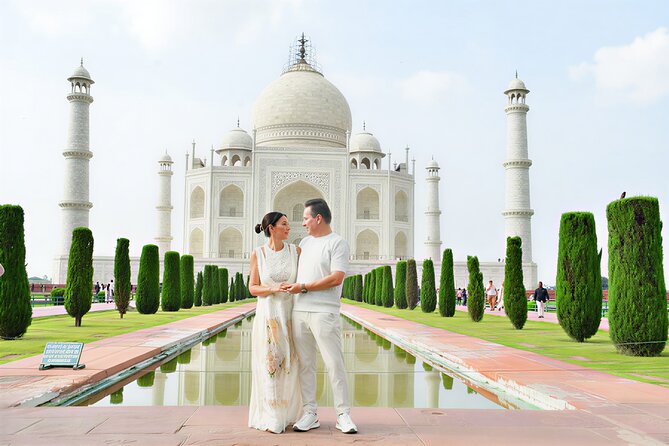
Day one hits a lot of ground, and it does it with smart variety: Mughal power, spice trade life, Sikh temple peace, then major New Delhi landmarks.
You start at Jama Masjid, one of Shah Jahan’s grand mosque builds, with red sandstone architecture and big views over the city. After that, you drop into the Chandni Chowk area and take a short rickshaw ride through the market streets. It’s one of the easiest ways to get the feel of Old Delhi without walking every narrow lane for hours.
Next comes Khari Baoli, one of Asia’s largest wholesale spice markets. Even if you don’t buy anything, the sensory part hits hard: colors, strong aromas, and the everyday rhythm of trade. It’s a quick stop, but it gives you context for what you’ll see later at places like Red Fort—this wasn’t just imperial architecture. It was also a city driven by commerce.
Then you move to Red Fort, the iconic Mughal symbol built by Shah Jahan. You’ll see massive red sandstone walls and gates, and you’ll get the sense of how power was built into the geography of the capital.
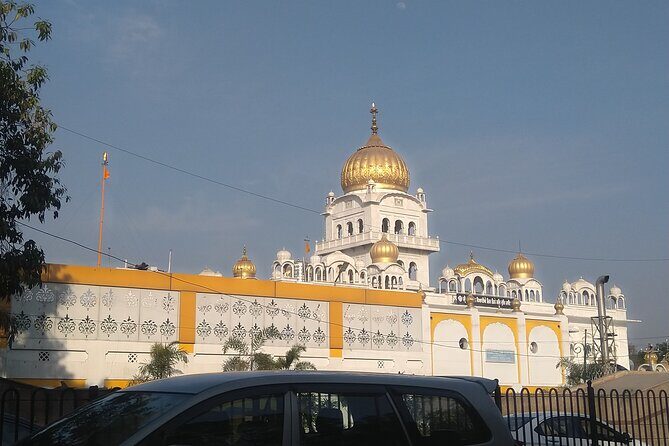
The mood shifts at Gurudwara Bangla Sahib, a major Sikh temple where the atmosphere is calming and visitors can witness the langar tradition (community service and equality). After temple calm, you head into New Delhi’s landmark zone with India Gate and views around Parliament House. There’s also a viewing moment for the official residence of the President of India, Rashtrapati Bhavan, set in Mughal gardens—worth it mainly for the architecture blend you’ll spot from a distance.
You then hit Lotus Temple (Bahá’í House of Worship), the white lotus-shaped landmark that’s known for serenity and welcomes people of all faiths. After that, you go to two UNESCO-listed Mughal-era pillars of Delhi sightseeing: Humayun’s Tomb and Qutub Minar. Qutub Minar is the star for scale—listed as the world’s tallest brick minaret—and it’s famous for early Indo-Islamic design details.
A key practical point: many monument tickets are not included for stops like Red Fort, Humayun’s Tomb, and Qutub Minar. You’ll want to carry cash/card for on-site payments.
At the end of day one, you drive to Agra via the Yamuna Expressway and your driver drops you at your self-booked hotel. That overnight transition is important. Instead of wasting the last hours of Delhi sightseeing, the plan moves you toward the Taj day without extra hassle.
Sunrise Taj Mahal and Agra Fort: The Moment You Came For
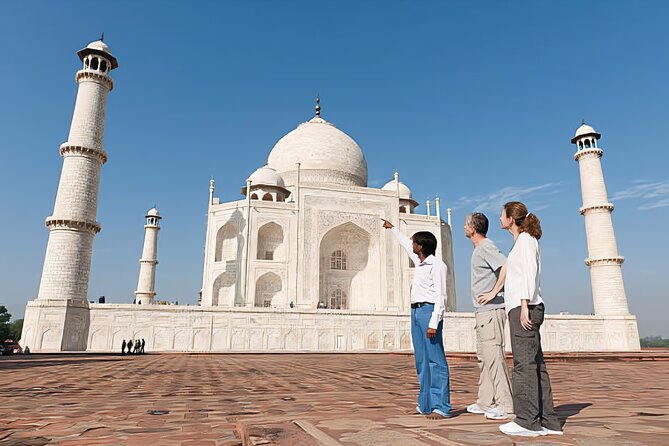
Day two is built around the big one: the Taj Mahal at sunrise. You wake up before dawn for that first light when the marble starts shifting color. The practical value of sunrise timing is simple: fewer crowds than later in the day, and the changing tones photograph better. Also, you’ll spend less time stuck in the worst heat.
Your entrance is handled with a battery golf cart ride from parking to the Taj entrance, which is a real quality-of-life upgrade. If you’ve ever done the Taj in blazing sun after a long walk, you’ll appreciate the saved steps.
After the Taj, you explore Agra Fort, described as a powerhouse of Mughal rule. It isn’t just a single monument. It’s a walled complex with palaces, mosques, and royal halls. This is where you start to understand that Mughal architecture was not only about one iconic building—it was about whole city-scale authority.
Then you visit Itmad-ud-Daula, often nicknamed the Baby Taj. It’s a more compact stop, but it’s a great warm-up for seeing how white marble craftsmanship can be refined and intricate. You’ll also get the connection many people make between this tomb and the inspiration behind the Taj.
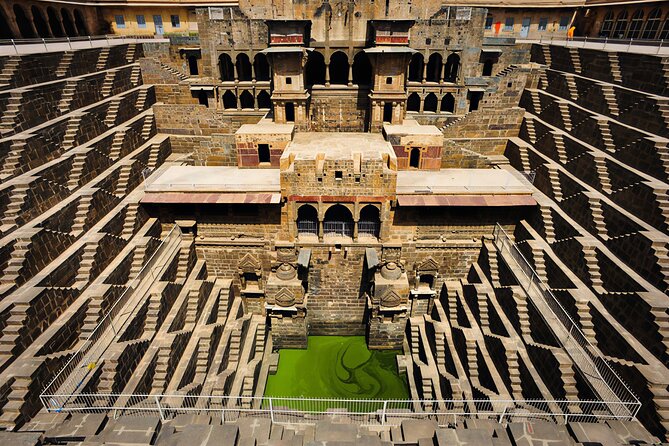
Before you reach Jaipur, the plan includes a detour to Chand Baori in Abhaneri on the way. This is where geometry turns into a sightseeing experience. Chand Baori is known for its deep stepwell and the symmetry of its steps. You get a short time to take in the scale and photo angles without it becoming a full extra day.
Finally, you relax during the drive into Jaipur. Your driver drops you at your self-booked hotel, so you can shower, recharge, and plan your evening on your own.
One more note that can matter for your calendar: the Taj Mahal is closed every Friday. If your Agra day would land on a Friday, the schedule rearranges to Delhi → Jaipur (first) → Agra (last) to keep your Taj visit possible.
Chand Baori to Jaipur: Short Detour, Big Payoff

I like that the route gives you more than a straight line from Agra to Jaipur. The stop at Chand Baori is short, but the visual impact is huge. A stepwell like this is not just a photo location. It helps you understand that water systems in India have always been engineered with public use and community planning in mind.
In terms of energy, this is also a good planning choice. You’re not stuck in another long museum-style experience. You see it, you photograph it, and then you move on while you still have momentum.
When you arrive in Jaipur, you get a hotel drop-off and time to reset. That flexibility is key, because Jaipur nights can be as busy as you want them to be. If you’re tired, you can keep it simple. If you’re energized, you can plan dinner and a walk in the Pink City lanes—just not at the cost of your next morning.
Jaipur’s Royal Sights: Forts, Palaces, and Giant Instruments
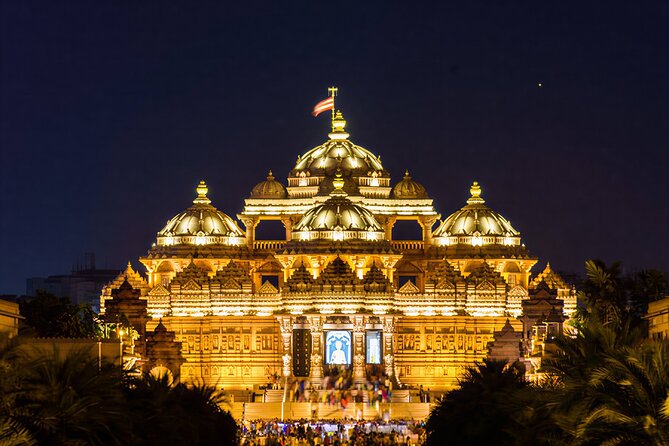
Day three is a full Jaipur day, and it’s structured to take you from early “wow” visuals to deeper royal context.
You start at Panna Meena ka Kund, a stepwell with symmetrical staircases. It’s short, but it’s designed for those who enjoy geometry and patterns. It also helps break up the day before you climb into Amber Fort.
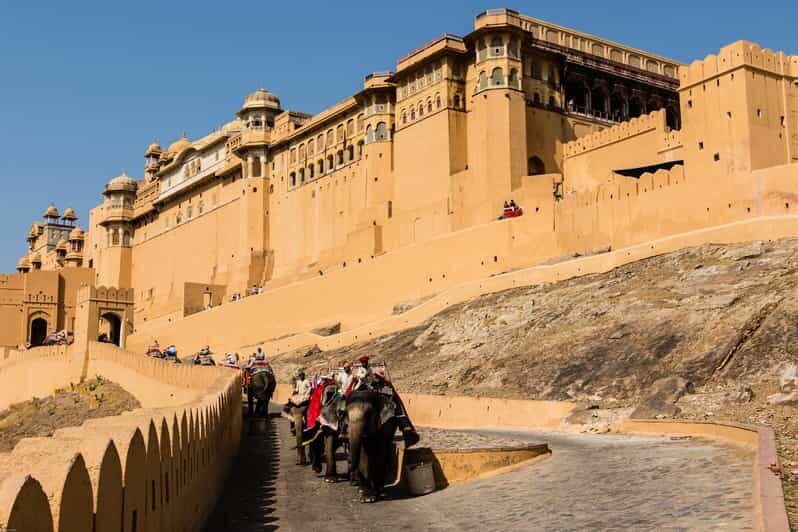
Then comes Amber Fort, a UNESCO World Heritage site and one of Jaipur’s signature sights. You’ll ascend into a honey-colored fortress complex. Since it’s a large compound rather than a single room, you’ll spend time walking between courtyards and palace sections. This is where your guide’s explanations can make the visit feel more connected, not just scenic.
You also get a photo stop at Jal Mahal, the palace on Man Sagar Lake. The plan notes you can’t go inside, but the view is the point here. It looks like it floats when the water levels are right, and the angles are great for quick photos.
Next, you head to City Palace of Jaipur, where part of the royal family’s living space continues. You’ll see courtyards and opulent halls, and your guide brings the place to life with stories tied to how the royal era worked. This is also where the Pink City stops making sense as just a color. You start seeing it as a curated identity shaped by rule, ceremony, and design.
Then it’s Jantar Mantar, the 18th-century astronomical observatory right beside the palace complex. Giant sculptural instruments sound simple until you stand there and realize people once used these for real-time measurements. It’s a different kind of awe than fort walls—more brain than camera.
You end with a quick photo stop at Hawa Mahal (Palace of Winds). The iconic honeycomb facade with many windows (jharokhas) is the star, and your visit is built around seeing the frontage and understanding why those windows mattered for royal viewing.
Tip for pacing: this day is long. The private car helps because you’re not repeating long transfers on foot. Still, wear comfortable shoes and plan for sun and occasional stair climbs.
You can also read our reviews of more tours and experiences in New Delhi





Albert Hall Museum and Patrika Gate Before You Return to Delhi
On day four, you shift from palaces and forts to art and modern city design.
You begin at Albert Hall Museum, the oldest museum in Rajasthan, known for Indo-Saracenic architecture. It’s a good choice for a last-day stop because it’s visual, indoor-friendly, and lets you slow down slightly after big outdoor landmarks.
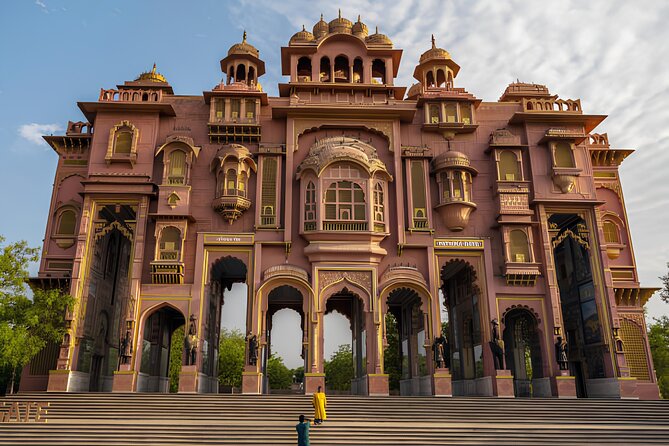
Then you head to Patrika Gate, a modern landmark with painted archways. It’s quick, but it’s fun if you like bold colors and design details. Because it’s short, you can enjoy it without worrying about losing too much time before your drive back.
Finally, it’s back to Delhi. You’ll sit in the private air-conditioned vehicle for about 4 to 5 hours to your Delhi airport or designated drop-off.
If you’re hoping to add more Jaipur after this tour, keep it realistic. This plan already covers a lot of key sights. The easiest extra would be a relaxed meal stop near your hotel after you’re dropped off, not a rushed “one more monument” sprint.
Price, Tickets, and the Real Cost of a Comfortable Golden Triangle
At $141.85 per person for roughly 4 days, the price can look like a good deal—until you add the monument tickets. Here’s the honest math:
- What you get in the price is the private AC car, hotel/airport pickup and drop-off, and expert local guides across Delhi, Agra, and Jaipur.
- You also get mineral water during the journey and the battery golf cart for the Taj entrance.
- Monument tickets are not included, estimated at around USD 70 per person paid on-site.
So you should plan for total trip spending that includes tickets. Even so, the value still holds for the right traveler, because you’re buying time saved, comfort gained, and less stress from navigating between cities and landmarks.
Also, you’re not doing this as a large group. A private format means less waiting and fewer “pace mismatches,” which is usually where Golden Triangle tours go wrong.
Should You Book This Private Golden Triangle Tour?
Book it if you want comfort, a private driver, and expert guidance while seeing major Delhi, Agra, and Jaipur highlights. I’d especially recommend it if you care about starting Taj Mahal in the right light, and you don’t want your day spent negotiating with the chaos of public transport.
Don’t book it if you prefer slow travel with long free blocks and minimal movement. This is an active plan. You’re going to walk and climb at places like Amber Fort and you’ll be on the go from sunrise onward.
If you’re the kind of traveler who likes a plan that protects your focus—thanks to No Tourist Trap Guarantee and a private vehicle—this tour fits nicely.
FAQ
What’s included in the tour price?
You get private air-conditioned transportation with a professional driver, expert local guides in Delhi, Agra, and Jaipur, hotel/airport pickup and drop-off, a battery golf cart ride to the Taj Mahal entrance, mineral water during the journey, and taxes and local handling charges listed as zero hidden fees.
Are monument entrance tickets included?
No. Monument tickets are payable on-site and are estimated at about USD 70 per person.
Do I get pickup and drop-off at hotels or the airport?
Yes. The tour includes hotel/airport pickup and drop-off, including transfers between cities in the private car.
How do you handle the Taj Mahal being closed on Fridays?
If your Agra day falls on a Friday, the schedule will be automatically rearranged to Delhi → Jaipur (first) → Agra (last) so you can still visit the Taj Mahal.
What if Lotus Temple or Red Fort are closed on Mondays?
If Lotus Temple and Red Fort are closed on Mondays, those stops are replaced with Agrasen ki Baoli and Lodhi Garden.
What dress code do I need for temples?
A modest dress code is required, covering shoulders and knees, for Akshardham, Lotus Temple, and Gurudwara.
Is a passport required?
Yes. A valid current passport is mandatory for hotel check-ins and monument entries.
Can I cancel and get a refund?
Yes. You can cancel for a full refund up to 24 hours before the experience’s start time.
Final Call: Is This the Right Golden Triangle Choice?
If you want the Golden Triangle with fewer headaches—private AC car, guided stops, sunrise Taj timing, and no pressure shopping—this is a smart pick. If you want a slow, flexible vacation where you wander more than you see, you might prefer a less structured option.