REVIEW · NEW DELHI
3 Days Private Golden Triangle Tour Delhi, Agra and Jaipur
Book on Viator →Operated by Agra Trip Packages · Bookable on Viator
Three days, three Indian icons. This 3-day Golden Triangle runs on a simple idea: see Delhi’s old-and-new mix and then follow the Mughal and Rajput highlights without wasting time. You’re picked up from IGI Airport in an air-conditioned car, and you’ll have a private guide who can adjust timing to what you care about, not just a fixed script.
The main trade-off is the pace. You’ll spend big chunks of the day in transit, including about 3 hours to Agra via Yamuna Expressway and around 8 hours to Jaipur after your Agra sightseeing. If you like slow wandering time, this route will feel more efficient than relaxing.
In This Review
- Key highlights that matter
- Golden Triangle in three days: what the pace feels like
- Delhi’s modern-and-old contrast: India Gate to Humayun’s Tomb
- Old Delhi essentials: Jama Masjid and Chandni Chowk
- The road to Agra: planning for the long car day
- Taj Mahal at morning light and the right follow-up
- Agra Fort’s practical value: context without extra time
- Jaipur arrival and Amber Palace: the hill-fort feel
- City Palace + Jantar Mantar: royal space and Rajput science
- Hawa Mahal: fast photos, smart angles, short stop
- Why the private guide changes everything
- Price and value: what $25.60 per person really buys
- Practical tips so the days don’t feel chaotic
- Should you book this 3-day private Golden Triangle tour?
- FAQ
- What cities does the 3-day Golden Triangle tour cover?
- Do I get picked up from the airport?
- Are monument entry tickets included?
- Is this a private tour?
- What’s included in the price?
- Is alcohol included, and can I cancel?
Key highlights that matter
- Private guide support that can tailor the pace and help you manage timing across busy sites
- Delhi’s contrast: Lutyens-style landmarks plus Old Delhi’s Jama Masjid and Chandni Chowk
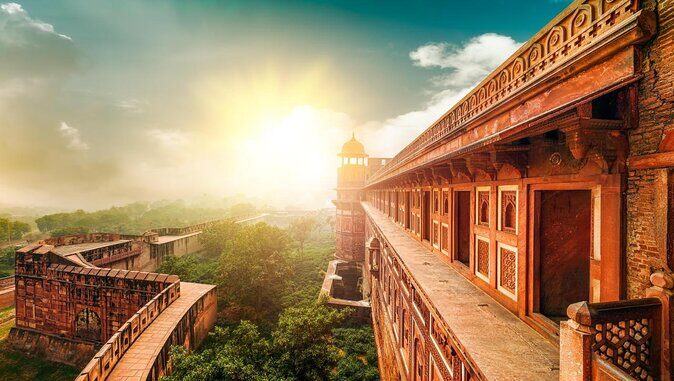
- Taj Mahal in the morning plan plus Agra Fort right after breakfast
- UNESCO stops in both Agra and Jaipur, including Humayun’s Tomb and Jantar Mantar
- Included essentials like bottled water and an air-conditioned vehicle, with many entry fees covered
Golden Triangle in three days: what the pace feels like
The Golden Triangle is the classic route for a reason: it hits India’s headline architecture fast—Delhi’s imperial-era planning, Agra’s Mughal masterpieces, and Jaipur’s Rajput royal sites. In this format, you’re not piecing together tickets and rides. You’re getting a private car, a guide, and a planned flow that keeps you moving city to city.
Here’s the rhythm you should expect. Day 1 starts with Delhi sightseeing after airport pickup, then you transfer to Agra and sleep there. Day 2 is built around Taj Mahal in the morning and Agra Fort afterward, then you ride on to Jaipur for the next overnight. Day 3 is a full Jaipur highlight run (Amber Palace, City Palace, Jantar Mantar, and Hawa Mahal) before dropping you back in Delhi.
If that sounds packed, it is. But it’s also why the value works. You’re getting the big-ticket sights and the travel between them in a structured way, with the guide managing the transitions so you can focus on seeing.
You can also read our reviews of more private tours in New Delhi


Delhi’s modern-and-old contrast: India Gate to Humayun’s Tomb
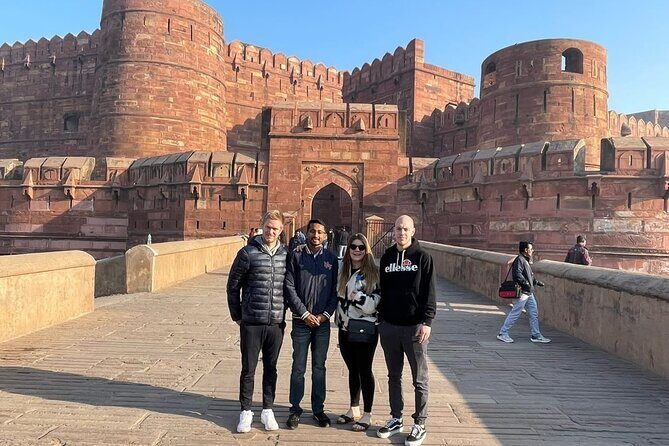
Delhi often surprises first-timers because it’s not one single vibe. This tour leans into that contrast. You start with modern Delhi’s iconic landmarks and then transition toward the Mughal and Old Delhi core.
India Gate is the first stop on the plan. It’s a war memorial, set in a calm open setting with lawns around it. It’s short, about 30 minutes, which is perfect for getting your bearings without losing time before the more intricate sites.
Next is President House Museum Main Building. You’ll spend around 30 minutes here. Even if you’re just seeing it from the right angles for photos, it helps you understand how the city’s planned, government-centered look fits into India’s imperial-era layout.
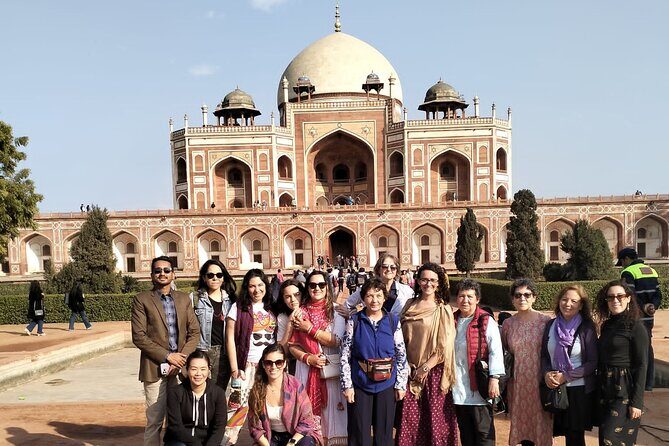
Then comes one of the best “wow factor per minute” stops in Delhi: Humayun’s Tomb (about 1 hour, admission included). This is a UNESCO site and one of the places where Mughal architecture clicks. The gardens and the tomb complex create a clear sense of scale. The timing works well too, because you’ve not yet hit the highest-energy stretch of Old Delhi.
What I like about this order: you start with big, readable landmarks, then you move into finer details. You’ll feel like you’re learning the city as you go, not just collecting photos.
Old Delhi essentials: Jama Masjid and Chandni Chowk
After Humayun’s Tomb, the tour heads into Old Delhi with two major stops that do very different jobs.
Jama Masjid takes about 1 hour and has admission included. It’s one of the grandest mosques in India, built by Shah Jahan, and it’s visually dramatic because of the red sandstone and white marble mix. This stop is less about a quick glance and more about letting the architecture and size register. If you like religious sites with serious scale, you’ll get your money’s worth here.
Then you move to Chandni Chowk for about 2 hours. The plan frames it as a spice market area, and that’s exactly the point. This isn’t a museum stop. It’s a sensory street stop—smells, colors, vendor calls, and side streets branching off fast. It’s a great place to pick up small things if you enjoy market browsing.
One practical consideration: this is the part where you’ll want to stay alert. Wear comfortable shoes, keep your valuables secure, and go at the pace your guide sets. A private guide helps because they can steer you around the busiest pockets so you’re not just getting swept along.
The road to Agra: planning for the long car day
Day 1 doesn’t just end in Agra—it transitions there. After your Delhi sightseeing block, you travel to Agra via the Yamuna Expressway, with about 3 hours noted for the drive, and the day totals around 8 hours before you’re set for an overnight stay at your pre-booked Agra hotel.
This matters more than it sounds. The Golden Triangle is a lot about timing and logistics, and the driving is part of the experience. If you hate long transfers, this route will test you. If you can handle a car day, it’s a smart way to make sure the next morning’s highlights don’t get rushed.
My advice: treat the ride time like a tool. Use it to rest, hydrate, and keep your plan simple for the evening. You’re positioning yourself for a morning visit to Taj Mahal.
Taj Mahal at morning light and the right follow-up
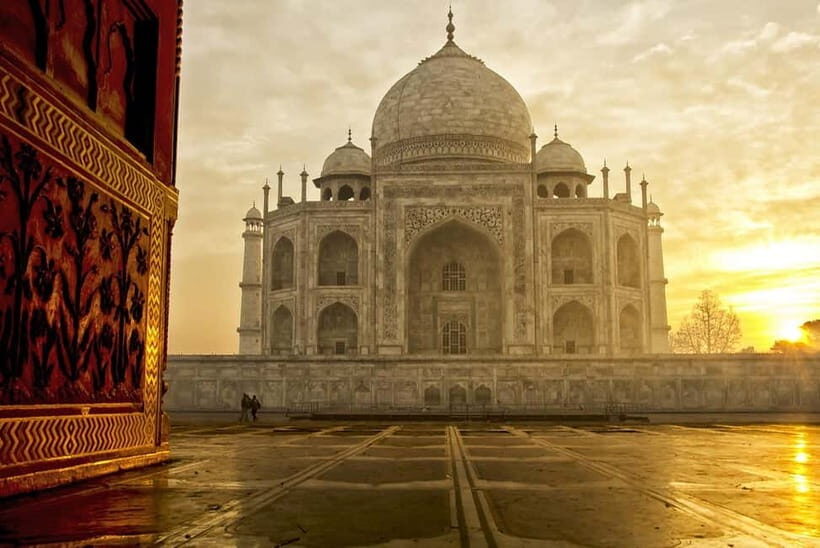
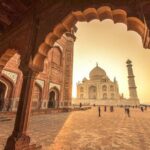
Day 2 starts with the heart of the whole trip: the Taj Mahal. The plan gives you about 2 hours there, and admission is included. The wording around the visit emphasizes morning light—dawn views that make the marble look softer and brighter rather than harsh. Whether or not you’re chasing perfect lighting, morning timing usually means better energy and fewer mood-killing delays.
What to do with your time on the ground: don’t try to see everything in one frantic loop. Let the main dome and façade take the lead, then spend the rest of your two hours on the angles and pathways your guide recommends. This is the kind of site where small shifts in viewpoint can change how the whole composition feels.
After Taj Mahal, you’ll head to Agra Fort (about 40 minutes, admission included). This is a different experience from the Taj. Instead of a single icon, you get the sense of power and fortification. It’s a solid follow-up because it widens the story from romantic monument to Mughal-era stronghold.
If you only did one Agra stop, you’d still have a great trip. But doing Taj Mahal plus Agra Fort in one day gives you context fast, without turning the day into a marathon.
You can also read our reviews of more tours and experiences in New Delhi





Agra Fort’s practical value: context without extra time
I like how the tour treats Agra Fort as a focused, shorter stop after breakfast. At about 40 minutes, you’re not stuck in a long circuit. You get enough time to recognize the fortress layout and feel how Agra’s Mughal legacy extends beyond one famous monument.
This is also where a guide’s role matters. A good guide can point out what to look for—gate areas, strong lines of the fortifications, and how the fort connects visually to the broader region. Even with limited time, you’ll get more than a selfie-and-leave visit.
Then you transfer to Jaipur that same day. That’s the nature of this itinerary: you’re always moving, so each stop has to count.
Jaipur arrival and Amber Palace: the hill-fort feel
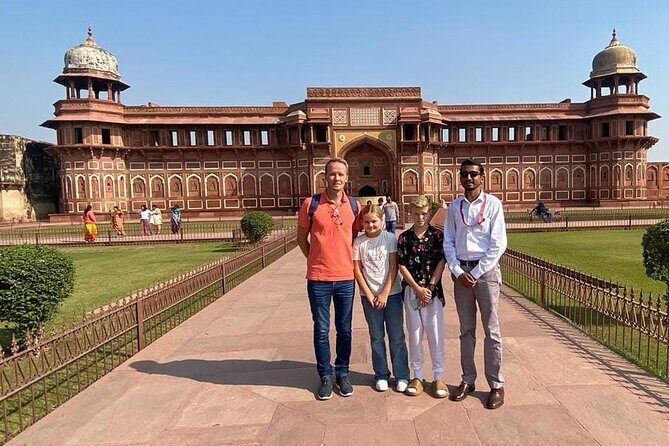
After Agra, you ride to Jaipur (the plan notes about 8 hours) and overnight there. On Day 3, you start your Jaipur highlights with Amber Palace for about 2 hours. Admission is listed as free for this stop.
Amber Palace is one of those sites where the setting does part of the work. It’s built for drama—fortress-like and Rajput in style—so you don’t need a long explanation to understand it’s meant to impress. Your time is long enough to walk, view main areas, and notice the details.
If you’re the type who loves architecture but also likes a breather, Amber Palace hits the sweet spot: enough time to see real features, not so long that you lose the rest of your day.
City Palace + Jantar Mantar: royal space and Rajput science
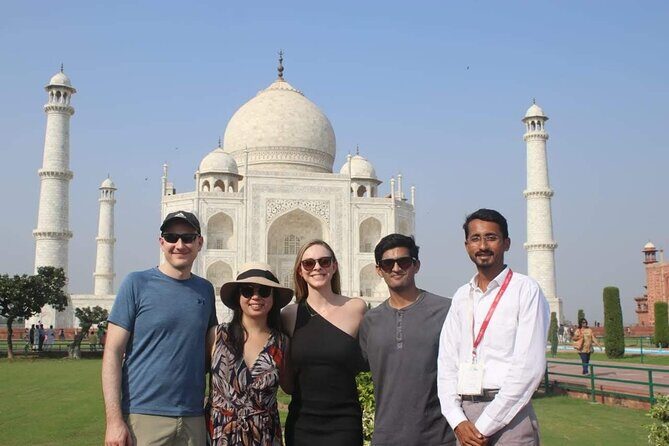
Next up is City Palace of Jaipur (about 45 minutes, admission included). This is the royal heart you can feel right away. Even in a shorter visit window, you get a strong sense of opulence and the way the palace complex functions as both a historic royal site and a living connection to Jaipur’s past.
Then you head to Jantar Mantar for about 1 hour (admission included). What I like about this stop is the mismatch between what many people expect and what they actually see. Instead of only decorative architecture, you get a serious old-school scientific observatory—monument-scale instruments for measuring the sky.
If you enjoy a site that teaches you something quietly, without turning into a lecture, Jantar Mantar is a strong choice in a short tour.
Hawa Mahal: fast photos, smart angles, short stop
Day 3 wraps with Hawa Mahal, the Palace of Wind. You’ll have about 30 minutes for it, and it’s listed as free.
This one is all about the façade. Hawa Mahal is instantly recognizable, with the pink sandstone look and honeycomb-style windows designed to catch airflow. Because your time is short, the best move is to focus on the outside details and the angles your guide recommends. Don’t over-plan—this is a quick hit.
One thing I appreciate: the itinerary doesn’t drag Hawa Mahal out. It treats it like a signature stop, not the entire goal of the day.
Why the private guide changes everything
This tour is set up for one group at a time, and the guide makes a real difference in how the day feels. In the feedback, guides like Mohammed, Riz, Monis, Abbas, Arvind, Abrar/Arbab, and Anjum get repeatedly mentioned for friendliness and for adjusting the tour to what the group wants.
That adaptation matters in small ways that add up:
- If you want more time at one monument, a good guide can adjust the schedule rather than forcing a strict pace.
- In market areas, having a guide who can help with communication can save you stress.
- For mixed ages and different comfort levels, a tailored pace means you’re less likely to feel rushed or lost.
So yes, you’re seeing the Golden Triangle highlights. But the private guiding is what keeps it from feeling like a conveyor belt.
Price and value: what $25.60 per person really buys
At $25.60 per person, the biggest value story here isn’t that it’s cheap. It’s what you’re getting for that cost.
You have:
- Air-conditioned vehicle
- All fees and taxes
- Bottled water
- Many admissions marked as included across the key sights (Humayun’s Tomb, Taj Mahal, Agra Fort, Jama Masjid, City Palace, Jantar Mantar)
- Some stops marked free (India Gate, President House main building, Chandni Chowk, Amber Palace, Hawa Mahal)
What’s not included: alcoholic beverages.
In other words, you’re not just paying for transport. You’re paying for the whole “put it together” package: tickets and taxes, plus a guide and vehicle that run the route on your behalf. That’s where value usually lives on this kind of trip.
The one thing to remember is that this is still three cities in three days. You’re buying efficiency, not long, slow stays.
Practical tips so the days don’t feel chaotic
A few practical habits will make this itinerary feel smoother.
- Wear shoes you can walk in. You’ll be on your feet at multiple sites, including big compounds like Jama Masjid and the forts/palaces.
- Keep water handy even though bottled water is included. Hot days + lots of walking can change how you feel fast.
- Use your guide’s timing. If they recommend starting with a certain viewpoint or arriving at a specific moment, it’s usually because it saves time or improves how the site reads.
- Plan for cultural pauses at places of worship like Jama Masjid. Even when the time block is set, you’ll want a calm, respectful pace.
- Expect photo moments to take longer than you think at Taj Mahal and the major palace façades. Don’t pack your brain with a shot list.
If you go in with flexibility, the schedule becomes your friend rather than your enemy.
Should you book this 3-day private Golden Triangle tour?
I think you should book this if you’re a first-timer to India and want the core Golden Triangle stops—Delhi’s Mughal and imperial landmarks, Taj Mahal plus Agra Fort, and Jaipur’s palace-and-science highlights—without dealing with ticket math and logistics. The private setup is also a plus if you want a guide who can adapt the pace, whether you’re traveling as a couple, with family, or with an adult child.
Skip it (or consider alternatives) if you hate long road days. The schedule includes significant transfers—Delhi to Agra, then Agra to Jaipur—and the sightseeing blocks are sized to fit those travel realities. If you want more breathing room between cities, you might find this too tight.
If you’re okay with a structured sprint, this tour offers a strong “big sights, managed time” value—especially with admissions included at several of the most important stops.
FAQ
What cities does the 3-day Golden Triangle tour cover?
It covers New Delhi, Agra, and Jaipur.
Do I get picked up from the airport?
Yes. Pickup is offered, and the tour starts from IGI Airport in an air-conditioned car.
Are monument entry tickets included?
Many are included in the tour plan, including Humayun’s Tomb, Taj Mahal, Agra Fort, Jama Masjid, City Palace, and Jantar Mantar. Some stops are listed as free, such as India Gate, Chandni Chowk, Amber Palace, and Hawa Mahal.
Is this a private tour?
Yes. It’s a private activity, and only your group participates.
What’s included in the price?
Included features are an air-conditioned vehicle, all fees and taxes, and bottled water.
Is alcohol included, and can I cancel?
Alcoholic beverages are not included. Cancellation is free up to 24 hours in advance for a full refund.