REVIEW · NEW DELHI
3 Days Golden Triangle Tour
Book on Viator →Operated by Creative India Holidays · Bookable on Viator
Three days, three icons, one easy plan. I like the stress-free planning: pickup, air-conditioned private transport, and a guide to keep you moving without the guesswork. I also like the guided highlights that help you understand what you’re seeing, not just take photos and sprint on. The main drawback to consider is simple: you’ll be on the move a lot, so this isn’t the slow, lingering style of travel.
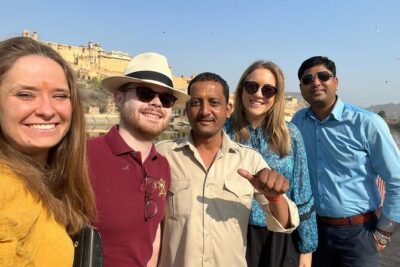
A big plus is the guide setup. On the best-run departures, the cities have different guides—Gaurav Kashyap in Delhi, Abdul Qadir in Agra, and Bipin in Jaipur—which means each day comes with fresh local context instead of one person trying to explain everything. I also value the practical way guides can adjust the pace for real-life needs, like helping elderly parents keep up comfortably.
You’re getting two nights of accommodation with daily breakfast (when you choose the hotel-included option), plus monument entry fees if you select that option. One key timing note: the Taj Mahal remains closed for all visitors on Friday, so your day order matters.
In This Review
- Key points to know before you go
- A smart way to tackle Delhi, Agra, and Jaipur in just 3 days
- Price and value: what $181 per person really covers
- Day 1 in Delhi: Humayun’s Tomb, Qutub Minar, India Gate, and Old Delhi markets
- Day 2 Agra: Taj Mahal, Agra Fort, and Fatehpur Sikri’s big-city bones
- Day 3 Jaipur: Amer Palace, City Palace, Hawa Mahal, Jal Mahal, and Jantar Mantar
- Why private city guides make this tour feel worth it
- Skip-the-line entry and entrance fees: the one detail you must confirm
- Getting from place to place: pickup time, private transport, and meal reality
- Who this tour suits best (and who should think twice)
- Final verdict: should you book this 3-day Golden Triangle tour?
- FAQ
- How long is the Golden Triangle tour?
- What is the meeting or start time?
- Does the tour include hotel pickup and drop-off?
- Is accommodation included?
- Are monument entrance fees included?
- Which cities are covered?
- Is the Taj Mahal always included?
- What is the cancellation window for a full refund?
Key points to know before you go
- Private vehicle, hotel pickup, and drop-off keep the trip efficient from the first morning.
- Different city guides (like Gaurav Kashyap, Abdul Qadir, and Bipin) help each stop feel grounded and specific.
- Two nights with breakfast are included if you book the version that includes hotels.
- Taj Mahal closure on Fridays can change what you get on Day 2.
- Monument entrance fees depend on your selected option, even though skip-the-line is offered when tickets are included.
A smart way to tackle Delhi, Agra, and Jaipur in just 3 days
The Golden Triangle is famous for a reason. Delhi shows you layers of empires and modern power, Agra anchors the story with the Taj Mahal and fort walls, and Jaipur adds the royal, colorful Rajasthan vibe. The challenge is that first-time travelers often waste time figuring out transport, tickets, and where to start.
This tour’s appeal is that the heavy lifting is handled for you. You get a guided, city-by-city route with hotel pickup and air-conditioned private vehicle transfers. Instead of turning your day into a spreadsheet of logistics, you can focus on the sights—and ask questions while you’re actually standing in front of them.
It’s also built for a certain kind of trip: tight time, big landmarks, and a plan that won’t fall apart the moment you’re running late. The fact that it’s rated 4.7 out of 5 (with 58 ratings) and recommended by 91% is a good sign that the experience works for most people—especially those who don’t want to spend their vacation time managing tickets and directions.
You can also read our reviews of more tours and experiences in New Delhi



Price and value: what $181 per person really covers
At $181 per person, the value comes from what you’re not paying for separately. The tour includes two nights of twin-share accommodation with breakfast (when you choose the hotel option), plus transfers and sightseeing by air-conditioned private vehicle. You also get a professional private guide, hotel pickup and drop-off, and taxes.
There’s one important “yes, but…”: lunch and dinner are not included, and drinks aren’t included either. That means you’ll need to budget for midday meals and evening food on your own. If you’re the type who likes a sit-down lunch in a proper restaurant, plan for it.
Another “yes, but…” is monument fees. Entrance fees are included only if you choose the option that covers monument entrance fees (and that’s also the option where skip-the-line entry is described). Some stops are listed as free admissions on this plan, so you may not pay for every single location—but don’t assume every ticket is automatically covered unless you selected the right add-on.
Day 1 in Delhi: Humayun’s Tomb, Qutub Minar, India Gate, and Old Delhi markets
Delhi can feel overwhelming. You have huge monuments in one direction and chaotic lanes in the other. This day balances both, starting with standout UNESCO-level architecture and ending in Old Delhi shopping streets.
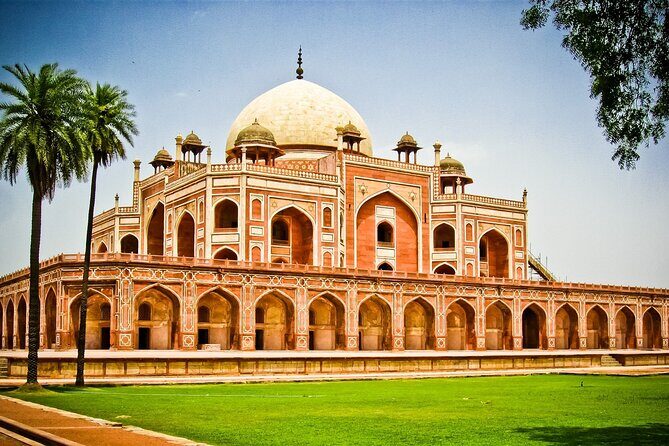
First stop is Humayun’s Tomb. It’s UNESCO-listed and an early, influential Mughal masterpiece. The benefit of going with a guide here is that you learn what makes this tomb a template for later Mughal design—so it’s not just an attractive building. Plan on about an hour.
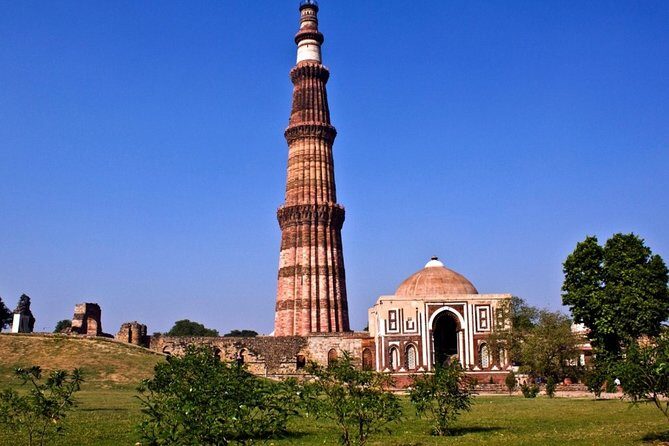
Next comes Qutub Minar, the iconic red sandstone and marble minaret rising to about 73 meters. This is the sort of monument where commentary matters. Without guidance, it’s easy to treat it like a photo stop. With a guide, you’ll connect the structure to the broader history around the site. Expect roughly an hour.
Then you shift to central Delhi with India Gate. It’s a quick stop (about 30 minutes) and listed as free admission on this plan. It’s also a good palate cleanser after the detailed tomb and minaret—more open space, more skyline views, and an easy place to reset.
After that, you’ll pass by the Rashtrapati Bhavan area (the President’s House). It’s described as Lutyens and Baker’s imperial architecture, and it’s a reminder that Delhi isn’t only ancient. It has a modern political heartbeat too.
Finally, the day turns toward old-world Delhi with Jama Masjid, followed by Chandni Chowk (Pasar Chandni Chowk). Jama Masjid is a major Mughal mosque built in the mid-1600s, and your time there is about an hour. This is one of those stops where you’ll want to slow down and watch how people move through the space, not just look at the walls.
Chandni Chowk is where the “culture” part becomes practical. You’ll walk into a market zone known for spices, dried fruit, silver jewelry, and bright saris. It’s a perfect place to buy a few small gifts or snack, if that’s your style. This part is listed as about an hour, but it’s the kind of time you might extend on your own later—if your energy holds.
Possible consideration for Day 1: Delhi days can feel long because you’re stacking monumental stops plus Old Delhi walking. Good shoes matter, and if you tire easily, this is where you’ll feel it first.
Day 2 Agra: Taj Mahal, Agra Fort, and Fatehpur Sikri’s big-city bones
Agra is the day that most people look forward to. You’ll spend time at the Taj Mahal, then Agra Fort, and finish with a stop at Fatehpur Sikri. This is a classic Mughal trio: the love story monument, the fortress power base, and the ambitious capital attempt outside the city.
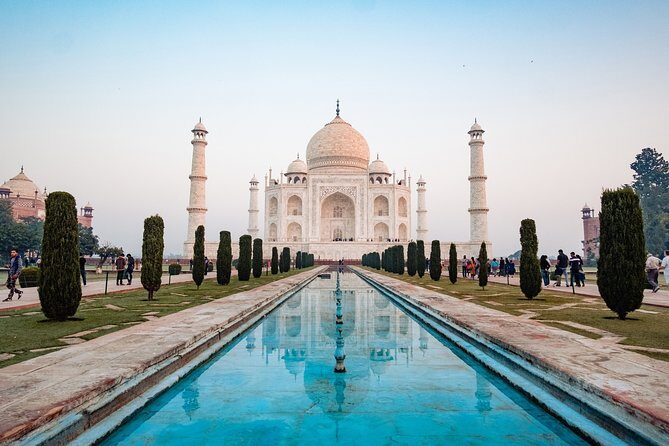
The big one is the Taj Mahal. It’s a mausoleum made of white marble, built between 1631 and 1653 under Shah Jahan. You’ll usually feel the difference between seeing it from afar and being close to its details—especially once you understand what you’re looking at. Time here is listed as about two hours.
Now the critical timing note: the Taj Mahal remains closed for all visitors on Friday. So if your Day 2 happens to land on a Friday, you’ll need flexibility from the schedule or a different plan day. Before you commit, check which day your visit will be.
Next is Agra Fort, a massive red sandstone fort associated with Akbar (with later marble additions by Shah Jahan). It sits by the Yamuna River. Time is about an hour. A guide helps you “read” the fort—seeing it not just as walls, but as a power center where rule, defense, and decoration all overlap.
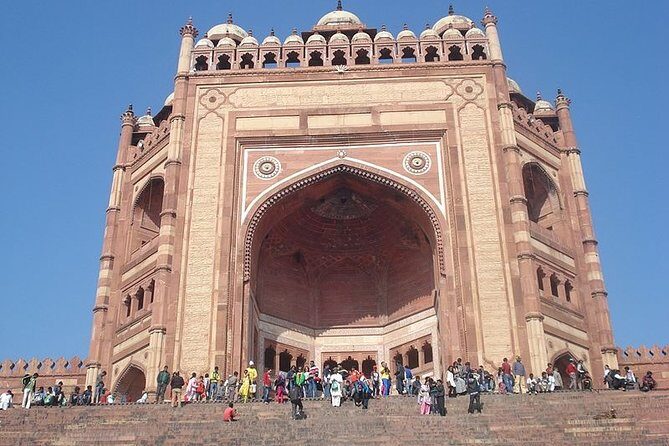
Then you head to Fatehpur Sikri, around 40 kilometers from Agra. This fortified city was a short-lived Mughal capital between 1572 and 1585. It’s listed as free admission on this plan and takes about an hour. If you’ve ever wondered why there are ruins that feel so intentional, this is the place to connect the dots. The site often makes people think about how empires plan, overreach, and then shift course.
One practical tip: because Day 2 is packed, go light on heavy shopping and focus on photos and notes. You’ll already have plenty to process.
Day 3 Jaipur: Amer Palace, City Palace, Hawa Mahal, Jal Mahal, and Jantar Mantar
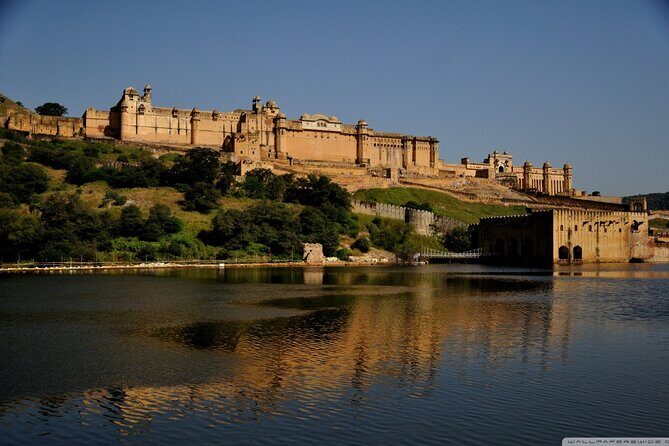
Jaipur is where the Golden Triangle starts to feel like Rajasthan: forts, palaces, and geometry made for daylight.
Your day begins at the Amer Palace (Amer Fort), about 11 kilometers from Jaipur. It was built in 1592 by Raja Man Singh. Time is listed as about two hours. Amer is a great opener because it sets the tone—this is where you see the fort-palace idea in full color and scale. With a guide, you’ll pick up what parts were built for power, what parts were for ceremony, and why certain views mattered.
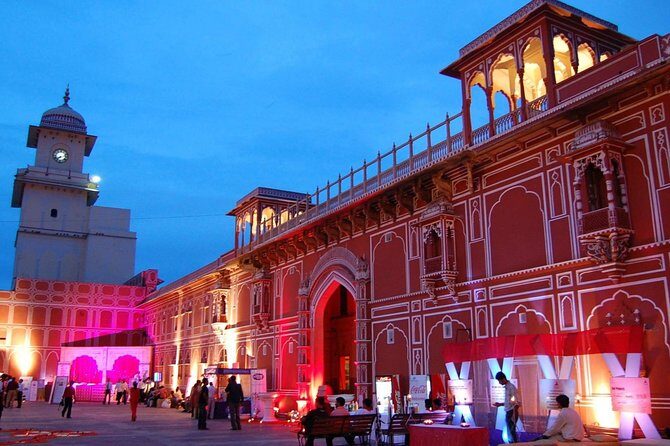
Then you head to the City Palace of Jaipur, in the heart of the Pink City. The description notes buildings like Chandra Mahal and Mubarak Mahal and explains it was where the Maharaja reigned. You’ll spend about an hour here. City Palace is a strong match for people who like details: coats of paint, royal layouts, and symbolism you can spot with a bit of explanation.
After that comes Hawa Mahal, the Palace of Wind. It’s a five-storey facade built in 1799, famous for its many windows. Your time is about 30 minutes, which is about right because the main experience is seeing the structure’s design and understanding how it worked. Don’t rush it—take a minute to look at the facade pattern and the way light hits it.
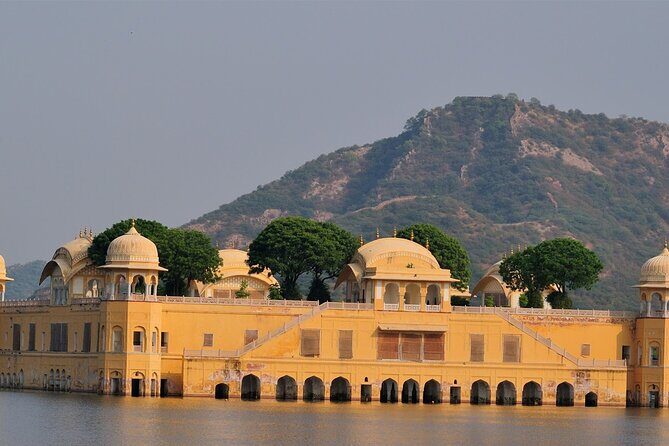
Next is Jal Mahal, the Water Palace in the middle of Man Sagar Lake. The plan lists this as free admission and about 20 minutes. The views depend on the day’s light and perspective, but even if you only get a short look, it adds a calmer, scenic break before the more “mind-bending” final stop.
Finally, you’ll visit Jantar Mantar, Jaipur’s astronomical observation site with fixed instruments built in the early 18th century. Time here is about an hour, and the site is described as having around 20 main instruments. This is a great last stop if you like learning through structure instead of only decoration. If you’ve ever wondered how people tracked time and celestial cycles before modern tech, this is where it clicks.






Why private city guides make this tour feel worth it
A guided tour can go two ways. It can either feel scripted, or it can help you connect the facts to what you’re seeing. The best feature of this plan is that it’s set up for professional private guiding in each city, rather than one long monologue for every stop.
On strong departures, you’ll have different guides per city. That matters because each place needs its own pacing and explanation. You might meet Gaurav Kashyap in Delhi, Abdul Qadir in Agra, and Bipin in Jaipur. You also get the kind of flexibility that shows up when you travel with family needs—like the ability to slow down and accommodate elderly parents. That’s not just “nice.” It keeps the whole trip from turning into stress.
So when you’re at a monument like Qutub Minar or Agra Fort, don’t just scan for the postcard view. Ask your guide what makes that site different, what to look for first, and what most people miss. With a live guide, you can quickly build understanding instead of just collecting sights.
Skip-the-line entry and entrance fees: the one detail you must confirm
The tour describes skip-the-line entry to all monuments, and it also lists monument entrance fees as included only if you pick the option that includes tickets. Some stops are marked with free admission (like India Gate, Fatehpur Sikri, and Jal Mahal), while many others are listed as admission ticket not included.
So the practical move is simple: when booking, confirm which option you’ve selected for monument entrances. If you selected the entry-fee option, you should be set for included tickets and the skip-the-line advantage. If not, you may face pay-at-site decisions for several major stops.
This is also where “value” becomes personal. If you hate ticket lines and you want everything handled, choose the add-on that covers entrance fees. If you prefer to manage tickets yourself (and you don’t mind lines), you might choose differently—but understand that the tour’s smoothness depends on those decisions.
Getting from place to place: pickup time, private transport, and meal reality
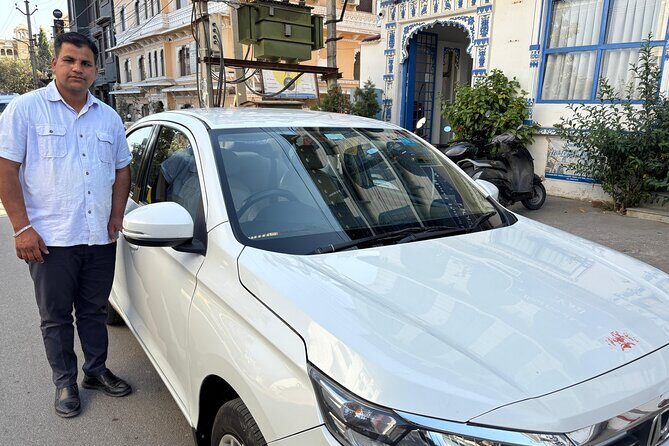
The tour starts at 8:00 am. Hotel pickup and drop-off are included, so you don’t have to meet a group at some distant landmark. Transfers and sightseeing happen by air-conditioned private vehicle, which is a big comfort upgrade—especially in hot or busy seasons.
Because lunch and dinner are not included, you should plan meals like a local. The guided stops have set durations, so you’ll want your lunch timing to match the schedule rather than treat it as spontaneous. If you’re sensitive to long gaps between meals, bring a small snack.
Also, drinks aren’t included. This matters in India, where staying hydrated keeps the day enjoyable. Even if you don’t love bottled water, having a plan for hydration makes the pace feel easier.
Who this tour suits best (and who should think twice)
This tour is a good fit if:
- you want the major Golden Triangle highlights in a controlled 3-day window
- you prefer a guided experience over self-planning
- you’re traveling with family members who benefit from smooth pickup, transport, and explained sights
You should think twice if:
- you hate early starts and fast pacing
- you want lots of free time to wander without a fixed route
- your trip includes a Friday visit to the Taj Mahal, because the Taj Mahal is closed for all visitors on Fridays
The private tour format also means your group stays together. That’s generally a plus if you want a more personal flow instead of being constantly moved around.
Final verdict: should you book this 3-day Golden Triangle tour?
If your priority is a well-managed, landmark-heavy Golden Triangle with guides in each city, I think this is a strong booking. For $181, the value comes from the combination of two nights with breakfast (hotel option), private air-conditioned transport, and city-by-city private guidance. You’re paying for time saved and stress avoided.
My main advice is to confirm two things before you choose:
- make sure you understand the entrance-fee option you selected, so you know whether skip-the-line and tickets are included
- double-check that your schedule doesn’t land your Taj Mahal day on a Friday, since it’s closed for all visitors then
Do that, and you’ll be set up for a trip that feels efficient and actually informative, not just busy.
FAQ
How long is the Golden Triangle tour?
It runs for 3 days (about 2 nights).
What is the meeting or start time?
The tour starts at 8:00 am.
Does the tour include hotel pickup and drop-off?
Yes. Hotel pickup and drop-off are included.
Is accommodation included?
It includes 2 nights of accommodation on twin sharing with breakfast if you book the option that includes hotels.
Are monument entrance fees included?
Monument entrance fees (admission tickets) are included only if you select the option that includes them. Lunch and dinner are not included.
Which cities are covered?
The tour covers New Delhi, Agra, and Jaipur.
Is the Taj Mahal always included?
The Taj Mahal is closed for all visitors on Friday, so plan your dates accordingly.
What is the cancellation window for a full refund?
You can cancel up to 6 days in advance for a full refund.