REVIEW · NEW DELHI
3 Days Golden Triangle Private Tour
Book on Viator →Operated by Perfect India Trip · Bookable on Viator
Golden Triangle tours are busy on purpose. This one works because you see Delhi, Agra, and Jaipur in a tight 3 days without having to research or coordinate transport.
What I like most is the mix of major sights and useful pacing. You get a live guide in each city, plus air-conditioned private car pickup and drop-off, so you spend less time figuring things out. I also like the flexibility, with different time slots you can choose from, which helps if you’re trying to match temple/market rhythms or avoid the worst crowds.
One thing to think about: this is a fast itinerary. You’ll pack a lot in, and that means some stops are shorter (especially in Delhi), so you may want to leave extra time for the sites that really hook you.
In This Review
- Key things to know before you go
- Golden Triangle in three days: how the pacing actually feels
- Day 1 in Delhi: from Qutub Minar’s minaret to Old Delhi by rickshaw
- Qutub Minar (UNESCO) and why the details matter
- Lotus Temple: modern design with a calming pause
- India Gate, Parliament House, and Rashtrapati Bhavan: the power axis
- Agrasen Ki Baoli and Humayun’s Tomb: the “wow” switches
- Chandni Chowk and Jama Masjid: Old Delhi on the ground
- Rickshaw ride and Red Fort: the day ends with momentum
- Traveling to Agra: the Yamuna Expressway drive
- Agra Day 2: sunrise Taj Mahal, Agra Fort, and the Baby Taj stops
- Taj Mahal: sunrise viewing plus a guided visit inside
- Agra Fort: the fort that explains rule
- Itmad-ud-Daula, also called the Baby Taj
- Chand Baori in Abhaneri: the stepwell with 3,500 steps
- Ending in Jaipur
- Jaipur on Day 3: stepwell views, Jal Mahal, and Jantar Mantar’s astronomy machines
- Panna Meena ka Kund: the stepwell near Amber Fort
- Jal Mahal: the palace on the lake
- City Palace: ceremonial residence
- Jantar Mantar: UNESCO astronomy instruments
- Hawa Mahal: Palace of Wind from the outside
- Back to Delhi
- Guides, comfort, and the small things that shape your day
- Price and value: what $20 per person really buys
- Who this Golden Triangle tour is best for
- Should you book this 3-day Golden Triangle tour?
- FAQ
- How long is the 3 Days Golden Triangle Private Tour?
- Is pickup and drop-off included?
- Is this tour private?
- Do you provide a guide?
- Is transportation included?
- Are entrance tickets included?
- Are hotels included?
- Are meals included?
- Is bottled water provided?
- What is the cancellation policy?
Key things to know before you go

- Private group experience: only your group participates, with a guide in each city.
- AC private vehicle with all driving costs covered: fuel, tolls, and parking are included during the tour.
- UNESCO World Heritage stops across all three cities: Qutub Minar, Humayun’s Tomb, Taj Mahal, Agra Fort, and more.
- Taj Mahal timing option: early start lets you catch sunrise viewing, plus a guided visit inside.
- Old Delhi isn’t just on foot: you’ll add a rickshaw ride experience to break up the walking.
- You can choose your package level: guide-only, transportation, or luxury with hotels (and entrance tickets if you pick the inclusive option).
Golden Triangle in three days: how the pacing actually feels
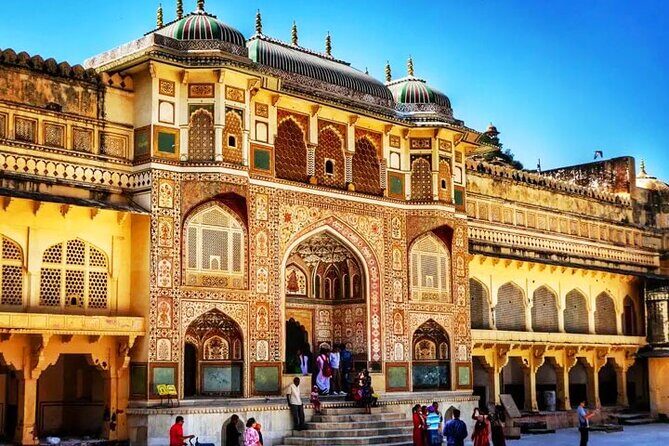
This tour is built for people who want the headline monuments—fast. You’ll start in New Delhi, then move to Agra, then Jaipur, with hotel nights added when you choose an option that includes accommodation.
The pacing is the real “feature.” Day 1 throws a lot at you in Delhi, then Day 2 concentrates on Agra’s biggest hits (especially the Taj Mahal), and Day 3 is Jaipur’s architecture and planning-story (palace + astronomy instruments + classic views). It’s not slow travel, but it’s structured travel—organized enough that you don’t feel lost.
The guide format is another big deal. Instead of one person trying to cover everything with one set of knowledge, you get a live tour guide service in each city. That usually means better explanations and smoother logistics at each stop, especially when you’re moving from Delhi to Agra and then onward.
Pickup and drop-off assistance helps too. You’re not stuck arranging your own rides between neighborhoods and main sights. Your transport is also air-conditioned, which matters once the day heats up.
You can also read our reviews of more private tours in New Delhi



Day 1 in Delhi: from Qutub Minar’s minaret to Old Delhi by rickshaw
Delhi on this itinerary is a “greatest hits with context” day. You start with landmarks that explain why Delhi has always been a strategic prize, then you slide into Old Delhi’s shopping and mosque neighborhood feel.
Qutub Minar (UNESCO) and why the details matter
You’ll begin at Qutub Minar, a UNESCO World Heritage site built by Qutb-ud-din Aibak in 1193. The minaret’s design is said to have been influenced by the Minaret of Jam, and it has a spiral staircase. Even if you don’t go deep into architecture, it’s a powerful start because it immediately sets the timeline for Delhi Sultanate-era building.
This is also one of those stops where a guide helps you notice what you’d otherwise miss: why this structure is treated as a landmark and what its form communicates.
Lotus Temple: modern design with a calming pause
Next up is the Lotus Temple, built in 1986. Its flower-like design is the headline, and the calm geometry is a nice reset after older monuments. This stop is shorter, so it’s more of a quick visual and photo moment than a long sit-and-learn.
India Gate, Parliament House, and Rashtrapati Bhavan: the power axis
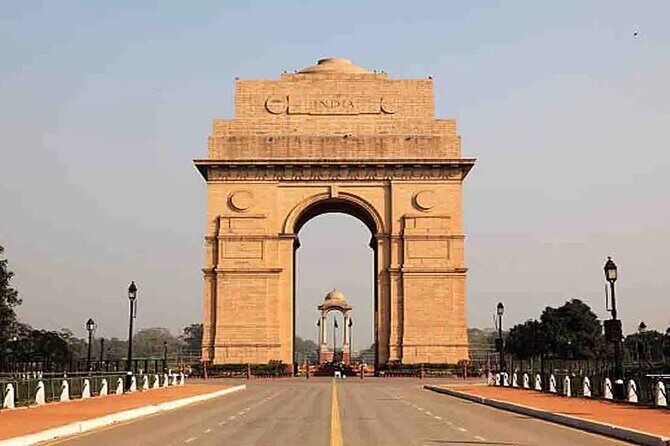
After that, you’ll move to the ceremonial core: India Gate, then stops around Parliament House and Rashtrapati Bhavan. India Gate is a war memorial devoted to British Indian soldiers who lost their lives. The tour framing here is useful because the structure isn’t just a memorial—it’s also part of the architectural language next to Rajpath.
Parliament House (Sansad Bhavan) is described as having a round design modeled after something specific in its origin story, and Rashtrapati Bhavan is the president’s official residence set in an estate with gardens and open space. On a day packed with landmarks, these short pauses help you feel the modern state side of Delhi, not only the Mughal and Sultanate eras.
You can also read our reviews of more tours and experiences in New Delhi





Agrasen Ki Baoli and Humayun’s Tomb: the “wow” switches
Two stops later you hit Agrasen Ki Baoli, a conserved medieval step well. The tour notes it’s about 60 meters long and 15 meters wide. Step wells are the kind of attraction that can feel abstract until someone points out how the design relates to everyday life and water needs.
Then you go to Humayun’s Tomb (UNESCO), built with an order from Empress Bega Begum in 1558. This is a longer stop, around an hour, which helps because it’s the kind of monument where you benefit from slow looking instead of rushing for a picture.
Chandni Chowk and Jama Masjid: Old Delhi on the ground
You’ll finish this major Delhi sweep with Chandni Chowk and Jama Masjid. Chandni Chowk is described as a busy shopping district with dried fruit, spices, silver jewelry, and saris, plus narrow alleyways packed with side shops. If you like markets, this is where the tour becomes human-sized.
Then Jama Masjid (Masjid-i-Jehan-Numa) is a major mosque built between 1650 and 1656 by Shah Jahan. This stop being around an hour gives you a chance to take in scale without it turning into a sprint.
Rickshaw ride and Red Fort: the day ends with momentum
Next comes a rickshaw tour in Old Delhi. The description ties the ride to a historical market timeline started when Delhi became the capital, and it’s also a practical break from walking. You’ll also visit Red Fort, a medieval fort that served as home to Mughal emperors for nearly 200 years, with museums inside.
The rickshaw + Red Fort combo is smart pacing. You get movement and then a transition to a site with more “big monument” breathing room.
Traveling to Agra: the Yamuna Expressway drive
After Delhi, you’ll have time for lunch at a nearby restaurant during the tour and then drive via the Yamuna Expressway to your accommodation in Agra. The day ends with check-in and leisure time, so you don’t get thrown straight into another full schedule before sleep.
Agra Day 2: sunrise Taj Mahal, Agra Fort, and the Baby Taj stops

Agra is where the itinerary earns its reputation. Day 2 is built around the Taj Mahal, then expands into fort power and Mughal garden aesthetics.
Taj Mahal: sunrise viewing plus a guided visit inside
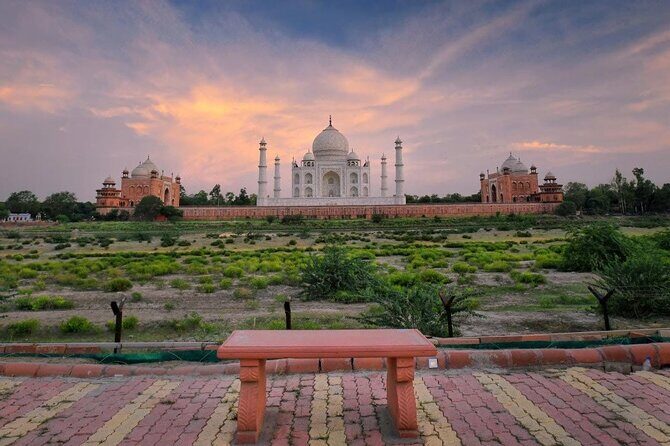
You’ll start with an early tour to see sunrise at the Taj Mahal. The tour notes that sunrise viewing happens when you get up early and begin your tour. After that, there’s a two-hour guided tour within the Taj Mahal.
This is the kind of stop where a guide matters because you’re not just staring at a landmark; you’re learning how the monument is meant to be read. And having a dedicated guided block reduces the common problem of wandering around without context.
Agra Fort: the fort that explains rule
Next is Agra Fort, a UNESCO World Heritage site. The itinerary includes guided time (about an hour) to explore its flats and stunning architecture. This stop complements the Taj Mahal well: one is associated with memorial beauty, the other shows the machinery of power and defense.
Itmad-ud-Daula, also called the Baby Taj
Then you’ll see Itmad-ud-Daula, also known as Baby Taj. The tour notes it has multiple outbuildings and gardens around the main building. This stop is shorter, but it’s a good palate cleanser from the emotional weight of the Taj Mahal.
Chand Baori in Abhaneri: the stepwell with 3,500 steps
Midway, you’ll visit Chand Baori, Abhaneri, an enormous elaborate stepwell from the 8th and 9th centuries, with 3,500 steps described in the itinerary. It’s an included admission stop and about an hour.
If you’ve already seen stepwell Agrasen Ki Baoli in Delhi, this is a chance to compare styles and scale. If you haven’t, it’s still a strong add because the geometry gives you something different from tomb and fort forms.
Ending in Jaipur
After the stepwell stop, the day includes arrival in Jaipur and a hotel check-in. Then you get the night there, which helps because Day 3 involves several major sights.
Jaipur on Day 3: stepwell views, Jal Mahal, and Jantar Mantar’s astronomy machines
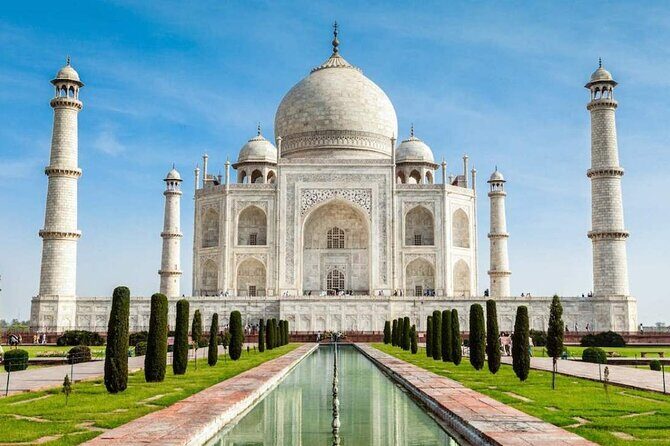
Jaipur’s Day 3 is all about planned design—water, palaces, and even instruments meant to map the sky.
Panna Meena ka Kund: the stepwell near Amber Fort
You start with Panna Meena ka Kund, a step well near Amber Fort. It’s a shorter guided visit (about 15 minutes), but it sets the water-and-architecture theme early. It also gives you a quick photo and structure check before bigger monuments.
Jal Mahal: the palace on the lake
Next is Jal Mahal, a palace in the center of Man Sagar Lake. The itinerary notes it was expanded and refurbished in the 18th century by Maharaja Jai Singh II. It’s included and about 30 minutes.
What’s nice here is that it slows things down visually. Even if you’re not a lake-and-palace person, this stop provides a different kind of scene than forts and tombs.
City Palace: ceremonial residence
Then you visit the City Palace of Jaipur, originally built in 1721 as the Maharaja of Jaipur’s official and ceremonial residence. The stop is about an hour, with the itinerary stating it hosted religious and cultural gatherings and that it still has a current residential component.
A guided hour is enough to connect what you’re seeing to the palace’s intended role, not only its looks.
Jantar Mantar: UNESCO astronomy instruments
After City Palace, you’ll see Jantar Mantar, a UNESCO World Heritage site. The itinerary describes it as an assembly of nineteen architectural astronomical instruments built by Jaipur’s founder Sawai Jai Singh II. The stop lasts about an hour.
This is one of those places that can look like a collection of odd stone structures until someone gives you the explanation. If you like the idea that cities weren’t only built for power but also for measurement of the sky, you’ll enjoy this.
Hawa Mahal: Palace of Wind from the outside
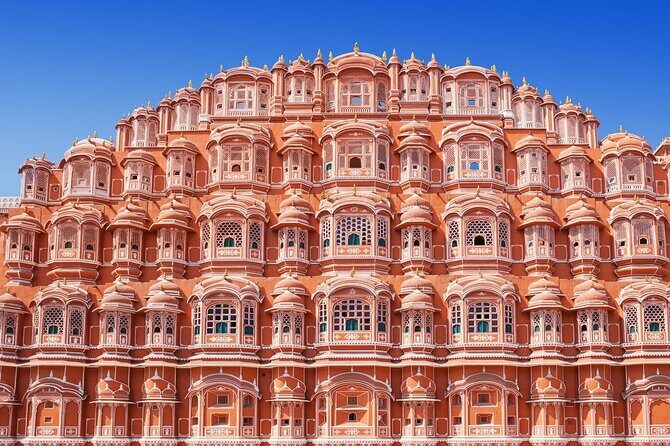
You then get to Hawa Mahal, also called the Palace of Wind. The itinerary highlights its red and pink sandstone and notes it’s famous for architecture. The stop is around 15 minutes.
This one is short by design. It’s best when you treat it like a classic exterior landmark rather than expecting a long museum session.
Back to Delhi
The tour ends with the drive back to New Delhi, about five hours, with options for drop-off back in the city or to the Jaipur airport.
Guides, comfort, and the small things that shape your day
A Golden Triangle tour lives or dies by the people moving you and explaining what you’re seeing. This operator’s model is built on live guides plus a private AC vehicle.
What stands out from guide names you may be assigned: in Delhi, you might meet Rahul or Azhar. In Agra, you might meet Priya or Mohammed Kadir. In Jaipur, you might be guided by Arbab. Reviews also mention Neeraj and his team of guides and drivers, and the tone from feedback is consistent: you’ll be treated as a real group, not just a set of ticket scans.
There’s also practical warmth in the way guides help you handle the moments that matter: photo help, explanations tied to what you’re looking at, and friendly conversation instead of hard-selling.
Comfort basics are covered. You get mineral water bottles during the trip, and you’re in an air-conditioned private vehicle with fuel, toll, and parking included. That’s not glamorous, but it reduces stress on a schedule that moves quickly.
Food is partially handled too. The included list states breakfast (2) and dinner (2), and the itinerary notes you’ll have time for lunch at a nearby restaurant on Day 1 (you’re not told lunch is included). If you have dietary needs, this is one area to plan around, since personal expenses aren’t included.
Price and value: what $20 per person really buys
At $20 per person, this looks like a budget-friendly way to hit three cities, major UNESCO sites, and private transportation. But here’s the key: the value depends on which option you choose.
The tour description allows different packages: guide-only, a tour with transportation, and a luxury package with hotels. The included list also says hotel accommodation is included if option chosen, and entrance tickets are included if option chosen all inclusive. So your lowest advertised price may align with fewer bundled items, while a higher bundle might include entrance tickets at monuments and more of your core logistics.
Even if you’re comparing to DIY, you should factor time. Delhi to Agra to Jaipur isn’t just distance; it’s transit planning, ticket logistics, and navigating timing for major sights. This itinerary removes a lot of friction by pairing each day with a guided route and private car.
So for value, ask yourself two questions:
- Do you want the structure of someone else handling the order and timing?
- Do you want your entrance tickets bundled, or are you fine paying as you go?
Who this Golden Triangle tour is best for
This tour fits best if you:
- Want a first-timer Golden Triangle hit list in 3 days.
- Prefer a guided plan over sorting monuments on your own.
- Like mixing big UNESCO landmarks with Old Delhi market energy.
- Want a private group feel with pickup and drop-off assistance.
It may feel a bit intense if you like slow afternoons, long stays in each monument, or lots of free time to wander without a schedule. The itinerary includes some shorter segments, especially in Delhi and for a couple of exterior-focused Jaipur stops.
Should you book this 3-day Golden Triangle tour?
I’d book it if you want maximum structure with live guidance and private transport, and you’re comfortable with a packed schedule. The biggest reasons are the guided approach across all three cities, the UNESCO coverage, and the built-in pacing that gets you from Delhi to Agra to Jaipur without daily logistics headaches.
I’d hesitate if you’re the type who needs lots of unscheduled time at each site. For that travel style, you’d likely want a longer itinerary or fewer stops per day.
If you go, pick the package level that matches your priorities. If you hate planning, choose the more complete option. If you’re budget-first, go guide-and-transport and handle any extras you want separately.
FAQ
How long is the 3 Days Golden Triangle Private Tour?
It’s approximately 3 days, covering Delhi, Agra, and Jaipur with travel time between cities.
Is pickup and drop-off included?
Yes, pick and drop-off assistance is included.
Is this tour private?
Yes. It’s a private tour/activity, and only your group will participate.
Do you provide a guide?
Yes. There is a live tour guide service in each city for the monument stops.
Is transportation included?
Yes. You’ll travel by air-conditioned private vehicle, including fuel, toll, and parking charges during the tour.
Are entrance tickets included?
Entrance tickets are included if you choose the all-inclusive option. Some stops are listed as admission ticket free, while others are listed as admission ticket included.
Are hotels included?
Hotel accommodation is included only if you choose the option that includes accommodation.
Are meals included?
The included list states breakfast (2) and dinner (2). The itinerary also gives time for lunch at a nearby restaurant on Day 1, but lunch inclusion is not stated as included.
Is bottled water provided?
Yes. Mineral water bottles are complimentary during the trip.
What is the cancellation policy?
You can cancel for free up to 24 hours in advance of the experience start time for a full refund. If you cancel less than 24 hours before, you won’t be refunded. The tour also requires good weather, and if canceled due to poor weather, you’ll be offered a different date or a full refund.