REVIEW · NEW DELHI
Private Custom Luxury Golden Triangle Tour
Book on Viator →Operated by Travelosei · Bookable on Viator
Golden Triangle tours are easy to overbook. This one feels built for control. You get a private custom experience in New Delhi that’s designed around planning, on-the-ground support, and a 24/7 concierge—so your days run smoother than the usual bus-and-bypass style.
I like that it’s not just a checklist of famous monuments. You get a dedicated tour manager, pickup service, private transportation, and a mobile ticket setup meant to reduce last-minute stress. That support matters most when you’re moving fast between Delhi, Agra, and Jaipur.
Here’s one consideration: Amer Fort includes an elephant ride. If you’d rather skip animal rides, make that a deal-breaker before you book.
In This Review
- Key highlights worth paying for
- Golden Triangle, with the comfort of a private plan
- Day 1 in Delhi: Red Fort, Jama Masjid, Chandni Chowk rickshaw energy, then Qutub Minar
- Day 2 from Delhi to Agra: Humayun’s Tomb, “drive-by” landmarks, then sunset-ready Agra forts
- Day 3: Taj Mahal at sunrise, then Fatehpur Sikri stepstones toward Jaipur
- Day 4 Jaipur icons: Amer Fort elephant ride, Hawa Mahal, City Palace, Jantar Mantar, Albert Hall
- Day 5 Jaipur forts and the ride back to New Delhi
- Value check: Is $1,700 per person fair for a private luxury Golden Triangle?
- Service style that matters: concierge, tour manager, and the no-tipping approach
- Who should book this private Golden Triangle tour
- Final decision: Should you book?
- FAQ
- How long is the Private Custom Luxury Golden Triangle Tour?
- Which cities are included?
- Do you get pickup from your hotel?
- Are admission tickets included?
- Are meals included?
- Is private transportation included?
- Is tipping required?
- Is GST included in the price?
- What’s not included besides dinner?
- Can I cancel for a full refund?
Key highlights worth paying for
- Sunrise Taj Mahal timing that starts your Agra day with maximum impact
- Old Delhi in a private vehicle, plus a rickshaw ride in Chandni Chowk for the street-level feel
- Included entrance tickets at major sites like Red Fort, Qutub Minar, Taj Mahal, and others
- Long-drive comfort with an air-conditioned vehicle and transfers between cities
- Guides with strong on-site pacing, with named professionals like Babar, Javed Khan, and Amit showing up in the tour’s history
Golden Triangle, with the comfort of a private plan
The classic Golden Triangle route is Delhi–Agra–Jaipur. What makes this version feel different is the structure behind it: a private tour setup with a dedicated tour manager and 24/7 concierge support. That means you’re not just being moved from stop to stop—you’re being managed.
If you like your travel to feel calm, this kind of planning is the point. You spend less time asking where to go, and more time actually looking at what’s in front of you. Even the small policy details are meant to lower friction—there’s a stated no tipping policy, so you don’t have to worry about scrambling with cash during the trip.
The flipside is price. At $1,700 per person, you’re paying for private logistics, guides, and included costs—not just for monuments. If you’re traveling solo on a tight budget, you may prefer a cheaper group format. If you want comfort plus timing, the math is easier to justify.
You can also read our reviews of more tours and experiences in New Delhi.



Day 1 in Delhi: Red Fort, Jama Masjid, Chandni Chowk rickshaw energy, then Qutub Minar

Your day starts with pickup from your hotel lobby and a private vehicle heading into Old Delhi. The first major stop is the Red Fort, a huge Mughal-era landmark that anchors the area. You get about 1 hour here, with an admission ticket included.
From there you move on foot and by short transfer to Jama Masjid, the large mosque near Red Fort. The tour gives you a guided walk-through window of about 45 minutes, and the admission here is listed as free. This is one of those “pause and notice” stops—the scale hits immediately, and the setting is very different from the fort.
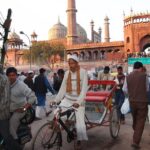
Then comes a change of pace: Chandni Chowk and its market streets. You get around 45 minutes for shopping and street food browsing, plus a rickshaw ride. This is fun, but it’s also frantic if you’re not used to Indian street traffic. If you don’t love chaos, stay close to your manager and keep your expectations simple: this is about atmosphere, not a neat stroll.
The day ends with Qutub Minar, the UNESCO-listed brick minaret. You’ll have about 1 hour there, and admission is included. It’s a strong contrast to the Mughal fort and mosque—more open, more dramatic in shape, and great for photos in daylight.
What I like about Day 1: you get a big historical spine (Red Fort → Jama Masjid → Qutub Minar) plus a real street window in Chandni Chowk.
What to watch: the day packs several high-intensity sights, so wear shoes you can keep on for long periods.
Day 2 from Delhi to Agra: Humayun’s Tomb, “drive-by” landmarks, then sunset-ready Agra forts
After breakfast and checkout, you meet your tour manager again for another Delhi day. The first stop is Humayun’s Tomb, a UNESCO precursor-style site to the Taj Mahal. You get about 1 hour, with admission included. It’s a good opener because it teaches you how Mughal design matured—so later, when you see the Taj, it feels more connected.
Next is Central Delhi via your private vehicle: India Gate and the Parliament House area. You don’t spend long on foot here—think short views and guided context while you stay comfortable in the car. That’s actually a smart use of time in a city like Delhi, where traffic can eat your schedule. These are quick hits around 20 minutes for India Gate and 40 minutes for Parliament/President House viewpoints.
Then you travel to Agra via the Yamuna Expressway. The drive is about 3 hours. Once you arrive, there’s hotel check-in with lunch and rest support arranged through the local representative, keeping you from having to figure out the first part of your Agra evening.
In late afternoon, you go sightseeing around 15:30 with a visit to Itmad-ud-Daulah, also known as the Baby Taj. This stop is about 1 hour, with admission included. I love this timing: it’s late enough to slow down after travel, and the garden-mausoleum vibe is calming compared to the heavier fort stops.
After Baby Taj, you visit Agra Fort for about 1 hour, with admission included. The tour notes a sunset-friendly plan for the best views. That makes sense here: Agra Fort sits in a way that benefits from softer light and less harsh midday sun.
What I like about Day 2: you get two styles of Agra—private mausoleum gardens (Baby Taj) and the imposing sandstone scale (Agra Fort).
What to watch: the day includes a long transfer, so you’ll want to keep your energy for the late-afternoon sightseeing.
Day 3: Taj Mahal at sunrise, then Fatehpur Sikri stepstones toward Jaipur
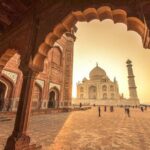
Day 3 is built around one of the biggest draws in India: the Taj Mahal at sunrise. The schedule says you meet for a sunrise tour based on timing. You get about 1 hour 30 minutes there, with admission included.
This is one of those moments where timing matters more than almost anything else. Sunrise light helps the marble look less flat, and it’s usually the only time slot where you can feel like you’re seeing the place rather than queuing around it. You’re also more likely to have a smoother flow for photos and walking—especially when you have a guide shaping your pacing.
After the Taj, you start the drive toward Jaipur, which takes about 3 hours. On the way, you stop at Fatehpur Sikri, the fortified Mughal ruins. You get about 1 hour here, with admission included. This stop is valuable because it shows you how the Mughal story expands beyond one monument—there’s an entire city’s worth of architecture and planning, even if it’s now in ruins.
Then you head to Chand Baori in Abhaneri, famous for its stepped well. The tour gives about 45 minutes and highlights that it’s a 13-story stepwell built back in the 9th century. Even if you’ve seen photos before, it hits differently in person—your brain starts measuring depth and repetition, and suddenly you understand why it’s so famous for angles.
Finally, you reach Jaipur, check into your property, and settle in. The schedule gives about 2 hours for Jaipur time with admission-free city recovery, which is a nice buffer after the travel day.
What I like about Day 3: sunrise Taj Mahal plus a route that includes both Mughal ruins and a totally different kind of structure (the stepwell).
What to watch: it’s still a big day. Sunrise is early, and the driving takes real time.
Day 4 Jaipur icons: Amer Fort elephant ride, Hawa Mahal, City Palace, Jantar Mantar, Albert Hall
Jaipur day starts after breakfast with Amer (Amber) Fort. You get about 1.5 hours here, with admission included—and yes, the plan includes a fun elephant ride. If you choose to do it, treat it as a moment in the full Amer Fort experience, not a separate attraction.
Amer Fort is a UNESCO World Heritage Site with intricate architecture. Your tour manager helps explain the story and details as you explore. This is the kind of place where having someone point out patterns and layouts improves how you see it.
Next is Jal Mahal, the water palace in Man Sagar Lake. The tour gives about 30 minutes, and admission is listed as free. The best part is simply the sightline—seeing reflections and the idea of a palace floating on water. Even if you don’t spend long here, it works as a visual break.
Then you move to Hawa Mahal, the Palace of Winds. You get about 45 minutes, with admission included. It’s an iconic facade, and it’s also fun because it’s tied to how Jaipur was designed—windows and air flow are part of the story.
After that, you visit City Palace of Jaipur, about 1.5 hours, with admission included. City Palace isn’t one building—it’s a complex of courtyards, gardens, museums, and royal apartments. With a guide, you’ll likely spend less time guessing what you’re looking at and more time understanding why the pieces are here.
From palace life to science: Jantar Mantar. The tour gives about 45 minutes at this UNESCO World Heritage Site observatory. It’s an 18th-century setup built to measure and track astronomical information, which makes it a satisfying change from forts and palaces.
The day ends at Albert Hall Museum for about 1 hour, with admission included. This is a nice capstone because it helps you connect the visual art and artifacts of Rajasthan to the architecture you’ve been seeing.
What I like about Day 4: you cover royal power (Amer Fort, City Palace), city identity (Hawa Mahal), and scientific design (Jantar Mantar) all in one day.
What to watch: it’s a lot of walking between sights. The pacing is key, so lean on your manager to keep moving efficiently.


Day 5 Jaipur forts and the ride back to New Delhi
Your final day starts with Nahargarh Fort, with about 1 hour and admission included. Nahargarh overlooks Jaipur, so the main payoff is the view of the Pink City. It’s a good closer because you can step back and see how the city’s layout connects with the forts you’ve already visited.
Next is Jaigarh Fort, about 1 hour, with admission included. The tour points out the world’s largest wheeled cannon on display here. Even if you’re not a military-history person, the size and the setting make it memorable.
After forts, you drive back to New Delhi within about 3 hours. The route is listed as via the Western Peripheral road, which hints at an effort to reduce slow downtown traffic.
What I like about Day 5: the forts aren’t repeat copies of each other—Nahargarh is about city views, while Jaigarh leans into defense and scale.
What to watch: the return day is still a full day with a transfer, so don’t plan anything demanding for your last evening in Delhi.
Value check: Is $1,700 per person fair for a private luxury Golden Triangle?
At $1,700 per person, this tour sits in the premium range. The value comes from what’s included, not from the label “luxury.”
Here’s what you’re getting that typically costs money on your own:
- Private transportation in an air-conditioned vehicle, plus driver support
- Pickup from your hotel
- Monument tickets (and the tour lists ticket/toll/fuel/driver allowance type coverage)
- Breakfast (5) and lunch (5)
- Parking fees and gratuities are included, paired with a stated no tipping policy
- Mobile ticket delivery for easier access
What’s not included is also important:
- Dinner, alcohol, and cocktails
- Any personal expense and shopping
- GST (Goods and Services Tax)
For me, the clearest value signal is the combination of private guide + private vehicle + included entry fees + meals. Many cheaper tours under-deliver by excluding tickets and then quietly adding them later. This one clearly spells out a lot of core costs up front, which makes budgeting less stressful.
That said, the big question is whether you’ll use all the value. If you’re the type who likes to wander independently and you don’t care about tight timing, you might feel you paid extra for structure. If you want a smooth, guided Golden Triangle with fewer hassles, the price makes more sense.
Service style that matters: concierge, tour manager, and the no-tipping approach
This is a tour built around people doing the coordination. You’re paired with a dedicated tour manager for your journey, and you also have access to a concierge 24/7 in person or by phone.
That matters most when plans depend on timing: sunrise Taj Mahal, tight city-to-city transfers, and multiple UNESCO stops. A good manager doesn’t just recite facts—they help you keep momentum and avoid getting stuck in confusion.
I also appreciate the stated no tipping policy. Tipping in India can be awkward if you’re unsure of amounts, or if your trip budget assumes gratuities are handled separately. Here, the tour lists gratuities as included, which reduces that friction.
And based on how the guide names are described in the tour’s history—Babar and Amit around the Taj Mahal experience, and Javed Khan around Taj and Agra pacing—this company seems to put effort into guide professionalism and smooth movement. The practical takeaway for you: you’re less likely to be stuck waiting for guidance at the exact moments that count.
Who should book this private Golden Triangle tour
This tour fits best if you want:
- Private pacing instead of group chaos
- A guided route linking the “big names” with a few thoughtful supporting stops
- Included tickets and included meals, so you don’t constantly recalculate your daily spending
- A sunrise Taj Mahal experience, which is hard to replicate on your own without planning time
It may not fit if:
- You strongly dislike elephant rides
- You’re looking for the lowest cost possible and don’t care about private logistics
- You prefer slow travel and long unstructured days (this route is scheduled and active)
If you’re a couple, a family unit, or a small group who wants the Golden Triangle without logistical headaches, this is a sensible match.
Final decision: Should you book?
If you want Delhi, Agra, and Jaipur with private transportation, a dedicated tour manager, and enough structure to keep days efficient, I think this is a smart booking. The sunrise Taj Mahal timing, the included tickets, and the built-in meal coverage are the big reasons.
But if the elephant ride is a deal-breaker for you, or if you’re trying to do the triangle as cheaply as possible, look for a version that matches your priorities. Spend your money where it actually changes your trip: in your comfort, your timing, and your ability to see the monuments without constant admin.
FAQ
How long is the Private Custom Luxury Golden Triangle Tour?
It runs for 5 days (approx.).
Which cities are included?
You’ll cover New Delhi, Agra, and Jaipur.
Do you get pickup from your hotel?
Yes. Pickup is offered, and your tour manager meets you at the hotel lobby.
Are admission tickets included?
Monument tickets are included as part of the package, and specific stops list admissions as included (like Red Fort, Qutub Minar, Taj Mahal, and others).
Are meals included?
Yes. The tour includes breakfast (5) and lunch (5). Dinner is not included.
Is private transportation included?
Yes. You get an air-conditioned vehicle and private transportation.
Is tipping required?
No. The tour states a no tipping policy, and gratuities are listed as included.
Is GST included in the price?
No. GST (Goods and Services Tax) is listed as not included.
What’s not included besides dinner?
Personal expenses and shopping are not included, along with alcohol and cocktails.
Can I cancel for a full refund?
Yes, free cancellation is offered. You must cancel at least 24 hours in advance for a full refund.