REVIEW · NEW DELHI
8-Day Private Golden Triangle Tour with a Ranthambore Wildlife Safari From Delhi
Book on Viator →Operated by Memorable India - Tour Operator · Bookable on Viator
India can feel overwhelming at first.
This private 8-day route strings together the big sights of the Golden Triangle with one major wildcard: Ranthambore wildlife. What I like is how it removes the mental load—airport meet-up, private AC transfers, and a guide who keeps the story straight while you focus on seeing rather than planning. It also helps you pace the trip for first-timers, with a mix of Mughal power (Red Fort, Taj Mahal), modern-day landmarks, and Indian city life.
My second favorite part is the practical bundle: 7 nights of hotel (double/twin sharing), breakfast every day, plus two safari jeep/canter rides in Ranthambore on a sharing basis. The main drawback to watch for is that most monument entry tickets are not included, so you’ll want cash/time for those add-ons. Also, the safari day means an early start and a long day, even though the rest of the trip is fairly relaxed.
In This Review
- Key things that make this tour work
- Why this Golden Triangle plus Ranthambore combo is a smart first trip
- Day 1 in Delhi: airport meet-up, quick orientation, and a temple option
- Day 2 in Delhi: Mughal power meets street markets and big-city icons
- Day 3 to Agra: the drive, then the big Mughal hits
- Day 4: Ranthambore arrival plus a stop at Fatehpur Sikri
- Day 5: Ranthambore tiger safari day (plus Ranthambore Fort)
- Day 6: Transfer to Jaipur, then Monkey Temple and an Amber Fort sound-and-light show
- Day 7: Amber Fort by jeep plus the full Jaipur landmark loop
- Day 8: Jaipur to Delhi drop-off (airport or hotel)
- Price and value: what $1,065 per person really covers
- A note on big calendar dates
- Hotels, meals, and daily pace: the comfort trade-offs
- Safari reality check: how to maximize your tiger odds
- Guide quality and what to watch for
- Who this tour fits best (and who might want to think twice)
- Should you book this private Golden Triangle with Ranthambore safari?
- FAQ
- What’s included in the tour price?
- Are monument entry tickets included?
- How many Ranthambore safari rides do I get?
- Is this a private tour or a shared group tour?
- What’s the pace like and are there early mornings?
- What if I arrive very early in Delhi on the first day?
Key things that make this tour work

- Private guide plus private AC vehicle: less waiting, clearer explanations, and smoother logistics between cities
- Two Ranthambore safari rides: you get more than one chance to spot tigers and other wildlife
- Daily breakfast, 7-night hotel stay: you’re not constantly making meal and lodging decisions
- Mughal and royal highlights in a tight loop: Delhi, Agra, Jaipur, then back through history again
- Amber Fort experience includes a jeep ride: less hiking, more time for the views and details
- Good value if you want structure: the price covers a lot of what usually costs extra on your own
Why this Golden Triangle plus Ranthambore combo is a smart first trip
The Golden Triangle is famous for a reason: Delhi, Agra, and Jaipur pack a huge amount of India’s history into a short, doable route. The problem is that doing it on your own can turn into a spreadsheet nightmare—tickets, drivers, hotel checks, and figuring out timing around crowds.
This tour is built to fix that. You’re met on arrival in Delhi, transported by private AC vehicle, and guided through major UNESCO sights and landmark areas. That matters because the best parts of these places aren’t just the photos; it’s the context. A good guide helps you understand why the Red Fort matters, what makes Qutub Minar distinctive, and how the Taj Mahal fits into Mughal politics and art.
And Ranthambore adds something completely different. Instead of temples and forts, you’re looking for animals in one of India’s wildlife strongholds. That contrast makes the trip feel like more than a checklist.
You can also read our reviews of more private tours in New Delhi


Day 1 in Delhi: airport meet-up, quick orientation, and a temple option

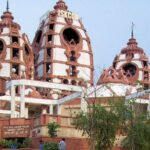
Your first day starts with a representative meeting you at the airport and helping with the transfer and check-in. If you land with enough time, you may be able to fit in a short visit to Akshardham Temple.
This first-day “light” approach is practical. It keeps you from feeling wrecked by jet lag while still getting your bearings. The tour notes also indicate you can arrive between 8 AM and 11 PM on Day 1, and if you arrive too early (before 8 AM), you may need to book a room for the night before on extra cost. That’s worth planning for so your first day doesn’t turn into a scramble.
Watch-outs for Day 1:
- You’ll be on a new schedule fast, even if today is mostly arrival and check-in.
- Temple time depends on your arrival and day flow, so don’t count on it as a guaranteed “must-do.”
Day 2 in Delhi: Mughal power meets street markets and big-city icons
Day 2 is a classic Old Delhi-to-New Delhi mix, and it’s one of the most interesting days because it shows multiple layers of Delhi.
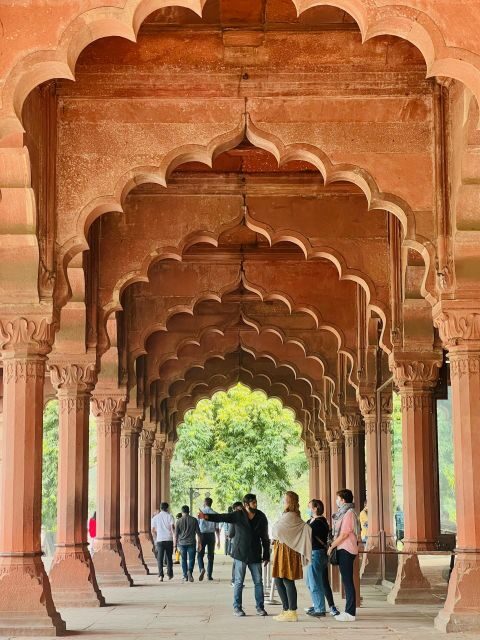
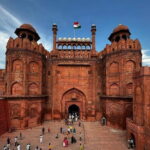
You start with the Red Fort, the UNESCO-listed fortress that served as the main residence of the Mughal emperors. From there, you go into the market area for Chandni Chowk, a walk focused on spices and jewel shopping. Next comes Jama Masjid, built in the Mughal era (constructed by Shah Jahan in the 1600s) and known for scale.
Then you shift tone again with reflective stops: Raj Ghat (the memorial site for Mahatma Gandhi after his cremation) and Humayun’s Tomb, famous for its garden layout and mausoleum design topped by a double dome. These are some of the most “story-rich” stops in the city because they connect power, memory, and architecture.
After that, you get a drive-by pass at India Gate and Parliament House. The tour also includes a stop at Qutub Minar, the 73-meter minaret in the UNESCO Qutb complex, and a quick visit to the Lotus Temple.
What I like about this day: it’s not just monuments. It’s also the feel of Delhi—the market energy, the ceremonial architecture, and the memorial spaces.
A practical consideration: you’ll move around a lot, and many sites have crowd flow. Wear comfortable shoes and expect security checks at major monuments.
Day 3 to Agra: the drive, then the big Mughal hits
After breakfast, you head to Agra by car (about a 4-hour drive), check in, then do sightseeing in the afternoon.
Agra is condensed in the best way: the plan centers on the three heavyweights. The Taj Mahal gets the spotlight, followed by Agra Fort (raised by Akbar and tied to the later Mughal era) and time for the fort’s highlights like Moti Masjid and Musamman Burj.
Here’s the value of having a guide: the Taj Mahal can be “just a photo” if you don’t know what you’re seeing. With explanation, you pick up on symmetry, materials, and the larger Mughal story that shaped it.
Your likely drawback: the Taj and fort will have ticket lines and time constraints. Since monument admissions aren’t included, plan for that cost and time so you don’t feel surprised mid-trip.
Day 4: Ranthambore arrival plus a stop at Fatehpur Sikri

This day shifts from stone empire to savanna reality. You leave for Ranthambore National Park, a top wildlife sanctuary area, and check in on arrival.
On the way, you have a stop at Fatehpur Sikri, the 16th-century Mughal city known for its red sandstone buildings clustered around the center. It’s a short stop, but it breaks up the travel and adds a bonus slice of Mughal architecture without turning the day into a marathon.
Why I like this structure: it’s efficient. You don’t lose the day to only driving, and you still arrive in Ranthambore ready to handle the next day’s safari schedule.
Consideration: Fatehpur Sikri is an added commitment, so if you’re someone who gets tired by lots of short stops, keep your expectations for Day 4 realistic.
You can also read our reviews of more tours and experiences in New Delhi





Day 5: Ranthambore tiger safari day (plus Ranthambore Fort)
Day 5 is the heart of the wildlife part. You set off early for the tiger sanctuary to maximize your chance of sightings. You also get time later for Ranthambore Fort, located within the park region near Sawai Madhopur.
The tour includes two jeep/canter safari rides in Ranthambore on a sharing basis. You’ll want to understand what that means for your experience: sharing can reduce the “private-control” feel, but it also keeps costs down and still gives you multiple opportunities on different routes/times.
My advice for safari day prep:
- Bring layers. Mornings can feel cooler, and you’ll be sitting for a while.
- Keep your phone/camera settings ready early so you’re not fiddling mid-sighting.
- Go in with patience. Even on good days, wildlife isn’t scheduled like a museum.
Also note: the safari ride is the part where admission is included (within the product structure), so you usually won’t be hit with extra safari ticket charges during that segment.
Day 6: Transfer to Jaipur, then Monkey Temple and an Amber Fort sound-and-light show
You check out after breakfast and drive to Jaipur, the “Pink City.” Long road days are part of this route, but you at least get a full transfer day rather than constantly hopping between stops back-to-back.
Once you arrive, you check into your hotel and the rest of the day is at an easier tempo. The tour includes Galtaji Temple, also known as the Monkey Temple, a temple complex with natural springs and sacred water tanks.
In the evening, you have a sound and light show at Amber Fort. I actually like this add-on on the first Jaipur night because it gives you a dramatic “frame” for Amber before you tour the fort properly the next day. You’re seeing the place in the light of stories, not just as a layout of courtyards and walls.
Practical note: these shows start at specific times, so keep your schedule flexible and don’t plan to squeeze in extra far-away activities.
Day 7: Amber Fort by jeep plus the full Jaipur landmark loop
This is a long, satisfying day. You begin at Amber Fort and the plan includes a jeep ride at Amber Fort, which helps reduce the slog and lets you spend more energy enjoying the scenery and details.
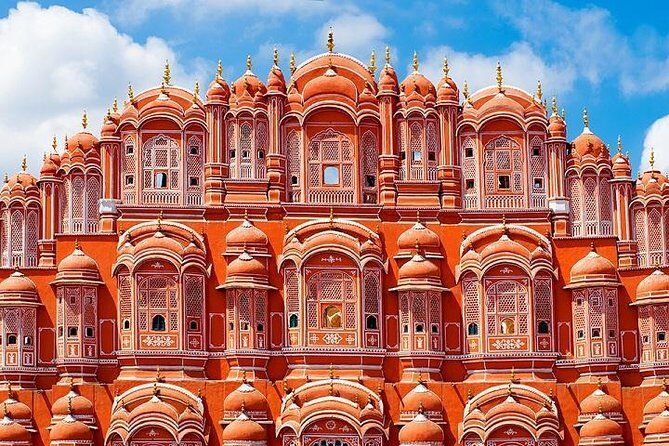
You also get Hawa Mahal (Palace of Wind) and City Palace of Jaipur. The tour then adds Jantar Mantar, the large sundial site and UNESCO World Heritage location. After that, you’ll visit Albert Hall Museum, plus a stop at Diwan-e-Khas (a hall tied to private audience in the fort complex).
If you like photo stops with payoff, you’ll appreciate the inclusion of Jal Mahal—the water palace set in the Man Sagar Lake area.
The final stops include Birla Mandir (Lakshmi-Narayan Temple), described as built on a white platform at Moti Dungari. That’s a nice way to end the day with a modern-white contrast to the older fort-and-palace look.
One key consideration: this day stacks many stops. Some days you’ll feel like you’re moving from viewpoint to viewpoint. If you prefer one or two “deep” sights over many highlights, you may want to slow down a bit by skipping optional photo time during the busiest transitions.
Day 8: Jaipur to Delhi drop-off (airport or hotel)
After breakfast, you drive back to Delhi (about a 6-hour journey) and are dropped off at either your preferred hotel or the airport.
This final day is straightforward: it’s about getting you home smoothly, not adding more admissions. I like that, because after a week of packed sightseeing, you don’t want a “last-minute” decision game. It also keeps the experience feeling complete: Delhi at the start, Delhi at the end, with everything else in between.
Price and value: what $1,065 per person really covers
At $1,065 per person, the value comes from what’s wrapped into the price.
You’re getting:
- 7 nights of accommodation on double/twin sharing
- Private transfers and sightseeing by AC vehicle
- English-speaking tour guide for Delhi, Agra, Jaipur
- Two safari rides in Ranthambore on sharing basis
- Breakfast included (7)
- Dinner included (2)
That bundle matters because on your own you’d pay separately for drivers, time-consuming coordination, hotels, and a guide who knows how to pace visits. Even with monument tickets excluded, the core logistics cost tends to add up fast.
Where you should be ready for extra cost:
- Most monument entry tickets are listed as not included (for example, Red Fort, Taj Mahal, and many Jaipur stops).
- Any personal spending and “not mentioned” costs aren’t covered.
A note on big calendar dates
The tour data also flags that gala dinner may be mandatory in some hotels on Dec 24, 25, or 31, even though a gala dinner isn’t normally included. If your travel dates land on those days, it’s smart to ask the operator before you pay final balances.
Hotels, meals, and daily pace: the comfort trade-offs
The tour keeps you on a steady rhythm: breakfast daily, planned sightseeing blocks, and hotel check-ins that limit your stress.
Meals:
- Breakfast is covered every day.
- Two dinners are included.
That’s enough to keep the trip from becoming a constant food hunt. Still, outside of those dinner inclusions, you’ll be eating on your own, so it’s smart to budget for that.
Pace:
- Delhi and Jaipur days are site-dense.
- Agra is more focused.
- Ranthambore includes the long safari day.
If you like “see a lot” trips, you’ll probably enjoy this flow. If you prefer slower travel with lots of downtime, you might feel the intensity on Days 2 and 7.
Safari reality check: how to maximize your tiger odds
Ranthambore safaris are never guaranteed. What you can control is preparation and attitude.
This tour gives you two safari rides, which increases your odds compared to one. You’ll be in a shared jeep/canter, so your experience depends on how the group and route planning runs that day. Still, having two shots is the right move if tigers are your top goal.
How to make it easier on yourself:
- Keep your camera and snacks easy to access (within park rules).
- Dress for cool mornings and warm afternoons.
- Expect slow moments and then sudden bursts of action.
Guide quality and what to watch for
The trip leans on guides to connect the dots between sites. One review highlighted that the guide in New Delhi was a standout, with strong answers to questions. Another mentioned that guide ability can vary, while praising the overall organization and driving.
I’d treat that as your cue to be proactive: on the first day, ask your guide what you should pay attention to at each stop. If you want deeper cultural context, say so early. With a private setup, you can usually steer the conversation a bit more than you can on big group tours.
Also, one named driver came up in feedback: Babulat. The point there isn’t celebrity status; it’s safety and confidence on busy roads. For a route that includes multiple transfers, a steady driver makes a difference.
Who this tour fits best (and who might want to think twice)
This tour fits best if you want:
- a structured first trip to India with minimal logistics work
- the Golden Triangle highlights plus a real wildlife experience
- private transport and guided context, not just transportation between hotels
- a pace that’s busy but not chaotic, with most days clearly timed
It may not be ideal if you:
- hate early mornings (safari day starts early)
- dislike paying extra for monument tickets
- want lots of free time to roam without a plan
If you’re the type who enjoys history and architecture but also wants one day that feels completely different, this mix is a strong match.
Should you book this private Golden Triangle with Ranthambore safari?
I’d book it if you want an organized, first-timer-friendly route that still includes the big “wow” factor of wildlife. The value stands out because the price covers the heavy lifting—hotels, AC transfers, guides, daily breakfast, and two Ranthambore safari rides—so you’re mostly paying for momentum and less for coordination.
Don’t book blindly if you’re trying to keep total costs ultra-low, because monument tickets are not included and you’ll likely pay for them across Delhi, Agra, and Jaipur. Also, if guide quality is a make-or-break factor for you, plan to ask questions right away so you can gauge how your guide works with your style.
If you’re ready for a well-packed week with one major animal day, this is a solid way to do India—fast, guided, and built for people who’d rather spend time seeing than planning.
FAQ
What’s included in the tour price?
The tour includes 7-night accommodation (double/twin sharing), transfers and sightseeing by private AC vehicle, an English-speaking tour guide for Delhi, Agra, and Jaipur, two jeep/canter safari rides in Ranthambore on a sharing basis, breakfast every day (7), and dinner (2). Taxes and car/driver expenses related to the program are also included.
Are monument entry tickets included?
Most monument entry tickets are listed as not included. For example, Red Fort, Taj Mahal, and many Jaipur sites show admission tickets not included.
How many Ranthambore safari rides do I get?
You get 2 jeep/canter safari rides in Ranthambore National Park, on a sharing basis.
Is this a private tour or a shared group tour?
This is described as a private tour/activity, and only your group will participate.
What’s the pace like and are there early mornings?
The wildlife day involves an early start for the tiger sanctuary safari. Other days include several scheduled sightseeing stops, especially in Delhi and Jaipur.
What if I arrive very early in Delhi on the first day?
If your flight lands before 8:00 AM, rooms should be booked one night prior on extra cost. The tour notes also say arrival can be between 8:00 AM and 11:00 PM on Day 1.