REVIEW · NEW DELHI
3-Day Private Golden Triangle Tour in Delhi, Agra, and Jaipur
Book on Viator →Operated by Golden Triangle Tours · Bookable on Viator
Three days, three icons of North India.
This private Golden Triangle plan is interesting because it reduces the planning headache and stacks the big sights with real guide time, not just drop-offs. I especially liked the private, guided pacing (with people like Mr Ali in Agra and Raj in Jaipur), and the fact you get two hotel nights in 4- or 5-star comfort with breakfast. The main drawback to pencil in is extra cost and time: monument entrance fees and camera fees can add up, and the drives between Delhi–Agra–Jaipur are substantial.
You’ll also feel looked after in the practical ways that matter in India. You travel in a comfortable air-conditioned vehicle with a dedicated driver, and your guides can handle timing and stories at each stop. In past trips, groups have specifically praised drivers like Mukut and Ram Singh for careful driving in busy streets, plus guide support that can include helpful local suggestions like a Jaipur chai stop or a camel ride recommendation at Amber Fort.
In This Review
- Quick hits before you go
- Why this 3-day Golden Triangle feels efficient
- Day 1 in Delhi: Humayun’s Tomb, Qutub Minar, Lotus Temple, and Lutyens’ New Delhi
- Day 2 in Agra and the Taj sunrise plan
- Day 3 in Jaipur: Amber Fort, Jal Mahal photos, Hawa Mahal, City Palace, and Jantar Mantar
- Hotels, driver, and guides: where the value really shows
- Entrance fees and small extra costs you should budget
- Timing and pacing: when you’ll feel rushed
- Who this tour is best for
- Should you book this Golden Triangle private tour?
- FAQ
- How long is the Golden Triangle tour?
- Is this tour private or shared with other groups?
- Where do pickup and drop-off happen?
- What’s included in the price?
- Are meals like lunch and dinner included?
- Do I need to pay monument entrance fees?
- What about camera fees at monuments?
- Is Lotus Temple open on all days?
- How does cancellation work?
- Does the tour include tickets or mobile tickets?
Quick hits before you go
- Private guide time in every city so you learn what you’re seeing, not just where to stand for photos
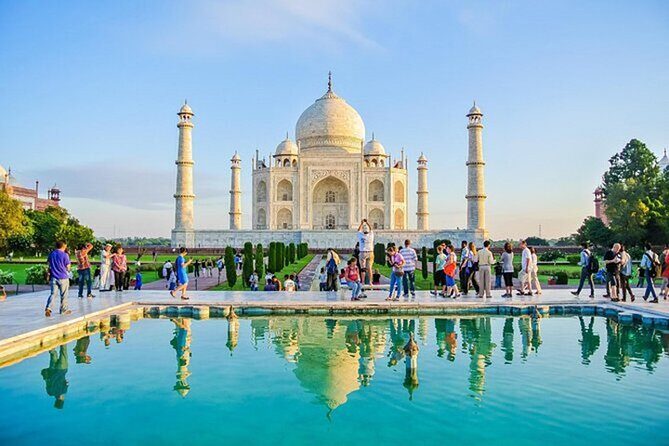
- Taj Mahal at sunrise for calmer light and a more magical first look
- UNESCO-heavy day planning with Humayun’s Tomb, Qutub Minar, Taj Mahal, Agra Fort, and Jantar Mantar
- Air-conditioned private transport plus bottled water to keep the day moving
- Comfortable 4- or 5-star hotels with breakfast for two nights on a twin-sharing setup
Why this 3-day Golden Triangle feels efficient
The Golden Triangle route usually takes longer than people expect because logistics eat time: finding tickets, getting directions, coordinating tuk-tuks, and hoping you end up at the right entrance. Here, you’re paying for someone else to do that linking. You get a driver, guided excursions, two nights of lodging, and breakfast included—so you can focus on the sights instead of the schedule stress.
I also like that the trip is built around a steady rhythm: one or two anchor monuments per day, then a hotel check-in and the chance to reset. It’s a smart match for first-timers who want the classics but don’t want every minute packed.
One small thing to keep in mind: you are still doing a lot of sightseeing. The route is called efficient for a reason, and you’ll need energy for early starts (especially the Taj Mahal morning).
You can also read our reviews of more private tours in New Delhi


Day 1 in Delhi: Humayun’s Tomb, Qutub Minar, Lotus Temple, and Lutyens’ New Delhi
Your day starts with pickup in the Delhi area—Indira Gandhi Intl Airport or your chosen pickup point in New Delhi, Gurugram (Gurgaon), or Noida. From there, you’re in the thick of Old Delhi’s broader story, moving from Mughal grandeur to later Delhi landmarks.
Humayun’s Tomb is a great warm-up because it’s both dramatic and easy to appreciate. This UNESCO World Heritage site is the tomb of Mughal Emperor Humayun, and the setting helps you understand why Mughal architecture set the tone for so much that came after.
Next comes Qutub Minar, another UNESCO stop and one of the most striking vertical sights in Delhi. It’s an Afghan-style victory tower and minaret built in 1193 by Sultan Qutb-ud-din to proclaim supremacy. If you’ve ever wondered why Delhi looks the way it does—old stone, big scale, and a strong skyline—this is part of the answer.
Then you get a slower, calmer contrast at Lotus Temple. It’s designed for tranquil worship and is shaped like a lotus. The big practical note: it’s listed as Monday closed, so if your dates land on Monday, you’ll want to be ready for an alternate plan.
You finish Delhi with iconic memorial and civic architecture. India Gate is a 42m-high stone memorial arch designed by Lutyens in 1921, honoring about 90,000 Indian army soldiers connected to WWI and the Northwest Frontier operations and 1919 Anglo-Afghan War. It’s short time on the schedule (about 30 minutes), but it gives context fast. After that, you’ll also see areas connected to Parliament House (including the 1947 power handover from Britain to independent India, and that parliament still meets) and Rashtrapati Bhavan/President House, listed as the official president’s residence in the former viceroy home with 340 rooms and roughly 2.5km of corridors.
Late afternoon you drive about 3 hours to Agra and check into your hotel. This timing is useful: you’re not fighting the full day of traffic twice, and you arrive with enough daylight to settle in.
Day 2 in Agra and the Taj sunrise plan
Day 2 is the money day. If there’s one reason people commit to a Golden Triangle trip, it’s this morning.
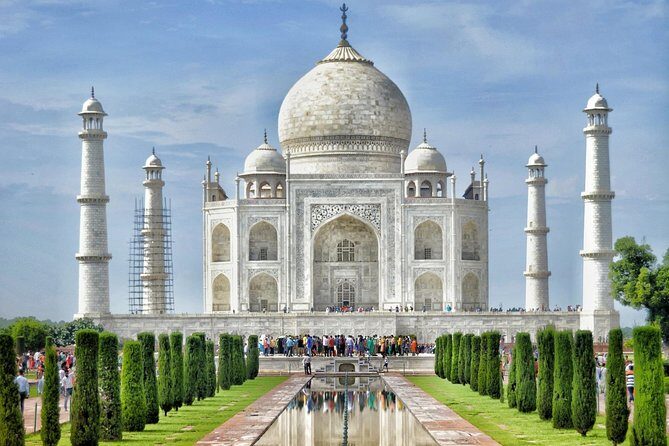
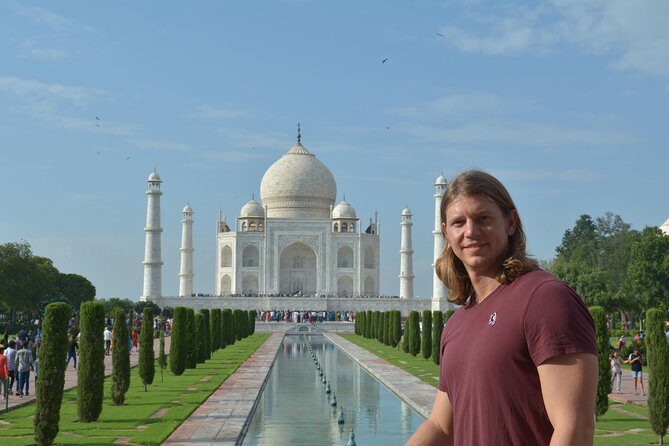
Taj Mahal at sunrise is scheduled as a highlight with about 2 hours on site. You’ll be visiting the UNESCO World Heritage site built by Shah Jahan as a memorial for Mumtaz Mahal, who died giving birth to their 14th child in 1631. Even if you know the story already, seeing it at sunrise changes the feel. Light across the marble can make the building look different minute to minute, and the crowds are typically easier when you start early.
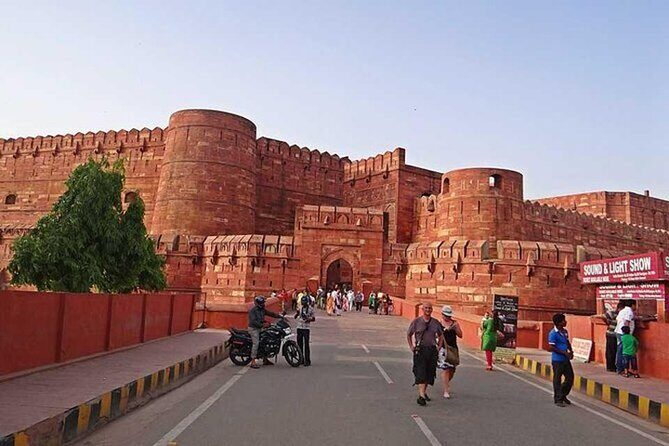
After the Taj, you shift to something more fortress-like and practical: Agra Fort along the Yamuna River. It’s UNESCO and listed as the main residence of Mughal dynasty emperors until 1638. The time here is shorter (about 1 hour), but it’s a strong follow-up because it broadens your understanding of Mughal power beyond one monument.
Then it’s back on the road: a drive of about 4 hours to Jaipur, often described as the Pink City. You’ll check into your hotel and get some breathing room for the evening.
If you’re sensitive to long drives, treat this day like an energy management exercise: hydrate, eat something simple when you can, and don’t try to do extra sightseeing after the hotel check-in. You’ll feel better for Day 3.
Day 3 in Jaipur: Amber Fort, Jal Mahal photos, Hawa Mahal, City Palace, and Jantar Mantar
Jaipur is where the tour leans into color and geometry—forts, palaces, and observatories. After breakfast, you head to Amber Fort, also known as Amber Palace in the itinerary. It’s described as a honey-hued fort of Amber rising from a rocky mountainside about 11km northeast of Jaipur, and it’s presented as a prime example of Rajput architecture. You get about 2 hours here plus guided context, which helps because the fort isn’t just walls—it’s layout and design choices that reflect how power and daily life mixed.
You then have a quick photo stop at Jal Mahal (Water Palace) near the cenotaphs of the maharanis of Jaipur in the Man Sagar area. The schedule calls for about 15 minutes, so this is best used for a few photos and a quick look rather than a full sit-down.
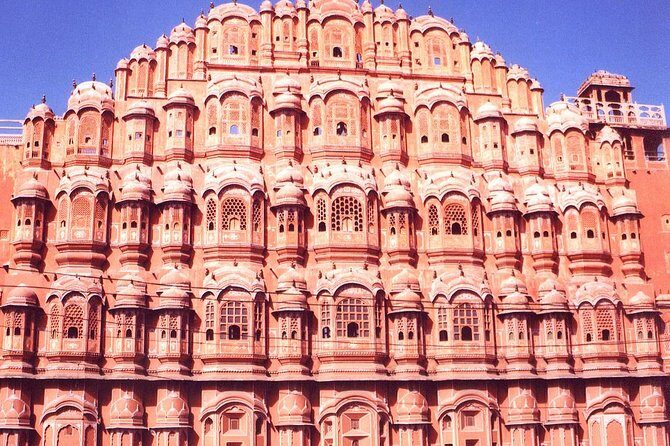
Next is Hawa Mahal (Palace of Wind), also about a 15-minute stop for photos. It’s the honeycombed pink facade that rises five storeys, constructed in 1799 by Maharaja Sawai Pratap Singh. The guide time here is short, but it’s still worth it—this is one of those landmarks where the details are hard to appreciate from a distance unless someone points them out.
After that, you move into the royal-life setting at City Palace of Jaipur in the center of the Old City. It’s listed as the residence of the royal family and a complex of courtyards, gardens, and buildings, with palace structures from different eras (including some from the early 20th century). You get about 1 hour here, which is enough for highlights without turning it into a full-day museum slog.
Then comes the most brainy stop: Jantar Mantar, UNESCO-listed as an observatory. You’ll see curving geometric buildings designed to monitor movement of stars and planets. It’s scheduled for about 1 hour. Even if you’re not a math person, a guide makes it easier to connect the shapes to why they matter.
Finally, you drive back to Delhi/Gurugram/Noida for airport or hotel drop-off, about 5 hours. If you’re continuing onward, this is also the day where you’ll want to protect your evening plans. You’ll be tired after a full day of walking and stairs at forts.
Hotels, driver, and guides: where the value really shows
This is a private tour, not a bus with strangers. Your package includes two nights of accommodation on a twin-sharing setup and breakfast for two mornings. It also includes a private air-conditioned vehicle with a driver throughout the days, plus bottled water, all taxes, and handling charges.
What that adds up to in real life: you’re paying for smoother logistics. You don’t need to negotiate transport repeatedly, guess which entrance to use, or worry about losing your timing between sites. Guides in each city are included for excursions, and the guided stories can help you make sense of why the monuments look the way they do.
The best part is that this sort of arrangement tends to feel safer and more personal. One highlighted experience praised feeling safe and welcomed, including for two gay female travelers, which is exactly the kind of comfort you can care about on a private trip. Separate reports also praised named guides and drivers such as Mukut, Honey, Yuvraj, Nand Singh Rathore (described as the owner who helps keep things running smoothly), and Ram Singh for safe handling in traffic.
You can also read our reviews of more tours and experiences in New Delhi





Entrance fees and small extra costs you should budget
Here’s the one part you need to handle carefully: the tour data includes admission-ticket language in the itinerary, but it also lists entrance fees as not included for major sites, specifically Taj Mahal, Red Fort, Amber Fort, Jantar Mantar, and City Palace of Jaipur, listed as ₹4,500 per person. Camera fees are also listed as not included.
So what should you do? Treat it as a budget item until the operator confirms exactly what is covered for your dates. If the ₹4,500 entrance fee applies on top, you’ll want that cash or payment ready. Also remember lunch and dinner are not included, so plan around meal breaks or bring snacks if you get hungry while the group is between stops.
Camera fees can be a surprise because you might be allowed to photograph with your phone but charged for certain equipment. If you’re serious about photography, ask before you arrive so you’re not deciding on the spot.
Timing and pacing: when you’ll feel rushed
The itinerary is tight but not crazy. Still, a few moments can feel like a sprint:
- Sunrise Taj Mahal means early wake-up and an early start.
- Jaipur Day 3 stacks Amber Fort, multiple photo stops (Jal Mahal and Hawa Mahal), plus City Palace and Jantar Mantar.
- Commutes are real: about 3 hours Delhi to Agra, about 4 hours Agra to Jaipur, and about 5 hours back toward Delhi/Gurugram/Noida.
You’ll want to pack for heat and for comfort on stairs and uneven surfaces at forts and tomb complexes. The tour includes bottled water, but your body will still need you to pace yourself. If you get motion-sick, consider planning accordingly for the highway drives.
Also note Lotus Temple is Monday closed. If your Day 1 falls on Monday, the plan may shift, so it’s smart to confirm alternatives before you go.
Who this tour is best for
This private 3-day Golden Triangle works best if you want the classics—Taj Mahal, Qutub Minar, Humayun’s Tomb, Amber Fort, and Jantar Mantar—without turning the trip into a logistics project.
It’s also a good fit if you:
- prefer private guiding and safe-feeling transport in a schedule you don’t have to manage
- like a balance of seeing major monuments and having time to reset between cities
- want a trip that feels structured but still flexible enough for photos and short breaks
If you’re the kind of traveler who loves roaming freely all day with no agenda, this might feel a bit scheduled. But if you want North India highlights delivered in a clean 3-day arc, it’s a solid match.
Should you book this Golden Triangle private tour?
If your priority is easy planning and guided context, I’d lean yes. Two hotel nights with breakfast, a private AC driver, and guides in each city are the core value, and the route hits the big UNESCO sites without wasting time on guesswork.
Before you book, do two quick checks:
- Confirm what’s covered for monument entrance fees and whether the ₹4,500 per person entrance fee applies to your plan
- Ask about Monday dates for Lotus Temple and how they handle closure on your day
If you can handle early mornings and you’re ready for long but comfortable drives, this is a strong way to see the Golden Triangle without turning your vacation into a project.
FAQ
How long is the Golden Triangle tour?
It’s listed as an approximately 3-day private tour covering Delhi, Agra, and Jaipur.
Is this tour private or shared with other groups?
This is a private tour/activity, and only your group will participate.
Where do pickup and drop-off happen?
Pickup is offered from your desired location in New Delhi, Gurugram (Gurgaon), or Noida. Drop-off is also to Delhi/Gurugram/Noida after the final day.
What’s included in the price?
The tour includes 2 nights of accommodation (twin sharing), breakfasts, a private driver with an air-conditioned vehicle, professional private guides for excursions, bottled water, and all taxes and handling charges.
Are meals like lunch and dinner included?
No. Lunch and dinner are not included.
Do I need to pay monument entrance fees?
Entrance fees are listed as not included for Taj Mahal, Red Fort, Amber Fort, Jantar Mantar, and City Palace of Jaipur, listed at ₹4,500 per person.
What about camera fees at monuments?
Camera fees at monuments are listed as not included.
Is Lotus Temple open on all days?
Lotus Temple is listed as Monday closed.
How does cancellation work?
Free cancellation is available if you cancel up to 24 hours in advance for a full refund.
Does the tour include tickets or mobile tickets?
Yes, mobile ticket is listed as a feature.