REVIEW · NEW DELHI
3-Day Private Golden Triangle Tour: Delhi, Agra & Jaipur
Book on Viator →Operated by INDIA TAJ TOURS · Bookable on Viator
Delhi to Jaipur in three days sounds intense, and it is.
This private Golden Triangle run strings together Delhi’s big-name sights, Agra’s early-morning Taj Mahal, and Jaipur’s forts and observatory in one tight plan. Two things I especially like: you get hotel/airport pickup in Delhi areas, and the tour includes live guides at the sites so you’re not just walking around guessing what you’re looking at. One possible drawback: the pace is fast, so you’ll want to protect your energy and confirm any extra stops you don’t want.
Day 1 has a classic Delhi mix of UNESCO monuments and spiritual landmarks, then a hands-on slice of local life at Chandni Chowk. Day 2 starts before sunrise so you can see the Taj Mahal when it’s calmer and the light is at its best. Day 3 shifts gears to Jaipur’s forts, photo stops, and the working-style history of the region’s astronomy.
If your goal is a high-value highlights itinerary without planning headaches, this fits well. If you prefer slow travel with long museum time and relaxed meals, you may find the schedule a bit demanding.
In This Review
- Key things that make this Golden Triangle run worth your time
- What you’re really booking: a tight Golden Triangle highlights tour
- Day 1 in Delhi: UNESCO monuments, Gandhi’s story, and Chandni Chowk energy
- Humayun’s Tomb: Mughal elegance in garden-tomb form
- Qutub Minar: a towering marker of the Qutub complex
- Swaminarayan Akshardham: modern monument feel with old-world design
- Jama Masjid and the Red Fort backdrop
- Pasar Chandni Chowk: market time with the right expectations
- The Tomb of the Unknown Soldiers: a sobering pause
- The planned city around Lutyens and Baker
- Gandhi Smriti: where Gandhi spent much of his life and was assassinated
- Day 2 Agra: sunrise Taj Mahal plus Agra Fort and Fatehpur Sikri
- Taj Mahal at 6 AM: photos, calm, and the best kind of effort
- Agra Fort: Mughal power center before the capital moved
- Fatehpur Sikri on the way: a longer stop that earns it
- Day 3 Jaipur: Amber Palace, Jantar Mantar, and the photo-only moments
- Amber Palace: fort views and a solid chunk of time
- Jal Mahal: the palace on the lake, with restricted entrance
- Jantar Mantar: an observatory that feels like science in stone
- Hawa Mahal: Palace of Winds, mostly an exterior show
- Heading back toward Delhi: plan your evening carefully
- Guide quality and small logistics that can make or break a short tour
- Value math: when this Golden Triangle works best (and when it doesn’t)
- Should you book this private Golden Triangle tour?
- FAQ
- What does pickup in Delhi include?
- What transportation is used during the tour?
- Are entrance fees included for the monuments?
- What are the main sights on each day?
- Are meals included in the price?
- Is this a private tour?
- Is free cancellation available?
Key things that make this Golden Triangle run worth your time
- Private AC chauffeur from Delhi-area pickup: You’re not stitching together trains and taxis while carrying a daypack.
- Sunrise Taj Mahal timing: A 6 AM start is early, but it usually means better photos and fewer crowds.
- Live guiding at major monuments: The plan is built around explanation, not just check-the-box stops.
- Tuk-tuk/rickshaw ride at Chandni Chowk: A quick, local-feeling way to experience the market area.
- UNESCO-heavy Day 1 and Day 2: Humayun’s Tomb, Qutub Minar, Taj Mahal, and Agra Fort anchor the trip.
- Guide and driver reliability: One review specifically called out Ishaan as the Agra guide and Amit as a very solid driver.
What you’re really booking: a tight Golden Triangle highlights tour
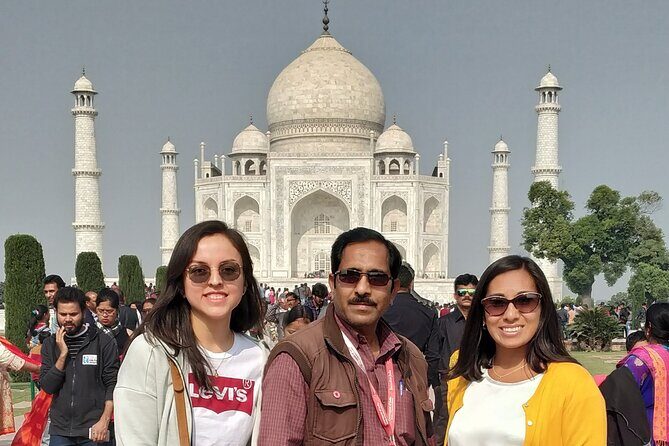
This is a three-day private plan covering Delhi, Agra, and Jaipur—the famous Golden Triangle route. The structure matters: each city gets curated hits that are recognizable, historically important, and physically close enough (with driving time) to make sense in a short window.
Also, this isn’t a “sit on a bus all day” tour. You’re moving between stops, but you’re given time blocks at the key sights: about an hour at several Delhi monuments, a few hours at Taj Mahal, and larger windows at Fatehpur Sikri and Amber Fort. That balance is useful if you want context without losing your whole day to long transports.
The big value question is price versus what’s actually covered. The listing shows $5 per person, but what you get for that depends on the option you select—especially around monument entrance fees. What’s clearly included: pickup in Delhi/nearby areas, AC vehicle with chauffeur, live guides at the sites, complimentary water and umbrellas, and certain entrance fees depending on your selected option.
You can also read our reviews of more private tours in New Delhi


Day 1 in Delhi: UNESCO monuments, Gandhi’s story, and Chandni Chowk energy
Day 1 is built like a greatest-hits Delhi playlist—start in the Mughal era, move through iconic Islamic architecture, then end with modern Indian history and street-life.
Humayun’s Tomb: Mughal elegance in garden-tomb form
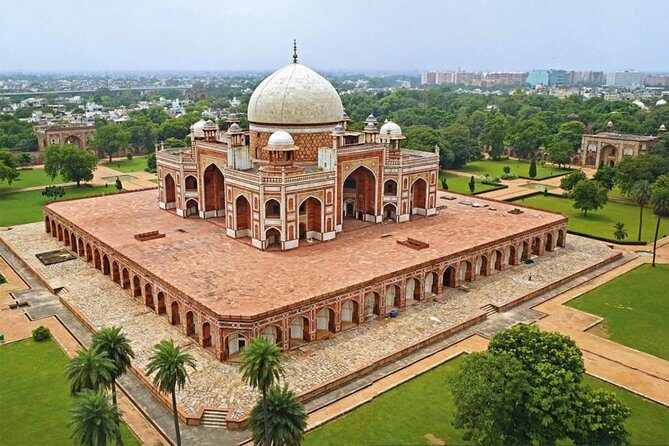
Humayun’s Tomb is a UNESCO World Heritage site and described as a first garden tomb of India. That detail matters because the layout isn’t just a single building; it’s a designed landscape with symmetry and carefully planned sightlines. You’ll have about 1 hour here, which is enough time to see the main tomb area without feeling rushed through the grounds.
Qutub Minar: a towering marker of the Qutub complex
Next is Qutub Minar, known as the tallest minaret built up in 1192 with bricks. It sits within the Qutub complex area, so you’re not looking at one isolated tower—you’re in a broader historic zone. Plan for about 1 hour.
Swaminarayan Akshardham: modern monument feel with old-world design
Then you shift to Swaminarayan Akshardham, a major Hindu temple complex completed in 2005 but designed in a way that can feel far older. The tour’s one-hour window is realistic here: you’ll see the main architecture and key areas, though you won’t get a long, slow wander like you might on a full-day temple visit.
You can also read our reviews of more tours and experiences in New Delhi





Jama Masjid and the Red Fort backdrop
Jama Masjid is huge—one of the world’s largest mosques—and the tour notes it was built in 1656 with help from 5,000 workers. It also puts you in the Chandni Chowk area, described as directly in front of the royal residence (the Red Fort). With 1 hour here, you’ll get the scale and the courtyard layout, then roll right into the market atmosphere.
Pasar Chandni Chowk: market time with the right expectations
After the mosque, you head to Pasar Chandni Chowk, described as Asia’s biggest and oldest market from the 17th century. The tour frames it as a one-stop for necessary items, and it also notes special flea bazaars on Sunday. You’re given about 1 hour, and honestly that’s a good amount—long enough to feel the place, not long enough to turn into a drag.
The Tomb of the Unknown Soldiers: a sobering pause
You also include the 1921 Tomb of the Unknown Soldiers. The key detail here is that names of 13,300 Indian army servicemen are carved on the wall who died during the First World War. This stop changes the mood of the day from monuments and temples into remembrance and national history. It’s another 1-hour block.
The planned city around Lutyens and Baker
Another Delhi stop described as 330 acres architecture built in 1929 connects you to planners Sir Edwin Lutyens and Herbert Baker, who are credited with constructing almost the whole of New Delhi. Even if you don’t study architecture deeply, it helps you understand that “Delhi” you see today isn’t random—it has planned districts and a design logic behind it.
Gandhi Smriti: where Gandhi spent much of his life and was assassinated
Day 1 ends at Gandhi Smriti, marking the area where Gandhi spent most of his life and was assassinated. You have about 1 hour. This is a powerful close, and it pairs well with the earlier historical stops so the day feels like a timeline rather than a random set of attractions.
Quick practical tip: Delhi can feel intense in the late morning. If you’re sensitive to heat or crowds, I’d prioritize water and use the complimentary umbrellas when the sun spikes.
Day 2 Agra: sunrise Taj Mahal plus Agra Fort and Fatehpur Sikri
Day 2 is the reason a lot of people choose the Golden Triangle. It starts early for the Taj Mahal, then adds two heavyweight historical sites.
Taj Mahal at 6 AM: photos, calm, and the best kind of effort
The tour starts with early morning pickup and aims for sunrise around 6 AM. The plan highlights help from your guide for finding the best possible photo spots. This is the moment where effort pays off: cooler air, softer light, and a different mood than midday.
The tour allocates about 3 hours for this stop. That’s important. Taj Mahal isn’t just a quick glance; details matter (the symmetry, the marble surfaces, and how the building interacts with its surroundings). With 3 hours, you can see the main views, take photos, and still have a bit of room to breathe.
Agra Fort: Mughal power center before the capital moved
Next is Agra Fort, a UNESCO World Heritage site. The tour notes it’s the only fort in India where all early Mughal emperors lived until 1638, before the capital shifted back to Delhi. It’s given about 1 hour—enough to understand it as a power base rather than only a wall-and-gate photo stop.
Fatehpur Sikri on the way: a longer stop that earns it
Fatehpur Sikri is scheduled for about 4 hours on the way to Jaipur. The tour describes it as a small city founded as the capital of the Mughal Empire in 1571 by Emperor Akbar. That’s why it’s a longer stop: you need more time to grasp that you’re not just seeing a single monument—you’re walking through a designed capital area.
The plan says admission here is free, while other monument entries depend on the option selected. In practical terms, this can help you manage costs while still getting major sight value.
Quick practical tip: For sunrise, set a firm alarm and avoid late texting and late hotel chaos. Your future self will thank you at 5:30 AM.
Day 3 Jaipur: Amber Palace, Jantar Mantar, and the photo-only moments
Jaipur day is where the architecture turns more “fortified” and more geometric. It’s also where you get a mix of entry sites and great exterior photo moments.
Amber Palace: fort views and a solid chunk of time
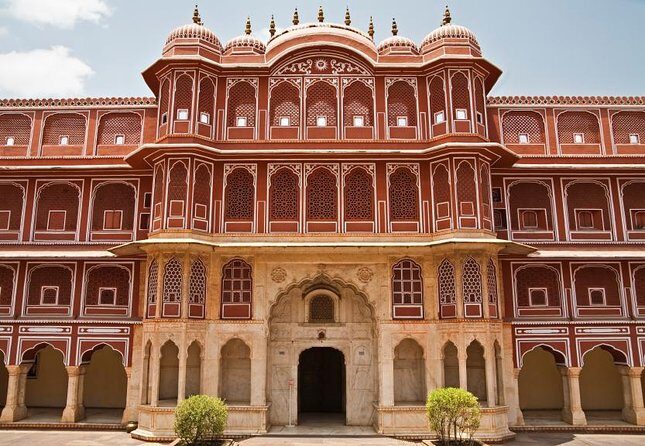
You start with Amber Fort (often called Amber Palace). The tour gives about 2 hours. It notes Amber is about 11 kilometers from Jaipur city and frames the fort as a key starting point for Jaipur sightseeing. In a short trip, 2 hours is a fair window: enough to get the main parts, then move on without exhaustion.
Admission is noted as free in the tour description for this stop, which can be a nice cost relief.
Jal Mahal: the palace on the lake, with restricted entrance
Then you get Jal Mahal, the palace on Lake Man Sagar. The tour states entrance is prohibited, but you can click photos from the outside. This is one of those “good for pictures, limited for wandering” stops, and it works because it breaks up the day visually without forcing extra time inside.
Jantar Mantar: an observatory that feels like science in stone
Jantar Mantar is next, described as an observatory with nineteen architectural astronomical instruments built by Rajput king Sawai Jai Singh II and completed in 1734. It’s given about 1 hour. If you’re curious about how older civilizations measured the sky, this is one of the most interesting stops in Jaipur because it’s practical science expressed in large structures.
Admission is listed as included here.
Hawa Mahal: Palace of Winds, mostly an exterior show
After Jantar Mantar, the tour includes Hawa Mahal. The plan notes you can take great pictures, but entrance is prohibited. Hawa Mahal is constructed with red and pink sandstone, and the “Palace of Winds” idea helps you imagine how the façade works with airflow and window patterns.
Again, it’s a photo stop built into the route—use that time for a final architectural moment before you head toward the return drive.
Heading back toward Delhi: plan your evening carefully
Around 2 PM the tour finishes Jaipur sightseeing and you drive back to Delhi. If you have a departure from New Delhi, you’ll drive back then. The schedule says arrival around 8 PM. That timing matters because you’ll want dinner plans that don’t require much effort after a long day.
Guide quality and small logistics that can make or break a short tour
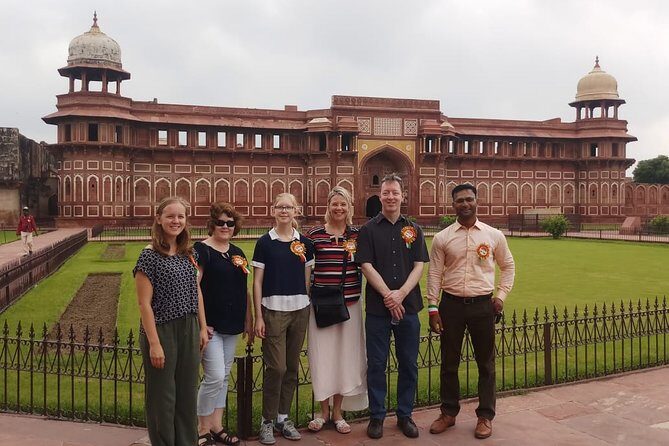
Here’s what I take from the best-reviewed experiences: guide quality and driver reliability turn a frantic schedule into a smooth one.
One review specifically praised Ishaan as the Agra guide and Amit as a very good driver who handled the Delhi-to-Agra-to-Jaipur drives. That’s exactly the kind of confidence you want on a tight itinerary—someone who knows how to manage timing and traffic so you don’t show up at monuments at the worst possible moment.
Also included: complimentary water bottles and umbrellas. In India, those tiny comforts can keep your day from spiraling. If you’ve ever had a “quick stop” become an uncomfortable heat slog, you know why this is worth noting.
And yes, there’s a tuk-tuk / rickshaw ride at Chandni Chowk in Delhi. It’s brief, but it gives you a local sensory hit: smaller streets, different rhythm, and a change of pace from sitting in the AC.
One caution from a less-perfect experience: one review raised an issue with the Delhi guide taking the group to stores and restaurants where the guide might benefit from purchases. I can’t confirm anything beyond what was described, but I can suggest a simple fix: tell your guide clearly what you want—monuments and local sights, not sales stops. If you’d rather skip shopping, say so early and tie it to the schedule.
Value math: when this Golden Triangle works best (and when it doesn’t)
At $5 per person, the tour looks like an unusually good deal on paper—but value comes from what’s included. The big components that reduce your planning burden are:
- AC transport with chauffeur
- live guides at the sites
- pickup in the Delhi area
- some monument entrance fees depending on the option you select
- small comforts like water and umbrellas
What you still must handle separately:
- accommodations
- meals
- tips/gratuities
- any additional services not explicitly listed
If you already have a place to sleep and you mainly need transport + guided sights, this is a strong fit. If you’re trying to bundle everything (hotel + meals + extras), you’ll probably feel the gaps quickly.
This tour is best for:
- First-timers who want the Golden Triangle highlights without planning every leg
- People who like history but don’t want to spend hours reading maps
- Anyone who enjoys sunrise photography and early starts
Consider a different style if:
- You want lots of free time for slow wandering
- You dislike tight pacing and constant transitions
- You hate any shopping detours and want full control of every hour
Should you book this private Golden Triangle tour?
I’d book it if your priority is covering Delhi, Agra, and Jaipur efficiently with guided explanations and dependable transport. The sunrise Taj Mahal timing is the headline feature, but the real win is the way the day is structured: UNESCO monuments, major city highlights, and enough time at each stop to understand what you’re seeing.
Before you say yes, do two things:
- Confirm what your option includes for monument entrance fees.
- Tell the guide you want to stick to sightseeing and skip extra commercial stops.
If that matches your travel style, this is an easy way to get a meaningful first Golden Triangle experience without turning your trip into logistics homework.
FAQ
What does pickup in Delhi include?
Pickup is offered from anywhere in Delhi / Noida / Gurgaon / Ghaziabad / Faridabad (or airport pickup in Delhi, depending on your situation). You travel in a private AC car with a chauffeur.
What transportation is used during the tour?
You get air-conditioned transportation with a chauffeur. In Delhi’s Chandni Chowk area, the plan also includes a tuk-tuk / rickshaw ride.
Are entrance fees included for the monuments?
Monument entrance fees are included depending on the option selected. Some stops are listed as having admissions included, while a few are listed as free in the itinerary description.
What are the main sights on each day?
Day 1 focuses on Humayun’s Tomb, Qutub Minar, Swaminarayan Akshardham, Jama Masjid, Chandni Chowk market area, the Tomb of the Unknown Soldiers, the planned New Delhi area attributed to Lutyens and Baker, and Gandhi Smriti. Day 2 includes sunrise Taj Mahal, Agra Fort, and Fatehpur Sikri. Day 3 includes Amber Fort, Jal Mahal (photo outside), Jantar Mantar, and Hawa Mahal (photo outside).
Are meals included in the price?
No. The tour does not include accommodations or meals.
Is this a private tour?
Yes. It’s described as a private tour/activity, meaning only your group participates.
Is free cancellation available?
Yes. You can cancel for a full refund up to 24 hours in advance of the experience’s start time.