REVIEW · NEW DELHI
3 Day Golden Triangle Trip -Delhi Taj Mahal and Jaipur From Delhi
Book on Viator →Operated by A Star Tours · Bookable on Viator
Three days through India’s iconic cities. This private, Delhi-based route is built for people who want major sights without spending your vacation stuck in lines. I like that it pairs skip-the-line access with comfort: air-conditioned vehicle transfers and a deluxe five-star stay while you hop between Delhi, Agra, and Jaipur.
The second big win for me is the way the tour keeps you moving with hotel pickup and practical extras like bottled water. Also, if you get a guide in the style of Ali (praised for smart photo spots, good local navigation, and pointing out artisans in Agra), the day feels smoother and more personal. One thing to consider: it’s a tight on-the-go pace, and dinner is on you since meals aren’t included.
In This Review
- Key things to know before you go
- The Golden Triangle pace: packed, but not chaotic
- Day 1 in Delhi: Jama Masjid to Qutub Minar without the wasted hours
- Day 2 in Agra: sunrise Taj Mahal and the fort day that holds together
- Fatehpur Sikri: the free-ticket pause that keeps the story coherent
- Day 3 in Jaipur: Amber Fort, City Palace, Hawa Mahal, and Jantar Mantar
- Skip-the-line access and your guide: where value shows up
- Practical tips for getting the most from this 3-day circuit
- Should you book this Golden Triangle tour?
- FAQ
- How long is the Golden Triangle trip?
- Does the tour include hotel pickup and drop-off?
- Is breakfast included?
- Are skip-the-line access and entry fees included?
- Is bottled water provided?
- Are meals included besides breakfast?
- Can I cancel for a full refund?
Key things to know before you go
- Skip-the-line entry at key sights: you’ll spend more time looking and less time waiting.
- Hotel pickup and drop-off included: less stress, especially on early mornings.
- Deluxe five-star hotel with breakfast: you get real downtime, not just ticket stops.
- Water is handled: bottled water is included for the duration of the tour.
- Major highlights, fast: Jama Masjid, Humayun’s Tomb, Taj Mahal, Amber Fort, City Palace, and Jantar Mantar all fit into three days.
The Golden Triangle pace: packed, but not chaotic
The Golden Triangle is famous for a reason. In three days, you cover the Delhi sights people list first, the headline building in Agra, and the Jaipur palaces and forts that make Rajasthan feel like another world.
The “private tour” format matters here. You’re not sharing a cramped schedule with strangers who want a different pace, and the transport between stops is planned around what you’re doing next. That kind of structure is what turns a long-distance route into something you can actually enjoy.
You still should expect long days. Even with professional guiding and smooth transfers, the calendar is full. If you like slow travel with time to wander and linger, this one may feel like a sprint.
You can also read our reviews of more tours and experiences in New Delhi



Day 1 in Delhi: Jama Masjid to Qutub Minar without the wasted hours
Delhi on Day 1 gives you two flavors: Old Delhi’s big Mughal monuments and a more spread-out South Delhi circuit of iconic religious and heritage sites.
You start at Jama Masjid, one of India’s largest mosques. It was built by Mughal Emperor Shah Jahan between 1650 and 1656, so you’re not just looking at a pretty building—you’re stepping into a major chapter of Mughal-era architecture. Admission is included, and you’ll have about an hour to take it in.
Next comes Chandni Chowk, where the experience is the market itself. You’ll pass through a shopping area known for spices, dried fruit, silver jewelry, vivid saris, and tiny shops selling essential oils. It’s shorter (about 30 minutes), and that works well because you’re not trying to shop your whole day away.
After that, you’ll see several Delhi landmarks as part of the route: Red Fort (Lal Qila), India Gate on the Rajpath, and the Parliament House (Sansad Bhavan). These stops give you the “big city” picture—palace power, memorial gravity, and modern government all in one day.
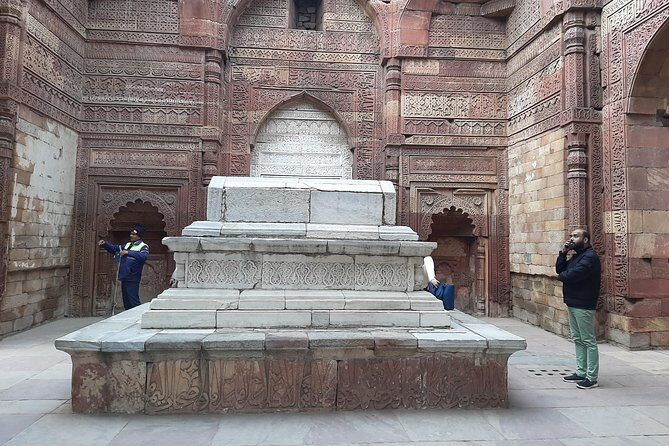
You then shift to Mughal and spiritual sites that slow the pace a bit. Humayun’s Tomb is the tomb of Emperor Humayun, commissioned in 1558 by his first wife and chief consort, Empress Bega Begum, and designed by Mirak Mirza. It’s also about an hour with admission included.
Lotus Temple is a change of tone. It’s a Bahá’í House of Worship dedicated in December 1986, famous for its flowerlike shape. Admission is free, and the stop is about 45 minutes, so it’s a good reset before the last major heritage stop.
Day 1 closes at Qutub Minar, part of the Qutb complex and a UNESCO World Heritage Site. You’ll have about an hour there, with admission included. Qutub Minar is a strong closer because it’s visually dramatic and easy to understand even when you’re on a schedule.
Day 2 in Agra: sunrise Taj Mahal and the fort day that holds together
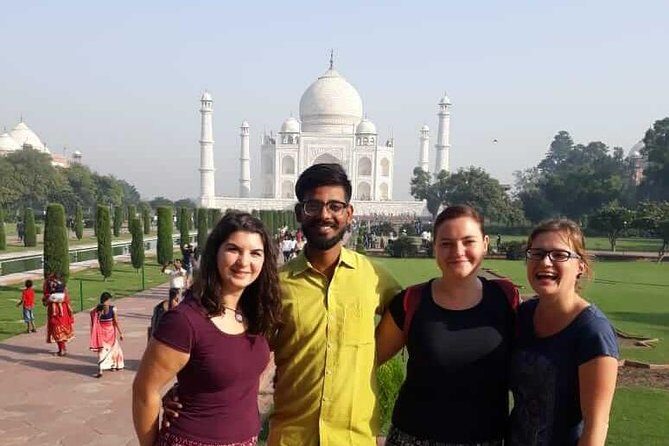
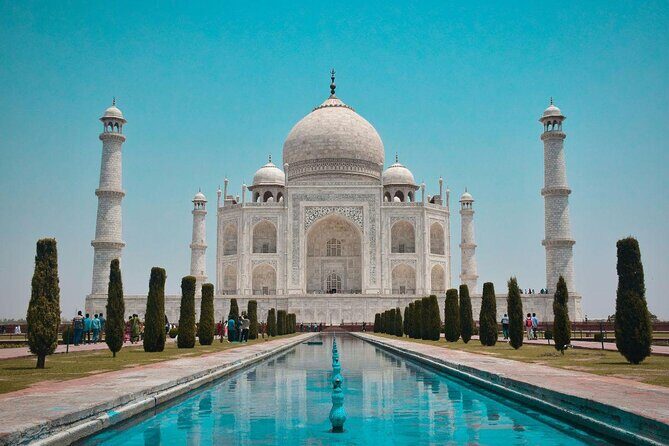
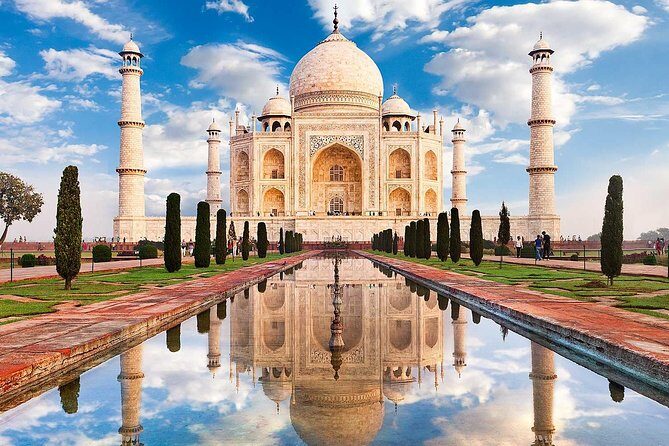
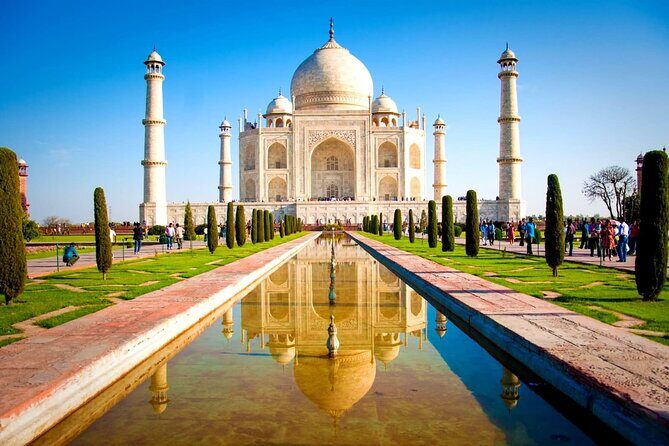
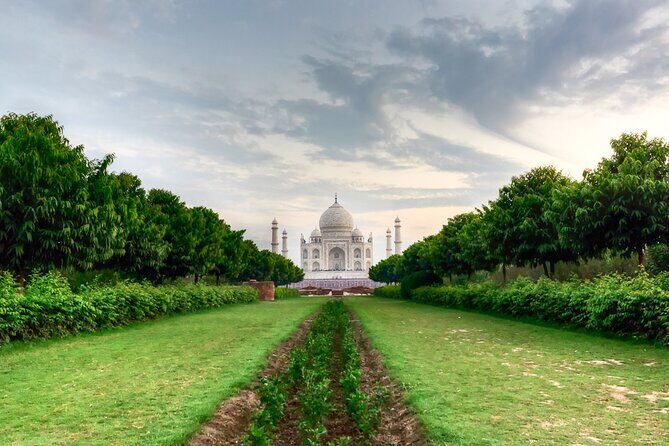
Day 2 is built around one target: the Taj Mahal at sunrise. You get an early pickup from your hotel and a guided visit timed for the morning, and the ticket is included. The Taj Mahal is described as an immense mausoleum of white marble, and the tour gives you about 1 hour 30 minutes at the site.
Why sunrise matters here, even without overpromising? Mornings usually feel calmer and the light is typically more flattering for photos. When you’re on a tight schedule, that timing can make the experience feel less rushed.
From there, you head to Agra Fort. It was the main residence of Mughal dynasty emperors until 1638, when the capital shifted from Agra to Delhi. You’ll get about 1 hour 30 minutes and admission is included.
Then you move to Fatehpur Sikri, which is where the day adds variety. This site is a small city founded in the 16th century by a Mughal emperor, with red sandstone buildings clustered around the center. The tour includes about 1 hour, and admission is free for this stop.
One practical note: because Day 2 includes high-profile sites in quick succession, you’ll want to keep your energy for walking and standing. The tour’s air-conditioned vehicle transfers help, but the monuments still ask you to move.
Fatehpur Sikri: the free-ticket pause that keeps the story coherent
Fatehpur Sikri can be the moment you either love—or wish you had more time. The tour’s approach is smart: you don’t overload it. You get about an hour, with admission listed as free, and that’s enough to connect it to the rest of the Mughal themes you saw earlier.
The key idea for this stop is the architecture described in the tour: red sandstone buildings grouped together, plus the big gateway element (Buland Darwaza gate is mentioned as an entrance to a Jama Masjid mosque). If you’re the type who likes to see how rulers built cities, not just single monuments, this stop clicks.
It also functions like a buffer between the Taj Mahal day and the switch to Rajasthan. You’ll feel the change in tone, but the Mughal thread stays intact.
Day 3 in Jaipur: Amber Fort, City Palace, Hawa Mahal, and Jantar Mantar
Jaipur is where the trip stops feeling like only big-ticket landmarks and starts feeling like a lived-in royal city. Day 3 mixes forts, palaces, and a fascinating science-and-geometry stop.
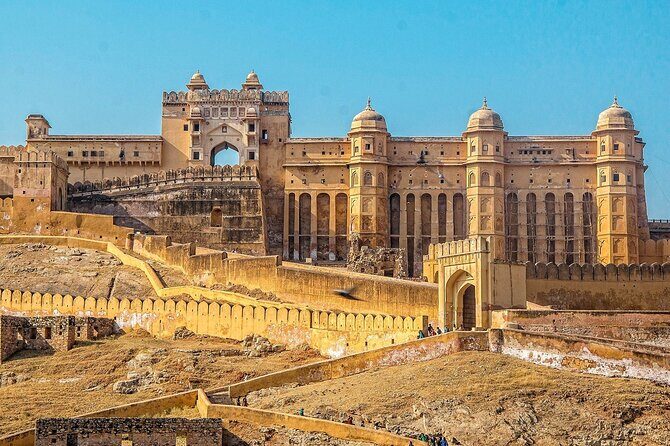
You begin at Amber Fort (Amer Fort). Amber is a town about 11 kilometers from Jaipur, and it’s noted as having an area of 4 square kilometers. The fort stop runs about 1 hour 30 minutes, and admission is included. This is a strong start because it gives you the fortress mindset quickly—Jaipur’s stories are often about power and design.
Next is the City Palace. It was established at the same time as Jaipur by Maharaja Sawai Jai Singh II, who moved his court to Jaipur from Amber in 1727. You’ll have about 1 hour 30 minutes and admission is included. This stop helps you understand why the city layout and royal identity matter, not just the buildings.
You’ll also stop near Hawa Mahal, the palace built from red and pink sandstone. It sits on the edge of the City Palace and extends to the Zenan a area (as described in the tour information). The tour lists it as a stop, but it doesn’t spell out admission or a set time here, so treat it like a quick look while you’re already in the area.
Then you get a breather at Jal Mahal. It’s a palace in the middle of the Man Sagar Lake, originally constructed in 1699 and later renovated. The stop is about 30 minutes and admission is listed as free.
The day finishes at Jantar Mantar in Jaipur. This site is described as a collection of 19 astronomical instruments built by Sawai Jai Singh II and completed in 1734. You’ll have about 1 hour with admission included. Even if you’re not a “science person,” it’s a memorable way to end because it shows how rulers combined art, measurement, and observation.






Skip-the-line access and your guide: where value shows up
For $350 per person, the value isn’t just the ticketing. The tour builds in multiple layers of convenience and time-saving: skip-the-line access, hotel pickup and drop-off, a private format, and a professional guide.
You also get breakfast included, plus bottled water during the tour, which sounds small until you’re three days into sun, walking, and photo stops. And “all fees and taxes” are included, which reduces the annoying part of travel where you have to calculate what you still owe.
The tour also explicitly lists the transfers as air-conditioned vehicle time, which is a big comfort factor in a route that covers long distances and multiple stops in a day.
The only real cost area to plan around is food beyond breakfast. Meals aren’t included, so you’ll want a cash or card strategy for lunch and dinner between sightseeing windows.
Practical tips for getting the most from this 3-day circuit
Because the schedule is packed, your biggest job is planning your energy and your logistics.
Bring a small day bag and keep basics easy to grab, since you’ll be moving between several sites in each day. Wear comfortable shoes you can stand in for longer periods, and keep your water usage steady since bottled water is included for the duration of the tour.
If you care about photos, aim to be ready at the start of each stop. The Taj Mahal sunrise timing is a key moment, and the tour’s structure is designed around getting you there efficiently.
Also, Delhi’s Chandni Chowk stop is the kind of place where you could easily lose time if you drift into every side street. If you want shopping, set a simple plan: look first, then decide. That keeps the rest of the day from getting squeezed.
Should you book this Golden Triangle tour?
I’d book this if you want a clean, guided “greatest hits” loop in a short window, and you value skip-the-line access plus hotel comfort. It’s a strong choice when your time is limited, you don’t want to juggle transportation, and you’d rather spend your energy on the monuments instead of logistics.
I’d hesitate if you prefer long, slow days, or if you hate early starts like the sunrise Taj Mahal visit. It’s also not meal-inclusive beyond breakfast, so make sure you’re okay budgeting for lunch and dinner during your sightseeing hours.
If you want the shortest path to Delhi, Agra, and Jaipur with real structure, this tour fits the job.
FAQ
How long is the Golden Triangle trip?
The tour lasts 3 days (approx.) and covers New Delhi, Agra, and Jaipur.
Does the tour include hotel pickup and drop-off?
Yes. Hotel/port pickup and drop-off are included.
Is breakfast included?
Yes. Breakfast is included with the 5-star hotel accommodation.
Are skip-the-line access and entry fees included?
Skip-the-line access is included for key attractions, and all fees and taxes are included in the tour price.
Is bottled water provided?
Yes. Bottled water is included for the duration of the tour.
Are meals included besides breakfast?
No. Meals are not included (breakfast is included, but lunch and dinner are not).
Can I cancel for a full refund?
Yes. You can cancel up to 24 hours in advance for a full refund. If you cancel less than 24 hours before the start time, the amount paid will not be refunded.