REVIEW · NEW DELHI
3 Nights, 4 Days Golden Triangle Tour From Delhi
Book on Viator →Operated by Arush Tours · Bookable on Viator
This trip is a fast tour of India’s big hitters. You’ll see Taj Mahal-level icons in Agra, step into the Rajput-style grandeur around Jaipur’s palaces, and then finish with classic Delhi monuments like Qutub Minar and Humayun’s Tomb. I like the hotel pickup and drop-off because it removes the hassle of sorting transport across three cities. I also like that you get a professional guide, which helps you understand what you’re looking at instead of just snapping photos. One drawback to plan for: monument entrance fees are not included, so your final total will be a bit higher once tickets are added.
What makes the schedule work is the simple point-to-point flow: you drive between cities in an air-conditioned vehicle, then you tour key sights in chunks you can actually follow. The tour is run for your group only, yet it can still offer group discounts depending on how you book. You’ll also receive a mobile ticket, so you’re not scrambling for paper when it’s time to go.
The other thing to know is that the days are packed with stops, so comfort matters. The drive times are real (about 3.5 hours to Agra, then roughly 5 hours to Jaipur, then another 4–5 hours back to Delhi), and weather can add friction; I’d show up ready for heat and humidity with water and light clothing.
In This Review
- Quick highlights you’ll feel right away
- Price and what you actually get for $151.43
- How the Delhi–Agra–Jaipur loop makes sense
- Day 1: Taj Mahal plus two more Mughal-era hits in Agra
- Taj Mahal (about 3 hours)
- Agra Fort (about 2 hours)
- Itmad-ud-Daula, also called Baby Taj (about 1 hour)
- Day 2: Drive to Jaipur via Fatehpur Sikri
- Fatehpur Sikri (about 2 hours)
- Arrive and check in Jaipur
- Day 3: Amber Palace and the Jaipur highlights that people actually remember
- Hawa Mahal photo stop (about 1 hour)
- Amber Palace (about 2 hours)
- City Palace Museum (about 1 hour)
- Jantar Mantar plus old-city markets (about 1 hour)
- Day 4: Delhi’s monument mix, from Gandhi memorial to UNESCO area
- Raj Ghat (about 1 hour)
- India Gate (about 1 hour, free)
- Qutub Minar (about 1 hour)
- Lotus Temple (about 1 hour)
- Humayun’s Tomb (about 1 hour)
- Transportation comfort: the hidden make-or-break factor
- Guides and service: where the experience tends to shine
- Small trade-offs to decide if this is your style
- Should you book this Golden Triangle tour?
- FAQ
- Are monument entrance fees included?
- What sights are covered in Agra?
- Do you get pickup from Delhi-area locations?
- How long is the drive from Delhi to Agra?
- Is there a Fatehpur Sikri stop on the way to Jaipur?
- What are the main Jaipur stops?
- Is breakfast included?
- What’s the cancellation policy?
Quick highlights you’ll feel right away
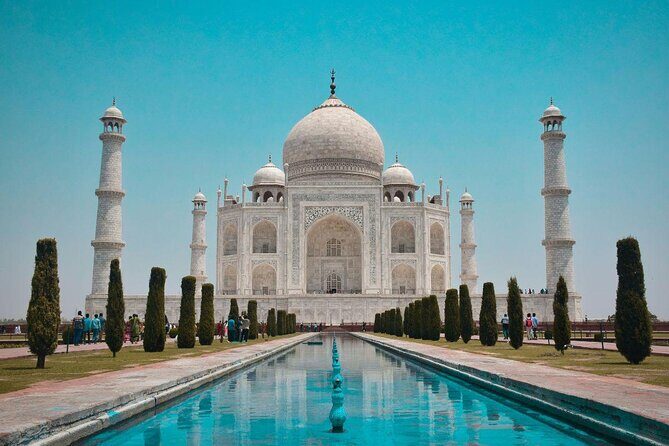
- Taj Mahal and Agra Fort in one day: Big Mughal moments back-to-back, so you don’t waste time hunting for sites later.
- Fatehpur Sikri on the route to Jaipur: A smart “get more for your drive time” stop.
- Jaipur highlights without the museum overload: Hawa Mahal photo stop, Amber Palace visit, City Palace museum, and Jantar Mantar.
- Delhi finale with major UNESCO-listed stops: Qutub Minar and the Qutb complex area are built into the last day.
- Guide names matter here: The experience is often praised for friendly service from guides such as Arman Akhtar and Farhan.
- Breakfast is included for all mornings: Breakfast is part of the package (4 breakfasts), which helps on packed touring days.
Price and what you actually get for $151.43
At $151.43 per person for 3 nights and 4 days, this Golden Triangle tour is aimed at people who want the classic Delhi–Agra–Jaipur loop without doing logistics day-by-day. The value shows up in the included basics: 3 nights of accommodation (if you choose that option), breakfast each morning, a professional guide, and hotel pickup and drop-off. You’re also covered for “under-the-hood” costs like taxes, parking fees, and handling charges.
Where you’ll likely spend extra: monument entrance fees. The itinerary is heavy on places that usually charge entry (and some include details that suggest tickets aren’t always free). So budget for tickets separately, and keep a small cash/UPI buffer handy in case the day’s specific ticketing doesn’t match what you expected.
If you’re traveling as a small group, you may also appreciate that this is described as private—meaning it’s only your group doing the tour, not a mixed crowd. That often makes the experience feel more flexible, even while the sightseeing schedule stays structured.
You can also read our reviews of more tours and experiences in New Delhi


How the Delhi–Agra–Jaipur loop makes sense
This is called the Golden Triangle for a reason: it’s the easiest way to cover India’s most famous cultural stops in one trip window. Instead of bouncing around aimlessly, the route creates a clean arc:
- Day 1: Delhi area → Agra (Taj Mahal, Agra Fort, Itmad-ud-Daula)
- Day 2: Agra → Jaipur (via Fatehpur Sikri)
- Day 3: Jaipur → Delhi (Hawa Mahal, Amber Palace, City Palace, Jantar Mantar)
- Day 4: Delhi local sights (Raj Ghat, India Gate, Qutub Minar, Lotus Temple, Humayun’s Tomb)
That structure is great for first-timers because you don’t have to decide what to drop. It can also be great for repeat travelers who just want a smooth highlight reel with a guide handling the “what is it and why it matters” layer.
Day 1: Taj Mahal plus two more Mughal-era hits in Agra
After pickup from your accommodation in Delhi, Gurgaon, or Noida, you’ll head to Agra in a private, air-conditioned vehicle. The drive is about 3.5 hours, and the point of that pre-scheduled transfer is simple: you don’t lose half your day figuring out transport once you arrive.
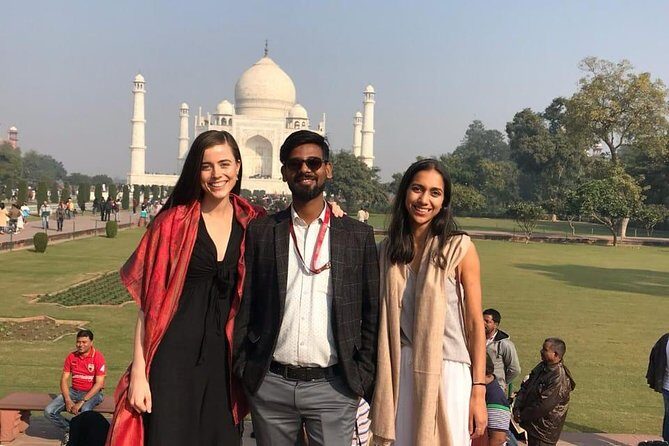
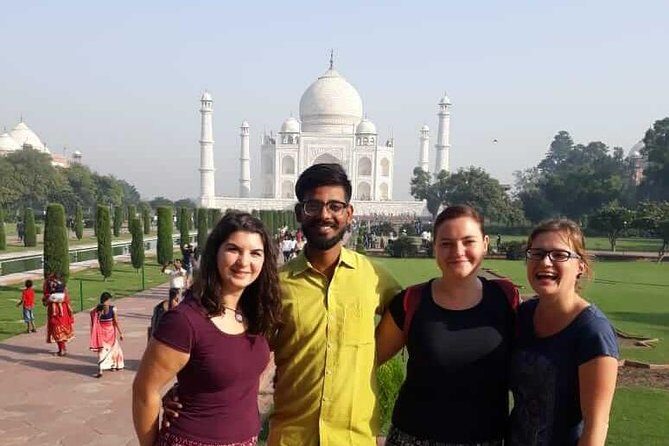
Taj Mahal (about 3 hours)
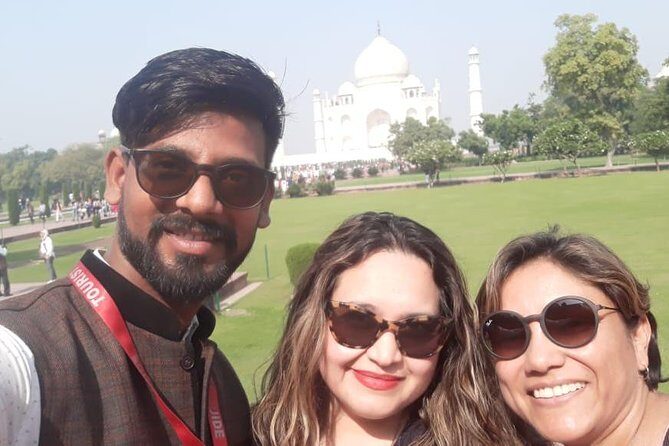
The tour gives you around 3 hours for the Taj Mahal, and that’s enough time to see it properly rather than treating it as a quick stop. Plan for a comfortable pace here—standing time can add up, and you’ll want a bit of breathing room for photos and slower moments. Also remember: admission tickets are not included.
Agra Fort (about 2 hours)
Next comes Agra Fort (Red Fort), described as a walled-city experience. The practical benefit of pairing Taj Mahal with Agra Fort is contrast: you move from the iconic monument to the fortress world around it. You’ll also get some free time for lunch (own expense), which matters because it keeps you flexible if you want a quick meal rather than being forced into one stop.
Again, entrance fees aren’t included, so it’s smart to expect ticket costs beyond the base price.






Itmad-ud-Daula, also called Baby Taj (about 1 hour)
You finish the day with Itmad-ud-Daula, often nicknamed Baby Taj. The itinerary gives you about 1 hour, which is perfect for a focused visit: you get a Mughal mausoleum stop without turning the day into an all-day grind. If you like details, this is a great place to slow down a touch.
Day 2: Drive to Jaipur via Fatehpur Sikri
Day 2 starts with breakfast and checkout, then it’s off to Jaipur, about 260 km / 5 hours by car. The itinerary includes a key stop along the way: Fatehpur Sikri.
Fatehpur Sikri (about 2 hours)
You’ll have about 2 hours here, and the schedule even marks admission as free for this stop. Still, because the overall tour says monument entrance fees aren’t included, I’d treat that as “check on the day” rather than assuming it covers everything. In practical terms, this stop makes your long drive feel purposeful; you’re not just sitting in the car for hours without a payoff.
Arrive and check in Jaipur
Once you reach Jaipur, the tour includes hotel check-in, so you can recover a bit before tomorrow’s bigger sightseeing day.
Day 3: Amber Palace and the Jaipur highlights that people actually remember
Jaipur day is built around recognizable landmarks, but with enough variety to keep it from feeling repetitive. After breakfast, you’ll take a route that includes a brief photo stop at Hawa Mahal, then visits to major palace sites and a famous observatory.
Hawa Mahal photo stop (about 1 hour)
You get about 1 hour at Hawa Mahal (Palace of Breeze). It’s scheduled as a photo stop, which is helpful because it keeps you from spending too long on one façade while you still have more substantial interiors and forts later. Admission isn’t included for this stop, so ticket costs may apply depending on what’s accessible.
Amber Palace (about 2 hours)
Then it’s to Amber Palace, also called Amber Fort. The itinerary blocks out about 2 hours, and this is where the trip really leans into Rajputana grandeur. You’ll want comfortable footwear and a patient mindset, because palace complexes aren’t quick like city landmarks.
Admission fees aren’t included, so plan extra time and budget for entry.
City Palace Museum (about 1 hour)
You’ll also visit the City Palace Museum, with a collection that includes paintings, carpets, weapons, and costumes. I like museum stops on tours when they’re short and specific, and this one fits that. In about 1 hour, you get a sense of the visual world behind the architecture without losing the day to galleries.
Jantar Mantar plus old-city markets (about 1 hour)
The final stop in Jaipur is Jantar Mantar, with a 90 ft sundial called out in the tour notes. You’ll have around 1 hour here, then the schedule includes time to explore the colorful old-city markets (time given as part of the stop). After that, you’ll drive back to Delhi for an overnight stay.
Admission tickets aren’t included, so expect some extra ticketing on top of the package price.
Day 4: Delhi’s monument mix, from Gandhi memorial to UNESCO area
Your final day is classic Delhi: memorial space, big public monuments, and major heritage sites. You’ll start after breakfast with checkout, then head out on a local loop.
Raj Ghat (about 1 hour)
First is Raj Ghat, the memorial dedicated to Mahatma Gandhi. This stop is brief but meaningful; it helps balance all the palace-and-fort energy from the previous days. You’ll have about 1 hour.
India Gate (about 1 hour, free)
Then it’s to India Gate, and this stop is listed as free. You’ll also have about 1 hour, which is just enough time for a walk, photos from the right angles, and a calm break before the heavier heritage sites.
Qutub Minar (about 1 hour)
Next: Qutub Minar, part of the Qutb complex and described as a UNESCO World Heritage Site. You’ll spend about 1 hour here. Admission isn’t included, so this is one more ticket moment to account for.
Lotus Temple (about 1 hour)
Then comes the Lotus Temple, a Bahá’í House of Worship shaped like a flower. The itinerary gives about 1 hour. It’s a good shift in mood after forts and tombs—clean lines, lots of open space, and a chance to reset before the final stop.
Humayun’s Tomb (about 1 hour)
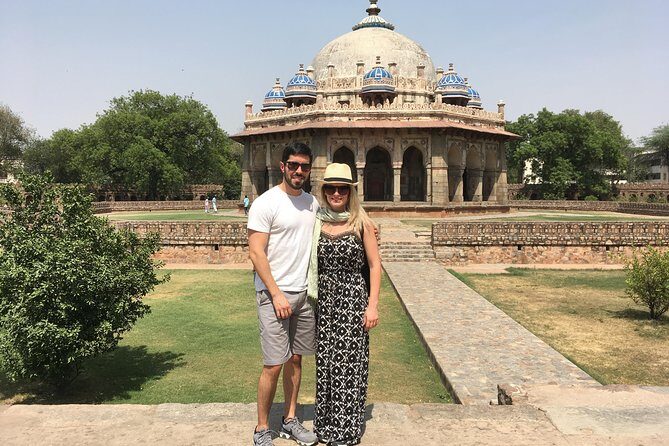
You finish at Humayun’s Tomb, the Mughal Emperor Humayun’s tomb in Delhi. You’ll have about 1 hour. It’s a fitting end to the loop because it brings you back to Mughal architecture with a quieter tone than the Taj Mahal spotlight.
Transportation comfort: the hidden make-or-break factor

This tour is driven by road time, not airline hops. That’s great because it keeps the trip cohesive, but you should think about comfort like a local:
- Air-conditioned vehicle helps on the long legs, especially on the Delhi → Agra and Jaipur → Delhi drives.
- The itinerary includes multiple days with full sightseeing blocks, so you’ll want to wear shoes that can handle a mix of walking, stairs, and uneven ground.
- If you travel in humid weather, I’d pack like you’re expecting heat: light layers, water, and a small towel or wipes. The idea of humidity affecting comfort shows up clearly in how the trip gets described.
Guides and service: where the experience tends to shine
One thing that comes through strongly is friendly, organized guidance. In particular, guides such as Arman Akhtar and Farhan get singled out for keeping the trip smooth—especially around big-ticket stops like the Taj Mahal. When a guide is on top of timing and explanations, the difference is huge: you spend less time asking where to go and more time understanding what you’re seeing.
Also, because pickup and drop-off are included, you’re not stuck negotiating taxis at the end of a long day.
Small trade-offs to decide if this is your style
This tour is built for efficiency. That comes with a few trade-offs:
- It’s not a slow travel itinerary. You’ll cover a lot in a short time window, which can feel intense if you prefer long museum wandering.
- Entrance fees are extra. This can be a surprise if you’re only budgeting for the headline price.
- Photo-stop moments exist. Hawa Mahal is a good example: you’ll get images, but not the deep time of a full-site visit.
Still, if you want a solid, classic itinerary that hits major landmarks without you managing every step, it’s a strong match.
Should you book this Golden Triangle tour?
I’d book it if you want:
- A first-time-friendly Delhi–Agra–Jaipur route with a guide.
- The comfort of pickup and drop-off instead of self-planning transport.
- A tour that balances major monuments with a few varied stops (fortress, observatory, palace museum, and Delhi memorial/heritage mix).
I’d skip or rethink it if:
- You hate packed days and long drives.
- You don’t want to deal with monument entrance fees on top of the base price.
- You’re looking for a deeply flexible schedule that changes day-by-day.
If you’re somewhere in the middle, this is the kind of “get it done well” trip that makes India’s headline cities feel connected rather than random.
FAQ
Are monument entrance fees included?
No. The tour price includes guide, pickup/drop-off, and breakfasts, but monument entrance fees are not included.
What sights are covered in Agra?
You’ll visit Taj Mahal, Agra Fort (Red Fort), and Itmad-ud-Daula (Baby Taj).
Do you get pickup from Delhi-area locations?
Yes. Pickup is offered from your accommodation in Delhi, Gurgaon, or Noida.
How long is the drive from Delhi to Agra?
The transfer from Delhi area to Agra is listed at about 3.5 hours.
Is there a Fatehpur Sikri stop on the way to Jaipur?
Yes. You’ll go Agra → Jaipur via Fatehpur Sikri, with about 2 hours at Fatehpur Sikri.
What are the main Jaipur stops?
You’ll have time for Hawa Mahal (photo stop), Amber Palace, City Palace Museum, and Jantar Mantar.
Is breakfast included?
Yes. Breakfast is included for 4 mornings.
What’s the cancellation policy?
You can cancel for free up to 24 hours before the experience starts for a full refund. If you cancel less than 24 hours before, the amount you paid won’t be refunded.