REVIEW · NEW DELHI
3-Day Golden Triangle Luxury Tour from Delhi to Agra and Jaipur
Book on Viator →Operated by THE GOLDEN MEMORIES · Bookable on Viator
Golden Triangle, done the comfortable way.
This 3-day luxury-style circuit strings together Delhi, Agra, and Jaipur with a private driver, expert local guidance, and a pace that keeps you from feeling like you’re sprinting between famous sights. I like how the plan mixes big-ticket icons with calmer, slightly less crowded stops, so the trip feels more human than checklist-only tourism.
What I like most is the smooth logistics: an air-conditioned car door-to-door, plus private guides for the main monuments. I also really like the built-in Taj Mahal add-on—the battery bus/golf cart return from the parking area to the entry point—because it removes one of the annoying parts of going early. One possible drawback to keep in mind: many entry tickets are marked as not included (and Taj Mahal sunrise is weather-dependent), so you’ll want to confirm what’s included versus optional before you go.
In This Review
- Key things I’d plan around before you book
- Why the Golden Triangle feels easier in 3 days
- The luxury part: private car, guides, and the real value of fewer hassles
- Day 1 in Delhi: Humayun’s Tomb, Qutub Minar, Lotus Temple, and Old Delhi
- Day 2 in Agra: Taj Mahal sunrise, Agra Fort, and Baby Taj
- Jaipur’s photo moments: Hawa Mahal, Panna Meena ka Kund, and Jal Mahal
- Amber Fort and City Palace: where Jaipur’s royal story becomes real
- Jantar Mantar: the geometry stop that saves you from monotony
- Driving times and pacing: what the transfers mean for your comfort
- Price and value: what $190.50 buys and what to double-check
- Who this Golden Triangle luxury tour fits best
- Should you book this tour?
- FAQ
- What is the duration of the tour?
- What does the price include?
- Is pickup available?
- Is this a private tour?
- Are entrance fees included?
- What about the Taj Mahal sunrise visit?
- What happens if I start the tour on Thursday?
- Is Lotus Temple open on Mondays?
- Does the tour include hotels and breakfast?
- What is the cancellation window for a full refund?
Key things I’d plan around before you book
- Sunrise Taj Mahal timing depends on weather, so it helps to stay flexible about that morning.
- Some monument tickets aren’t included by default, but there’s an option for entrance fees.
- Day order can change if you start on Thursday (Taj Mahal closure on Friday).
- Lotus Temple is closed Mondays, so your Delhi day may feel a bit different depending on timing.
- Your private transport matches your group size, from a 4-seater sedan up to a 10-seater van.
Why the Golden Triangle feels easier in 3 days
The Golden Triangle loop—Delhi, Agra, Jaipur—can feel huge on paper. In practice, it works best when someone handles routing, timing, and on-the-ground explanations. This trip is built around exactly that: you get a private car with an air-conditioned ride, and you’re not stuck figuring out how to move between cities and landmarks.
You’re also covering two different “moods” of India. Delhi gives you imperial-era architecture and modern city rhythm. Agra brings the Mughal stage set, with the Taj Mahal as the centerpiece. Jaipur adds the royal palaces and geometric town-planning vibe. Doing it in three days means you see the signature moments without spending a week in traffic and hotel-hunting.
You can also read our reviews of more tours and experiences in New Delhi



The luxury part: private car, guides, and the real value of fewer hassles
When people say luxury, they often mean fancy hotels. Here, the value is more practical: a private driver with an air-conditioned vehicle and professional private guides at the excursions. That matters because your time is limited. You don’t just “go to” places—you get context while you’re standing there.
A few other comfort touches help your body keep up. You get bottled water, and the plan includes pickup and drop-off to your hotel or airport area. If you choose the option with hotels, you also get two nights of accommodation on twin sharing with breakfast. (If you choose the option without hotels, you book your own lodging in the cities of stay—first night in Agra and second in Jaipur.)
One more detail that signals they’re thinking about the experience, not just the route: for the Taj Mahal morning, you get a battery bus/golf cart return ride from parking to the entry area. If you’ve ever walked a parking situation while sleepy, you’ll understand why this is a big deal.
Day 1 in Delhi: Humayun’s Tomb, Qutub Minar, Lotus Temple, and Old Delhi
Delhi in one day can be a lot. This schedule manages it by grouping monuments by area and keeping transitions realistic. Your first big stop is Humayun’s Tomb, a UNESCO World Heritage site tied to Emperor Humayun’s final resting place. The tomb complex is one of those places where architecture starts to feel like a story—layout, symmetry, and gardens all work together.
Next comes Qutub Minar, another UNESCO World Heritage highlight. It’s a soaring victory minaret—an Afghan-style tower associated with early Afghan-era rule in the region. It’s the kind of monument where you can take photos for days, but the guide help matters: you’ll get the why behind the form, not just a pretty skyline shot.
Then there’s a change of pace: the Lotus Temple. It’s designed for tranquil worship, and it’s a nice contrast to the heavier stone monuments. There’s a catch: the Lotus Temple is closed on Mondays, so if your dates land on a Monday, you’ll just shift your day slightly.
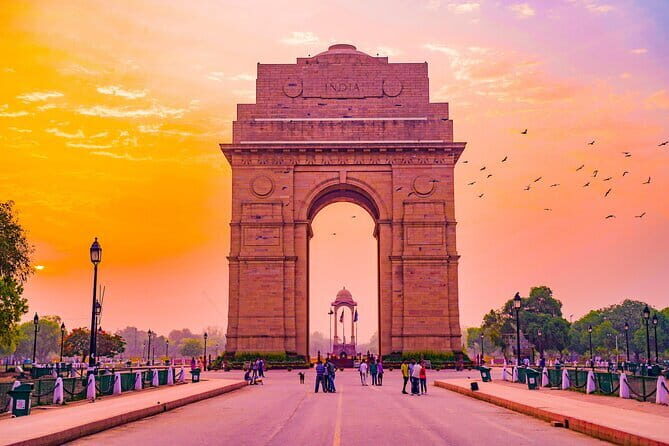
From there you move into the government-zone classics: India Gate (a memorial arch honoring roughly 90,000 Indian army soldiers connected to WWI and later campaigns) plus stops for Rashtrapati Bhavan and Parliament House. These are mostly shorter photo/stop moments, but they help you understand how Delhi’s colonial-era imprint shaped the city center.
Old Delhi is where Delhi gets louder—and fun. You stop at Chandni Chowk for shopping streets, spices, and the dense market rhythm. Then you take an Old Delhi rickshaw ride. It’s a quick 30 minutes, but it helps you feel the historic core instead of just scanning it from the curb.
The day also includes Agrasen Ki Baoli, a long stepwell site. It’s not as famous as the others, but it’s exactly the kind of stop that gives the trip texture—quiet stone, water structure, and a sense of older Delhi life.
Late in the day you roll out for your drive toward Agra via the Yamuna Expressway. The plan also builds in time for lunch at a local restaurant during that transfer window, which is practical because it keeps you from hunting food later.
Day 2 in Agra: Taj Mahal sunrise, Agra Fort, and Baby Taj

Agra is a one-hit town if you do it wrong. Do it right, and you get three layers: the main statement, the royal power behind it, and the softer Mughal elegance that comes before or after.
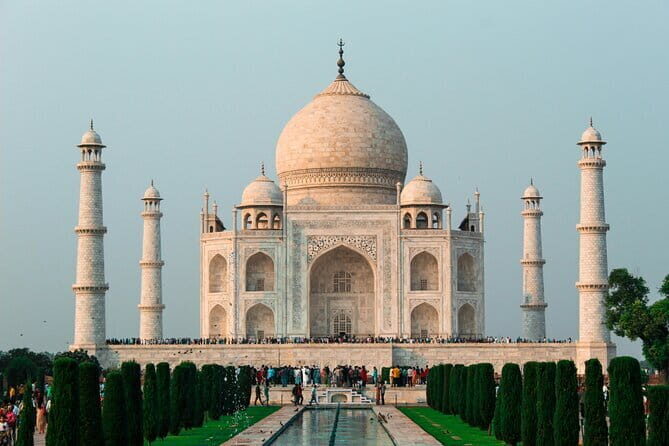
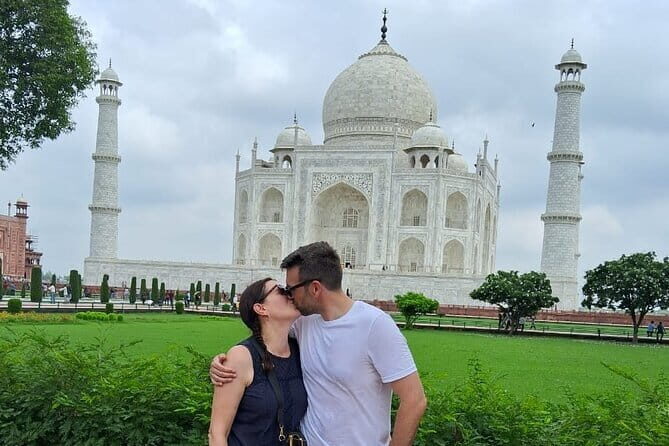
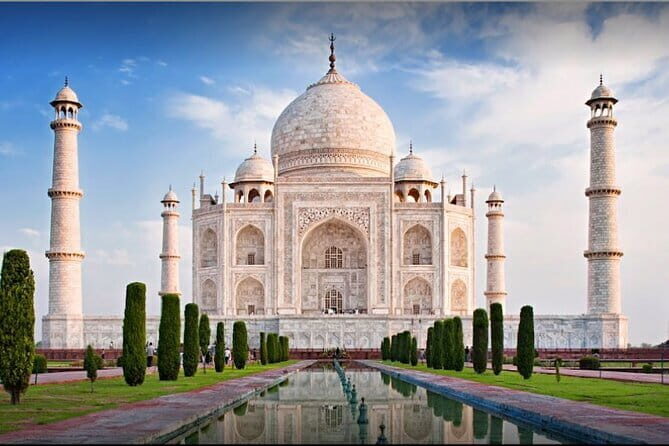
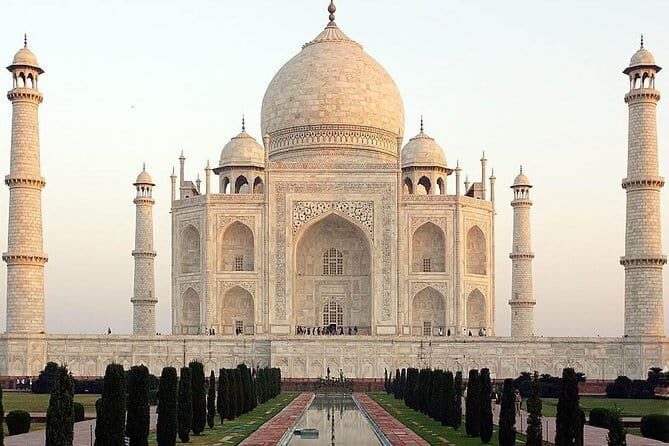
The most important moment is Taj Mahal at sunrise. It’s UNESCO World Heritage, and you’ll see why the Taj’s popularity isn’t just marketing. The guide usually helps you connect details to the mausoleum’s meaning as a 17th-century monument built by Emperor Shah Jahan. One key thing: sunrise is subject to weather conditions, so if fog or weather interferes, your start time and experience may shift.
After the Taj, you head to Agra Fort, another UNESCO site. This is where Mughal power feels more grounded—fort walls, river-side location, and an easier sense of “how rule worked here,” not just how it looked. Next comes Itmad-ud-Daula, often called Baby Taj. It’s a Mughal mausoleum with outbuildings and gardens, and it’s a great contrast after the massive scale of the Taj. It helps you slow down and look closer at stonework and design.
Then you get a strong detour stop outside the main city draw: Chand Baori in Abhaneri, famous for its stepwell reached by 3,500 steps. Even if you don’t go all the way down (you might find you don’t need to), it’s visually impressive, and it breaks up the day so Agra doesn’t feel like one monument after another.
At the end of the day, you transition onward to Jaipur and check in for your second overnight. That keeps the schedule tight without stacking too many late-night changes.
Jaipur’s photo moments: Hawa Mahal, Panna Meena ka Kund, and Jal Mahal
Jaipur is the easiest city to photograph—but it can also become a blur if you rush. This plan protects you from that by mixing “big landmark” moments with architectural pauses.
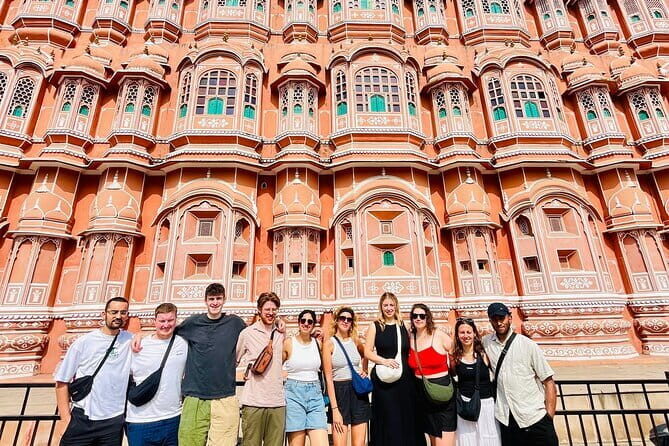
You begin with Hawa Mahal (Palace of Wind). It’s instantly recognizable: a pink honeycombed facade rising five storeys. The idea behind it is clever, and the look is unmistakable. You’ll have a photo stop that’s short but timed so you’re not stuck waiting forever.
Next comes Panna Meena ka Kund, a stepwell known for symmetrical staircases and an elegant, older design style from the 16th century. Even if you’re not a stepwell person, it’s a good reset between palace stops. It also gives you a different kind of architecture to look at—less royal-court drama, more engineering and geometry.
Then you hit another “wow from the outside” moment: Jal Mahal, the Water Palace. It’s near the cenotaphs and set in the Man Sagar water area. The stop is mainly photo-focused, but it’s one of those places where you can stand for a few minutes and watch the scene change with light.
After that you move toward the city center for the deeper palace sites.
You can also read our reviews of more tours and experiences in New Delhi




Amber Fort and City Palace: where Jaipur’s royal story becomes real
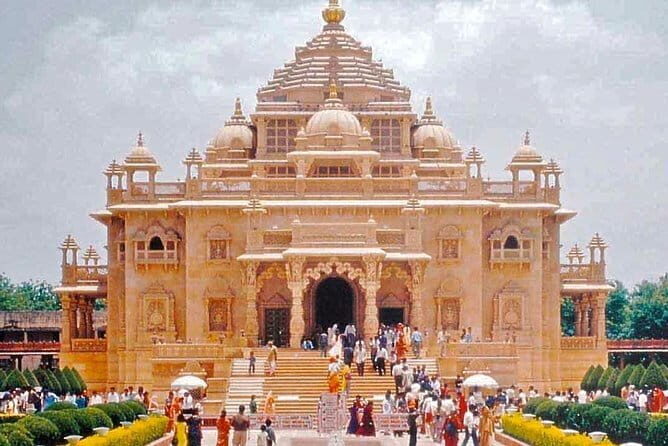
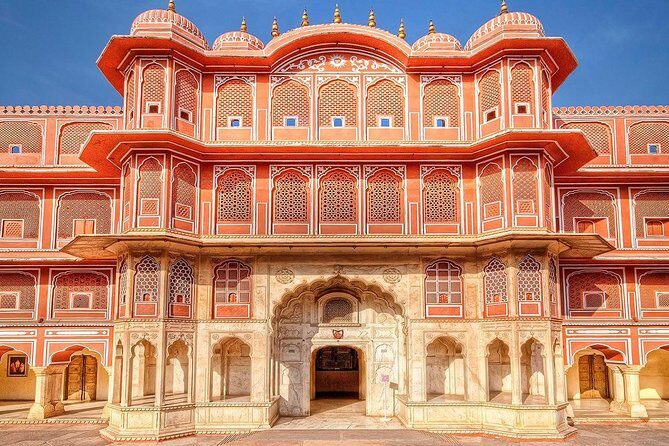
If you love fortifications and palace rooms, this is the heart of your trip. Amber Palace (Amber Fort) is a UNESCO-listed highlight, and it’s one of those places where you can feel the effort that went into defense and display. You’ll see marble-style decoration and mirrored-wall details mentioned in the plan description, plus the general “palace as a statement” design.
Then comes City Palace of Jaipur. Built in 1721, it was originally the administrative and ceremonial seat of the Maharaja. What I like about this kind of stop is that it’s not only about architecture—it connects the monument to how people lived and how events were organized. You’ll also get a sense of continuity here, since it’s still a functioning cultural center today.
Jantar Mantar: the geometry stop that saves you from monotony
By the time you reach Jantar Mantar, your legs might feel it—but this is a smart inclusion. It’s a UNESCO World Heritage Observatory with curving geometric structures designed to monitor movement of stars and planets. This is the kind of stop that breaks the pattern of palaces and forts.
Instead of thinking only about kings and empires, you get another side of Jaipur: the science and math that helped people measure the sky. It’s also a good pacing tool. An hour here can refresh your brain before the final drive back toward Delhi later.
Driving times and pacing: what the transfers mean for your comfort
This tour is three days, but what you really feel is the movement between cities. The drive from Delhi to Agra is about three hours using Yamuna Expressway. Later, the Jaipur-to-Delhi leg is described as around five hours. Traffic can stretch those times, and the plan says exact duration depends on the time of day and road conditions.
Here’s the practical upside: you’re in one air-conditioned vehicle with a private driver, so you aren’t juggling multiple transfers or public transit stress. That’s the difference between “I saw a lot” and “I actually enjoyed it.”
You’ll also want to keep your expectations realistic about walking. The plan recommends comfortable shoes, and you will walk through several historic complexes across three cities.
Price and value: what $190.50 buys and what to double-check
The listed price is $190.50 per person, but the total value depends on your chosen package. Here’s what’s clearly part of the experience:
- Private car with driver throughout, in an air-conditioned vehicle
- Professional private guides for excursions
- Bottled water and all taxes/handling charges
- Hotel/airport pickup and drop-off
- Two breakfasts if you choose the hotel-inclusive option
- Battery bus/golf cart return ride connected to the Taj Mahal entry area
What may change based on your option:
- Accommodation: included as two nights with breakfast only if you book the option that includes hotels.
- Entrance tickets: many stops list admission as not included, but there’s an option noted for entrance fees (described as optional).
My advice is simple: when you book, confirm whether your package includes monument entries for the specific sites you care most about. That one check can prevent budget surprises later.
Also, treat the Taj Mahal sunrise as a “timing perk,” not a guaranteed outcome. It’s described as subject to weather conditions, and that’s honest travel planning.
Who this Golden Triangle luxury tour fits best
This works especially well if you want:
- A private experience instead of a bus full of strangers
- A clear plan that still gives you time at each main stop
- Comfort-first logistics, especially between Delhi and Agra, and again back to Delhi
- A mix of major highlights (Taj Mahal, Amber Fort) and supporting architecture stops (stepwells, observatory)
It may be less ideal if you hate early mornings or you want total control over every ticket and timing detail. Here, you’re choosing a guided, structured flow—so you benefit from flexibility.
Should you book this tour?
If your goal is the Golden Triangle without the usual hassle—finding transport, syncing your schedule, and figuring out what you’re looking at—this is a strong pick. The combination of private car comfort, professional guides, and the Taj Mahal sunrise with battery-ride support is exactly where value shows up.
I’d book it if you want a well-paced 3-day plan that hits the top sites and still includes thoughtful extras like Humayun’s Tomb, Chand Baori, and Jantar Mantar. I’d slow down and confirm the entrance-ticket situation first, because several monuments are listed with admissions not included unless you choose the optional entrance-fee approach.
Overall, it’s the kind of trip that makes the Golden Triangle feel manageable, even if it’s your first time in India.
FAQ
What is the duration of the tour?
The tour is 3 days (approx.), covering Delhi, Agra, and Jaipur, with driving transfers between cities.
What does the price include?
The tour is listed at $190.50 per person. What’s included depends on whether you book the option with hotels, but the experience includes private transport with an air-conditioned vehicle, professional private tour guides, bottled water, and pickup/drop-off.
Is pickup available?
Yes. Pickup is included from your desired location in Delhi, Gurugram (Gurgaon), or Noida, with airport/hotel pickup and drop-off.
Is this a private tour?
Yes. It’s described as a private tour/activity, with only your group participating.
Are entrance fees included?
Many stops are shown with admission ticket not included, but the information also mentions entrance fees included as an optional add-on. You should confirm what tickets are included in your selected option.
What about the Taj Mahal sunrise visit?
The sunrise visit is described as subject to weather conditions.
What happens if I start the tour on Thursday?
If you start on Thursday, the order is adjusted because Taj Mahal remains closed on Friday. The plan notes the tour will run like Delhi – Jaipur – Agra – Delhi.
Is Lotus Temple open on Mondays?
No. Lotus Temple is listed as closed on Mondays.
Does the tour include hotels and breakfast?
If you choose the option including hotels, it includes 2 nights of accommodation on twin sharing with breakfast. If you choose the tour price without hotels, you book your own hotels, with the first night in Agra and the second in Jaipur.
What is the cancellation window for a full refund?
Free cancellation is available up to 24 hours in advance of the experience start time for a full refund. Canceling less than 24 hours before start time is not refunded.