REVIEW · JAIPUR
Walking Tour of Pink City (World Heritage Site) with Local Guide
Book on Viator →Operated by Pashmina Tours · Bookable on Viator
Jaipur’s Pink City clicks when you walk it. This walking route is built to explain why the area is a World Heritage Site, using real streets, real shopfronts, and a guide who helps you connect the buildings to daily life. You start right by Hawa Mahal, then work through markets where the city’s design and trade history show up fast.
I especially like the focus on Hawa Mahal and the surrounding lanes, because you get an easy photo and orientation moment without feeling rushed. The tour is led by an English-speaking guide, and that matters here. When you can ask one good question and get a straight answer, bazaars stop being confusing and start making sense.
One thing to consider: it’s still a walking tour through busy lanes, so plan for heat and shoes that can handle uneven ground and crowds. If you hate close-quarter shopping streets, this may feel like a lot in 2 hours 30 minutes.
In This Review
- Key highlights I’d plan my day around
- Why the Pink City is best on foot (and how this tour helps)
- Meeting at Tattoo Cafe near Hawa Mahal (and getting your bearings fast)
- Stop 1: Hawa Mahal Palace of Wind in the real-world lane setting
- Stop 2: Johri Bazar for jewelry, silver, gold, and wedding color
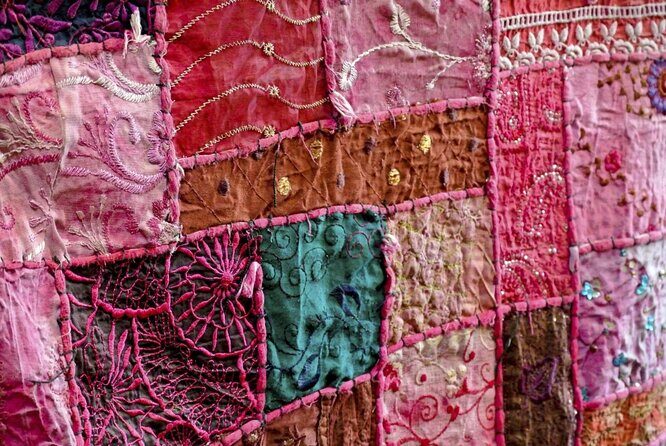
- Stop 3: Bapu Bazar textiles, and why it’s a good mid-tour reset
- Stop 4: Tripolia Bazar book market, utensils, and gem-stone wholesale lanes
- Stop 5: Chandpol Bazaar, spices and dry fruits, plus Ishwar Lat photos
- The rickshaw ride: a short break that keeps momentum
- Refreshments included: tea, coffee, soda, and bottled water
- Price and value: $35 for a guided market-and-monument loop
- Who this tour fits best (and who should skip it)
- A real sense of local help: what Sanjeed-style guiding feels like
- Should you book this Pink City walking tour?
- FAQ
- How long is the Walking Tour of Pink City?
- Where do I meet the guide?
- Is the tour private?
- What is included in the $35 price?
- Which places are included on the walking route?
- Are there admission tickets included for the stops?
- Can I cancel for free?
Key highlights I’d plan my day around
- Hawa Mahal start with Tattoo Cafe timing for a strong early orientation
- Johri Bazar and wedding-dress shopping lanes for color and texture (plus great people-watching)
- Bapu Bazar to Tripolia Bazar market chain so you see textiles, books, utensils, and gem-stone wholesale areas in one flow
- Chandpol Bazaar + Ishwar Lat photo moment at the tallest minaret inside the Pink City
- Rickshaw ride to break up the walking and reset your energy
Why the Pink City is best on foot (and how this tour helps)
Jaipur looks postcard-perfect from the main avenues, but the Pink City is really about connections: corridors of buildings, narrow lanes, and neighborhoods shaped by how people moved and traded. A walking tour gives you that texture. You don’t just see monuments. You see what’s next to them, which is usually the point with heritage places.
This route is designed like a mini sampler. You begin at Hawa Mahal and then shift into markets one after another—Johri Bazar, Bapu Bazar, Tripolia Bazar, and Chandpol Bazaar. That pacing matters. Instead of spending your whole day inside one area, you get several different “Jaipurs” in one block of time: royal-facing views, jewelry and wedding shopping, textiles, book and utensil trade, and spice and dry goods.
You’re also not stuck figuring it out alone. With an English-speaking local guide, I like that you get context while you’re standing in the moment. Heritage explanations land better when they’re paired with what you can actually see: craft shops, signage styles, and the way streets funnel movement toward landmark areas.
You can also read our reviews of more walking tours in Jaipur


Meeting at Tattoo Cafe near Hawa Mahal (and getting your bearings fast)
Your meeting point is the Tattoo Cafe & Lounge, on the 3rd floor, opposite Hawa Mahal on Hawa Mahal Rd in Badi Chaupar. You meet your guide there, and the tour starts with a short introduction and quick setup—then you head for the first big visual payoff.
One practical plus: the meeting location is inside the heart of the Pink City, so you’re already in the zone once you arrive. No long transfer. No dragging your day out before anything interesting happens.
Another detail that can make this tour smoother: you get a chance to go up to the cafe level near the start. That’s useful because Hawa Mahal’s impact is visual. Seeing it from a comfortable vantage point first helps you understand what you’re about to walk around, and it makes later photo angles easier.
If you’re the kind of traveler who likes to know where you’ll be walking before you commit, this is a good start.
Stop 1: Hawa Mahal Palace of Wind in the real-world lane setting
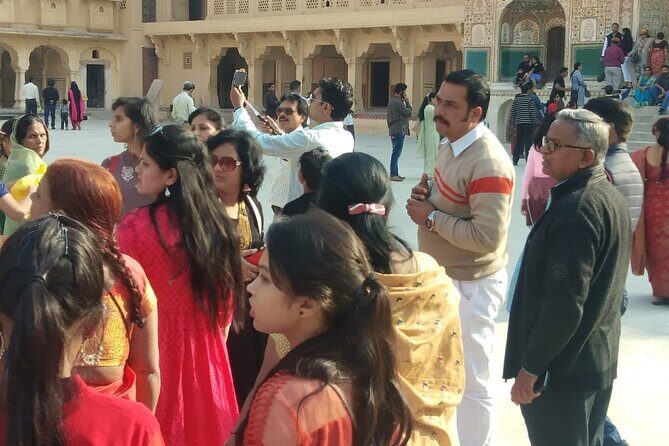
Hawa Mahal is the headline, and this tour treats it that way. The stop is short (about 10 minutes), but it’s built for orientation rather than a slow museum-style visit. You get time to look, take photos, and understand why this landmark is iconic in Jaipur’s skyline.
What I like about this approach: you don’t spend half your tour parked at one spot. Instead, you get the main “wow” image and then move. That keeps the walking tour feeling like a journey, not a queue.
A guide-led moment also helps you read the building as more than a pretty facade. You learn how the area earned heritage recognition, and you see how royal design connects with the daily streets around it.
Stop 2: Johri Bazar for jewelry, silver, gold, and wedding color
After Hawa Mahal, you walk toward Johri Bazar. This is where the tour shifts from architecture to commerce, and that’s a smart trade-off. Johri Bazar is known for jewelry—stone jewelry, silver, and gold—plus colorful wedding dress shops.
This stop is about 30 minutes, which is long enough to browse without making you tired of bargaining noise. You can look at craftsmanship, compare styles, and notice how shop patterns cluster around the lane rhythm. If you’re shopping, this is the lane where you’ll feel the biggest variety. If you’re not shopping, it’s still one of the most visually rewarding stops because of the color palette and the sheer density of goods.
One practical note: jewelry lanes can be crowded, and some shops get busy with customers. Keep your phone and valuables secure and follow your guide’s cue on when to stop and when to move.
Stop 3: Bapu Bazar textiles, and why it’s a good mid-tour reset
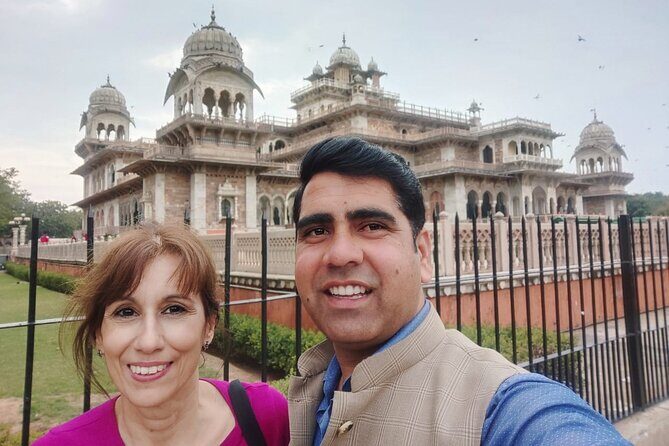
Bapu Bazar is one of the city’s most famous bazaars, and here the focus shifts toward textiles and other shopping categories. This stop also runs about 30 minutes.
I like this stage because it changes the sensory mix. After Johri Bazar’s heavy focus on jewelry and bridal textiles, Bapu Bazar gives you fabric textures and shop displays that feel different. It’s a nice way to keep your interest from flattening out.
Also, mid-tour is exactly when a guided group can be helpful. You don’t just wander randomly through aisles. You get pointed toward the kinds of shops that represent Jaipur’s craft trading culture—so you feel like you understood the area, not just walked through it.
You can also read our reviews of more guided tours in Jaipur






Stop 4: Tripolia Bazar book market, utensils, and gem-stone wholesale lanes
Next up is Tripolia Bazar. This is a longer market mix: you’ll see book market areas, utensils, wholesale trading connected to precious and semi-precious gem stones, and a final stretch where the route continues onward.
This stop is about 30 minutes, which again hits a good balance. You don’t need hours here to grasp the specialization. In many bazaars, the “identity” of the street becomes obvious quickly: the shop signage, the goods, and who’s buying.
What’s valuable for you: a market tour can be fun, but it can also turn into aimless browsing. This stop avoids that by covering distinct categories in sequence. You walk from books to utensils and then toward gem-related wholesale trading, so you see how Jaipur’s commercial districts are organized by product type.
If you enjoy photography, Tripolia Bazar is often where street texture shows up: stacked goods, storefront crowds, and the contrast between different shop surfaces.
Stop 5: Chandpol Bazaar, spices and dry fruits, plus Ishwar Lat photos
Chandpole (Chandpol) Bazaar is where the route leans into food-related shopping: spices, dry fruits, and also areas for silver jewelry and marble work. The stop includes time to wander and then take a photo break near a landmark called Ishwar Lat.
This is where the tour becomes more than a shopping circuit. Ishwar Lat is described as the tallest minaret inside the Pink City, and the stop gives you a chance to take some nice photos near it.
I like adding a landmark like that at the end of a market-focused day segment. It gives your brain a different kind of “read” moment—height, shape, skyline framing—before you wrap up the walk.
Chandpol Bazaar is also a good reminder that Jaipur’s heritage isn’t only palace walls. It’s trade, craft, and everyday needs that keep the city functioning.
The rickshaw ride: a short break that keeps momentum
This tour includes a rickshaw ride. You don’t get long sightseeing by vehicle, but you do get a reset. In a 2.5-hour walk, that small transport piece can make the difference between feeling energized and feeling worn out by the afternoon heat.
Think of it as pacing management. You’ll still get the walking experience, but you’re not paying for a tour that’s all endurance. Plus, in a city like Jaipur, a short ride can give you perspective on street layout and how the Pink City connects in practice.
Refreshments included: tea, coffee, soda, and bottled water
Included in the price are soda/tea/coffee and bottled water. That’s not a small detail in Jaipur. You’re on foot and in busy sun-adjacent lanes, so having hydration and a quick drink built into the experience is a practical win.
I also like that it’s included without turning into a full sit-down break. You get what you need and keep going.
What to bring: comfortable, grippy shoes. A light layer. Sunscreen. And a plan for when you feel market overload—step aside, regroup, and let your guide steer you to the next stop.
Price and value: $35 for a guided market-and-monument loop
At $35 per person for about 2 hours 30 minutes, this tour is priced like a solid local-guided experience rather than a big, fancy, long-day program. The value comes from the combination:
- Multiple major Pink City zones in one route (palace landmark + several bazaars)
- English-speaking guide for context and direction
- Rickshaw ride for pacing
- Beverages and bottled water so you’re not buying everything on the fly
- A format that’s small-group or private for your group, which usually means you can move at a pace that fits you
You’ll still want to plan for what’s not included: transport to the meeting point, and no lunch or dinner. If you schedule this before a meal, you’ll feel better and spend less time thinking about food logistics.
Also, the tour uses a mobile ticket and mentions group discounts. That can make a difference if you’re traveling with friends or family and want everyone on the same plan.
Who this tour fits best (and who should skip it)
This walking tour is a great fit if you want:
- A guided way to understand Jaipur’s heritage area without wandering aimlessly
- Market time that’s organized by topic (jewelry, textiles, books and utensils, spices and dry goods)
- A short landmark sequence that starts with Hawa Mahal and ends with an architectural photo stop at Ishwar Lat
- A practical 2.5-hour block that doesn’t eat your whole day
You might want to choose something else if:
- You want deep, slow palace touring with long indoor viewing time
- You prefer quiet areas with fewer crowds and lots of breathing space
- You’re very sensitive to shopping-street energy and constant storefront activity
A real sense of local help: what Sanjeed-style guiding feels like
One thing that comes through in the tour’s recent feedback is the value of a guide who’s prepared and kind. Sanjeed is specifically mentioned in one recommendation, and that kind of support matters in markets. A good guide doesn’t just point at sights. They help you read the street—when to pause, what to notice, and how to keep moving without getting lost in the noise.
If you like tours where you can ask questions and get answers that actually help, you’re in the right format.
Should you book this Pink City walking tour?
Yes, I’d book it if you want a time-efficient Jaipur overview that feels grounded in real daily life. For $35, you’re getting a guided loop through the Pink City’s big visual anchor (Hawa Mahal), plus several specialized bazaars, plus a rickshaw break and included refreshments. That combo is hard to beat for a short day plan.
Skip it only if you want a long, in-depth museum-style heritage experience or you know you don’t handle crowded market lanes well. If you’re comfortable with walking, heat, and close-up storefront energy, this tour is a very practical way to understand why Jaipur’s Pink City is heritage-worthy—and to enjoy it while you’re doing it.
FAQ
How long is the Walking Tour of Pink City?
The tour lasts about 2 hours 30 minutes.
Where do I meet the guide?
You meet at Tattoo Cafe & Lounge (3rd floor), 30, Opposite Hawa Mahal, Hawa Mahal Rd, Badi Chaupar, Jaipur, Rajasthan 302002, India.
Is the tour private?
Yes. Only your group will participate.
What is included in the $35 price?
An English speaking tour guide, a rickshaw ride, soda/tea/coffee, and bottled water.
Which places are included on the walking route?
The tour includes Hawa Mahal, Johri Bazar, Bapu Bazar, Tripolia Bazar, and Chandpol Bazaar (with a photo stop near Ishwar Lat).
Are there admission tickets included for the stops?
The stop details list admission ticket free for the included stops.
Can I cancel for free?
Yes, free cancellation is available. You can cancel up to 24 hours in advance for a full refund.