Skip the Taj-only script.
This is a 3–4 hour old-city walk-and-eat route you feel in your feet and tastebuds, not a sit-and-watch day. I especially like the tuk-tuk setup that gets you between places fast, while the guide threads history through Faizan-style explanations like Mughal-era Agra landmarks and the stories behind the temples you pass. You’ll stop at Kinari Bazaar, Jama Masjid, Shri Mankameshwar Mandir, Rawatpara Spice Market, Seth Gali, and end with Chaat Gali favorites in Sadar Bazaar.
Two big wins: the street food budget is included, so you can sample classics like Agra petha, chaat, and lassi without doing math on every bite. And because it’s private, the pace stays yours instead of getting swallowed by random groups. One consideration: this route is very much about market life, so expect spicy foods and close-up crowds in narrow lanes. If you’re sensitive to heat (or you hate noise), I’d plan to eat more slowly and choose milder options with your guide.
In This Review
- Key highlights worth your attention
- Why Agra’s old-city lanes beat a Taj-only afternoon
- Door-to-door tuk-tuk logistics that keep your day simple
- Kinari Bazaar: shopping streets near Jama Masjid
- Jama Masjid (Friday Mosque): 17th-century architecture with real atmosphere
- Shri Mankameshwar Mandir: Shiva legends near Agra Fort
- Rawatpara Spice Market: saffron, turmeric, and how to shop smarter
- Seth Gali sweets and halwais: the sweet lane moment
- Sadar Bazaar and Chaat Gali: Agra petha, chaat, and lassi
- Price and inclusions: why this costs about $5 but feels bigger
- The guide factor: what I’d look for when you book
- Who should book this tuk-tuk food and heritage tour
- Should you book this Agra tour?
- FAQ
- How long is the Agra tuk-tuk tour?
- How much does the tour cost?
- Does the tour include pickup and drop-off?
- Is street food included in the price?
- Are entrance tickets required for the stops?
- Is this tour private?
- Can I get a full refund if I cancel?
Key highlights worth your attention
- Private tuk-tuk with driver: door-to-door pickup/drop in Agra and smooth travel between compact lanes
- Jama Masjid (Friday Mosque): a 17th-century stop with free entry and a strong sense of place
- Shri Mankameshwar Mandir near Agra Fort: a temple visit tied to Shiva and the legend of Lord Krishna’s birth
- Rawatpara Spice Market: see saffron, turmeric, and cumin in a real shopping street, not a souvenir shop
- Seth Gali sweets and halwais: a classic Agra lane for traditional sweets
- Sadar Bazar + Chaat Gali: where Agra petha, chaat, and lassi fit naturally into the walk
Why Agra’s old-city lanes beat a Taj-only afternoon
If you only do the big monument circuit, Agra can feel like a highlight reel. This kind of tour is different because it puts you in the neighborhoods where people actually shop, pray, and snack. You’ll cover key spots in a short window, but you’re still moving through real street geometry—narrow lanes, small storefronts, and the everyday rhythm around temples and markets.
I like that the experience is built around contrasts. One moment you’re at a historic mosque; the next you’re in a spice market seeing saffron and turmeric close up. Then you switch to the sweet-and-savory world of halwais, petha, chaat, and lassi. It’s a fast way to understand Agra beyond the postcard.
The 3–4 hour timing is also smart. It’s long enough to feel satisfying, but short enough that you’re not exhausted before you even start your evening plans.
You can also read our reviews of more tours and experiences in Agra.



Door-to-door tuk-tuk logistics that keep your day simple
This tour is designed for convenience. You get hotel or station pickup and drop back to your preferred location in Agra city. Then you ride in a private tuk-tuk with a driver, with a guide who stays with you at the stops.
A practical point: tuk-tuks help when streets get tight. Even if the sights involve walking, you’re not walking the whole time across the city. Instead, you hop between areas and spend your energy where it matters—at the markets, temple entrances, and street-food lanes.
You’ll also get mineral water bottles, which matters more than people think. Hot weather plus street eating can turn into a grumpy stomach if you’re constantly hunting for water.
Finally, the tour is booked as private, meaning it’s only your group. That usually makes it easier to ask questions, slow down for photos, or tell the guide you want more food time (or less).
Kinari Bazaar: shopping streets near Jama Masjid
Kinari Bazaar is the first flavor of Agra you’ll feel: narrow, active lanes, with shops focused on traditional Indian goods. It’s the kind of market where you don’t browse in a leisurely way. You move with purpose, peeking into storefronts, watching what locals buy, and picking up the sense that this area has always been built for foot traffic.
What I like here is the location logic. Since Kinari Bazaar sits near Jama Masjid, it’s a great warm-up for your mental shift from food mode to heritage mode. Your guide can point out what’s around you and help you make sense of why the shops and the mosque sit so close together.
One small drawback: bazaars like this can be crowded and tight. If you’re the type who hates brushing shoulders or squeezing through groups, go slow. You can still enjoy the sights without forcing yourself to “walk fast.”
Jama Masjid (Friday Mosque): 17th-century architecture with real atmosphere
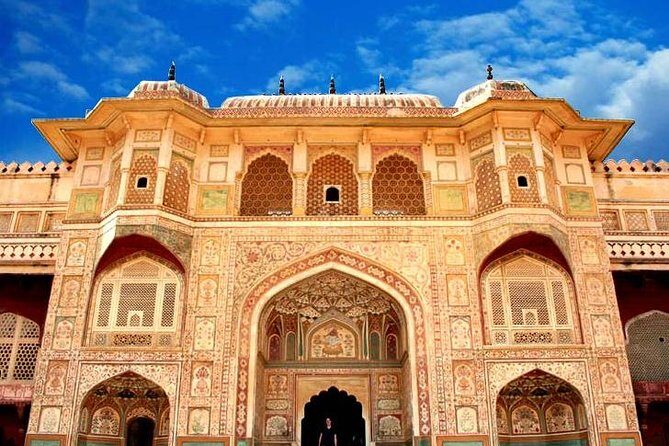
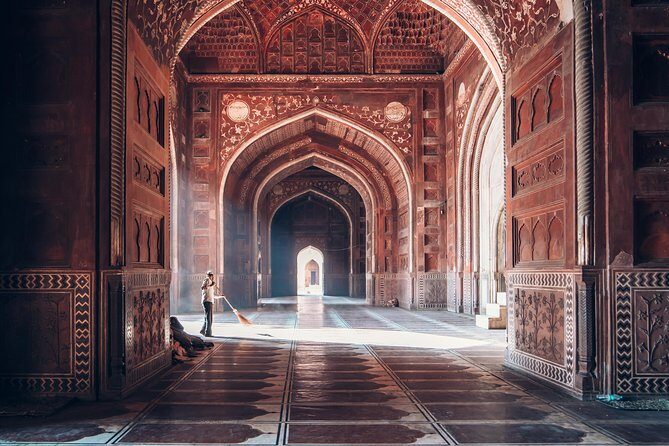
Jama Masjid is a major Mughal-era mosque in the heart of Agra, and it’s known as the Friday Mosque. It’s a 17th-century landmark commissioned by Jahanara Begum. The guide’s job here is important, because the value isn’t just seeing a building—it’s understanding what you’re looking at and why it matters to the neighborhood.
You’ll spend around 30 minutes here, which is enough time to get your bearings, see key areas, and ask questions without turning it into a rushed checklist. Admission is free, so you’re not paying extra to “earn” your visit.
How to enjoy it: keep your pace respectful, dress appropriately for a place of worship, and listen to the guide’s explanations about the mosque’s role in the city. If you’re curious about how faith shapes daily life, this is a strong stop.
Consideration: if you’re expecting a quiet photo session, adjust your expectations. Mosques in working areas tend to stay alive with people and movement.
Shri Mankameshwar Mandir: Shiva legends near Agra Fort
After Jama Masjid, the tour shifts tone again at Shri Mankameshwar Mandir. This Hindu shrine is dedicated to Lord Shiva, and it’s located near Agra Fort. Here’s one of the most interesting details you’ll hear: the belief that Lord Shiva installed the Shiva Linga here during Lord Krishna’s birth.
That legend gives the stop an extra layer. You’re not just visiting a temple because it’s old. You’re visiting because local faith connects it to a specific mythic moment—one that people treat as meaningful, not as trivia.
You’ll have about 20 minutes here, enough time to observe, learn the story, and enjoy a quieter rhythm after the market streets. Admission is free, so you can focus on the experience instead of the ticket line.
Practical tip: temples can mean uneven surfaces and lots of visitors. Wear shoes you can walk in comfortably and keep your attention on where you step.



Rawatpara Spice Market: saffron, turmeric, and how to shop smarter
Rawatpara is the stop for people who love food but also want to understand ingredients. This spice market is known for a wide range of fresh, aromatic spices—everything from saffron to everyday staples like turmeric and cumin.
What makes Rawatpara feel more real than a packaged-market visit is that you’re in a shopping environment where spices aren’t just décor. You can learn what different spices look like, how they’re used, and what’s commonly bought for home cooking.
The time here is about 30 minutes, which is right for sampling scents, asking questions, and possibly picking up a spice or two if that’s your thing. The guide can help you avoid the common tourist trap: buying something without knowing how you’d actually use it.
Possible drawback: spice markets can be intense for people sensitive to strong smells. If you’re prone to headaches or nausea from heavy fragrances, tell the guide early. You can still see and learn without overloading your senses.
Seth Gali sweets and halwais: the sweet lane moment
Then comes Seth Gali, a renowned lane in Agra famous for sweet shops (halwais). This is where the tour’s “taste” theme becomes unmistakable. You’ll get to see how traditional sweets and street snacks are part of the daily food culture.
You’ll spend about 30 minutes, which is enough to watch the work, smell the sugar and frying aromas, and choose a sweet that fits your preferences. If you’re a dessert person, this is one of the most fun segments, because it’s sensory and visual in a way that feels distinctly Agra.
One thing to keep in mind: sweets are meant to be shared or savored slowly. Don’t rush your first bite just to “keep up” with the group. Let your guide help you pick something you’ll actually enjoy, not just something you feel pressured to try.
Sadar Bazaar and Chaat Gali: Agra petha, chaat, and lassi
Sadar Bazaar is near Agra Cantt and is known for leather goods and handicrafts, but the real star for this tour is the food lane energy—especially in Chaat Gali. You’ll spend around 30 minutes here.
This is where the tour delivers on the classics. Plan on trying iconic local bites like Agra petha, chaat, and lassi. The big advantage is that street food expenses are included, so you can treat it like a guided tasting, not a budget stress test.
Why Chaat Gali is a good finale: it’s the kind of place where you can keep your momentum going. After temples and spice shopping, your brain shifts naturally into snack mode. And because the tour has you here at the end, you get a satisfying wrap-up—something sweet, something tangy, something cooling.
Smart move: ask your guide what to order first. Chaat menus can be confusing when you’re hungry. Your guide can steer you toward items that match what you like and what you’ve already eaten.
Price and inclusions: why this costs about $5 but feels bigger
The price is $5.00 per person, with duration around 3 to 4 hours. On paper, it can sound too small to cover much. But the value comes from what’s actually included.
You get:
- hotel/station pickup and drop
- a private tuk-tuk with driver
- a guide who speaks your preferred language at the stops
- street food expenses
- bottled mineral water
- driver allowances and all parkings, fuel, and taxes
Tips are optional and not included. That’s normal.
So the real “math” here is that your biggest costs—transport and guided access to street-food areas—aren’t something you’re paying for separately. And because street food expenses are part of the plan, you’re not stuck trying to guess what to eat while navigating market crowds.
Group discounts are also mentioned, which can make it even better if you’re coming with friends.
The guide factor: what I’d look for when you book
This tour works best when the guide can connect dots. In recent experiences, the local guide Faizan has been praised for knowing Agra and being able to tailor the tour to match the group’s interests. That matters because you’ll see the same places as other tours, but you’ll remember the ones where someone explained why they matter.
So if you’re booking, think about what you want from the guide:
- history context at Jama Masjid and the Shiva legend at Mankameshwar
- spice-market guidance at Rawatpara
- smart ordering help for petha, chaat, and lassi
The tour already provides a language-speaking guide, which helps a lot when you’re choosing food and asking questions in markets.
Who should book this tuk-tuk food and heritage tour
You’ll love this if you’re the kind of person who wants your travel days to feel like real life: markets, religious sites, street snacks, and short walks with a purpose. It’s a good fit for foodies, culture lovers, and curious travelers who like learning while they eat.
It’s also a solid choice if you want a private pace. Instead of being swept along, your group stays together, and your guide can adjust the tempo.
Who might want to think twice:
- If you dislike spicy food or strong smells, the spice market and street-food focus may feel too intense.
- If you want quiet museums or long sit-down time, this is more about moving through lanes and tasting along the way.
Should you book this Agra tour?
Yes, if you want a quick, guided taste of Agra’s old city—temples in the morning mood, spices in the middle, and petha/chaat/lassi to finish. The private tuk-tuk, included street-food budget, and pickup/drop make it strong value at the $5 price point.
Book it when you can handle market energy. If you show up ready to walk a bit, eat like you mean it, and ask questions, this tour gives you a practical, memorable snapshot of Agra that goes well beyond the Taj Mahal photo stop.
FAQ
How long is the Agra tuk-tuk tour?
It runs about 3 to 4 hours.
How much does the tour cost?
The price is listed at $5.00 per person.
Does the tour include pickup and drop-off?
Yes. It includes hotel or station pickup and drop.
Is street food included in the price?
Yes. Street food expenses are included.
Are entrance tickets required for the stops?
Admission tickets are listed as free for the stops mentioned, and the tour includes the visit times for places like Kinari Bazaar, Jama Masjid, and the temples/markets.
Is this tour private?
Yes. It’s a private tour/activity, meaning only your group will participate.
Can I get a full refund if I cancel?
Yes. You can cancel up to 24 hours in advance for a full refund.