REVIEW · NEW DELHI
“Taj Mahal” Tour from Delhi by India’s Fastest Train (Gatiman Express)
Book on Viator →Operated by Majestic Taj Tours · Bookable on Viator
Taj Mahal without the road-stress is the whole point. This private day trip from Delhi uses the Gatiman Express to cut through the slow, chaotic parts of getting to Agra, plus you get air-conditioned car transfers and a live guide who helps you make sense of what you’re looking at. It’s built for people who want a big, famous sight day but still want the day to feel manageable.
I like how the timing is packed but not frantic: you see the Taj Mahal first, then head straight into other key Mughal-era stops like Agra Fort and the “Baby Taj” complex. And I also like that you can upgrade for admission tickets and even a buffet lunch at a 5-star hotel, which means fewer decisions once you’re in motion.
The main thing to watch for is mismatch risk: the tour is very dependent on correct ticket details and smooth station navigation. One tricky story involved an issue with a child’s train ticket, so if you’re traveling with kids, I’d double-check every passenger detail before the day arrives.
In This Review
- Quick Hits Before You Go
- How the Gatiman Express Changes a Taj Mahal Day
- Pickup to Platform: What Your Morning Transfer Really Means
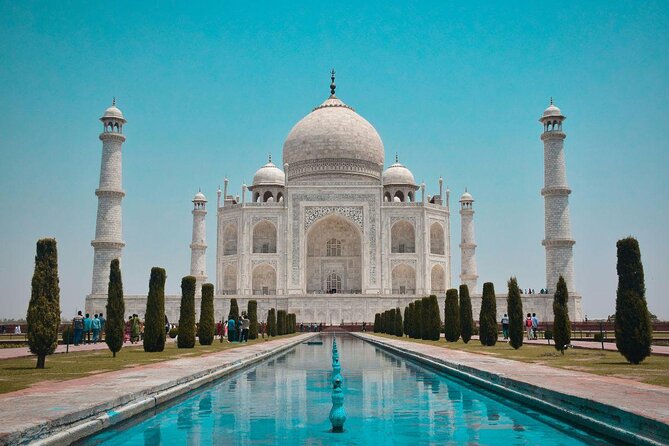
- Taj Mahal: How to Use Your Time in the White Mausoleum
- Agra Fort After the Taj: Mughal Power in Stone
- Lunch at DoubleTree by Hilton Agra: A Real Break from Monument Mode
- The “Baby Taj” (Itmad-ud-Daulah) and Why It Works
- Mehtab Bagh Sunset Point: Optional but Worth the Consideration
- Price and Value: What $72 Buys (and What Upgrades Change)
- Small Friction Points I’d Plan For
- Who This Taj Mahal by Train Tour Fits Best
- Should You Book This Tour?
Quick Hits Before You Go
- Gatiman Express, round-trip: faster than most car-only itineraries, with hotel-to-station comfort
- Private guide on the ground: you’re not just walking through monuments, you’re getting context
- Big-ticket sights in one sweep: Taj Mahal, Agra Fort, Itimad-ud-Daulah, plus Mehtab Bagh (listed as an optional stop)
- Air-conditioned car transfers in Agra: from station to sights to lunch
- Optional 5-star buffet lunch: a true reset instead of a random street meal stop
- Mobile ticket included: helpful when you’re moving fast and switching locations
How the Gatiman Express Changes a Taj Mahal Day
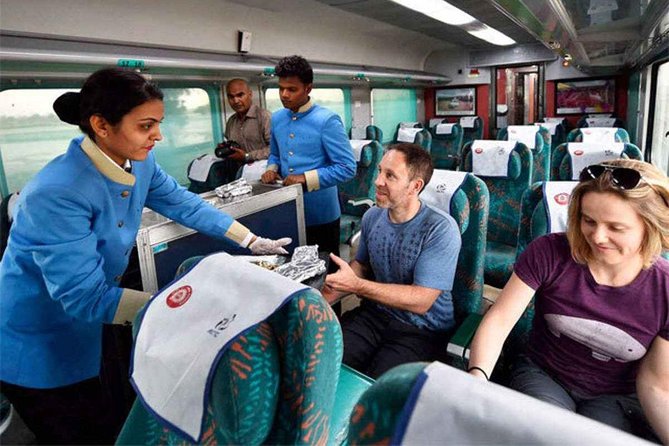
If you’ve ever done the Delhi-to-Agra drive, you know the pattern: you start hopeful, traffic chips away at your energy, and by the time you reach the Taj area, you’re thinking more about getting through the day than soaking it in. This tour tries to fix that by making the train the backbone of the schedule.
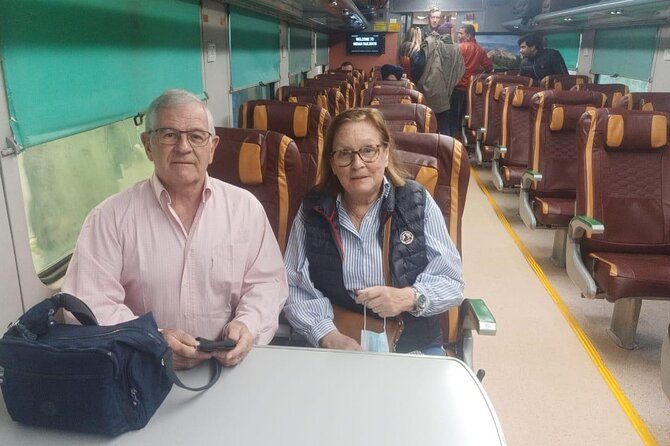
The outbound ride is on the Gatiman Express train 12050 from Hazrat Nizamuddin Railway station to Agra. On the way back, the schedule calls for train 12049, departing Agra Cantt at 5:50 p.m. and reaching Hazrat Nizamuddin in Delhi at 7:30 p.m. That fixed return time matters. It helps you plan the rest of the day without guessing when you’ll finally be done.
In plain terms: you trade long road time for rail time, and you end up with a Taj day that feels more like a sightseeing route and less like a battle.
You can also read our reviews of more tours and experiences in New Delhi.



Pickup to Platform: What Your Morning Transfer Really Means

You’re picked up from anywhere in Noida, Delhi, or Gurugram by an air-conditioned chauffeur-driven car. The drive goes to Hazrat Nizamuddin Railway station, then you connect to the train. In Agra, the handoff is built in: your guide meets you at the station holding a placard with your name.
That name-placard detail sounds small, but it’s a big deal when you’re arriving in an unfamiliar station layout. You get your bearings fast and you’re not stuck hunting for the right person while taxis and crowds swirl around you.
One practical note: station navigation on the return day can feel less guided. A tip I’d take seriously from past experiences is to pay attention to the car-signage once the train pulls in—there are indicators that can light up to help you identify which car you need. If you’re traveling with a group or older family members, build in a little extra patience at that step.
Taj Mahal: How to Use Your Time in the White Mausoleum
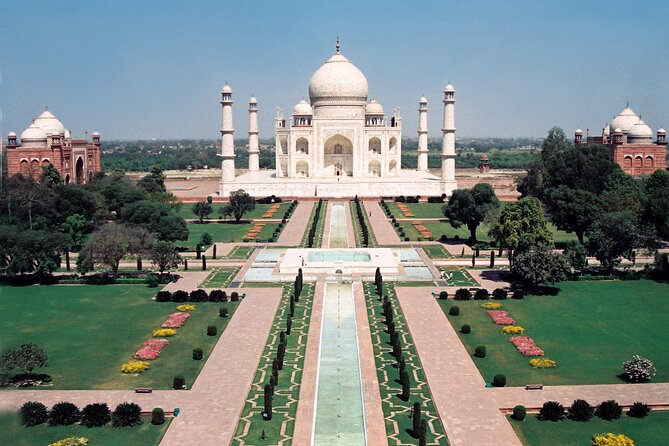
The itinerary gives you about 2 hours at the Taj Mahal, with entry included if you choose the ticket option. Two hours sounds like plenty until you remember queues, security checks, and the fact that you’ll likely want time for at least a few classic angles as the light shifts.
Here’s how I’d use that window if you like photos but also want to actually understand what you’re seeing:
- Spend the first chunk getting your orientation: main view, then a slow turn to notice symmetrical details.
- Use the middle chunk for the story: carvings, layout, and why the Taj looks the way it does from different positions.
- Save the final chunk for what you didn’t get the first time—often the best look comes after you understand the layout.
The tour’s value isn’t just that you get inside. It’s that you’ll have a guide explaining the monument while you’re there. One guide name that shows up is Rashid, and when he’s on duty the feedback emphasizes strong English and clear explanations of both the Taj Mahal and the other stops like Agra Fort. Even if your guide isn’t Rashid, I’d still expect that live context to be a core part of your experience.
Agra Fort After the Taj: Mughal Power in Stone
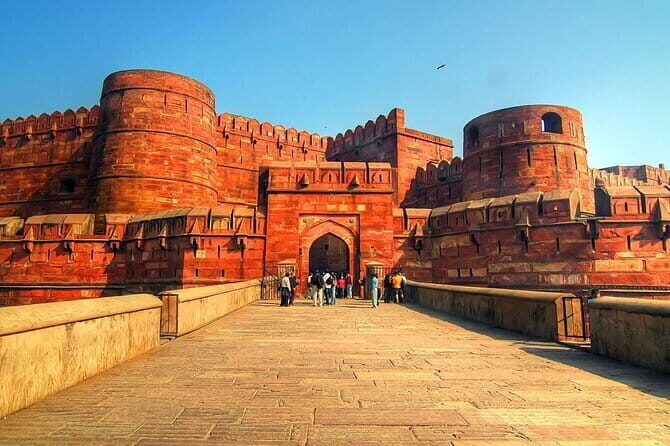
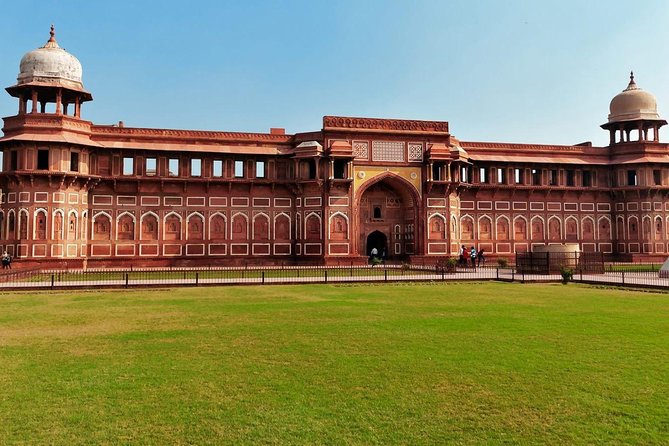
Right after the Taj, you drive to Agra Fort, listed for about 1 hour with admission included if you choose the ticket option. Agra Fort is a different mood than the Taj Mahal. The Taj is about perfection and composition; Agra Fort is about control—walls, authority, and the fact that Agra was a seat of power.
The schedule positions Agra Fort immediately after the Taj, and I think that’s smart. Your brain is still in “Mughal mode,” so the shift from marble symbolism to fortress reality lands smoothly instead of feeling like a random add-on.
Potential drawback: if you’re the type who wants long, quiet monument time (or you’re jet-lagged), 1 hour can feel tight. That said, the tour structure is built to protect your full-day flow and keep you on track for lunch and the next sights.
Lunch at DoubleTree by Hilton Agra: A Real Break from Monument Mode
After Agra Fort, the itinerary schedules lunch at DoubleTree by Hilton Hotel Agra for about 1 hour. The buffet lunch is included only if you opt in to the lunch upgrade, and it’s described as a five-star buffet.
This part is more than eating. It’s the reset button. You’re in Agra for most of the day, and after Taj Mahal + fort time, your feet and attention need a breather. A proper sit-down meal also makes it easier to handle heat and crowds without rushing.
What I’d do: plan to eat like a traveler, not like a contest. Hydrate, fill up, and give yourself a few minutes to slow down before you go back into sight mode.



The “Baby Taj” (Itmad-ud-Daulah) and Why It Works
Next on the route is Itmad-ud-Daulah, also commonly called the Baby Taj, listed for about 30 minutes with admission included if you choose the ticket option. Itmad-ud-Daulah is a Mughal mausoleum, often described as a detailed, jewel-box style place.
Thirty minutes is short, but that works here because Itmad-ud-Daulah is visually dense. You don’t need an hour to get something meaningful out of it—you need a guide and a focus. If you’re paying attention, you’ll likely notice that it complements what you just saw at the Taj. It feels related, but it’s not a duplicate.
Mehtab Bagh Sunset Point: Optional but Worth the Consideration
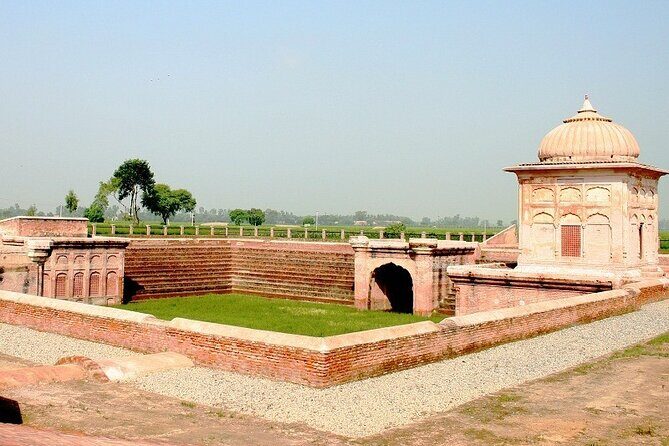
After the Baby Taj stop, you head to Mehtab Bagh, described as a charbagh complex on the opposite side of the Yamuna River and presented as a sunset point behind or across from the Taj area. The itinerary lists it for about 30 minutes and notes it can be optional depending on the plan.
If it’s included on your day, I think Mehtab Bagh makes sense because it changes the viewpoint. Even when you can’t get a dramatic sunset moment, the idea of seeing Taj-area symmetry from the other side is useful for connecting what you saw earlier.
If it’s cut due to timing, don’t panic. You still get the core monuments. But if you love photography and the idea of a different angle, it’s a stop I’d try to keep.
Price and Value: What $72 Buys (and What Upgrades Change)
The price listed is $72 per person, and the tour is typically booked about 19 days in advance on average. For that price, you’re paying for a full day that includes:
- Round-trip train tickets via Gatiman Express
- Air-conditioned chauffeur-driven transfers for pickup to the station and for Agra sightseeing
- A live tour guide
- Admission and lunch as upgrade options (depending on the ticket/lunch selections you choose)
This is where value comes down to how you’d otherwise travel. If you were planning to drive, you’d spend time and still have the hassle of navigating traffic, parking, and entry line dynamics. If you were planning to book separately, you’d likely end up paying for train tickets, private guide time, and separate transfers anyway.
The two upgrade levers matter:
- Admission tickets: listed as included if you choose that option
- Lunch upgrade: buffet at DoubleTree by Hilton is included only if you opt in
My advice: if you’re doing a once-in-a-lifetime Taj day, I’d strongly consider taking the admission and lunch upgrade. It reduces decision fatigue and keeps the day feeling like one smooth package.
Small Friction Points I’d Plan For
No tour is perfect, and this one has a few predictable pressure spots.
1) Ticket detail accuracy
If you’re traveling with a child, be extra careful that train tickets match the child’s age category. One past experience included an issue where a child’s ticket wasn’t properly handled and the explanation didn’t match what was later confirmed with Indian Railways. Even if that’s not typical, it’s a reminder: confirm passenger details early.
2) Post-Taj “sales feeling”
One account described the tour as starting well but then feeling like a trap to sell things after the Taj. I can’t guarantee what you’ll experience, but I’d keep your expectations simple: focus on monuments, ask questions, and politely decline anything that turns into a sales pitch.
3) Return-day station independence
Even with guidance at the start, the return can require you to follow signs and board correctly once you’re at Agra Cantt. If you want a low-stress return, stay alert, stick with your group, and use the station indicators.
4) Time is approximate
The schedule notes timing is approximate and may vary based on how long you spend at monuments. If you’re the type who must catch a separate dinner or a specific evening plan in Delhi, give yourself cushion.
Who This Taj Mahal by Train Tour Fits Best
This tour fits best if you:
- Want the Taj Mahal day without spending half your day stuck in traffic
- Appreciate a private guide who explains what you’re seeing
- Prefer air-conditioned transport and a structured route
- Like seeing multiple Agra highlights, not just one photo stop
- Might appreciate an easier meal stop via the 5-star buffet lunch upgrade
It may be less ideal if you:
- Want lots of free time for wandering without a schedule
- Are sensitive to any sales-pressure behavior and dislike being steered into extra stops
- Need highly flexible timing for medical or mobility reasons (the itinerary is designed to flow, though a guide may be accommodating if you’re unwell)
Should You Book This Tour?
Yes, if your goal is a well-run Taj Mahal day that avoids the worst of road travel and gives you multiple meaningful stops in Agra—especially if you choose the admission and lunch upgrades to keep the day simple.
Before you book, do two smart things:
- Double-check that all passenger details required for booking are correct, including passport information (the tour states you need passport name, passport number, passport country, and expiry date).
- If you’re traveling with kids, verify that train tickets are issued correctly for each person.
If you want a Taj Mahal day with structure, comfort, and a fast route back to Delhi, this Gatiman Express plan is a solid way to get there.